Tag: LC-MS/MS
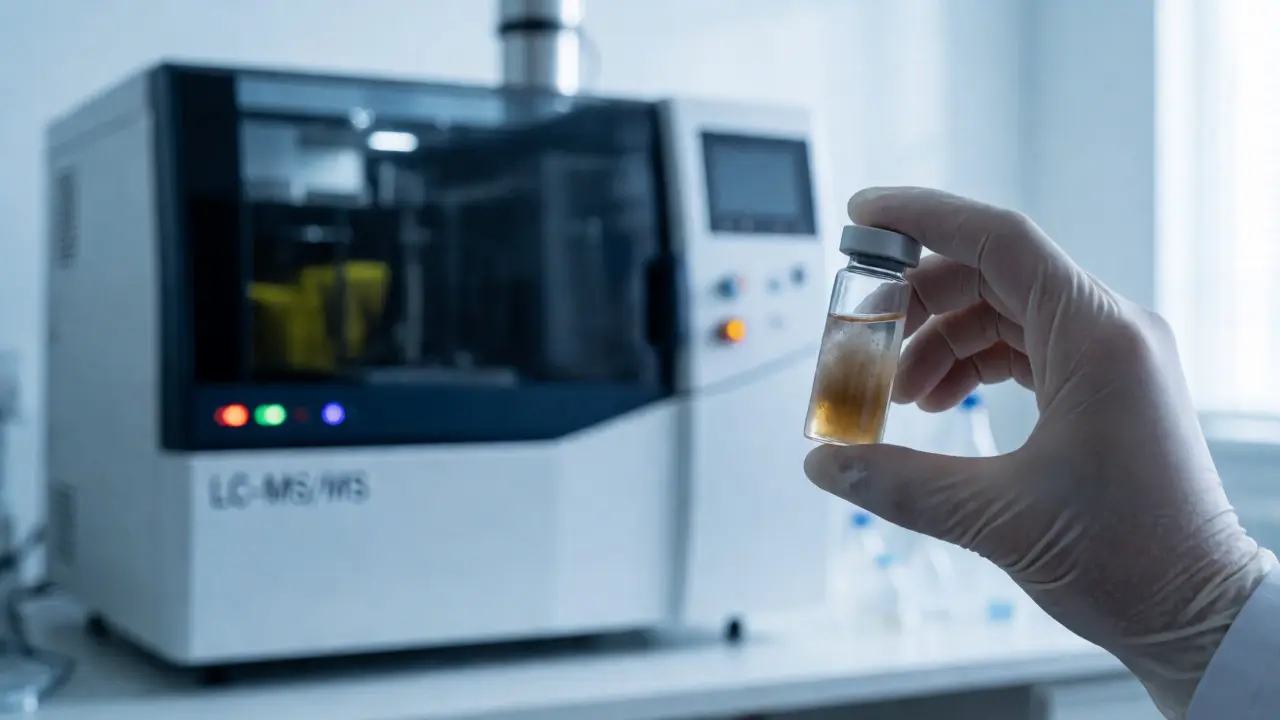
Synthetic Cannabinoids: Evolving Panels and Metabolites in Forensic Toxicology
- By : Ian Brophy
- Date : Aug 31 2026
Synthetic cannabinoids pose a major challenge for forensic toxicology due to their diverse structures and rapid metabolism. Standard THC screens often miss these novel psychoactive substances, requiring advanced LC-MS/MS and HRMS techniques. Learn why targeting specific metabolites is crucial for accurate detection and interpretation.

Cold Case Toxicology: How Retrospective Reanalysis Solves Mysteries
- By : Ian Brophy
- Date : Aug 29 2026
Discover how retrospective reanalysis solves mysteries in cold case toxicology. Learn why old samples hold new secrets and how modern tech changes justice.

LC-MS/MS in Drug Analysis: Sensitivity and Selectivity Explained
- By : Ian Brophy
- Date : Aug 21 2026
Explore how LC-MS/MS revolutionizes drug analysis through superior sensitivity and selectivity. Learn about its role in forensic toxicology, validation requirements, and practical applications.

Opioid Detection Guide: Morphine, Oxycodone, and Fentanyl Testing Methods
- By : Ian Brophy
- Date : Aug 17 2026
Explore how forensic toxicologists detect opioids from morphine to fentanyl. Learn about the limitations of immunoassays, the power of LC-MS/MS, and the challenges of identifying synthetic analogs in legal cases.

Opioid Analog Detection: Carfentanil and Emerging Threats in Forensic Toxicology
- By : Ian Brophy
- Date : Aug 16 2026
Explore the challenges of detecting carfentanil and emerging opioid analogs. Learn why LC-MS/MS is the gold standard and how labs stay ahead of synthetic threats.

Detecting Xylazine and Emerging Adulterants: A Guide to Modern Testing Strategies
- By : Ian Brophy
- Date : May 30 2026
Explore modern detection strategies for xylazine and emerging adulterants like medetomidine and BTMPS. Learn how LC-MS/MS, immunoassays, and point-of-care tests are reshaping forensic and clinical toxicology.

Matrix Effects in Toxicology: Overcoming Ion Suppression in LC-MS/MS
- By : Ian Brophy
- Date : May 17 2026
Explore the causes and solutions for ion suppression in LC-MS/MS toxicology. Learn how matrix effects impact accuracy and strategies like SPE, chromatography optimization, and internal standards to overcome them.

Confirmatory Testing: The Definitive Guide to Drug Identification
- By : Ian Brophy
- Date : May 13 2026
Discover how confirmatory testing provides definitive drug identification using advanced methods like LC-MS/MS and GC-MS, ensuring accuracy and legal defensibility in forensic and workplace settings.

Boosting Sensitivity and Specificity in LC-MS/MS Methods
- By : Ian Brophy
- Date : Apr 12 2026
Learn how to boost sensitivity and specificity in LC-MS/MS methods using SMRM, narrow-bore columns, and dead volume minimization for forensic toxicology.