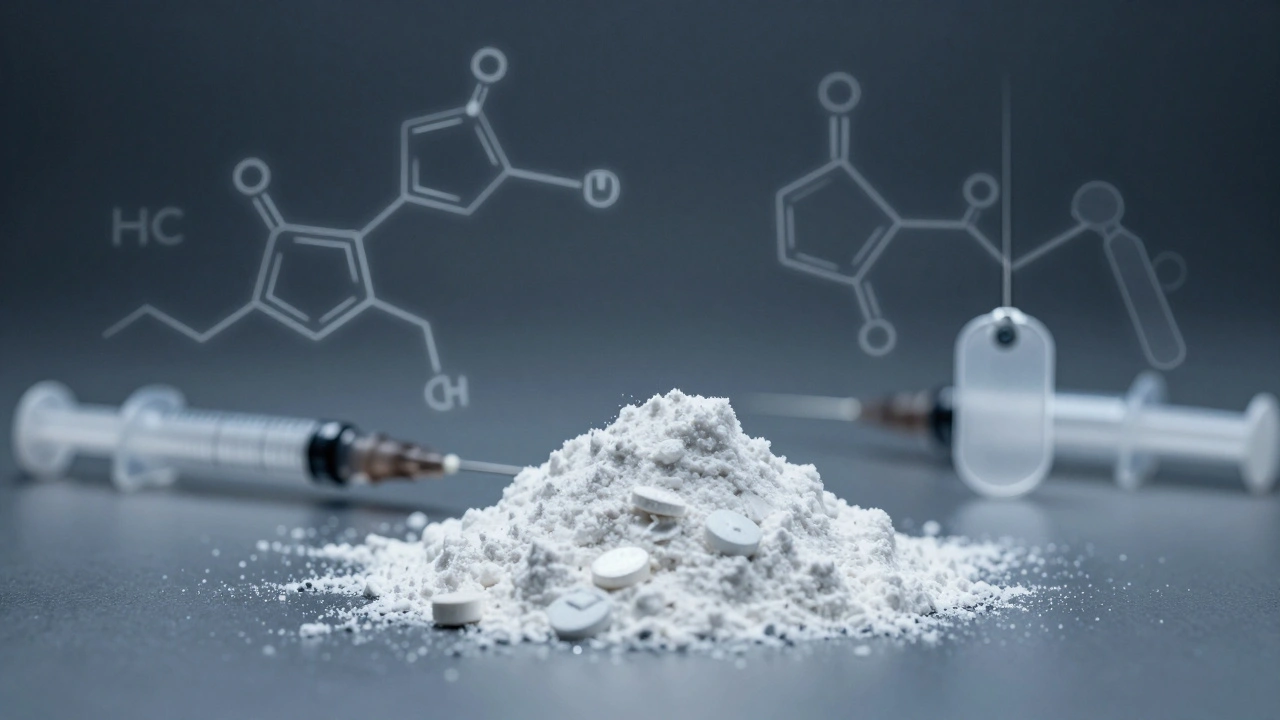
Imagine a drug supply that changes faster than the tests designed to catch it. That is the reality we are facing right now. For decades, forensic toxicology relied on a relatively stable set of known substances. Today, Xylazine is a non-opioid veterinary sedative that has become the most pervasive recent adulterant in the U.S. illicit drug market. Originally developed by Bayer in the 1960s for large animals like horses and cattle, this alpha-2 adrenergic agonist was never approved for human use due to severe side effects like hypotension and central nervous system depression. Yet, since its first appearance in Puerto Rican heroin supplies in the early 2000s as "anestesia de caballo," it has spread across all 50 states. By late 2022, it was found in more than half of fentanyl-laced samples in some jurisdictions. This isn't just about one chemical; it's about a shifting landscape where industrial stabilizers and other veterinary drugs join the mix, demanding new detection strategies.
The Evolving Landscape of Drug Adulterants
To understand how we detect these substances, we first need to know what we are looking for. The illicit drug supply is no longer just opioids and stimulants. It is a complex cocktail. While xylazine remains the dominant concern, emerging data from 2023 and 2024 highlights a growing list of co-adulterants. These include Medetomidine, which is another veterinary tranquilizer that is 200 to 300 times more potent than xylazine. There is also Phenylbutazone, a nonsteroidal anti-inflammatory drug used in animals. Perhaps most surprisingly, we are seeing BTMPS (Tinuvin 770), which is an industrial light stabilizer used in plastics and coatings.
Why are these appearing? Manufacturers use them to enhance the subjective effects of fentanyl, extend its duration, or simply as cheap bulking agents. In fact, analysis of 98 illicit drug samples showed that BTMPS comprised more than 50% of the total sample volume in 63% of cases. This means when you test a powder, you might be testing mostly plastic additive. Recognizing these entities is crucial because their presence drastically increases overdose risk and complicates treatment, especially since naloxone does not reverse the sedative effects of xylazine or medetomidine.
Chromatography-Mass Spectrometry: The Gold Standard
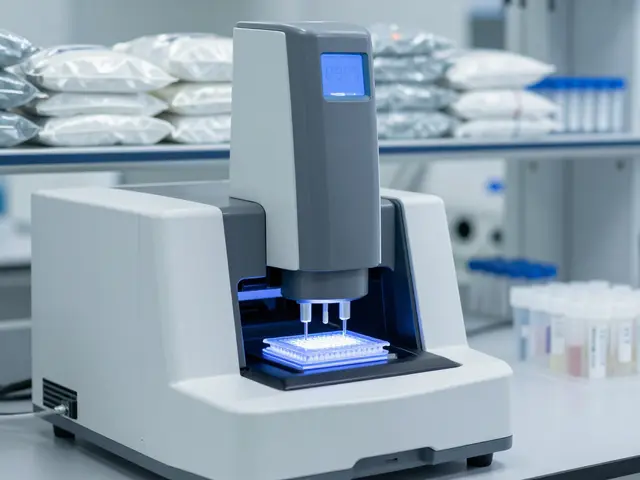
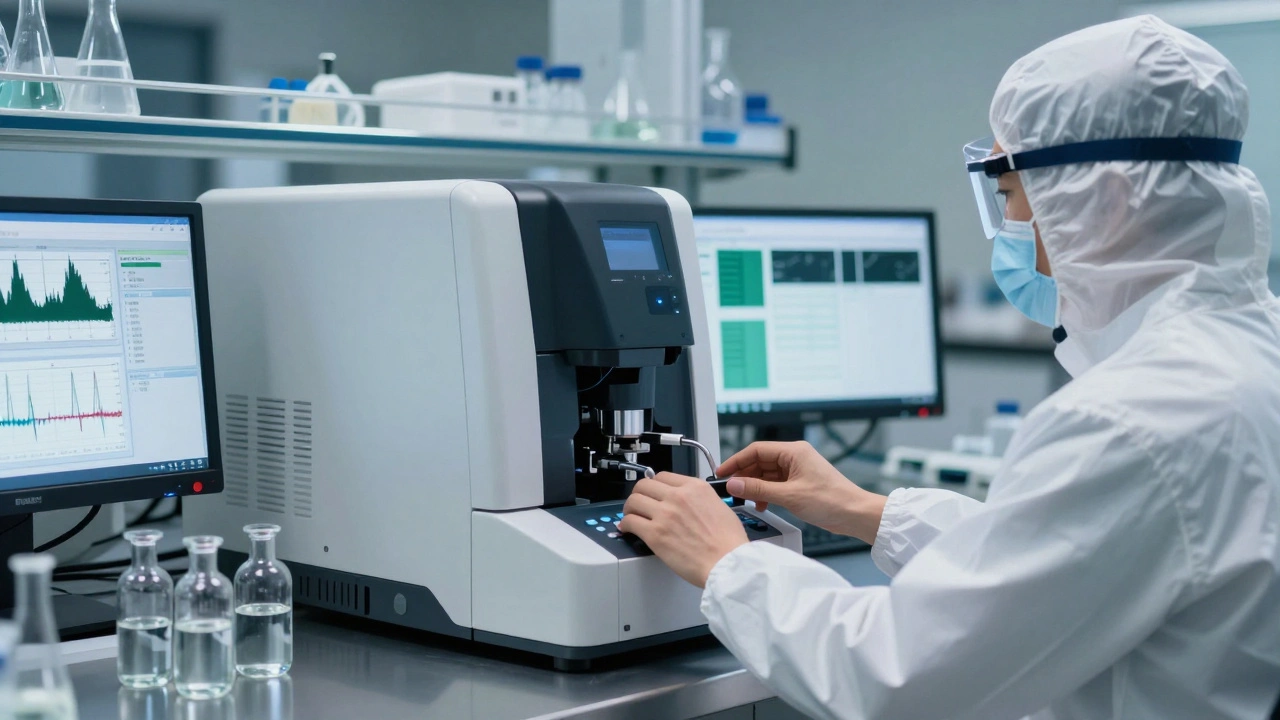
When accuracy matters, there is no substitute for mass spectrometry. In clinical and forensic laboratories, LC-MS/MS (Liquid Chromatography-Tandem Mass Spectrometry) is the primary method for confirming and quantifying xylazine and emerging adulterants in biological samples. This technique separates compounds using liquid chromatography and then identifies them based on their mass-to-charge ratio. It offers high specificity and can detect multiple analytes in a single run.
Here is why labs prefer LC-MS/MS over older methods like GC-MS (Gas Chromatography-Mass Spectrometry). Many emerging adulterants are thermally labile or polar, meaning they break down or don't vaporize well in gas chromatography. LC-MS/MS handles these compounds better, achieving limits of detection in the low nanograms per milliliter range. Laboratories that already run comprehensive drug screens can often add xylazine to their panels with minimal effort-just acquiring certified reference standards and validating the multiple reaction monitoring (MRM) transitions. However, this requires specialized equipment and trained staff, making it less accessible for rapid, on-site decisions.
Immunoassays: Speed vs. Specificity
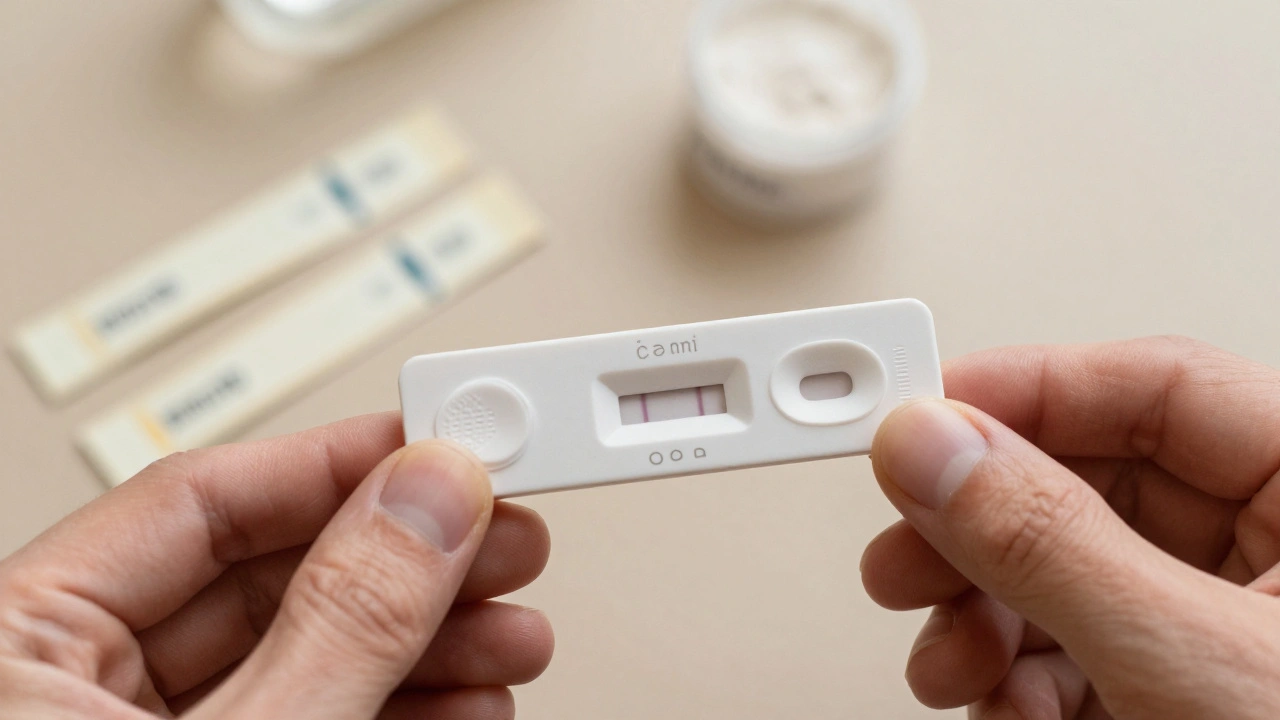
Not every situation allows for a trip to a high-tech lab. That’s where immunoassays come in. These tests use antibodies to bind to specific target molecules. For xylazine, two main types exist: automated analyzer assays and lateral-flow test strips.
Automated immunoassays, often used in forensic settings, have a cutoff concentration of around 10 ng/mL. They offer high throughput and can be integrated into existing chemistry analyzers. However, they are generally labeled for forensic use only, not FDA-cleared for clinical diagnosis, which creates regulatory hurdles for hospitals. On the other end of the spectrum are lateral-flow test strips, similar to pregnancy tests or fentanyl strips. These are widely used in harm-reduction programs. Their cutoffs are higher, typically ranging from 100 to 500 ng/mL. While they provide results in minutes at a low cost, this lower sensitivity means they can miss low-level contamination, leading to false negatives. Users must understand that a negative strip doesn’t guarantee safety, especially when mixed with potent substances like medetomidine.
| Method | Sensitivity / Cutoff | Turnaround Time | Primary Use Case | Limitations |
|---|---|---|---|---|
| LC-MS/MS | Low ng/mL (High Sensitivity) | Hours to Days | Clinical Confirmation & Forensic Quantification | High cost, requires specialized staff/equipment |
| Automated Immunoassay | ~10 ng/mL | Minutes (Batch processing) | High-throughput Screening (Forensic/Lab) | Not FDA-cleared for clinical use; cross-reactivity risks |
| Lateral Flow Strips | 100-500 ng/mL | Minutes | Harm Reduction & Field Screening | False negatives below cutoff; qualitative only |
| Chemical Spot Tests | Varies (Qualitative) | Seconds to Minutes | Rapid Field Identification | Less specific; interference from mixtures |
Point-of-Care and Community-Based Detection
Detection isn't just happening in sterile labs anymore. Community-based drug checking is becoming a vital part of public health strategy. Harm-reduction organizations are deploying multi-strip toolkits that screen for fentanyl, benzodiazepines, and xylazine simultaneously. This approach empowers people who use drugs to make informed decisions before consumption.
Recent advancements include chemical spot tests designed for field deployment. A 2025 study in ACS Omega highlighted a multitechnique approach where colorimetric reactions could discriminate xylazine from common adulterants in mock mixtures. While these aren't as precise as mass spectrometry, they serve as excellent initial screening tools. When combined with spectroscopic techniques like FTIR (Fourier-transform infrared spectroscopy) or Raman spectroscopy, which can identify major components in powders and pills, community centers can build a robust picture of local drug supply trends. The key is education: users need to know that these tools indicate presence, not potency, and that novel adulterants like BTMPS may still slip through standard screens.
Implementation Challenges and Future Directions
So, what stands in the way of universal detection? First, there is the issue of reference standards. You can't test for something if you don't have a pure sample to calibrate your machine against. For newer adulterants like BTMPS, commercial toxicology labs like Aegis Sciences Corporation had to wait until December 2024 to add it to routine testing, months after it was first recognized in June 2024. This lag time leaves gaps in surveillance.
Second, regulatory barriers complicate clinical adoption. Because many xylazine assays are designated for forensic use, emergency departments sometimes hesitate to implement them, fearing liability or compliance issues. This is problematic because knowing a patient has ingested xylazine changes treatment protocols-it explains why they remain sedated despite naloxone administration and alerts clinicians to monitor for respiratory depression and skin ulcers.
The future lies in adaptive infrastructure. We need networks that combine high-end HRMS (High-Resolution Mass Spectrometry) for untargeted discovery of new NPS with agile development of immunoassays for widespread screening. Federal initiatives, such as the White House’s July 2023 response plan, emphasize expanding testing in community and law enforcement settings. The goal is to integrate xylazine and adulterant data into real-time overdose surveillance systems, allowing for faster public health warnings. As Johns Hopkins’ Opioid Principles project notes, fentanyl and xylazine won't be the last adulterants. Our detection strategies must be flexible enough to evolve alongside the supply.
Why is xylazine not detected by standard opioid tests?
Standard opioid immunoassays are designed to recognize morphine-like structures. Xylazine is a veterinary sedative and an alpha-2 adrenergic agonist, chemically distinct from opioids. Therefore, it does not trigger a positive result on traditional opiate screens, requiring dedicated xylazine assays or mass spectrometry for detection.
What is BTMPS, and why is it in drug supplies?
BTMPS, also known as Tinuvin 770, is an industrial hindered amine light stabilizer used in plastics. It appears in illicit drug supplies as a cheap bulking agent. In some samples, it makes up more than 50% of the total weight, diluting the active psychoactive substances while adding unknown health risks.
How sensitive are xylazine test strips compared to lab tests?
Xylazine lateral-flow test strips typically have cutoff concentrations between 100 and 500 ng/mL, whereas laboratory-based LC-MS/MS methods can detect levels in the low ng/mL range. This means strips may produce false negatives if xylazine is present at low concentrations, making them useful for screening but insufficient for ruling out exposure entirely.
Does naloxone work on xylazine overdoses?
No, naloxone does not reverse the effects of xylazine. Since xylazine is not an opioid, naloxone will not counteract its sedative or respiratory depressant properties. Patients with xylazine exposure often require prolonged supportive care, including ventilation, even after opioid receptors are blocked by naloxone.
What is the role of medetomidine in the current drug crisis?
Medetomidine is another veterinary sedative that has emerged as an adulterant. It is significantly more potent than xylazine-estimated to be 200 to 300 times stronger. Its presence in fentanyl mixtures dramatically increases the risk of fatal overdose, necessitating highly sensitive detection methods like LC-MS/MS since specific immunoassays are not yet widely available.