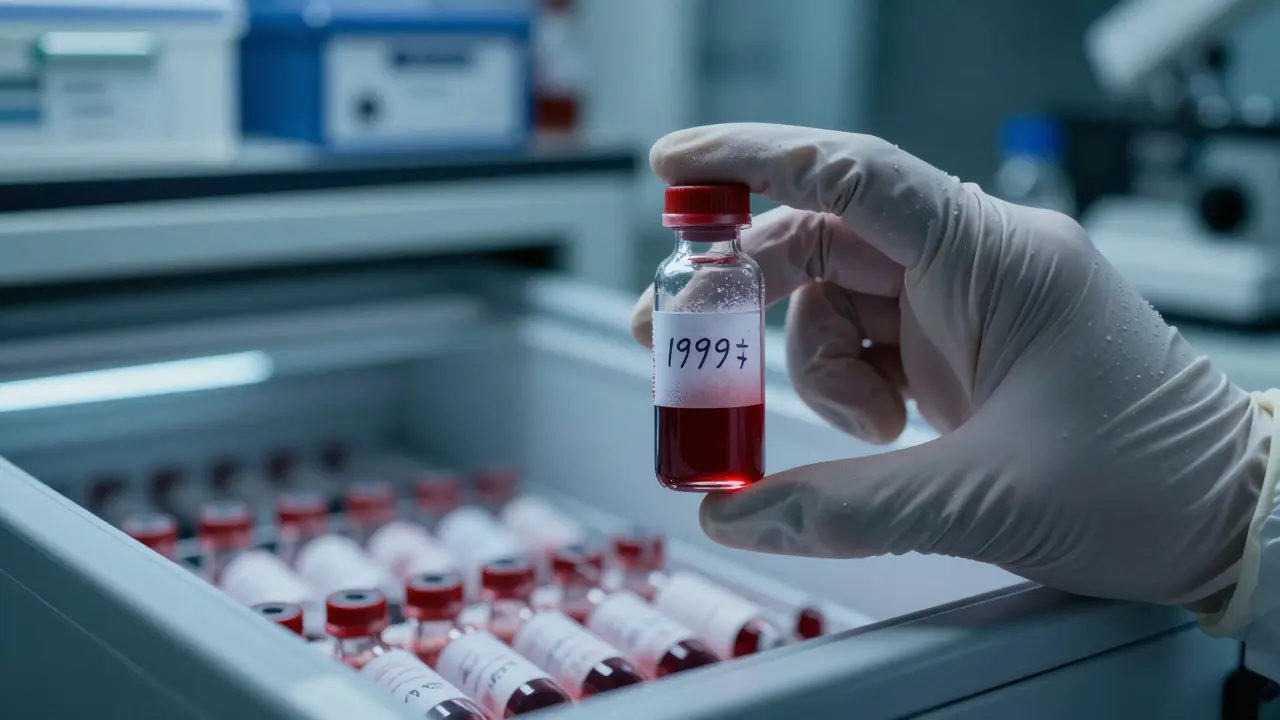
Imagine a death ruled "natural causes" in 1995. The autopsy showed no trauma. The heart looked fine. The family grieved, the case closed, and the file gathered dust for three decades. Then, in 2026, a new medical examiner opens that box. They don't find a smoking gun; they find a vial of blood that has been sitting in a freezer since the Clinton administration. With modern Cold Case Toxicology, this old sample becomes a time machine. It reveals that the deceased wasn't dying of heart failure-they were overdosing on a synthetic opioid that didn't even exist in 1995.
This isn't science fiction. It’s happening right now in labs across the country. We call it Retrospective Reanalysis. It’s the process of testing preserved biological samples from unsolved or questionable deaths using technology that simply wasn’t available when the person died. If you’re a student, a legal professional, or just someone fascinated by how science catches up with history, understanding this field changes how you view justice.
Why Old Samples Suddenly Talk Back
Why bother digging into cases from twenty years ago? Because the chemistry of death has changed faster than our ability to detect it. In the 1990s and early 2000s, standard toxicology screens focused on a narrow list: alcohol, cocaine, heroin, benzodiazepines, and maybe some common antidepressants. If a victim had taken a rare prescription drug or an emerging designer substance, it often went undetected because the lab simply wasn't looking for it.
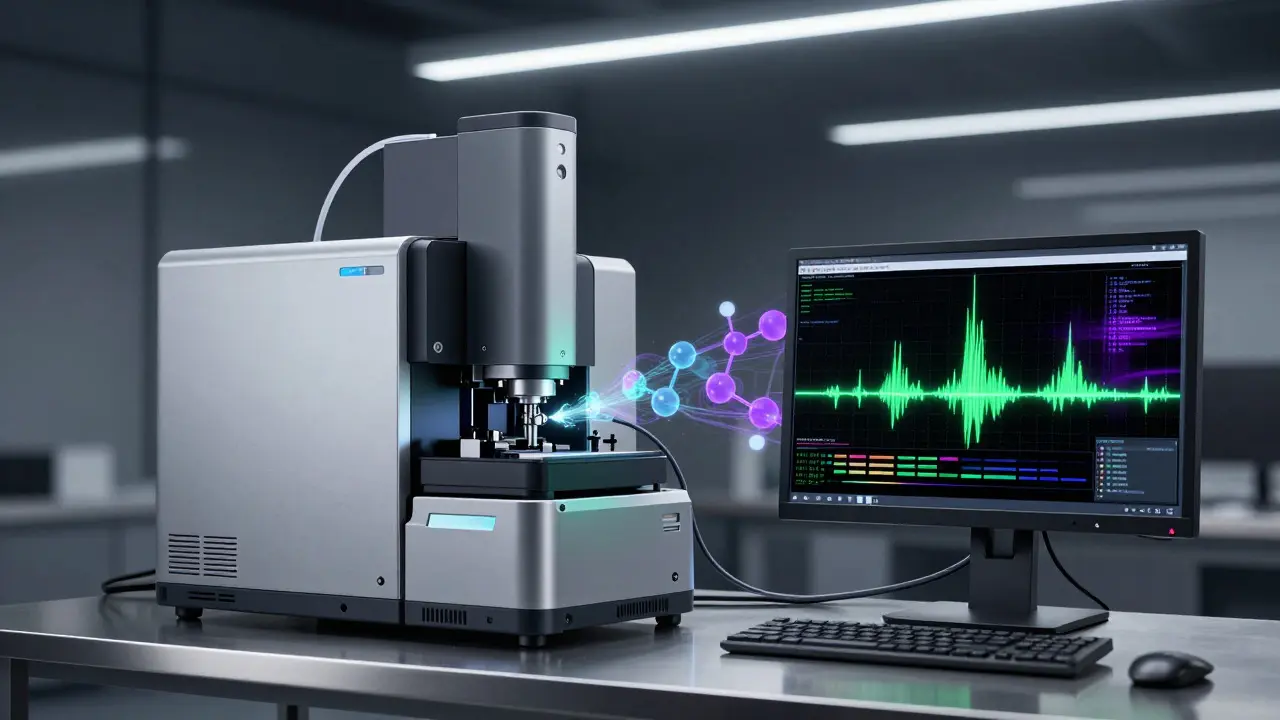
Today, we have tools like Liquid Chromatography-Tandem Mass Spectrometry (LC-MS/MS). This instrument is a molecular fingerprint scanner. Unlike the immunoassays of the past-which were like checking if a key fits a lock-LC-MS/MS reads the actual shape and weight of every molecule in a sample. It can identify thousands of compounds simultaneously. When we run a 20-year-old blood spot through this machine today, we might find metabolites of drugs that were brand new at the time of death but are now well-documented in reference libraries.
The value here isn't just academic. For families, it brings closure. For prosecutors, it can reopen cases where the initial ruling was wrong. And for public health officials, it provides data on historical trends in drug use that were previously invisible.
The Science Behind Retrospective Testing
You might wonder: does blood stay good in a freezer for thirty years? Surprisingly, yes. Biological matrices like blood, urine, vitreous humor (the fluid inside the eye), and liver tissue are remarkably stable when stored correctly. While some volatile substances like ethanol evaporate or degrade over time, many non-volatile drugs and their metabolites remain intact. Vitreous humor, in particular, is isolated from blood circulation, making it resistant to post-mortem contamination and degradation. It’s often the gold standard for retrospective analysis when blood samples are compromised.
However, reanalysis isn't as simple as popping a tube into a machine. Scientists must account for matrix effects-interferences caused by the breakdown products of proteins and cells in the old sample. A fresh blood sample behaves differently chemically than one that has undergone freeze-thaw cycles over decades. Labs must validate their methods specifically for aged specimens. This involves running control samples spiked with known concentrations of target analytes into similar aged matrices to ensure accuracy.
Another critical factor is metabolite stability. Some parent drugs break down quickly after death, but their metabolites persist longer. For example, morphine breaks down into hydromorphone and other compounds. By targeting these stable metabolites rather than the unstable parent drug, toxicologists can reconstruct what the person ingested, even if the original substance has largely degraded.
Case Studies: When Technology Catches Up
Let’s look at a real-world scenario. In the late 1990s, a young man dies suddenly in Portland, Oregon. No signs of foul play. Toxicology comes back negative for alcohol and common street drugs. Cause of death: undetermined. Fast forward to 2024. His sister, researching her family’s medical history, requests a re-evaluation. She suspects his sudden cardiac arrest might be linked to a medication he started taking weeks prior-a beta-blocker that was relatively new at the time.
The lab retrieves the archived blood card. Using high-resolution mass spectrometry, they identify specific metabolites of the beta-blocker at lethal levels. The initial screen missed it because the assay threshold was set too high for this specific compound, or perhaps the cross-reactivity with other drugs masked it. The cause of death is revised to drug toxicity. This single finding changes the narrative for the family and potentially impacts insurance settlements and genetic counseling for siblings.
Another common area is novel psychoactive substances (NPS). Synthetic cannabinoids and cathinones flooded the market in the mid-2000s. Many deaths during that period were labeled "unknown overdose." Today, reference standards for these chemicals exist. Reanalyzing samples from 2008-2012 allows researchers to map the true extent of the synthetic drug epidemic, correcting historical data that underestimated its lethality.
Challenges and Limitations
It’s not all smooth sailing. Storage conditions are the biggest variable. If a sample was frozen improperly, thawed multiple times, or exposed to light, degradation accelerates. Chain of custody issues also arise. Who has access to these archives? Are the labels still legible? In older cases, documentation might be sparse. Did the technician note the pH of the urine? Was the blood collected before or after embalming? These details matter.
Cost is another barrier. Running a comprehensive LC-MS/MS panel on hundreds of cold cases is expensive. Labs often prioritize cases based on legal interest or potential impact on policy. Additionally, false positives can occur due to degradation products mimicking target molecules. Rigorous confirmation protocols, such as using two different analytical techniques (e.g., GC-MS and LC-MS), are essential to avoid misidentifying a degraded protein fragment as a controlled substance.
| Feature | Historical Methods (1990s-2000s) | Modern Retrospective Methods (2020s) |
|---|---|---|
| Primary Technique | Immunoassay Screening + GC-MS Confirmation | High-Resolution LC-MS/MS & HRAM |
| Target Scope | Narrow (Top 20-50 drugs) | Broad (Thousands of compounds + metabolites) |
| Sensitivity | Low to Moderate (ng/mL range) | High (pg/mL range) |
| Detection of NPS | Poor (often missed) | Excellent (with updated libraries) |
| Sample Requirement | Larger volumes needed | Micro-sampling possible (blood spots) |
Legal and Ethical Implications
Reopening a case based on new science raises tough questions. Does a change in cause of death constitute "new evidence" sufficient to overturn a verdict? In civil suits, yes, often. In criminal cases, double jeopardy protections complicate things. However, most reanalyses focus on clarifying ambiguous rulings rather than prosecuting new crimes against individuals who may no longer be alive or identifiable.
Ethically, consent is tricky. Do next-of-kin need to agree to retesting a body part removed decades ago? Generally, if the tissue belongs to the estate or medical examiner's office, administrative rules apply. But transparency is key. Families should be informed about the possibility of unexpected findings. Discovering that a loved one died from an undisclosed drug habit can be painful, but many families prefer truth to ambiguity.
There’s also the issue of bias. Analysts know the context of the case. To maintain integrity, blind testing is ideal-where the lab doesn’t know the suspected cause of death until after the results are generated. This prevents confirmation bias, ensuring that the detection of a trace amount of a drug isn't influenced by the investigator's hunch.

How to Initiate a Retrospective Analysis
If you suspect a cold case needs a second look, here’s the practical path forward:
- Locate the Sample: Contact the Medical Examiner or Coroner’s office. Ask specifically about archived blood cards, vitreous humor, or tissue blocks. Not all jurisdictions archive long-term.
- Verify Chain of Custody: Ensure there is documentation proving the sample hasn't been tampered with or improperly stored.
- Select a Specialized Lab: General hospital labs aren't equipped for this. Look for forensic toxicology labs accredited by ASCLD/LAB or ISO 17025 that specialize in low-abundance analytes.
- Define the Target List: Don't just ask for a "full screen." Provide context. If you suspect a specific class of drugs (e.g., opioids, antidepressants), guide the analysts to prioritize those targets while still performing a broad scan.
- Prepare for Interpretation: Results will need expert interpretation. Post-mortem redistribution means drug levels in blood don't always match pre-death levels. An experienced forensic toxicologist must contextualize the numbers.
The Future of Cold Case Toxicology
We are entering an era where digital archives meet biological ones. As more labs digitize their raw mass spectrometry data, we can re-search old datasets without touching physical samples. Imagine querying a database of 10,000 autopsies from 2005 for a new biomarker discovered in 2026. That’s already becoming possible with AI-driven spectral matching.
Furthermore, advances in hair analysis allow us to see a timeline of exposure. Hair grows approximately 1 cm per month. Segmental analysis of hair samples from cold cases can reveal chronic drug use patterns over months or years, providing insight into lifestyle factors that contributed to death. This longitudinal view is something blood tests alone cannot offer.
For students and professionals, this field offers a unique intersection of history, chemistry, and justice. It reminds us that science is never static. What we thought we knew about a death ten years ago might be completely rewritten by a better detector today. Keep your eyes open for the quiet files gathering dust. Sometimes, the loudest truths are hiding in the oldest samples.
Can all cold case samples be reanalyzed?
No. Success depends heavily on storage conditions. Blood and urine require freezing (-20°C or lower) to preserve non-volatile drugs. Formalin-fixed tissues are generally poor for toxicology because formaldehyde alters chemical structures. Vitreous humor is highly stable and often yields the best results from old cases.
What drugs are most likely to be found in retrospective analysis?
Drugs with long half-lives and stable metabolites are most detectable. This includes many antidepressants, antipsychotics, benzodiazepines, and certain opioids. Volatile substances like alcohol and acetone often degrade significantly. Novel psychoactive substances from the 2000s are also frequently identified now that reference standards exist.
Is retrospective toxicology admissible in court?
Yes, provided the laboratory follows validated methods for aged matrices and maintains a clear chain of custody. Courts generally accept scientifically sound reanalysis, especially when it clarifies ambiguous previous findings. Expert testimony explaining the limitations and strengths of the new data is crucial.
How much does cold case reanalysis cost?
Costs vary widely depending on the scope. A targeted test for specific drugs might cost $200-$500. A comprehensive broad-spectrum screening using LC-MS/MS can range from $800 to $2,000+ per sample. Additional costs include retrieval fees from archives and expert consultation.
Does post-mortem redistribution affect old samples?
Yes, and it affects them differently than fresh samples. Redistribution occurs immediately after death, moving drugs from organs into blood. Over time, further degradation occurs. Interpreting old samples requires comparing peripheral blood levels to central blood levels if both were archived, or relying on stable metabolites which redistribute less than parent compounds.