You’ve probably seen it on crime shows. A detective bends a stiff arm, checks the jaw, and declares with absolute certainty: "He died four hours ago." It sounds dramatic. It’s also completely wrong.
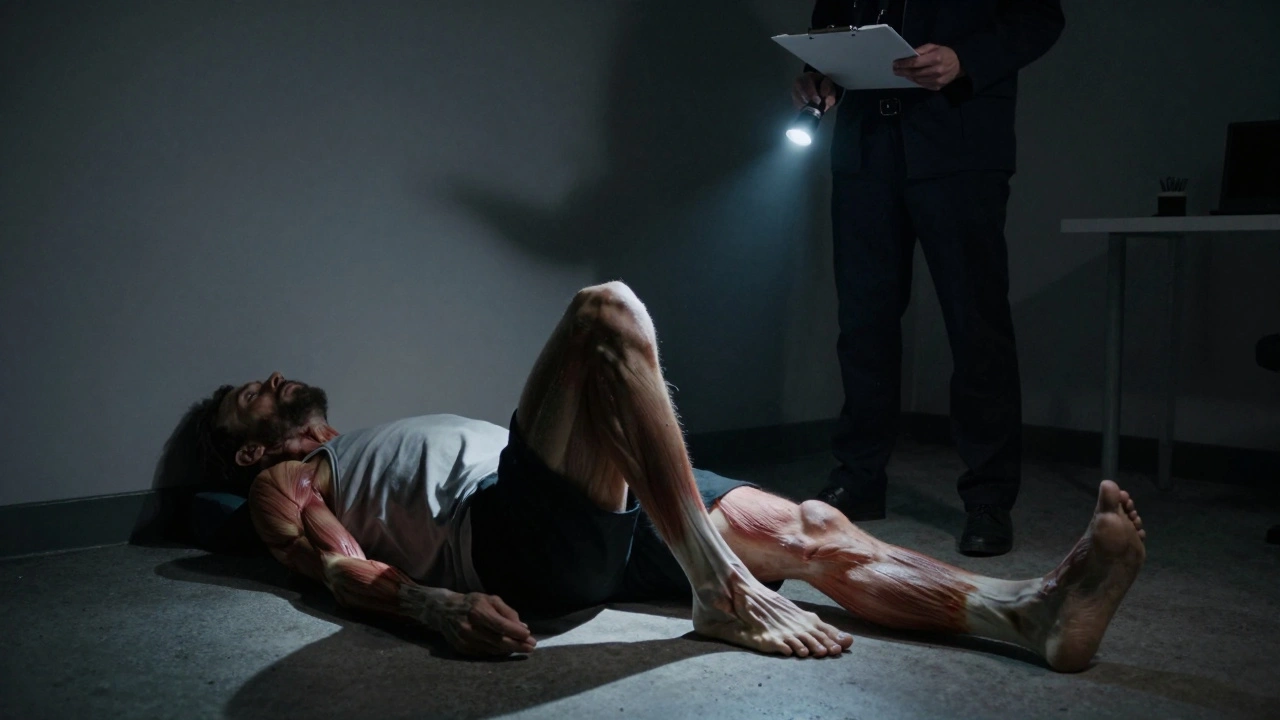
In real-world forensic pathology is the branch of medicine that determines cause and manner of death through examination of bodies, rigor mortis is not a stopwatch. It is a messy, variable biological process that gives us a rough window, not a precise timestamp. Relying on it alone to estimate the postmortem interval (PMI) is the estimated time elapsed since death occurred is one of the biggest mistakes beginners make-and even experienced investigators have to guard against it.
So what is rigor mortis really telling us? How do we assess it properly at a scene? And why does it still matter when we have temperature probes and chemical tests?
The Biochemistry Behind the Stiffness
To understand why a body stiffens, you have to look at the muscle fibers. While you are alive, your muscles use energy in the form of adenosine triphosphate (ATP) is the primary energy carrier molecule in cells used for muscle contraction and relaxation. ATP acts like a lubricant; it allows the protein strands inside your muscles-actin and myosin-to slide past each other smoothly. When you die, circulation stops. Oxygen delivery halts within seconds. The factory that makes ATP shuts down.
For a short while, muscles run on stored glycogen reserves, but those burn out quickly. As ATP levels drop below a critical threshold, the "lubrication" disappears. Calcium ions leak from storage sacs into the muscle tissue, causing actin and myosin to lock together tightly. They cannot detach without ATP. This creates a rigid cross-bridge complex across every muscle fiber. That is rigor mortis.
This biochemical locking is irreversible until decomposition begins. Bacteria and enzymes eventually break down the muscle proteins, dissolving the bridges and returning the body to a flaccid state. Until then, the body stays stiff.
The Timeline: What Actually Happens
Textbooks love clean numbers, but biology hates them. However, under standard temperate conditions (around 20-22 °C or 68-72 °F), there is a general pattern most pathologists see:
- 0-2 hours: The body is flaccid. Muscles are relaxed. No stiffness is detectable.
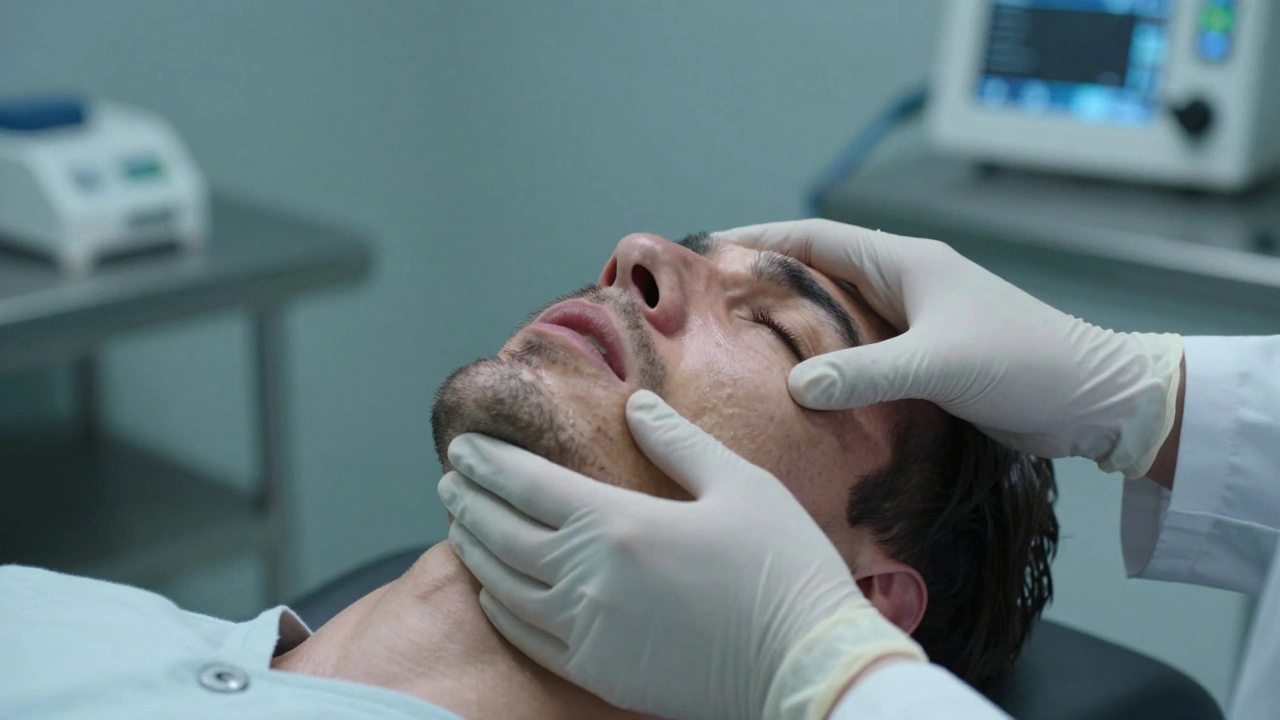
- 2-6 hours: Rigor begins. It usually starts in small muscles-the eyelids, jaw, and neck. You might notice resistance if you try to open the mouth gently.
- 6-12 hours: Stiffness spreads downward. Shoulders, elbows, wrists, hips, knees, and ankles become rigid. By hour 12, the whole body is typically fully stiff.
- 12-24 hours: Peak rigidity. Moving limbs requires significant force.
- 24-36 hours: Resolution begins. Rigor fades in the same order it appeared. Face and neck soften first, followed by limbs.
- 36-72 hours: Complete resolution. The body becomes flaccid again due to putrefaction and protein breakdown.
This timeline assumes an average adult in a normal room. Change the variables, and the clock breaks.
Temperature: The Biggest Game Changer
If you want to know why rigor timelines fail in court, look at the thermometer. Temperature dictates the speed of all biochemical reactions, including ATP depletion and enzyme activity.
| Condition | Onset Time | Full Rigor | Resolution |
|---|---|---|---|
| Cold (4-10 °C / 39-50 °F) | Delayed (4-6+ hours) | Slower (18-24 hours) | Prolonged (up to 72 hours) |
| Temperate (20-22 °C / 68-72 °F) | Standard (2-3 hours) | Standard (12 hours) | Standard (36 hours) |
| Hot (>30 °C / 86 °F) | Rapid (<1 hour) | Fast (4-6 hours) | Quick (18-24 hours) |
If a body is found in a refrigerated truck or buried in snow, rigor may take days to develop and last much longer. If someone dies in a heatwave or during intense physical exertion, rigor can set in within minutes and fade before you even arrive on scene. Never guess the PMI without knowing the ambient temperature history.

Other Factors That Skew the Clock
Besides temperature, several intrinsic factors alter how rigor presents itself:
- Physical Build: Muscular individuals often exhibit stronger, more prolonged rigor because they have more muscle mass to lock up. Elderly, cachectic (severely wasted), or infant bodies may show weak or fleeting stiffness.
- Antemortem Activity: Did the person run, fight, or seize before dying? Intense activity depletes ATP stores while alive. This can lead to "instant rigor" or accelerated onset, as the muscles are already near exhaustion at the moment of death.
- Cause of Death: Deaths involving seizures (epilepsy), status asthmaticus, or extreme emotional stress often present with early or widespread rigidity. Conversely, deaths occurring during deep sleep or under heavy sedation may show delayed onset.
- Medical Conditions: Sepsis, electrolyte imbalances, or certain intoxications (like cyanide) can disrupt normal metabolic pathways, altering the timeline unpredictably.
How Investigators Assess Rigor in the Field
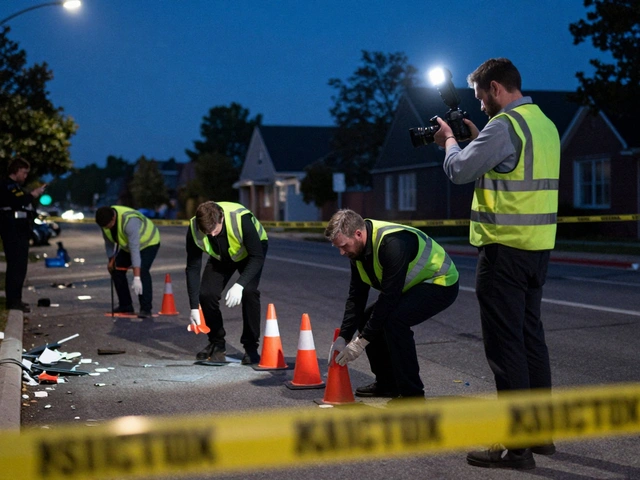
You don’t need expensive equipment to check for rigor. In fact, the standard method is manual manipulation. Here is how a medicolegal death investigator typically proceeds:
- Check the Jaw: Gently attempt to open the mouth. Resistance indicates early rigor.
- Flex the Limbs: Try to bend the elbows and knees by 10-20 degrees. Note the amount of force required.
- Score the Stiffness: Use a standardized scale. Many agencies use a 0-3 ordinal system per joint:
- 0 = None (flaccid)
- 1 = Slight (minimal resistance)
- 2 = Moderate (noticeable resistance, movement possible)
- 3 = Complete (practically immovable without force)
- Document Position: Photograph the body exactly as found. If limbs are fixed in an unnatural position, note it.
- Look for Broken Rigor: Has anyone moved the body after rigor set in? Look for creases in clothing, disturbed bedding, or joints that feel "loose" while surrounding areas remain stiff. Breaking rigor leaves the affected area flaccid until decomposition takes over.
Some research suggests using handheld dynamometers to measure torque at joints for greater precision, but this is rare outside academic studies. For practical field work, your hands and eyes are the primary tools.
Why Rigor Matters Beyond Timing
If rigor is so unreliable for exact timing, why do we still teach it? Because it tells a story about what happened to the body after death.
Detecting Body Movement: If a body is found lying flat on its back, but the legs are rigid in a sitting position, the body was moved after rigor had set in. This contradicts claims that the person fell or collapsed naturally in that spot. It helps reconstruct the scene and identify potential staging.
Distinguishing Antemortem vs. Postmortem Injury: Fractures or dislocations caused by forcing a limb against full rigor often tear muscle and joint capsules without vital hemorrhage (bleeding). Injuries sustained while alive show active bleeding and inflammatory responses. Rigor helps pathologists determine if trauma occurred before or after death.
Triage in Mass Disasters: In large-scale incidents, partial rigor can help sort victims into broad categories (e.g., likely dead <24 hours vs. >24 hours), aiding resource allocation and identification efforts.
The Myth of Cadaveric Spasm
You may have heard of "cadaveric spasm" or "instantaneous rigor," where a victim is found gripping a weapon tightly, supposedly proving suicide or intense emotion. Traditional literature described this as a unique phenomenon linked to extreme mental states.
Modern forensic experts are highly skeptical. Most cases attributed to cadaveric spasm can be explained by localized rigor in muscles that were actively contracted at the moment of death, combined with postmortem drying and positional fixation. True, unequivocal cadaveric spasm is extremely rare-likely less than 1% of suicides. Courts should be cautious about accepting it as definitive proof of intent or emotional state.
Rigor vs. Other Postmortem Changes
Rigor never works alone. It is part of the classical triad of early postmortem changes, alongside algor mortis is the gradual cooling of the body after death and livor mortis is the settling of blood in the lower parts of the body, causing purple discoloration.
- Algor Mortis (Cooling): Generally more reliable for PMI in the first 24 hours. Internal temperature drops predictably (about 0.55-0.83 °C per hour in temperate conditions), allowing models like the Henssge nomogram to provide estimates with narrower error margins (±2-3 hours).
- Livor Mortis (Lividity): Indicates body position and whether the body was moved. Becomes fixed (doesn't blanch when pressed) after 8-12 hours.
- Rigor Mortis: Provides coarse categorization (early, intermediate, late) and clues about movement/posture. Least precise for exact timing.
For later intervals (>48 hours), forensic entomology (insect development) and biochemical markers (like vitreous potassium levels) become far more accurate than rigor.
Best Practices for Accurate Assessment
To avoid errors in your own assessments or reports, follow these guidelines:
- Never use rigor in isolation. Always combine it with body temperature, lividity, gastric contents, and scene context.
- Record environmental data. Note ambient temperature, humidity, airflow, and exposure (sun/water/refrigeration).
- Use broad intervals. Instead of saying "died 6 hours ago," say "PMI is consistent with 4-10 hours based on rigor progression."
- Document everything. Photograph limb positions, note any broken rigor, and record your scoring clearly.
- Consider individual factors. Age, weight, health status, and antemortem activity all shift the timeline.
Rigor mortis remains a vital tool in forensic pathology-not because it gives us exact times, but because it reveals the physical history of the body. Used wisely, alongside other evidence, it helps reconstruct the final moments and movements of the deceased. Used poorly, it leads to misleading conclusions. Know the difference.
Can rigor mortis tell me the exact time of death?
No. Rigor mortis provides only a rough estimate of the postmortem interval, typically with an uncertainty of ±4 to ±8 hours. It is influenced heavily by temperature, physical build, and cause of death. For more precise timing, forensic pathologists rely on body cooling (algor mortis), vitreous chemistry, and entomology.
Why does rigor mortis start in the face?
This follows Nysten’s law, which observes that rigor typically appears first in smaller muscles and involuntary muscles (like the heart and diaphragm) before spreading to larger voluntary muscles. Facial muscles, eyelids, and jaw are small and numerous, so they often show initial stiffness within 2-3 hours after death.
What happens if rigor mortis is "broken"?
If a limb is forced to move after rigor has set in, the muscle cross-bridges are physically disrupted. That specific area will remain flaccid and will not regain stiffness, even if other parts of the body are still rigid. This is a key indicator that the body was manipulated after death.
Does cold weather stop rigor mortis?
Cold slows down the biochemical processes involved in rigor. In very cold environments, onset may be delayed by several hours, and the duration of rigor can extend to 48-72 hours or more. It doesn’t stop rigor entirely, but it significantly alters the timeline compared to temperate conditions.
Is cadaveric spasm real?
True cadaveric spasm is extremely rare and controversial. Most cases historically attributed to it are better explained by localized rigor in muscles that were actively contracted at the time of death, combined with postmortem drying. Modern forensics advises caution in using it as proof of suicide or emotional state.
How long does rigor mortis last?
In temperate conditions, rigor typically begins within 2-3 hours, peaks around 12 hours, and resolves completely between 36 and 72 hours as decomposition breaks down muscle proteins. Hot environments accelerate this process, while cold environments prolong it.
Can I use rigor mortis to estimate time of death in water?
Water complicates rigor assessment significantly. Water conducts heat away from the body faster than air, accelerating cooling and potentially altering rigor timelines. Additionally, buoyancy and water movement can affect body position and muscle tension. Rigor should only be used qualitatively in aquatic cases, alongside other evidence.
What is the difference between rigor mortis and livor mortis?
Rigor mortis is the stiffening of muscles due to biochemical changes. Livor mortis (lividity) is the purplish discoloration caused by blood settling in the lowest parts of the body due to gravity. Livor indicates body position and whether the body was moved; rigor indicates muscle state and potential postmortem manipulation.