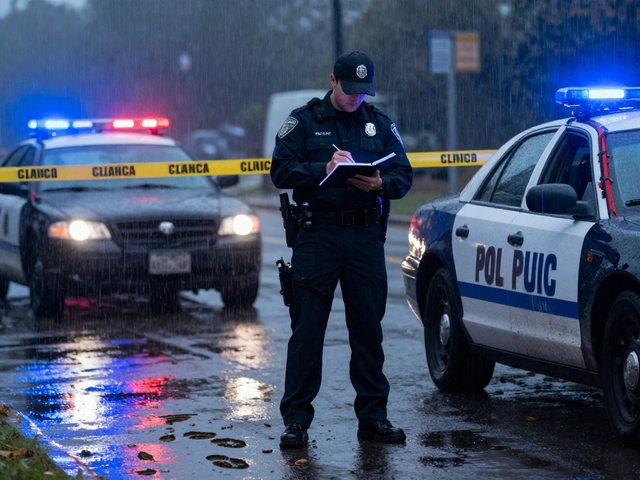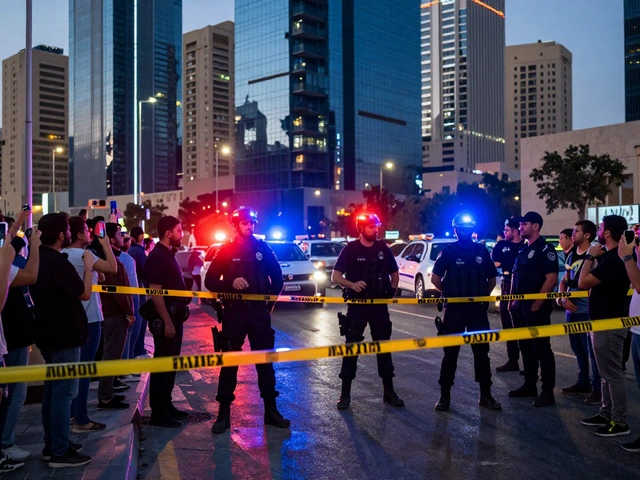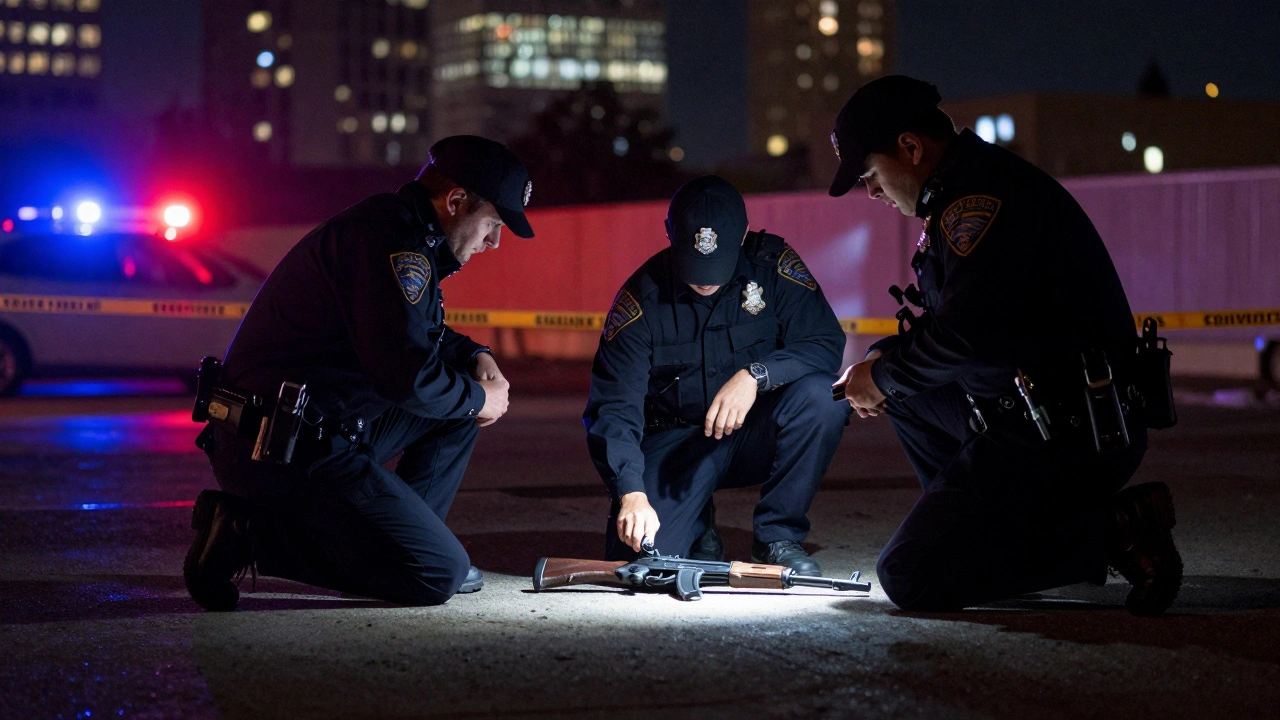
When a homicide occurs and a gun is found at the scene, the first question investigators ask isn’t just who pulled the trigger-it’s where did this gun come from? That’s where firearm trace and eTrace come in. These aren’t just bureaucratic steps. They’re critical tools that can connect a murder weapon to its original sale, track its path through multiple owners, and sometimes even lead straight to the person responsible.
What Is Firearm Trace?
Firearm trace is the process of following a gun’s history from the manufacturer to the last known legal owner. Every firearm made or imported into the United States has a unique serial number. When a gun is sold by a licensed dealer, the dealer records the buyer’s information and the gun’s serial number in a log. That record stays with the dealer for at least 20 years.
When police recover a gun used in a crime, they send the serial number to the Bureau of Alcohol, Tobacco, Firearms and Explosives (ATF). ATF then contacts the manufacturer, distributor, and the original dealer to find out who bought it and when. That chain of custody is called a trace.
It sounds simple, but it’s not always easy. Guns change hands illegally. A gun might be stolen, sold at a flea market, or passed between friends without paperwork. A trace doesn’t always reveal the current owner-it shows the last legal transfer. But even that can be a starting point.
How eTrace Changed Everything
Before 2000, trace requests were mailed or faxed. It could take weeks. Today, nearly all traces are done through eTrace, ATF’s online system. It’s fast, secure, and connects law enforcement agencies across the country.
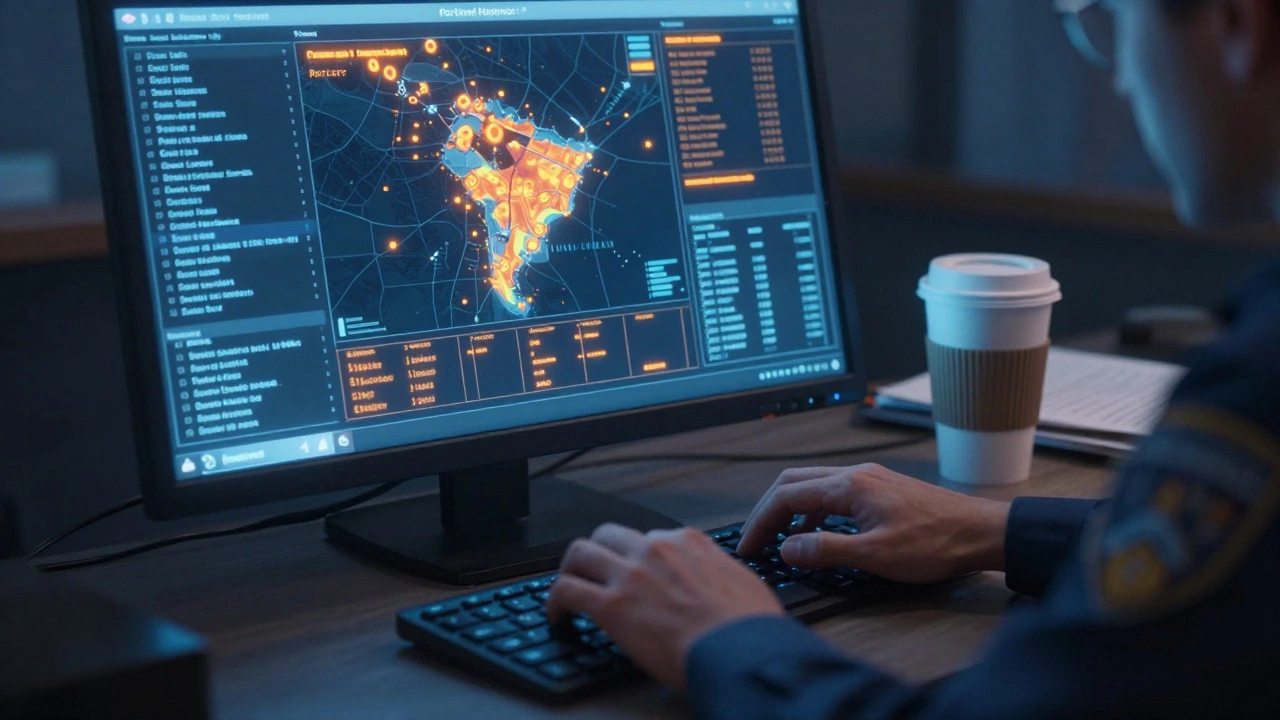
eTrace lets police submit a trace request in minutes. They enter the serial number, the location of recovery, and basic case details. The system automatically routes the request to the right manufacturer and dealer. Responses come back in hours, not days. In 2025, ATF processed over 280,000 trace requests through eTrace-up 12% from the year before.
What makes eTrace powerful isn’t just speed. It’s data. The system flags patterns. If 12 guns recovered in Portland this month all trace back to the same store in Phoenix, that’s not a coincidence. It’s a trend. Investigators can see which dealers are supplying guns that end up in crimes, even if those dealers are hundreds of miles away.
How eTrace Helps Solve Homicides
In homicide cases, every second counts. A gun recovered at a crime scene might be the only physical evidence left. A trace can turn that gun into a timeline.
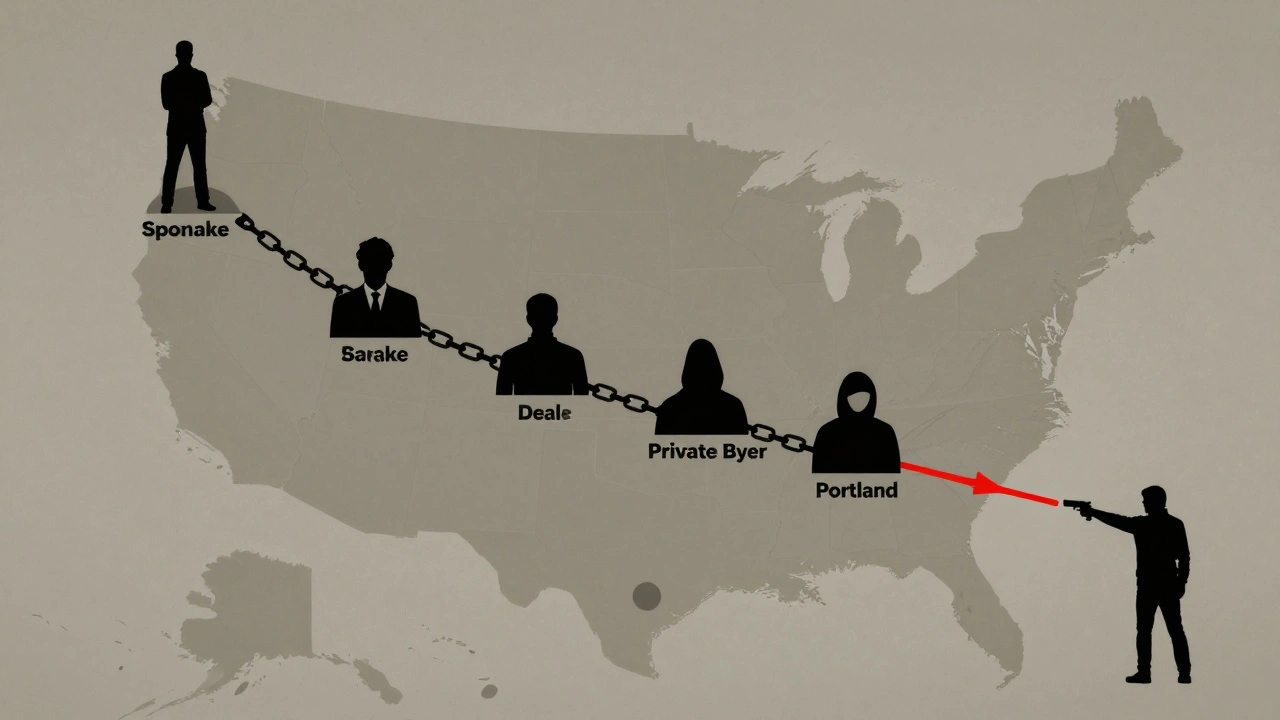
For example, in 2024, a shooting in downtown Portland left two dead. The gun was a .40-caliber pistol with a scratched-off serial number. Police couldn’t ID the shooter. But when they ran a trace through eTrace, they found the gun was sold in 2021 to a man in Las Vegas. That man had a prior conviction for illegal firearm transfer. He had sold the gun to a middleman in Arizona. That middleman had sold it to a person in California, who later lost it in a burglary.
The trace didn’t name the killer. But it gave police a list of people who had contact with the gun in the past three years. One of them-recently arrested for a separate assault-matched the security footage. The trace led to a confession.
This isn’t rare. In 2025, ATF reported that firearm traces contributed to arrests in 38% of homicide cases where a traceable weapon was recovered. In cities with high gun violence, that number jumps to over 50%.
Limitations and Misconceptions
Firearm trace and eTrace aren’t magic. They can’t track a gun that was never sold through a licensed dealer. If a gun was built in a garage, smuggled in from another country, or stolen from a private collection before 1968 (when federal record-keeping began), there’s no trace.
Also, tracing doesn’t prove who used the gun in the crime. It only shows who legally owned it last. That’s why traces are just one piece of the puzzle. DNA, video, cell records, and witness statements still matter more.
Another myth: many think trace data is public. It’s not. ATF keeps trace records confidential. Only law enforcement can access them. Even prosecutors can’t get them without a court order. This protects privacy and prevents interference in ongoing investigations.
What Happens After a Trace?
Once ATF completes a trace, they send the report back to the agency that requested it. That report includes:
- The manufacturer and importer
- The distributor and dealer
- The date and location of the original sale
- The name and address of the first purchaser
- Any subsequent transfers recorded by dealers
Police use this to:
- Interview the original buyer
- Check if the buyer has ties to gangs or known traffickers
- Look for patterns in nearby crimes
- Apply for search warrants on related individuals
In Portland, homicide detectives now cross-reference eTrace data with local gun theft reports. If a gun recovered in a homicide matches a stolen gun from six months ago, they immediately prioritize that case. It’s one of the most reliable ways to link crimes across time and neighborhoods.
Real Impact: A Case from 2025
In January 2025, a 17-year-old was shot and killed during a drive-by in Southeast Portland. The weapon was a 9mm handgun. eTrace showed it was sold in February 2023 to a man in Spokane, Washington. That man had been arrested twice for gun trafficking. His phone records showed he was texting someone in Portland the day before the shooting.
Police didn’t stop there. They pulled records from other eTrace requests in the same area. Over the last 18 months, 11 guns recovered in Portland homicides traced back to that same Spokane dealer. That wasn’t random. It was a trafficking route.
With that evidence, detectives got a warrant to search the dealer’s home. They found 14 unreported firearms, cash, and a ledger listing buyers. The dealer was charged with multiple counts of illegal firearm transfer. The person who actually fired the gun? He was arrested two weeks later after a neighbor recognized him from surveillance footage.
The trace didn’t solve the case alone. But without it, the trail would’ve gone cold.
Why This Matters for Public Safety
Firearm trace and eTrace aren’t about tracking law-abiding gun owners. They’re about stopping the flow of guns into criminal hands. Every trace that leads to an arrest or a trafficking ring weakens the supply chain of violence.
States with stronger background check laws and better dealer oversight have fewer traceable guns turning up in homicides. But even in states with looser rules, eTrace helps identify where guns are leaking out. It’s one of the few tools that gives police a national view of gun movement.
It’s also why some cities are pushing for real-time data sharing. Right now, eTrace only shows the last legal sale. But if dealers were required to report every private sale-like some states already do-traces could be even faster. That’s still a policy debate. But the data is clear: traceable guns lead to more arrests, more convictions, and fewer unsolved homicides.
What You Should Know
If you own a gun, your trace history is only triggered if the gun is recovered in a crime. It’s not monitored. It’s not tracked. It’s not shared with the government unless a crime occurs.
But if you’re ever asked to surrender a gun for trace-say, after a theft or a lost firearm-do it. It helps police keep track of what’s out there. A gun you didn’t know was stolen could end up in a homicide. Reporting it might stop someone else’s tragedy.
And if you’re a law enforcement officer: use eTrace every time. Don’t assume a gun is untraceable. Even scratched-off serial numbers can be recovered with the right tools. And even partial data can connect dots you didn’t know existed.
Can eTrace identify the current owner of a gun used in a homicide?
No, eTrace only shows the last legal sale. It cannot track private transfers, thefts, or illegal sales. It identifies the original purchaser and the dealer, but not who had the gun at the time of the crime. Investigators use this as a starting point, then combine it with other evidence like witness statements, cell data, or surveillance footage.
How long does a firearm trace take?
Through eTrace, most responses come back within 24 to 72 hours. Older methods could take weeks. The speed depends on how many dealers were involved and whether records are digitized. In rare cases where a dealer has lost records or is uncooperative, it can take longer-but ATF can often reconstruct the chain using manufacturer data.
Are all guns traceable?
No. Guns made before 1968, homemade firearms (like 3D-printed guns), and guns imported illegally often have no traceable history. Serial numbers that are removed or altered also complicate tracing. About 15% of guns recovered in homicides cannot be traced at all. That’s why investigators rely on multiple lines of evidence.
Can civilians request a firearm trace?
No. Only law enforcement agencies can submit trace requests through eTrace. Private individuals cannot access the system or request information about a gun’s history, even if they own it. This protects privacy and prevents misuse of the system.
Do firearm traces violate the Second Amendment?
Courts have consistently ruled that firearm tracing is constitutional. The system doesn’t track gun ownership-it tracks the legal sale of firearms by licensed dealers. It’s similar to how police trace stolen vehicles using VIN numbers. The goal is to investigate crimes, not restrict lawful ownership. The data is confidential and only used for law enforcement purposes.
What Comes Next?
The future of firearm tracing lies in better data sharing. Some states are piloting systems where dealers report private transfers electronically. Others are using blockchain-style ledgers to log gun sales without revealing personal details. These aren’t perfect, but they could make traces faster and more accurate.
For now, eTrace remains the backbone of homicide investigations involving guns. It’s not flashy. It doesn’t make headlines. But when a family gets answers after a loved one is killed, it’s often because a trace led police to the right door.