When someone goes missing, time isn’t just a factor-it’s the difference between finding them alive or not. But here’s the hard truth: most missing persons cases don’t stay within one city, county, or even state line. A child who vanishes in Oregon might be spotted on a camera in Idaho. An adult who disappears near the Canadian border could end up in a rural area of Montana. Without coordination between agencies, these cases vanish too-along with the people in them.
Why Jurisdictional Silos Break Investigations
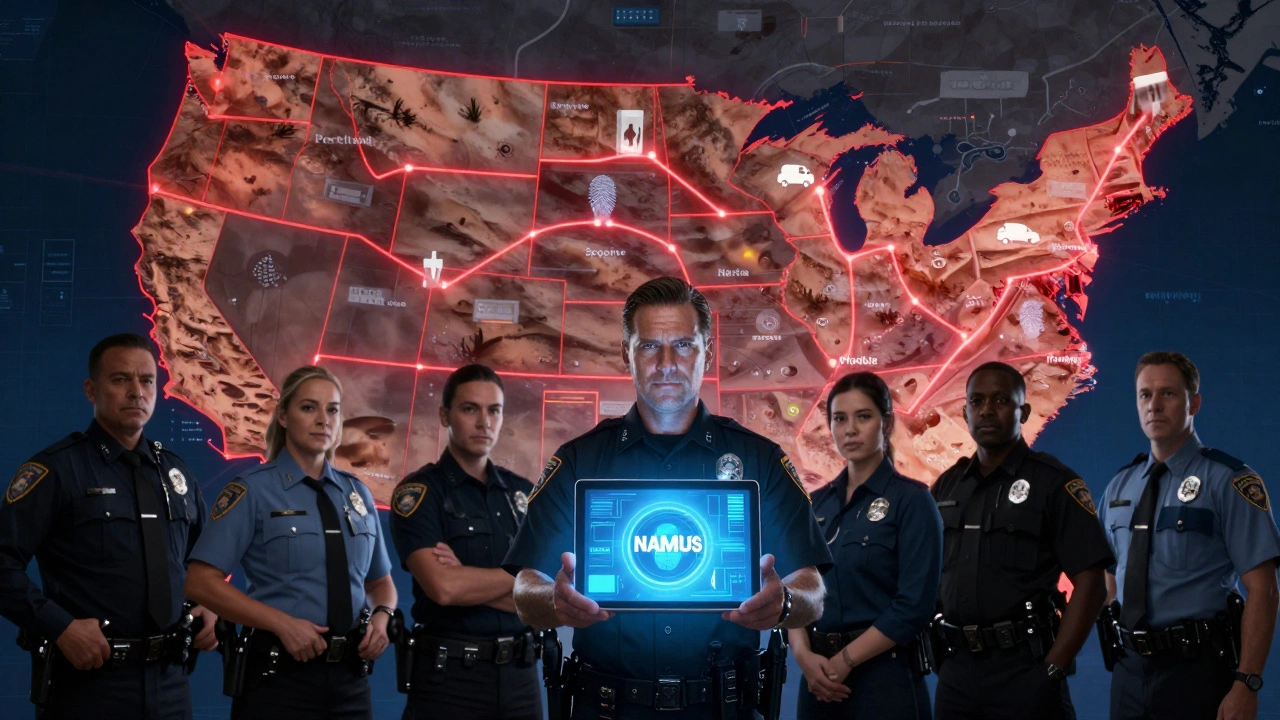
Police departments, sheriff’s offices, tribal agencies, and state bureaus operate on their own systems. Each has its own database, its own protocols, its own way of logging a missing person. If a mother in Portland reports her daughter missing, and the girl is later seen in Spokane, Washington, the Portland PD doesn’t automatically know. Spokane doesn’t know about the Portland case. Neither has access to the other’s evidence. That gap? That’s where people get lost. The National Missing and Unidentified Persons System (NamUs) was built to fix that. It’s not just another database. It’s the only federally funded national system designed specifically to connect missing persons cases across every level of law enforcement-from small tribal units to federal agencies like the FBI and U.S. Marshals. NamUs brings together dental records, fingerprints, clothing descriptions, last known locations, and even photos into one searchable platform. And it’s free. No agency pays a dime to use it.How NamUs Connects the Dots
Imagine you’re a detective in a rural county in Arizona. A 19-year-old woman disappears. Her car is found abandoned near a highway. No witnesses. No leads. You enter her case into NamUs. Two weeks later, a medical examiner in New Mexico reports an unidentified set of remains found in a desert area. The system automatically cross-references dental records and physical descriptors. Bam. A match. The family gets closure. That’s not fiction. That’s NamUs in action. NamUs doesn’t just store data. It actively links cases. If two missing persons reports share the same vehicle description, similar clothing, or even the same tattoo pattern, the system flags it. Investigators get alerts. They don’t have to guess. They don’t have to call 10 different agencies. The system does the heavy lifting. And it’s not just for adults. NamUs has special fields for children, elderly individuals, and people with cognitive impairments. It even tracks cases involving people who may have wandered off due to dementia or mental health crises-something most local systems ignore.The Tribal Gap and Why It Matters
One of the biggest blind spots in missing persons investigations has always been Native American and Alaska Native communities. Tribal lands often fall into legal gray zones. Who investigates? The tribal police? The BIA? The FBI? The state? The answer? All of them-and none of them, unless someone coordinates. That’s why NamUs has a Tribal Liaison-someone from the Navajo Nation-who works directly with tribal law enforcement. This isn’t symbolic. It’s structural. The liaison helps tribes enter cases correctly, explains how to share biometric data securely, and builds trust. Why does trust matter? Because for decades, many Native communities have been failed by federal systems. They’ve seen reports disappear. They’ve seen investigations stall. NamUs is trying to change that by making the system work with tribes, not over them. The Bureau of Indian Affairs’ Missing and Murdered Unit (MMU) also plays a critical role. It doesn’t just collect data-it assigns investigators, coordinates with the FBI’s Behavioral Analysis Units, and even works with the National Center for Missing and Exploited Children. When a case spans tribal, state, and federal lines, the MMU becomes the glue.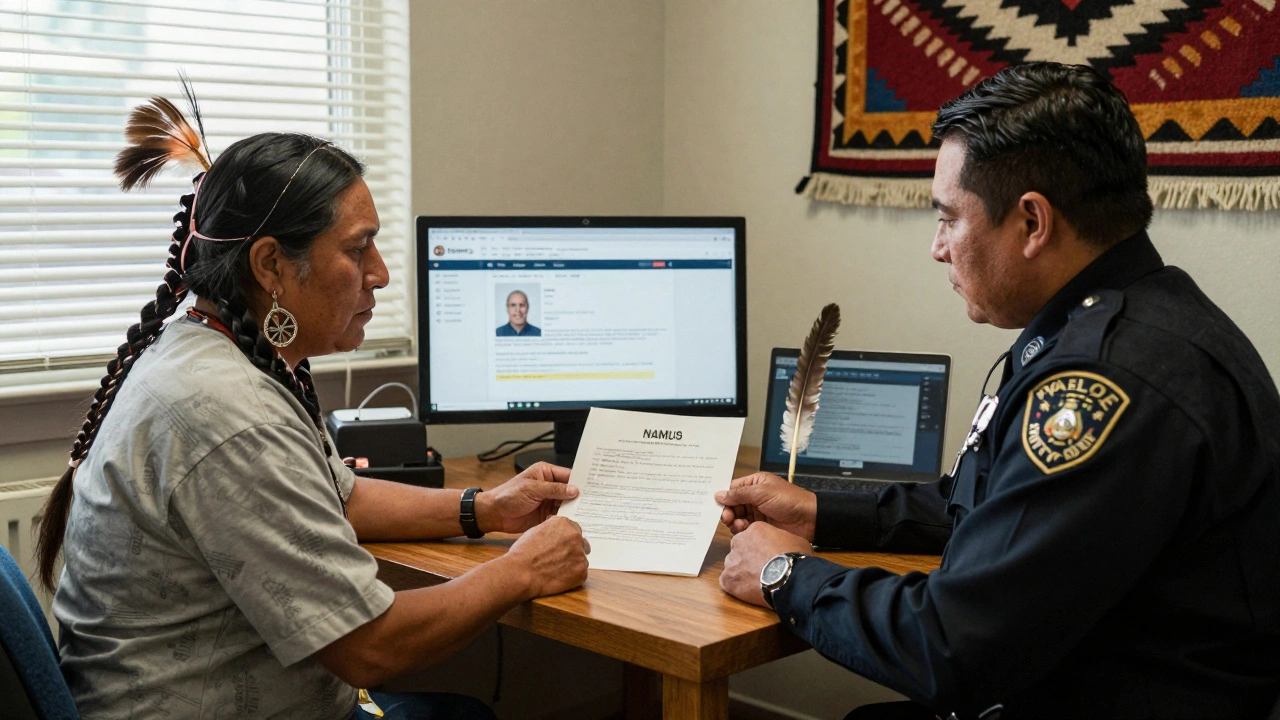
Technology Beyond NamUs
NamUs is the backbone, but it’s not the only tool. Real-time coordination is changing how agencies respond. Flock Safety’s License Plate Recognition (LPR) network is one example. If a missing person’s car is spotted in a neighboring county, LPR cameras automatically alert every participating agency-no matter the jurisdiction. That alert pops up on a patrol car’s dashboard in real time. No waiting. No faxing. No phone calls. Just instant recognition. Rave Link is another. It lets police, fire, and emergency management teams send live alerts, share maps, and coordinate resources during a multi-agency search. Think of it like a group chat for first responders-but with encrypted, verified access so only authorized personnel can join. Then there’s ViCAP, the Violent Criminal Apprehension Program. It doesn’t track missing persons directly. Instead, it tracks patterns. If a series of disappearances share the same modus operandi-same type of vehicle, same time of day, same location pattern-ViCAP connects them. It’s how the FBI found the Golden State Killer: by linking cold cases across decades and states.The Hidden Barriers
Despite all this tech, coordination still fails. Why? First, participation is voluntary in most states. Only 16 states require law enforcement to enter missing persons cases into NamUs. That means in 34 states, it’s up to each agency to decide whether to use it. Some do. Many don’t. Why? Lack of training. Lack of staff. Lack of time. Second, not all agencies have the same tech. A small town in Montana might still file reports on paper. A big city in California might use AI-powered facial recognition. If the data isn’t digitized the same way, NamUs can’t match it. Third, cultural mistrust runs deep. Especially in Indigenous communities. If a tribal member goes missing, their family might not report it. Or they might report it, but fear their case won’t be taken seriously. That’s why NamUs and the MMU don’t just offer tools-they offer training, cultural competency workshops, and even on-the-ground support teams.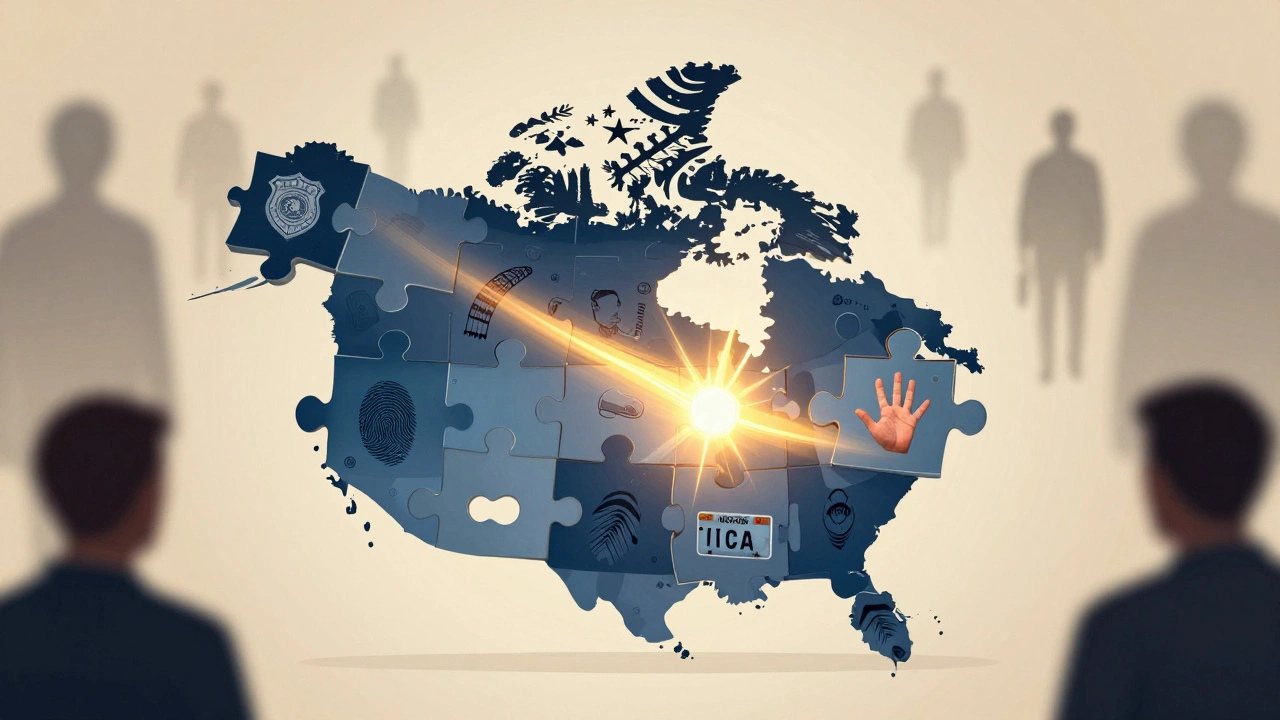
What Families Can Do
If someone you love is missing, don’t wait. Don’t assume the police will handle everything. Here’s what actually works:- Request that the investigating agency enter the case into NamUs immediately. Ask for the case number.
- Provide all photos, medical records, dental records, and recent GPS data from phones or smartwatches.
- Ask if the case has been shared with the Bureau of Indian Affairs MMU if the person is Native American or Alaska Native.
- Encourage local media to publish the case. Many NamUs matches come from public tips.
- Reach out to National Center for Missing & Exploited Children (if under 18) or Missing Persons Advocacy Network for additional resources.
The Future: Better Systems, Better Outcomes
The number of states mandating NamUs use is growing. More agencies are adopting real-time tools like Flock Safety and Rave Link. The Department of Justice is expanding its Missing and Murdered Indigenous Persons (MMIP) Initiative Coordinators to every U.S. Attorney’s Office. That’s progress. But technology alone won’t fix this. Trust will. Training will. Consistent policy will. The goal isn’t just to find people after they disappear. It’s to stop them from vanishing in the first place. That means better data sharing. Better communication. Better systems that work across borders-not despite them.Frequently Asked Questions
How does NamUs differ from local police databases?
NamUs is a national, federally funded system that connects missing persons cases across state, tribal, and federal lines. Local police databases are limited to their own jurisdiction and often don’t share data with others. NamUs allows investigators to search across thousands of cases, match biometric data like dental records and fingerprints, and get expert forensic support-all for free.
Why do some missing persons cases never get solved?
Many cases go unsolved because information never crosses jurisdictional lines. A person might disappear in one county, be seen in another, and end up unidentified in a third. Without systems like NamUs or ViCAP to link these events, each agency works in isolation. Time delays, lack of resources, and poor data entry make it even harder. Cases that aren’t entered into national systems are often lost forever.
Can tribal police enter cases into NamUs?
Yes. NamUs was specifically designed to include tribal law enforcement, with a dedicated Tribal Liaison from the Navajo Nation to help guide the process. Many tribal agencies have historically been excluded from federal systems, but NamUs provides secure, culturally appropriate tools to ensure their cases are tracked and matched with national data.
What role does the FBI play in missing persons cases?
The FBI doesn’t handle every missing person case. But when a case crosses state lines, involves suspected foul play, or involves a child, the FBI can step in. Their Child Abduction Rapid Deployment (CARD) teams provide on-the-ground support, including forensic analysis, mapping tools, and access to national databases. They also work closely with NamUs and the Bureau of Indian Affairs MMU.
Are there free tools families can use to help find a missing person?
Yes. Families should request that law enforcement enter the case into NamUs. They can also contact the National Center for Missing & Exploited Children (NCMEC) if the person is under 18, or the National Missing and Unidentified Persons System’s public portal to upload photos and information. Social media and local media outreach are also powerful tools-but always work with investigators to ensure accuracy and safety.