When a traumatic event happens - a suicide, homicide, or unattended death - the aftermath isn’t just emotional. It’s biological. Blood, bodily fluids, and tissue can seep into walls, floors, and furniture in ways you can’t see. And if you try to clean it up without knowing exactly where the contamination goes, you’re not just risking your health - you’re putting others at risk too. That’s why trauma scene reconstruction isn’t optional. It’s the first, most critical step in every professional biohazard cleanup.
Why Trauma Scene Reconstruction Isn’t Just a Step - It’s the Foundation
You can’t clean what you can’t see. That’s the core truth behind trauma scene reconstruction. Most people think cleanup starts with gloves, mops, and disinfectants. But that’s backwards. Before a single drop of cleaner touches the floor, you need a complete map of the contamination. This isn’t guesswork. It’s science. The process was formalized in 2014 by the IICRC S540 Standard a comprehensive guideline for trauma scene remediation developed by the Institute of Inspection, Cleaning and Restoration Certification. Updated in 2019, it’s now the industry’s bible. Every certified trauma cleanup company in the U.S. follows it. And for good reason: scenes cleaned with reconstruction protocols take 35-40% less time and reduce worker exposure to bloodborne pathogens by 92% compared to reactive cleanup. Think about it this way: if you’re a technician and you miss one spot - a drop of blood soaked into the subfloor, a smear on the back of a closet door - that spot can harbor hepatitis B or HIV for weeks. And when the next person moves in? They’re exposed. Reconstruction prevents that. It turns cleanup from a gamble into a guaranteed outcome.The 6-Phase Reconstruction Process: What Happens Before the Cleaning Starts
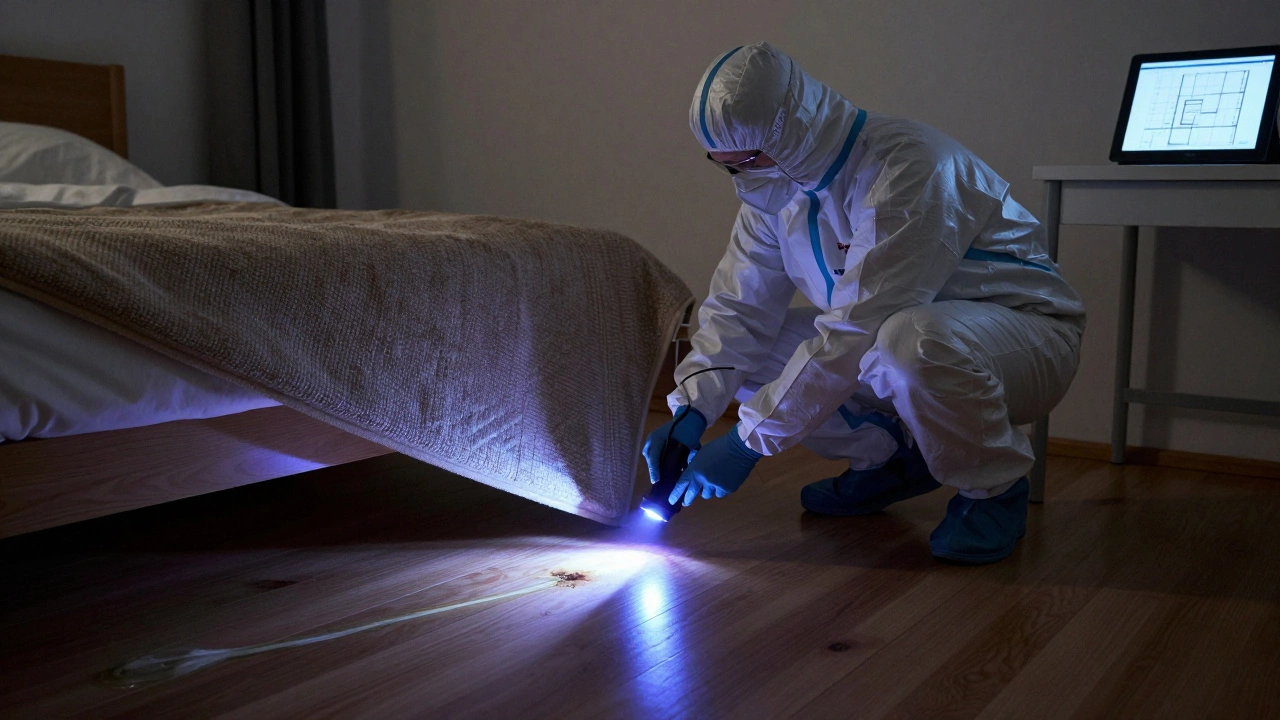
There’s no room for shortcuts. Trauma scene reconstruction follows a strict six-phase process that’s been tested across hundreds of real-world cases.- Initial Scene Assessment - This isn’t a quick walk-through. Technicians arrive with UV lights (365nm wavelength) and digital measuring tools. At this stage, they’re not looking for blood - they’re looking for what blood did. UV light reveals traces invisible to the naked eye, detecting hemoglobin concentrations as low as 0.001%. In one Portland case, a technician found hidden contamination under a carpet pad that had been swept over twice by family members trying to clean it themselves.
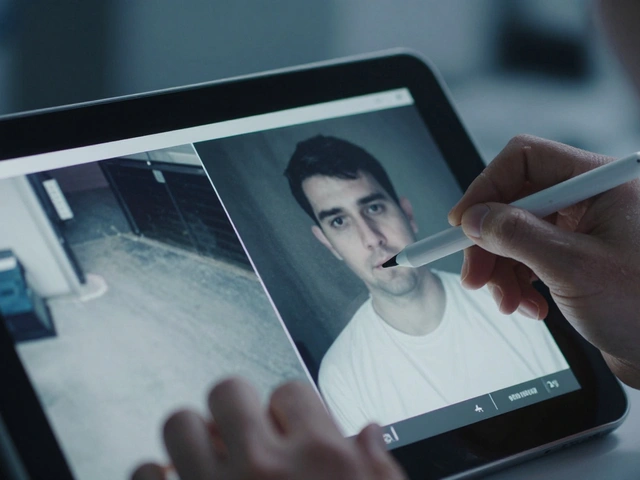
- Documentation and Mapping - Every inch of contamination is mapped. Using apps like magicplan a digital floor plan tool used by 78% of certified trauma technicians in 2023, they create precise floor plans accurate to within half an inch. Photos are taken from every angle - at least 20 per scene - with timestamps and labels. This isn’t for show. It’s for accountability.
- Contamination Classification - Not all biohazards are the same. OSHA classifies them into categories. Here, technicians identify Category 3 materials: blood, vomit, feces, tissue. They note which surfaces are porous (drywall, wood, insulation) and how deep contamination likely penetrated. Studies show blood can soak up to 3 inches into untreated wood. That means a single drop on the floor might mean removing an entire section of subfloor.
- Equipment and Protocol Planning - Based on the map, they decide what PPE is needed (minimum Level C per EPA guidelines), which EPA-registered disinfectants to use (like Cavicide HB an EPA-registered disinfectant with proven virucidal claims against HIV, HBV, and HCV), and how to handle waste. They also calculate square footage - most residential scenes range from 150 to 300 square feet of affected area. This determines labor, materials, and cost.
- Safety Officer Review - Before any work begins, the plan is reviewed by an on-site safety officer. This isn’t a formality. In 2022, OSHA found 73% of violations in trauma cleanup cases came from skipped or incomplete planning. The officer checks: Are all vectors accounted for? Is the disinfectant approved? Is the waste disposal plan compliant?
- Client Communication - Families don’t need to understand the science, but they need to understand the process. Providing a simple visual map - showing exactly where contamination was found and why certain materials had to be removed - increases client satisfaction from 67% to 94%, according to National Association of Realtors data. One Portland homeowner told us, “Seeing the map helped me understand why they had to tear out the whole bedroom floor. I thought they were overcharging. Now I know they saved me from a health nightmare.”
What Happens If You Skip Reconstruction?
Some companies try to cut corners. They show up, spray disinfectant, haul away obvious debris, and call it done. The results? Catastrophic. - A 2021 case in Spokane, WA: A family moved into a home after a suicide cleanup. Three months later, the new tenant got hepatitis B. Testing traced it to blood trapped under the flooring - missed because no reconstruction was done. - In 2022, an independent contractor in Ohio was fined $18,000 after OSHA found he failed to document contamination on a ceiling joist. The next occupant developed a respiratory infection from fungal growth in lingering bodily fluids. The cost of skipping reconstruction isn’t just financial - it’s human. And it’s avoidable.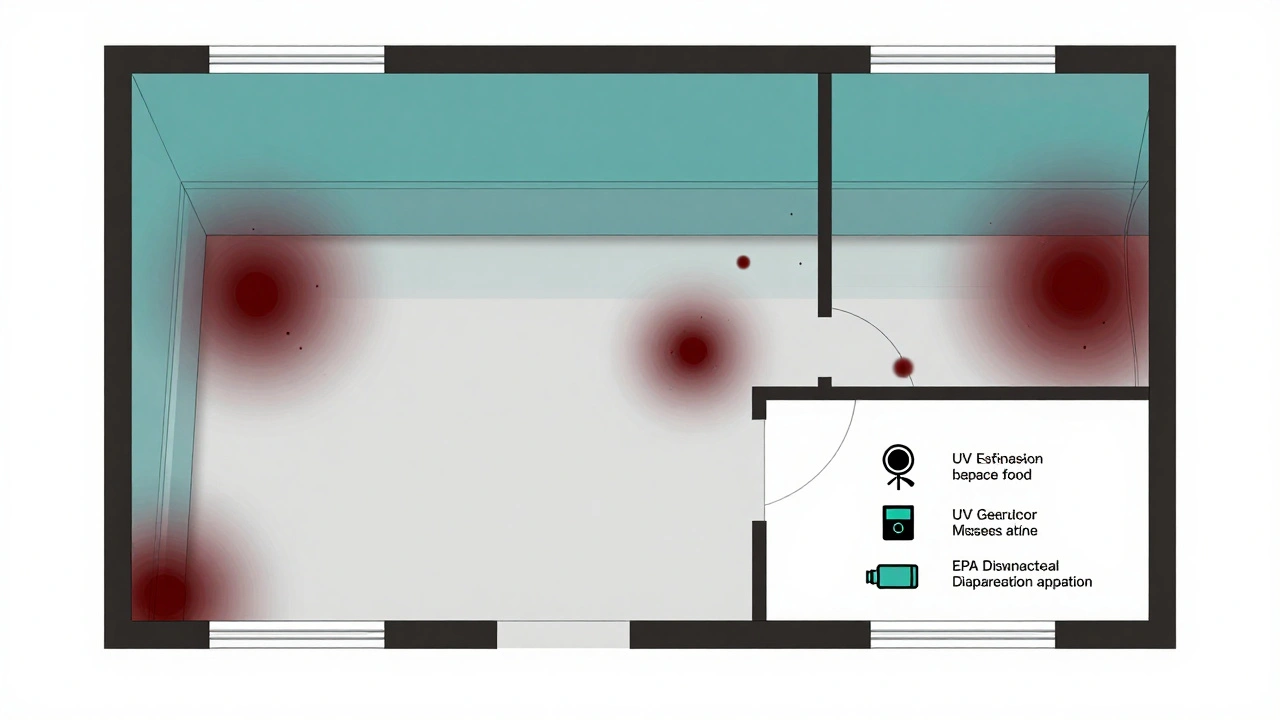
Tools of the Trade: What Professionals Use
This isn’t a job for a broom and bleach. It requires specialized tools:- UV Lighting (365nm) - Detects hidden biological residues. Used on every surface, including ceilings and behind baseboards.
- Digital Floor Plan Software - Tools like magicplan or Floorplanner create accurate 2D/3D maps. 73% of top firms now use AI-assisted mapping to predict contamination spread.
- ATP Meters - These devices measure biological residue after cleaning. A reading above 100 RLU means contamination remains. Used to verify success.
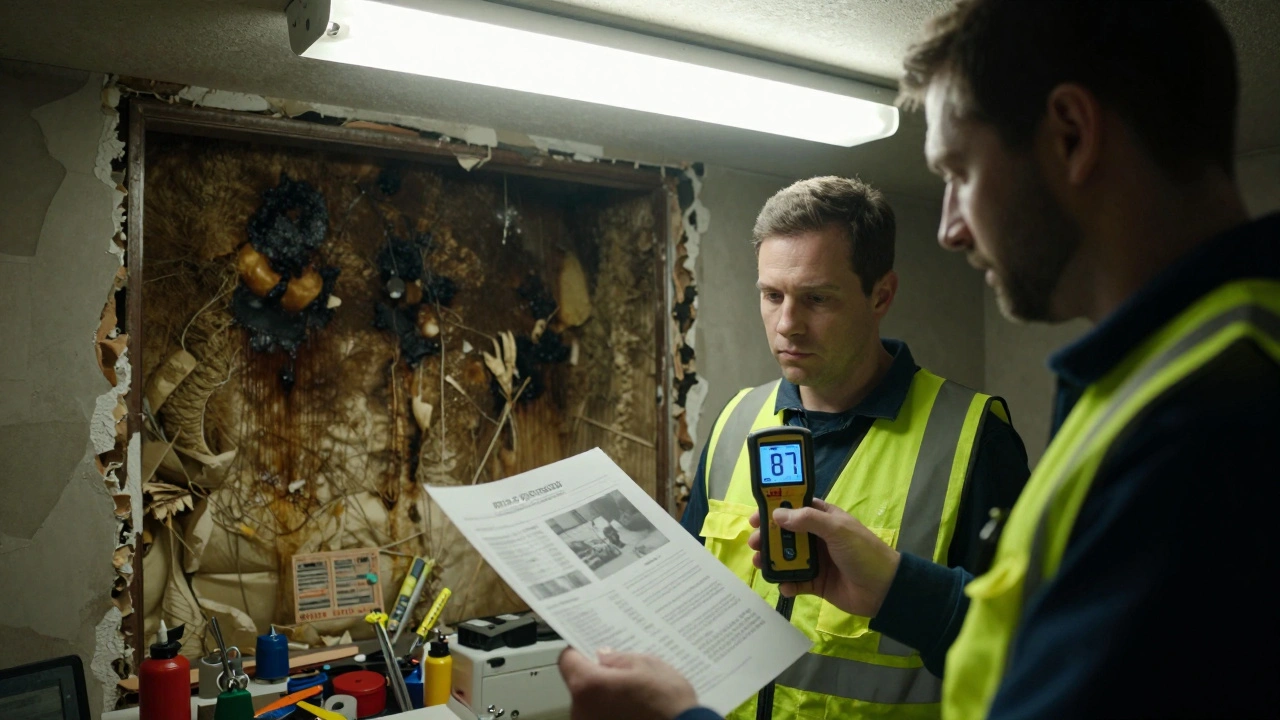
- Moisture Meters - Detect hidden dampness in walls and subfloors. Blood carries moisture. If the meter shows moisture beyond the surface, contamination is deeper than it looks.
- Disinfectant Logs - Every product used must be recorded with its EPA registration number. This isn’t paperwork - it’s legal proof of compliance.
The Hidden Cost of Not Doing It Right
The biggest myth? That reconstruction adds cost. It doesn’t. It saves money. A 2023 study by the Journal of Environmental Health Sciences a peer-reviewed publication analyzing 89 trauma scenes compared 44 scenes with reconstruction to 45 without. The results:| Factor | With Reconstruction | Without Reconstruction |
|---|---|---|
| Average Cleanup Time | 4.7 hours | 8.2 hours |
| Re-work Rate | 3% | 22% |
| Occupational Exposure Incidents | 8% of cases | 92% of cases |
| Client Satisfaction | 94% | 67% |
| Insurance Claim Approval Rate | 98% | 61% |
Who’s Doing It Right - And Who’s Falling Behind
The gap between certified companies and independent contractors is widening. In 2023:- 98% of certified firms with 5+ employees used full reconstruction.
- Only 42% of independent contractors did.