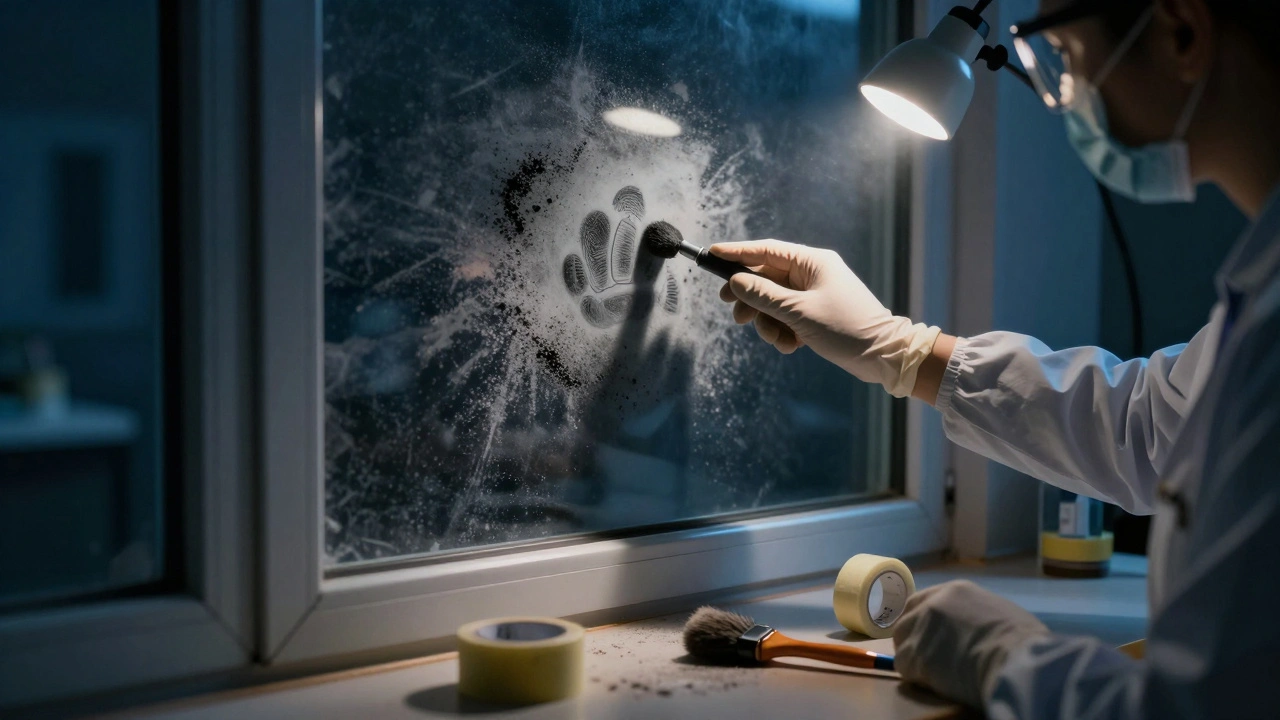
When you hear the word fingerprint, you probably picture a dark, smudged print lifted off a glass door with tape. But not all fingerprints are created equal. In real forensic work, there are two main types-latent and patent-and they’re as different as a hidden clue and a bloody handprint on a wall. One is invisible until you know how to find it. The other screams for attention. Understanding the difference isn’t just academic-it changes how investigations unfold.
What Are Latent Fingerprints?
Latent fingerprints are the silent players in crime scene investigations. They’re not painted on, smeared with ink, or soaked in blood. They’re made of sweat and oil-natural secretions from your skin. When your fingers touch something, a tiny amount of this mixture transfers. That’s it. No visible trace. Not to the naked eye, anyway. These prints show up on smooth surfaces: glass, metal, plastic, polished wood. They’re the reason forensic teams dust doorknobs, window frames, and weapon handles. The ridges in your skin leave behind a pattern so fine, each ridge is only about 0.5 to 2.0 millimeters wide. The whole print is often partial, smudged, or incomplete. That’s why developing them takes time, skill, and the right tools. Forensic techs use three main methods to reveal latent prints:- Powder dusting-black, aluminum, or magnetic powder sticks to the oils. It’s the classic method you see on TV, but it only works on non-porous surfaces.
- Cyanoacrylate fuming-super glue vapor reacts with the print residue, forming a white plastic layer over the ridges. It’s used on items like guns, plastic bags, or electronics.
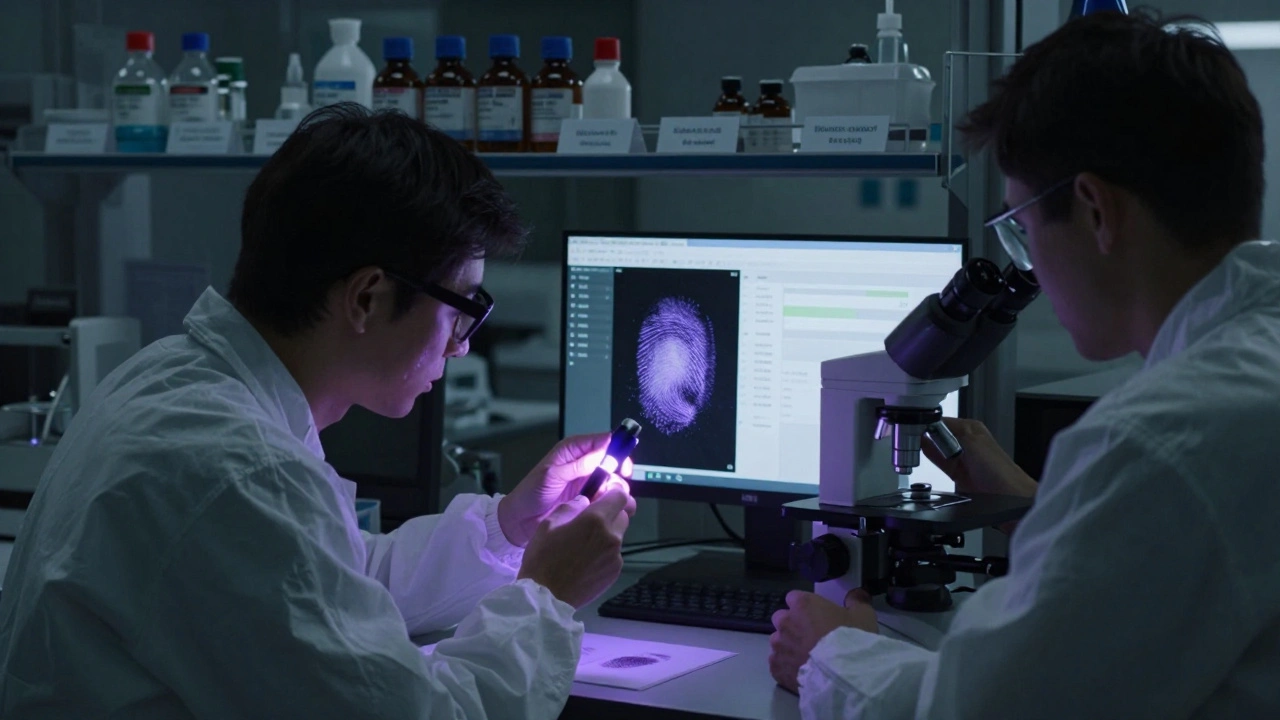
- Ninhydrin or fluorescent chemicals-these react with amino acids in sweat, turning prints purple or glowing under UV light. Great for paper, cardboard, or fabric.
What Are Patent Prints?
Patent prints are the opposite. They’re visible right away. No powder. No fuming. No UV light. If you’ve ever seen a bloody handprint on a wall, a greasy smudge on a car door, or an inked thumbprint on a check-that’s a patent print. They form when fingers are coated with something thick enough to leave a clear impression: blood, ink, grease, dirt, paint, or even chocolate. These substances don’t just transfer-they pool, smear, and stick. That’s why patent prints are often easier to photograph than develop. Unlike latent prints, patent prints don’t need enhancement. A high-resolution camera (at least 500 dpi) and good lighting are all you need. But that doesn’t mean they’re simple to work with. Blood prints, for example, can smear under pressure. Grease can spread across surfaces. Ink can bleed into paper fibers. And if the person who left the print wiped it away after the fact, you might only get part of it. Patent prints are also more likely to be contaminated. Because they’re so obvious, they’re often touched, brushed, or accidentally disturbed by first responders or bystanders. Studies show contamination rates for patent prints run between 15-20%, compared to 5-10% for properly handled latent prints.Which One Is More Common?
Here’s the reality: latent fingerprints make up 90-95% of all fingerprint evidence collected at crime scenes. That’s not a guess-it’s based on decades of field data from police departments and forensic labs across the U.S. and Europe. Why? Because most crimes involve casual contact. A burglar touches a window frame. A suspect leans on a counter. A weapon is handled without gloves. These aren’t intentional acts meant to leave a mark. They’re unconscious, momentary touches. And that’s where latent prints come from. Patent prints? They’re rare. Maybe 5-10% of cases. They usually show up in violent crimes: stabbings, shootings, assaults where blood is involved. Or in cases where someone deliberately presses a greasy or inked finger onto something-like signing a fake document or wiping a surface with a dirty hand. So if you walk into a crime scene, odds are you’ll be hunting for latent prints. Patent prints? You’ll notice them immediately. But they’re not the majority.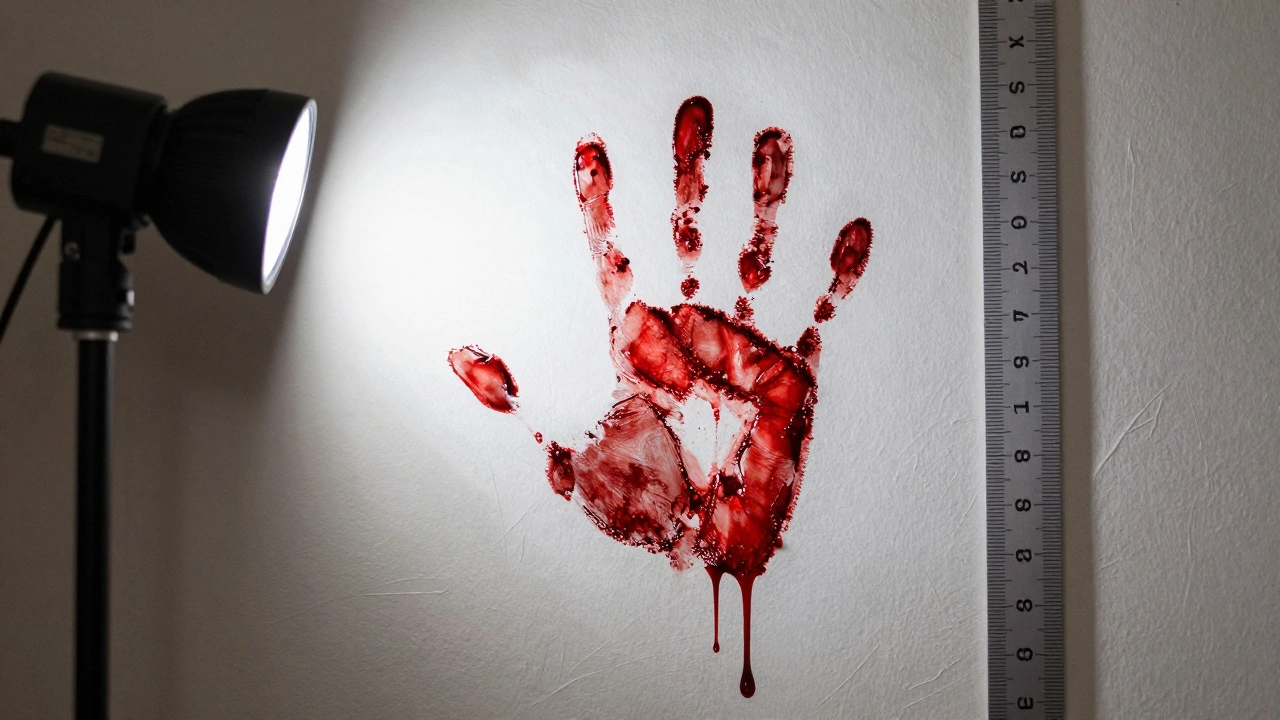
Which One Holds Up Better in Court?
You might think the clearer, more obvious print would be stronger evidence. But that’s not always true. Latent prints, when properly developed and documented, have a 92% admissibility rate in court. Why? Because they’re harder to fake. They’re subtle. They require expertise to detect and lift. That means the chain of custody is tighter. The process is more controlled. And courts trust that process. Patent prints? They’re admissible too. But they’re more vulnerable to challenge. If a defense attorney can argue the print was smudged during collection, or that the substance wasn’t properly identified (was it blood or paint?), the evidence can be weakened. Plus, patent prints are often taken from surfaces that aren’t ideal-like a stained shirt or a greasy dashboard-where ridge detail is blurry. There’s another layer: accuracy. The FBI’s Next Generation Identification system shows that latent print matching, when assisted by AI, achieves 95% preliminary accuracy. Patent prints, while visually clear, can be distorted by the very substance that makes them visible. NIST found that patent prints can lose 15-20% of their identification accuracy due to smearing or uneven transfer. And here’s the kicker: IAI certification requires latent print examiners to pass proficiency tests at 92% accuracy. For patent prints? Only 85%. The bar is higher because the work is harder.What Happens When Things Go Wrong?
No system is perfect. The 2004 Madrid train bombing case is still one of the most infamous examples. The FBI matched a latent print found on a bag to Brandon Mayfield, an American lawyer. Four separate analysts agreed. It was wrong. The print actually belonged to a man in Spain. The error came from a partial, low-quality print and confirmation bias. That case shook the forensic world. It led to reforms, better training, and more transparency. But it also exposed a truth: fingerprint analysis, whether latent or patent, isn’t 100% foolproof. Even with advanced tools, human judgment still plays a role. And that’s why experts like Professor Simon Cole argue that fingerprints shouldn’t be treated like DNA. They’re powerful-but not infallible.