When a biohazard event happens - whether it's a violent crime, unattended death, or a large-scale spill of bodily fluids - the cleanup doesn't stop at the visible mess. The real danger often hides in plain sight: inside your HVAC system. Air ducts, vents, and filters can become breeding grounds for pathogens, spreading contamination far beyond the original scene. Without proper HVAC decontamination, you're not just cleaning a room - you're risking the health of everyone who walks through the door next.
Why HVAC Systems Are a Hidden Threat
HVAC systems are designed to move air. That’s their job. But when a biohazard occurs, that airflow becomes a delivery system. Blood, saliva, respiratory droplets, and even microscopic particles from contaminated sharps can get sucked into return vents, carried through ductwork, and redistributed into bedrooms, kitchens, and offices. Mold spores from damp ducts can multiply. Viruses like HIV or Hepatitis B can survive on surfaces for days. And if the system keeps running during cleanup? You’re essentially using your own ventilation to spread the contamination.Studies show that in residential and commercial buildings where HVAC systems weren’t properly isolated during biohazard cleanup, secondary contamination occurred in up to 40% of adjacent rooms. That’s not a small risk. That’s a public health failure waiting to happen.
Step 1: Shut It Down and Isolate
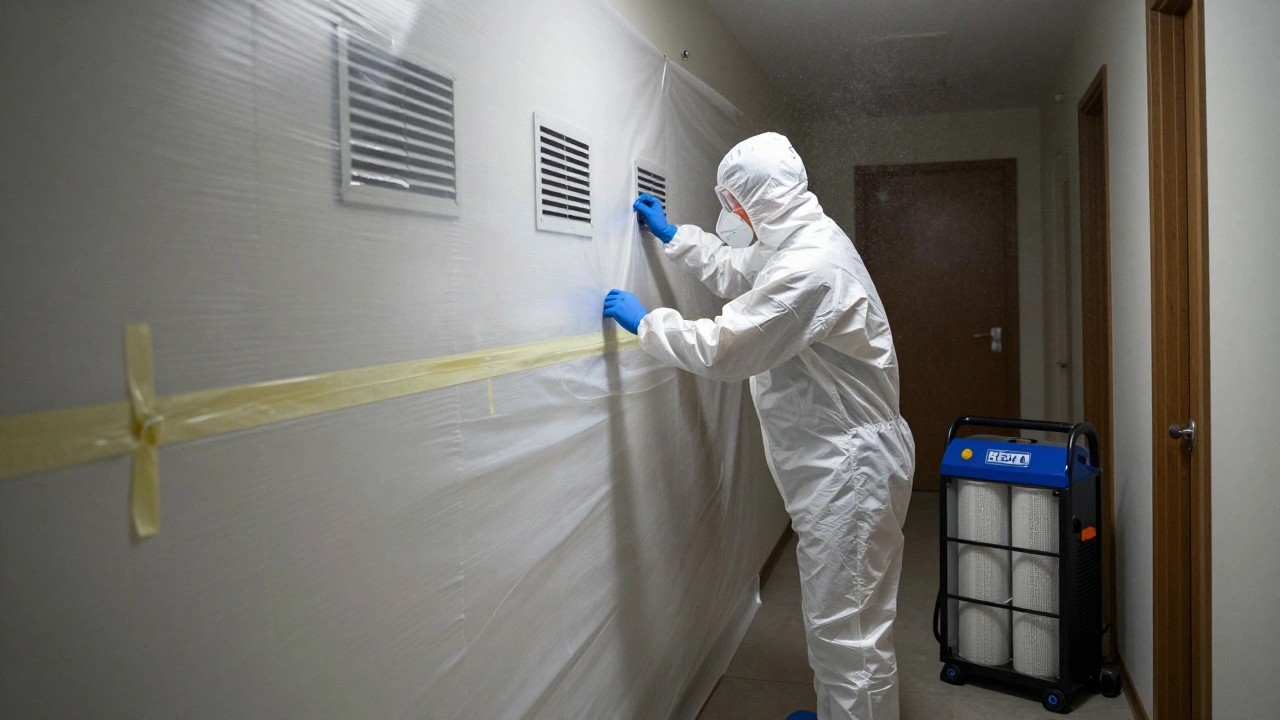
The first rule of biohazard remediation? Stop the airflow. Right away. No exceptions.Technicians immediately turn off the HVAC system at the main breaker. Then, they seal off all supply and return vents with 6-mil polyethylene sheeting - thick enough to hold up under pressure and prevent leaks. This isn’t just tape and plastic. It’s a full containment barrier, sealed with tape and weighted at the edges. In high-risk areas like bathrooms or rooms with heavy contamination, negative air pressure machines are installed. These units pull air in through HEPA filters and vent it outside, creating a vacuum effect that keeps airborne particles from escaping the work zone.
Think of it like this: if you’re cleaning up a spill in a kitchen, you don’t open the windows to let the smell out - you close them. With biohazards, you’re not dealing with smell. You’re dealing with live pathogens. Isolation isn’t optional. It’s the foundation of safety.
Step 2: Replace Filters - Not Clean, Not Rinse, Not Reuse
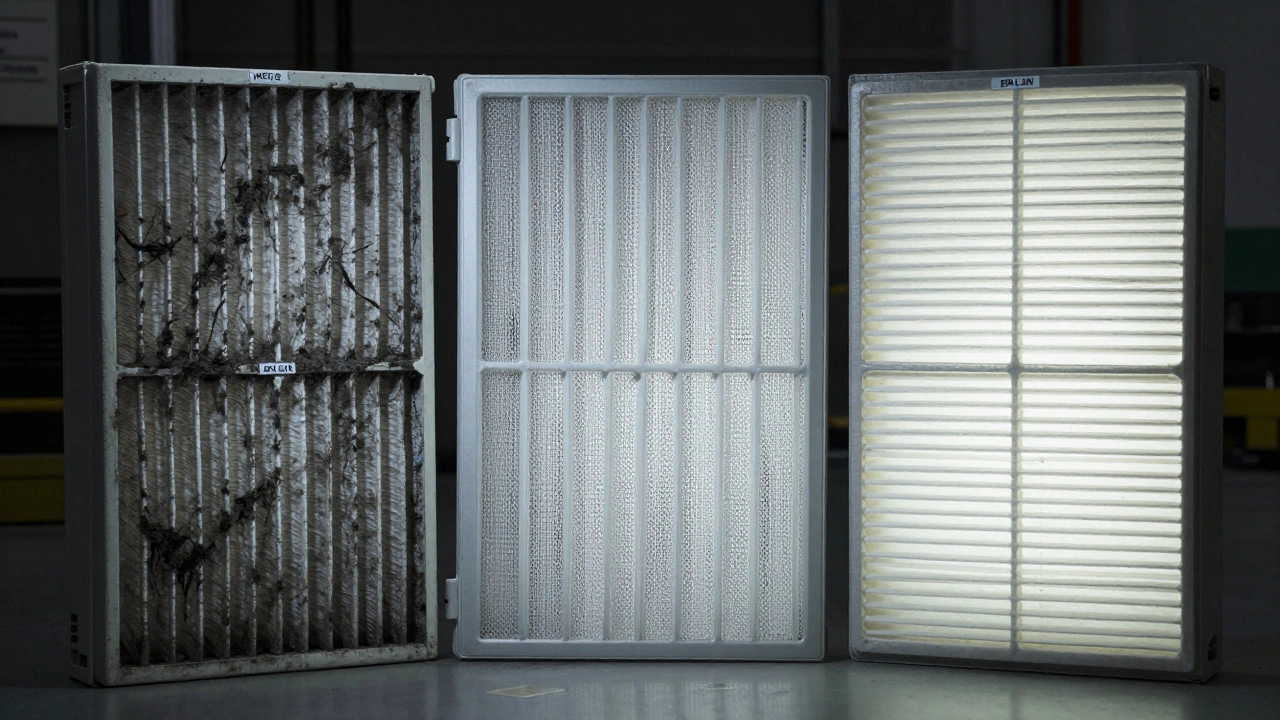
Filters are not something you vacuum off and put back in. They’re single-use exposure points. Once contaminated, they become hazardous waste.Standard MERV-8 filters? Gone. Even MERV-11? Gone. After a biohazard event, you need HEPA-rated filters - or at minimum, MERV-13. These filters capture 99.97% of particles as small as 0.3 microns, including viruses, bacteria, and mold spores. MERV-13 filters are now the industry standard for healthcare and correctional facilities, and they should be the minimum for any building that’s experienced a biohazard.
Here’s what you’re looking for on the label: “HEPA” or “MERV 13 or higher.” If it doesn’t say that, don’t install it. And never try to clean a filter. You can’t disinfect a filter. You can only replace it. Documentation matters too - every filter replacement must be logged with the date, type, and technician’s signature. Insurance companies and health inspectors will ask for it.
Step 3: Clean the Ductwork - No Exceptions
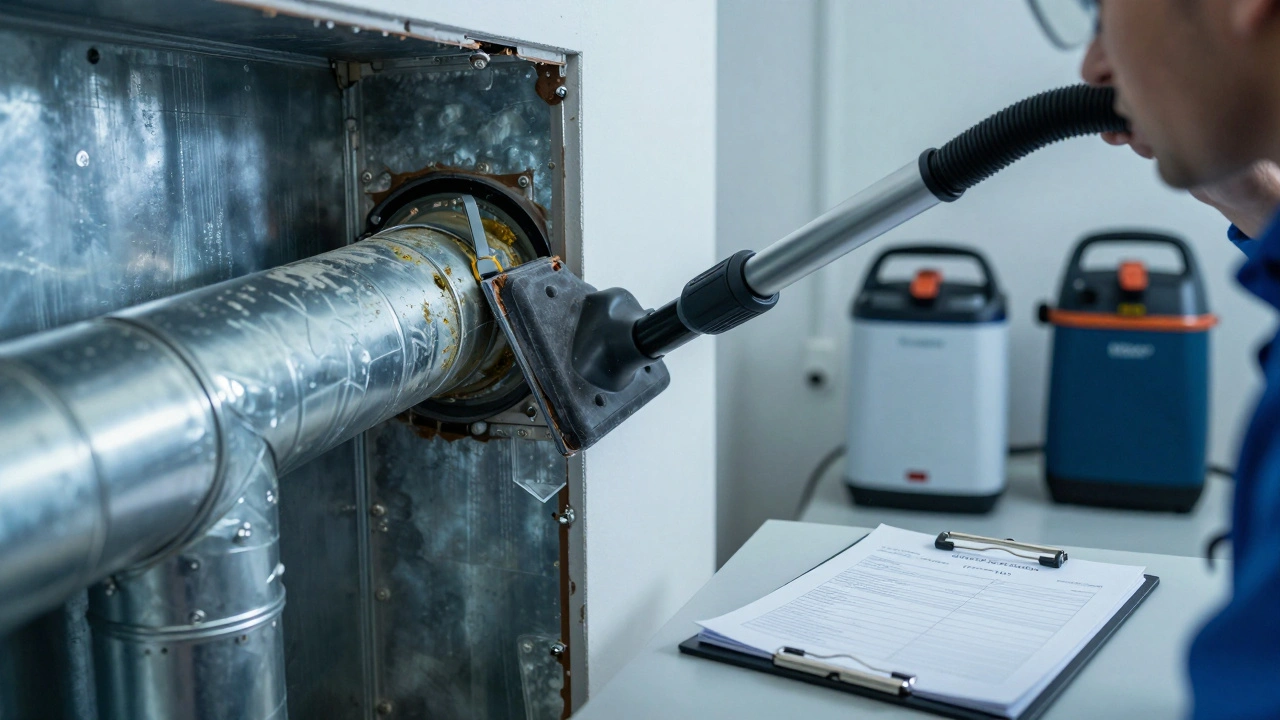
You can’t just change the filter and call it done. Ductwork is a maze of hidden surfaces where biohazards cling to dust, grease, and moisture. A standard cleaning won’t cut it. You need professional duct cleaning using HEPA-filter vacuums and antimicrobial treatments.Technicians use specialized brushes and air whips to dislodge debris from metal ducts. Then, they vacuum it all out with HEPA-filtered equipment - the same kind used in hospitals after surgery. After physical removal, they apply an EPA-registered hospital disinfectant approved for bloodborne pathogens. Products like those on EPA’s List N or List Q are required. These aren’t your store-bought Lysol. These are disinfectants proven to kill HIV, Hepatitis B, MRSA, and C. diff - with dwell times of 5 to 10 minutes. That means the surface must stay wet for that long. No rushing. No shortcuts.
For flexible ducts (common in homes), replacement is often the only safe option. They can’t be properly cleaned. If they’re contaminated, they go in the biohazard waste bin.
Step 4: Use Air Scrubbers and Monitor Air Quality
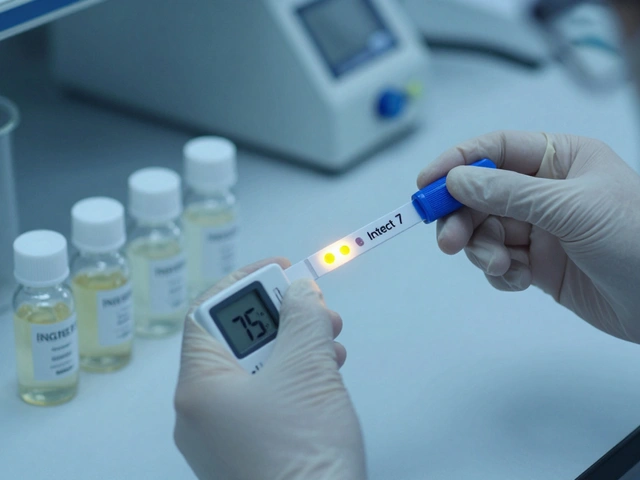
Portable HEPA air scrubbers are the unsung heroes of biohazard cleanup. These machines run continuously during remediation, pulling air through multiple filters and releasing clean air back into the space. They’re placed near vents and high-traffic areas to capture any airborne particles before they spread.But scrubbers alone aren’t enough. You need verification. After cleanup, air sampling is performed using surface swabs and air impaction collectors. Labs test for ATP (adenosine triphosphate), a biological marker that indicates organic residue. High ATP levels mean the surface isn’t clean - even if it looks spotless. Some companies also use PCR testing to detect specific pathogens like Hepatitis B DNA.
Clearance isn’t just a visual check. It’s a data-driven process. A final report must include:
- ATP test results
- Before-and-after air quality readings
- Disinfectant product names, lot numbers, and dwell times
- Filter replacement logs
- Technician certifications
- Sign-off from a certified supervisor
This isn’t paperwork for the sake of bureaucracy. This is your legal and medical protection. If someone gets sick months later because of residual contamination, this documentation is what keeps you from being held liable.
Regulations You Can’t Ignore
OSHA requires employers and remediation teams to follow the Bloodborne Pathogens Standard (29 CFR 1910.1030). That means:- Full PPE: gloves, masks, eye protection, coveralls
- Training on exposure control plans
- Proper disposal of contaminated materials
- Medical follow-up for exposed workers
The CDC provides guidance on disinfectant selection and dwell times. The EPA regulates which products can legally claim to kill bloodborne pathogens. And if you’re in a multi-unit building, local health departments may require permits before reoccupancy.
Ignoring these rules doesn’t just put people at risk - it opens you up to lawsuits, fines, and insurance denial. In 2024, a property manager in Oregon was held personally liable after failing to replace HVAC filters after a suicide. The tenant who moved in next developed severe respiratory illness. The court ruled the cleanup was “grossly negligent.”
Prevention Is the Best Cleanup
The best way to handle biohazard contamination? Don’t let it get to the HVAC system in the first place.- Upgrade filters to MERV-13 in all common-area systems - not just after an incident, but as routine maintenance.
- Install UV-C germicidal lights inside ductwork. These kill airborne pathogens as air passes through.
- Keep humidity below 50%. Mold thrives in damp ducts. Dehumidifiers help.
- Use air purifiers with HEPA filters in high-risk areas like bedrooms and bathrooms.
- Inspect ducts annually. Look for dust buildup, moisture stains, or rodent droppings.
A 120-unit HOA in Portland saw a 60% drop in respiratory complaints after switching to MERV-13 filters and quarterly inspections. That’s not magic. That’s science.
What Happens If You Skip HVAC Decontamination?
People think, “It’s just a filter. I’ll change it later.” But later isn’t safe.Without proper decontamination:
- Pathogens linger for weeks - even months - in ducts.
- Children, elderly, and immunocompromised people are at highest risk.
- Mold can grow inside ducts, leading to chronic allergies or asthma attacks.
- Insurance claims may be denied if contamination is found to be preventable.
- Property value plummets. Buyers walk away from homes with a biohazard history - even if cleaned.
There’s no such thing as “good enough” when it comes to biohazard cleanup. If the HVAC system was exposed, it’s part of the contamination. And it must be treated like it.
Final Checklist: Did You Do It Right?
Before allowing anyone back into the space, ask yourself:- Was the HVAC system shut off before cleanup began?
- Were all vents sealed with 6-mil poly sheeting?
- Were HEPA or MERV-13 filters installed - and documented?
- Was ductwork professionally cleaned or replaced?
- Were air scrubbers used during remediation?
- Was ATP or lab testing performed after cleanup?
- Is there a signed clearance report with dates, names, and product details?
If you answered “no” to any of these, the job isn’t done. And the risk remains.
Can I clean the HVAC system myself after a biohazard event?
No. DIY cleanup of HVAC systems after a biohazard is extremely dangerous and violates OSHA and CDC guidelines. Biohazard materials like blood, bodily fluids, and pathogens require trained professionals with PPE, HEPA equipment, and EPA-registered disinfectants. Attempting to clean ducts or replace filters without proper training risks exposure to infectious agents and can spread contamination further. Always hire a certified biohazard remediation company.
How long does HVAC decontamination take?
It depends on the severity. For a small incident like a single blood spill, expect 1-2 days: isolation, filter replacement, duct cleaning, and air testing. For larger events - like unattended deaths or violent incidents - the process can take 3-7 days. Air scrubbers may run continuously for 48 hours, and clearance testing requires lab processing time (usually 24-72 hours). Never rush the process. Safety is not negotiable.
What type of filter should I use after a biohazard?
Use HEPA filters if your system supports them. If not, install MERV-13 or higher. MERV-13 captures 99% of airborne particles, including viruses and mold spores. Avoid MERV-8 or lower - they’re designed for dust, not pathogens. Always check your HVAC manual to ensure the filter size and rating are compatible with your system. Installing the wrong filter can damage your unit or reduce airflow.
Do I need to replace ductwork?
It depends. Metal ducts can be cleaned and disinfected. Flexible ducts (often made of plastic-lined fabric) are porous and can’t be fully sanitized. If they were exposed to bodily fluids, mold, or biohazard debris, replacement is the only safe option. Professionals will inspect ducts with cameras and recommend replacement if there’s visible residue, moisture, or odor. Don’t assume ducts are fine just because they look clean.
Is UV light in HVAC systems worth it?
Yes - especially if you’ve had a biohazard event or live in a high-risk environment. UV-C lights installed inside ductwork kill airborne bacteria and viruses as air passes by. They don’t replace filters or cleaning, but they add a critical layer of protection. Many hospitals and correctional facilities use them. Residential systems are now affordable and easy to install. Look for units certified by UL or IEC standards.