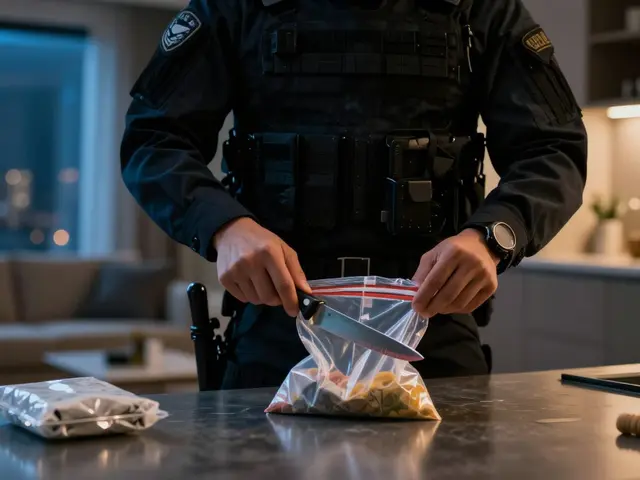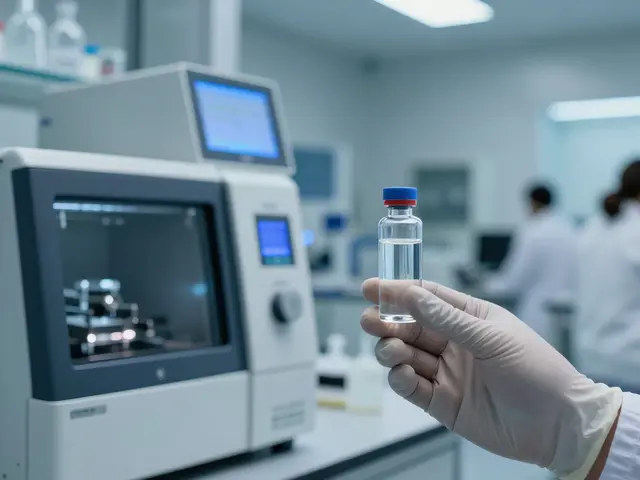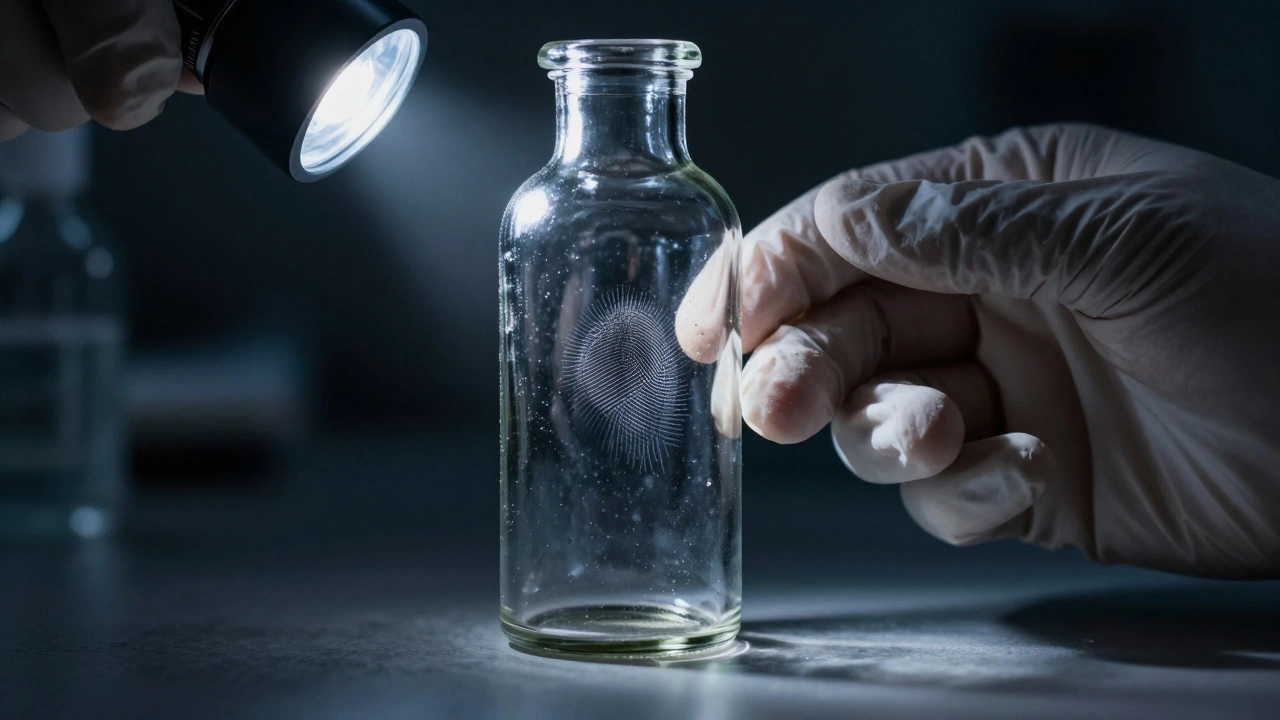
When we talk about Latent Fingerprints is invisible impressions left on a surface by the oils, sweat, and amino acids from human skin. Because these residues vary wildly from person to person and surface to surface, a single-step approach often fails. Sequential processing allows examiners to target different components of the print-like lipids, proteins, or salts-in a specific order that maximizes recovery.
The Logic of the Sequence: Why Order Matters
If you use a reagent that permanently binds to a surface and blocks pores, you might kill the chance of recovering DNA or using a more sensitive chemical later. The golden rule of sequential processing is to move from the least destructive and most specific tests to the most aggressive and general ones. You want to capture the volatile or fragile components before they are washed away by harsher solvents.
For instance, starting with a physical method like powder or a mild chemical vapor often preserves the biological integrity of the print. If you jump straight to a strong acid or a permanent stain, you might get a visual image, but you've effectively "baked" the evidence, making it impossible to perform a genetic profile. This strategic layering ensures that the evidence provides as much data as possible-both the visual ridge patterns and the biological markers.
Breaking Down the Chemical Toolkit
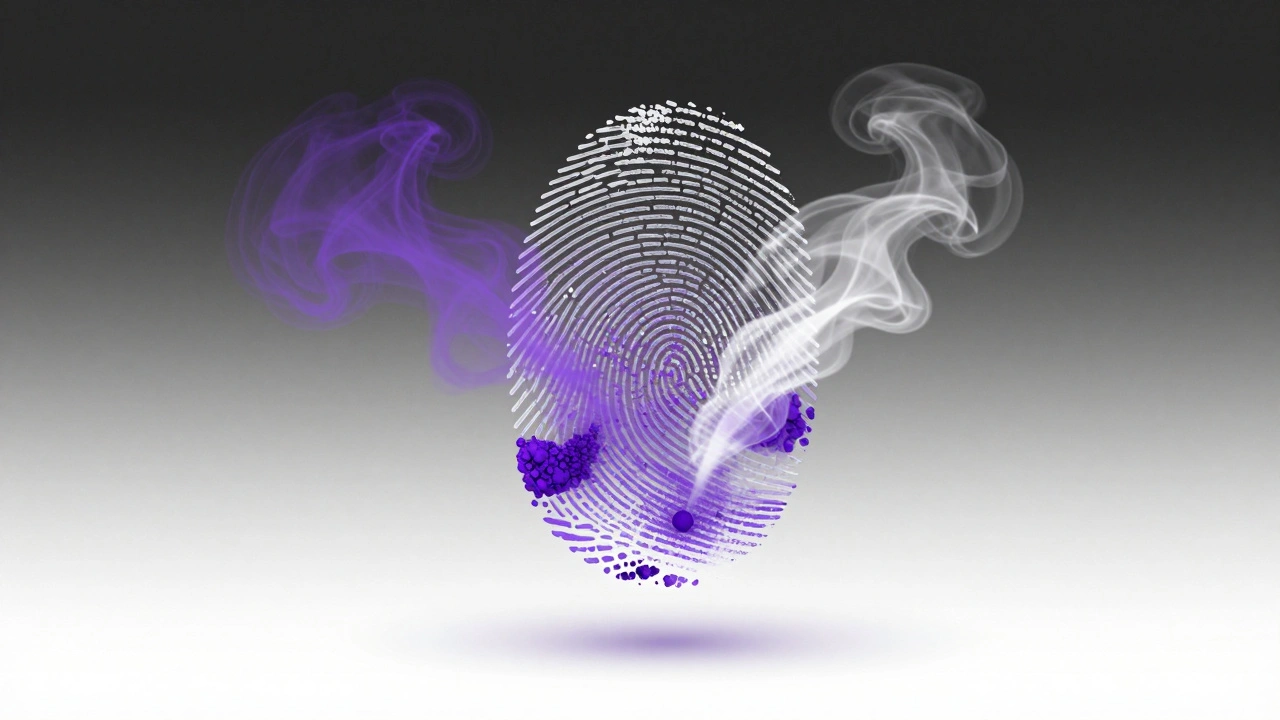
To understand how these strategies work, you have to look at what the reagents actually target. Not all latent prints are created equal. Some are "eccrine" (mostly sweat and salt), while others are "sebaceous" (mostly oils). Ninhydrin is a chemical used to detect amino acids in latent fingerprints, turning them a purple color. It's a classic first-choice for porous surfaces like paper.
Then there's Cyanoacrylate Fuming, more commonly known as superglue fuming. This process uses heated ethyl cyanoacrylate vapors to polymerize on the moisture and fats of a fingerprint, creating a hard, white plastic shell over the ridge detail. While great for non-porous surfaces like plastic or metal, it's a permanent change. Once the glue sets, it can act as a physical barrier for subsequent chemical treatments.
| Reagent | Target Substance | Surface Type | Destructive Level |
|---|---|---|---|
| Ninhydrin | Amino Acids | Porous (Paper) | Low |
| Cyanoacrylate | Water/Lipids | Non-Porous | Medium (Permanent) |
| Silver Nitrate | Chlorides/Salts | Various | High |
| Amido Black | Proteins | Non-Porous | Medium |
Balancing Visual Recovery and DNA Analysis
One of the biggest tensions in the lab is between the fingerprint examiner and the DNA analyst. The fingerprint examiner wants a high-contrast image of the ridges. The DNA analyst wants the biological cells intact. Sequential processing is the peace treaty between these two needs. By using DFNI (Detection of Fingerprints using Ninhydrin and Iodine), labs can get a visual hit while keeping the DNA usable for STR (Short Tandem Repeat) analysis.
If an examiner uses a reagent that involves high heat or strong oxidative chemicals too early, they might fragment the DNA. Modern strategies now favor "DNA-friendly" sequences. This often involves using vacuum metal deposition or specific fluorescent dyes that don't degrade the cellular material. The goal is to ensure that if the print is identified, the DNA can confirm it, or if the print is too smudged to identify, the DNA can still provide a lead.
Developing a Custom Strategy for Complex Evidence
No two pieces of evidence are the same. A bloody fingerprint on a painted wall requires a different sequence than a greasy print on a soda can. When building a strategy, forensic experts follow a decision tree. First, they assess the substrate (the material the print is on). Then they consider the environmental exposure-has it been in the rain? Is it 10 years old?
For a complex case, a sequence might look like this:
- Visual inspection under multiple light wavelengths using ALS (Alternative Light Sources to find where the prints are without touching them.
- Application of a non-destructive powder or vapor to capture the basic ridge architecture.
- Targeted chemical staining (like Ninhydrin) to enhance the detail.
- Final "last resort" chemicals that may destroy the print but provide a final chance of detection.
- Swabbing for DNA recovery after the visual evidence has been documented.
Avoiding Common Pitfalls in the Lab
The most common mistake in sequential processing is "over-processing." This happens when an examiner keeps adding chemicals to a print that isn't developing, eventually creating so much chemical noise (background staining) that the actual ridge detail is swallowed up. It's like trying to clean a window by adding more and more soap without ever rinsing; eventually, you can't see through the suds.
Another risk is cross-contamination. When you move from one reagent to another, you must ensure the surface is properly neutralized or rinsed. If leftover Ninhydrin reacts with a subsequent silver nitrate treatment, you might get weird artifacts or "ghost" prints that aren't actually there. Precision in the rinsing phase is just as important as the chemical application itself.
Does sequential processing always destroy the evidence?
Not necessarily. The goal is to use a sequence that preserves as much as possible. While some chemicals are permanent (like superglue), others are mild. The key is the order-starting with the least invasive methods ensures that you have a baseline of evidence before moving to more aggressive chemicals.
Can I recover DNA after using superglue fuming?
Yes, but it's harder. The cyanoacrylate polymer creates a physical shell over the print. To get to the DNA, analysts often have to physically scrape or chemically dissolve parts of the polymer, which can be risky. This is why DNA swabbing is often considered before or during the sequence if the risk of loss is high.
What is the best first step for a paper document?
For porous surfaces like paper, the standard first step is usually a combination of Iodine fuming or Ninhydrin. Iodine is particularly useful because it's temporary and doesn't permanently alter the paper, allowing other chemicals to be used afterward if the Iodine doesn't work.
How do you decide when to stop the sequence?
Experts stop when they achieve "sufficient detail" for identification (typically 8 to 16 points of similarity) or when the background noise becomes too high. Adding more chemicals beyond this point often decreases the quality of the image rather than improving it.
Why not just use one "universal" chemical for all prints?
Because fingerprints are made of different substances. One person might leave mostly salts, while another leaves mostly oils. A universal chemical would either be too weak to catch everything or too strong, potentially destroying the delicate biological markers needed for DNA analysis.
Next Steps for Forensic Practitioners
If you are setting up a lab protocol, start by creating a standardized matrix based on your most common evidence types (e.g., glass, paper, plastic). Don't guess-use a validated sequence that has been tested for DNA recovery. If you encounter a rare substrate, like a textured fabric or a chemically treated metal, run a small-scale test on a similar non-evidence material first to ensure your reagents don't react with the surface itself.
For those focusing on the biological side, prioritize the use of fluorescent powders and dyes. These often provide the best of both worlds: high-contrast visual ridge patterns and minimal interference with subsequent genetic sequencing. Always document every single step of the sequence; in court, the how you found the print is often just as important as the print itself.