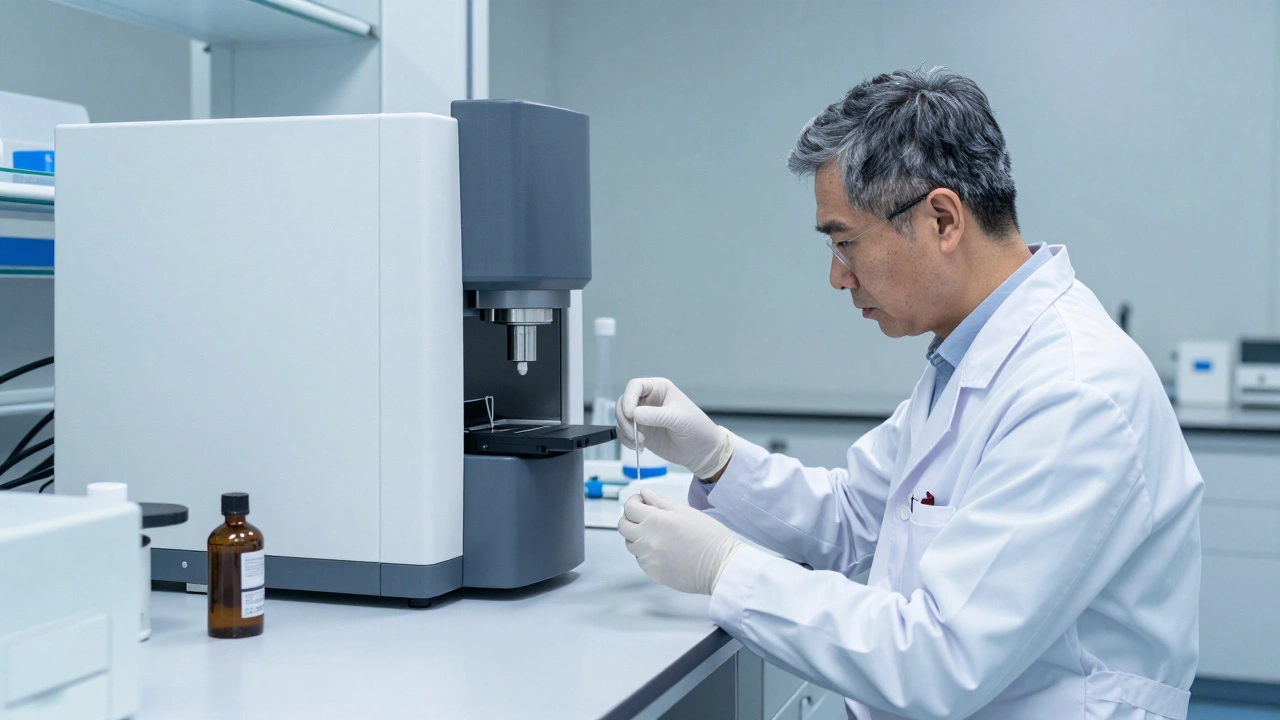
Imagine a courtroom where a case hinges on a single drug test result. If the lab can't prove exactly how they calibrated their machines or that their staff is actually competent, that evidence can vanish in an instant. In the world of forensic science, a result is only as good as the quality control (QC) backing it up. Whether it's a postmortem investigation or a DUI case, the stakes are too high for "close enough." To keep results bulletproof, labs rely on two main pillars: toxicology quality control and rigorous proficiency testing.
The Core of Lab Reliability
At its heart, quality control is about consistency. You need to know that if you run the same sample today and tomorrow, you'll get the same answer. For forensic labs, this isn't just a good idea-it's a requirement. Most high-level labs align themselves with ISO/IEC 17025 is the international standard that specifies the general requirements for the competence, impartiality, and consistent operation of laboratories. This framework ensures that the lab isn't just buying expensive gear, but is actually managing its processes to eliminate error.
In the US, the American Academy of Forensic Sciences (AAFS) sets the bar with specific standards for QC programs. These rules cover everything from how you prepare your standards to how you monitor your assays. If a lab is chasing accreditation from the American Board of Forensic Toxicology (ABFT), these QC practices are the first thing auditors will scrutinize.
Mastering the Art of Calibration
Calibration is basically telling your instrument what "truth" looks like. If you're looking for a specific illicit drug, you can't just guess the concentration; you need a calibrator-a known amount of that substance-to set the scale. A common mistake is using a generic solvent, but the gold standard is using an authentic matrix. If you're testing blood, your calibrators should be in blood. This accounts for "matrix effects," where the components of the blood itself might interfere with the signal of the drug.
Labs typically follow a strict routine: they determine actual retention times and fragment ion ratios at set intervals. This ensures the machine is actually seeing the drug it claims to see and not a chemically similar "look-alike." To keep things honest, a lab supervisor or a qualified deputy must oversee these activities. You can't just let the machine run on autopilot; a human with the right credentials has to sign off on the validity of the calibration curve.
| Feature | Calibrators | QC Controls |
|---|---|---|
| Purpose | Sets the measurement scale (The "Ruler") | Verifies the scale is still accurate (The "Check") |
| Frequency | At the start of a batch or periodically | With every single batch or sample set |
| Requirement | Multiple concentrations (curve) | Usually low, medium, and high levels |
| Failure Result | Instrument cannot quantify results | Results are flagged as unreliable |
Proficiency Testing: The Ultimate Stress Test
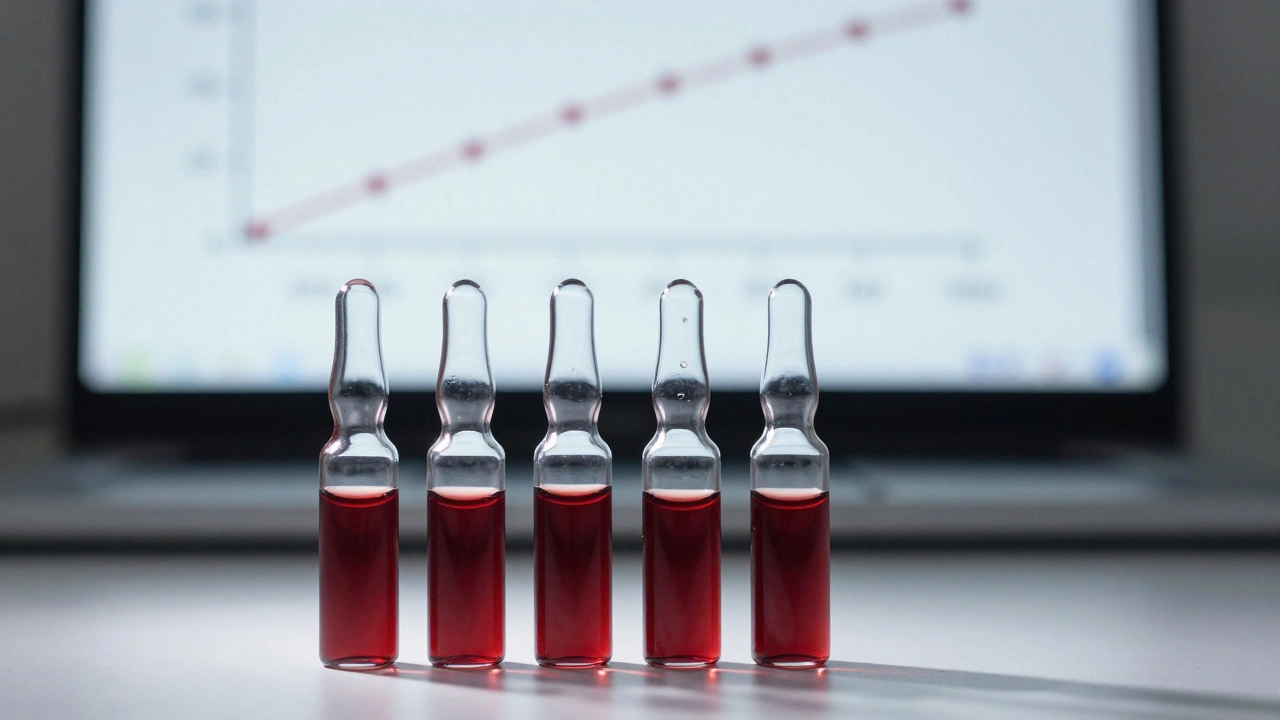
Calibration tells you the machine is working; Proficiency Testing (PT) tells you the people are working. Also known as External Quality Assessment (EQA), PT is like a blind taste test for scientists. An outside organization, such as LGC Standards, sends the lab a "mystery sample" with an unknown concentration of a drug. The lab analyzes it and sends the result back. If the lab's answer matches the known value, they've proven their competency.
This process is governed by ISO/IEC 17043, which ensures that the PT provider is actually qualified to judge the lab. For a forensic toxicologist, this isn't just a box to check. It's a way to catch systemic errors-like a reagent that's slowly degrading or a technician who is consistently miscalculating a dilution-before those errors end up in a legal report.
Depending on the lab's focus, PT requirements change. A lab doing postmortem work-determining the cause of death-will have different frequency and scope requirements than a lab handling human performance toxicology (like DUI cases). While most toxicology falls under these umbrellas, it's worth noting that breath alcohol testing often has its own separate, more rigid regulatory framework because of how commonly it's used in street-side arrests.
Building a Bulletproof Quality Manual
If it isn't written down, it didn't happen. That's the mantra of every forensic auditor. A quality manual is the "bible" of the lab. It must contain detailed Standard Operating Procedures (SOPs) that leave no room for interpretation. If a new technician joins the team, they should be able to read the SOP and prepare a reagent exactly the same way the previous person did.
What exactly goes into these manuals? You need specific sections for:
- Reagent Preparation: Exactly how chemicals are mixed and how their quality is verified.
- Specimen Requirements: What happens if a sample arrives with a volume smaller than the approved SOP? There needs to be a protocol for that.
- Acceptance Criteria: At what point is a result considered "out of range" and rejected?
- Record Keeping: A complete log of every positive control result for every assay.
State-level labs, like the Washington State Patrol Toxicology Laboratory Division, often set the gold standard for these manuals, integrating strict reagent control with a clear chain of custody for standards. Following these models prevents the "drift" that happens when labs get complacent over time.
Avoiding Common Pitfalls in the Lab
Even the best labs make mistakes. One of the biggest traps is relying solely on internal controls. Internal controls are great for daily checks, but they can lead to "groupthink" where everyone assumes the process is fine because the internal check passes. This is why External Quality Assessment is non-negotiable. An outside perspective identifies blind spots that internal staff simply cannot see.
Another common issue is the mishandling of phase II-conjugates. In some substance classes, drugs are bound to other molecules in the body. To get an accurate reading, labs must perform enzymatic hydrolysis-basically breaking those bonds. If this step is skipped or done poorly, the lab will under-report the amount of drug in the system, leading to a false low or a false negative.
Finally, avoid the temptation to use "short-cut" calibration. Some might be tempted to use a single-point calibration for a quick check, but in a forensic setting, a multi-point curve is essential to ensure linearity. Without it, you can't prove that the machine's response remains proportional to the drug concentration across the entire expected range.
What is the difference between ISO/IEC 17025 and ISO/IEC 17043?
ISO/IEC 17025 focuses on the competence of the laboratory itself-essentially, whether the lab is capable of producing accurate results. ISO/IEC 17043, on the other hand, focuses on the providers of proficiency testing. It ensures that the organization sending the "mystery samples" to the lab is doing so in a standardized, fair, and accurate way.
Why is an authentic matrix important for calibration?
An authentic matrix (like real human blood or urine) is critical because the components of the matrix can affect how the instrument detects the drug. This is known as the matrix effect. If you calibrate using a pure solvent but test a real sample, the results could be skewed, leading to inaccurate quantification that could be challenged in court.
How often should a toxicology lab perform proficiency testing?
The frequency depends on the accreditation body (like ABFT or AAFS) and the type of testing being performed. Generally, labs must participate in PT schemes for every analyte they report on a regular basis-often annually or semi-annually-to demonstrate ongoing competency and catch any performance drift.
What happens if a lab fails a proficiency test?
A failure triggers a mandatory corrective action process. The lab must investigate the root cause-whether it was a technician error, a machine malfunction, or a contaminated reagent-document the fix, and often re-test to prove the issue is resolved. Repeated failures can lead to the loss of accreditation.
Does quality control for forensic toxicology apply to breathalyzer tests?
Generally, no. Most forensic toxicology QC standards explicitly exclude breath alcohol toxicology. Because breathalyzers are specialized devices with their own specific regulatory requirements and calibration protocols, they are managed under separate frameworks, such as those outlined by OSAC.
Next Steps for Lab Managers
If you're reviewing your current QC program, start by auditing your SOPs. Are they current, or are they based on how things "usually" get done? Update your manuals to reflect the latest ISO/IEC 17025:2017 standards. Next, look at your PT schedule. If you've been using the same provider for years, consider a second external provider to ensure you aren't just getting used to one company's specific sample preparation style.
For those in the process of seeking accreditation, focus on your record-keeping. Ensure that every single positive control is documented and that every "out-of-range" result has a corresponding corrective action report. This level of transparency is exactly what auditors look for to determine if a lab is truly reliable or just lucky.