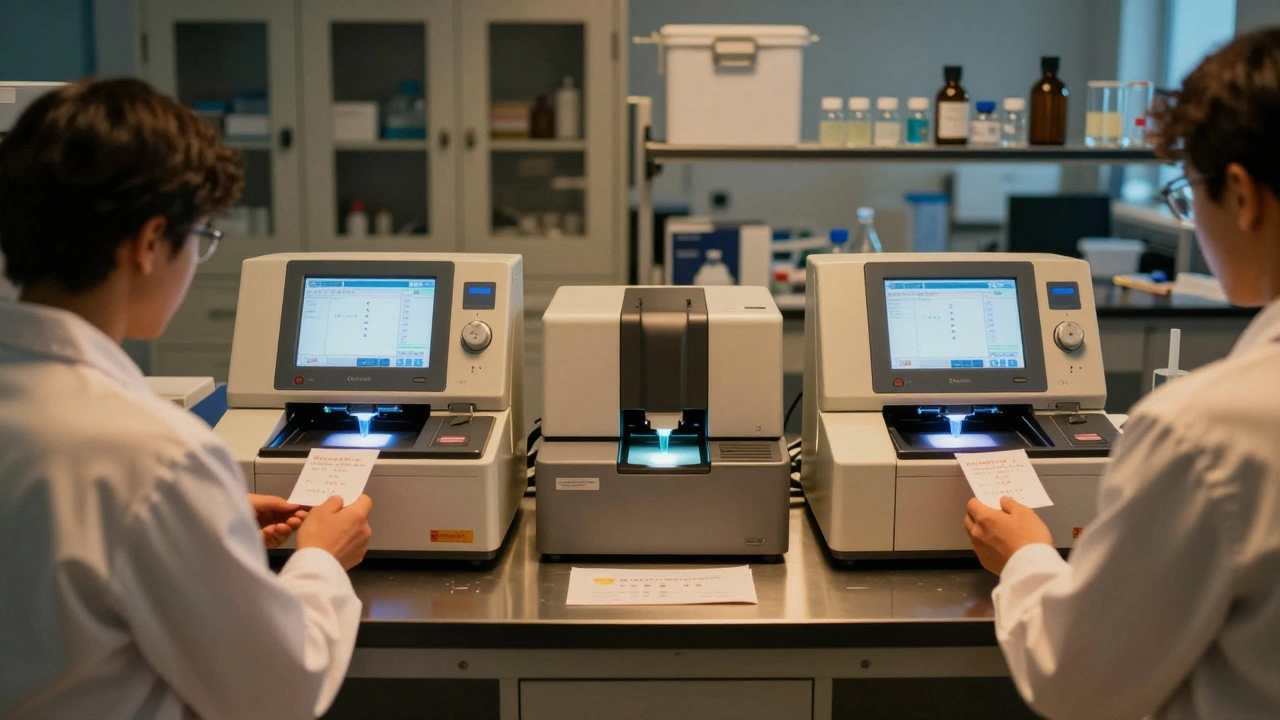
Imagine two crime labs analyzing the exact same sample of evidence. One lab concludes the DNA matches a suspect; the other says it does not. In the high-stakes world of criminal justice, that kind of inconsistency isn't just an inconvenience-it's a failure of the system. This is the exact problem that Forensic DNA Harmonization aims to solve. It is the process of aligning testing methodologies so that a piece of evidence yields the same result whether it is analyzed in New York or New Orleans.
We are currently navigating a significant era in forensic science. As of today, laboratories are operating under updated frameworks that have been active since mid-2025. The goal is clear: make sure every report generated is scientifically sound, legally defensible, and reproducible. If you work in a lab or handle cases involving genetic evidence, understanding this landscape is critical.
The Core Problem: Why Harmonization Matters
For decades, the primary concern has been variability. Different analysts, even within the same facility, sometimes looked at a complex sample and drew different conclusions. This issue is most pronounced when dealing with DNA mixturesSamples containing genetic material from multiple individuals. A single-source sample is straightforward, but a mixture adds layers of complexity regarding interpretation thresholds and statistical calculations.
Without standardized protocols, the "interpretation" phase becomes subjective. If Lab A decides a peak height indicates a contributor while Lab B dismisses it as noise, the justice system suffers. Harmonization introduces objective criteria. It forces labs to prove their methods work consistently through validation studies before they ever touch a real case. You cannot simply decide to test a four-person mixture if your protocol hasn't been verified for that complexity level.
The Evolution of Standards: From Guidelines to Mandates
To understand where we are, we have to look back at where we started. The foundation was laid by the Technical Working Group on DNA Analysis Methods (TWGDAM). These groups were voluntary bodies of experts who drafted recommendations that became de facto industry standards. For years, labs followed TWGDAM guidelines because it was the smartest way to operate, not because they were forced to.
The shift toward formal regulation began in 1998. The DNA Advisory Board (DAB)A board created under the DNA Identification Act of 1994 took over, establishing stricter quality assurance rules. This transition marked the move from suggestions to required operational standards. Eventually, responsibility shifted to federal oversight, leading to the FBI Quality Assurance StandardsComprehensive requirements for forensic DNA testing laboratories.
A major milestone occurred recently. On July 1, 2025, the FBI approved significant updates to the Quality Assurance Standards. We are now nine months into this new regulatory cycle. The Science Working Group on DNA Analysis Methods (SWGDAM) published guidance documents to help labs transition. These aren't minor tweaks; they represent a consolidation of best practices learned over thirty years of forensic application.
Current Architecture: The Three Pillars of Compliance
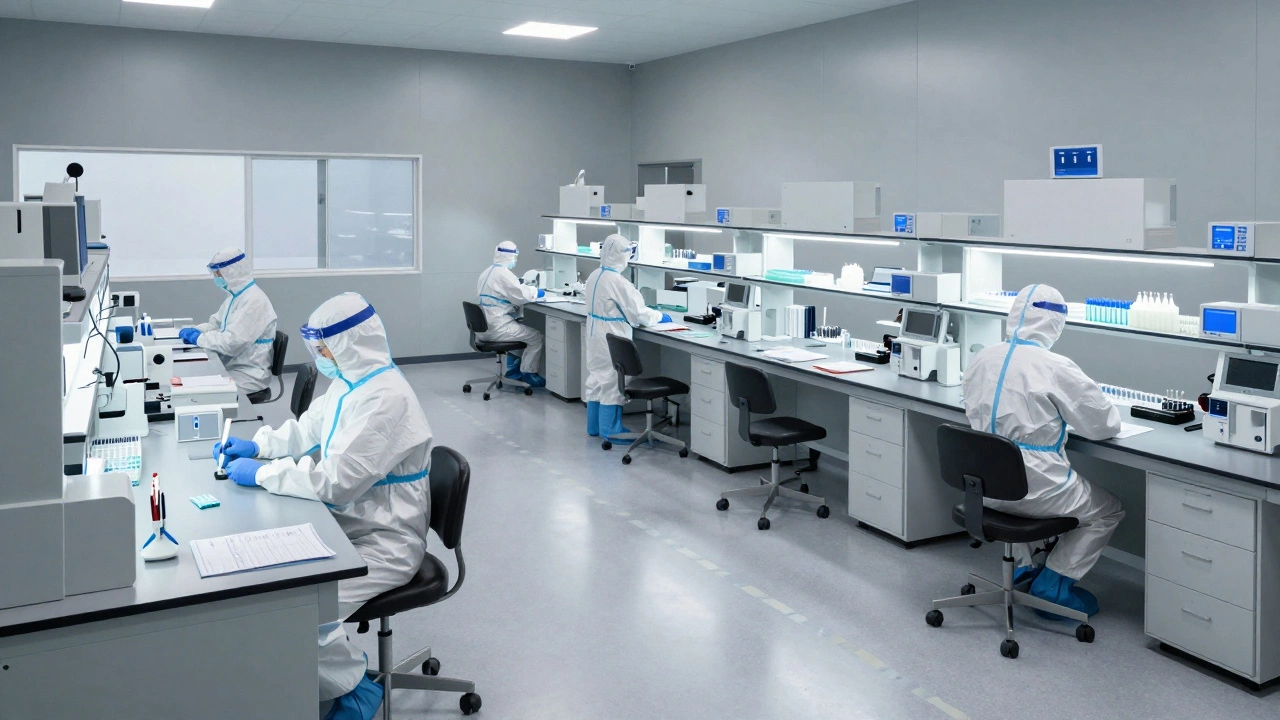
In the current landscape, three distinct sets of rules govern laboratory activities. First, there are the Quality Assurance Standards. These are the heavy lifters, covering everything from staffing qualifications to equipment calibration. Second, we have the NDIS Requirements. The National DNA Index System (NDIS)The U.S. national database of DNA profiles is part of CODIS, the Combined DNA Index System. If a lab wants its data to go into the national repository, it must sign a Memorandum of Understanding agreeing to specific NDIS rules.
The third pillar is Accreditation. While compliance with federal standards is mandatory for participation in NDIS, accreditation is often voluntary but essential for credibility. Organizations like the American Society of Crime Laboratory Directors (ASCLD) evaluate labs against these rigorous benchmarks. Meeting the Quality Assurance Standards is a prerequisite for seeking accreditation, creating a hierarchy where you must first satisfy federal minimums before earning external validation.
Tackling Complexity: DNA Mixture Standards
One of the biggest challenges in recent years has been handling mixtures. The OSAC (Organization of Scientific Area Committees) for Forensic Science, administered by NIST, stepped in to address this gap. In 2020, new standards were adopted specifically for mixture interpretation. These were further developed by the American Academy of Forensic Sciences (ASB).
These standards introduced a strict concept called "validation boundaries." Essentially, a lab can only interpret mixtures up to the number of contributors they have tested their protocol for. If your validation study proves your method works for up to three people, you cannot legally interpret a mixture with four or more contributors without additional validation. This prevents labs from pushing their analytical capabilities beyond their proven reliability, a practice that previously led to errors.
Furthermore, the ASB Standard 136Requirements for preventing contamination in PCR-based analysis, published in 2022, focuses on contamination control. DNA is sensitive; stray biological matter can ruin a sample. This standard mandates specific procedures to detect, assess, and mitigate contamination risks, including for Rapid DNA analysis. It ensures that when a profile is generated, it truly belongs to the evidence, not the environment.
The Practical Impact on Daily Operations
What does all this mean for someone working behind the bench? It means paperwork. Every procedure used in DNA analysis must be written down, formally approved by management, and documented meticulously. Validation isn't a one-time event; equipment must be calibrated regularly according to national standards.
Consider the verification step. Before using a validated method on casework, a lab must verify that the protocol produces consistent results with samples different from the ones used in the initial validation. This double-check mechanism ensures robustness. Additionally, the 2025 updates to the Quality Assurance Standards brought changes in documentation and record-keeping requirements. SWGDAM prepared comparison tables between the 2020 and 2025 versions to highlight these shifts, allowing directors to map their existing workflows against the new rules efficiently.
This structure creates a safety net. When a report reaches court, attorneys can challenge the methodology knowing that a standardized, verified chain of custody exists. It transforms forensic genetics from a gray area of scientific interpretation into a disciplined engineering process.
Is compliance with forensic DNA standards mandatory for all labs?
While almost all forensic science standards in the US are technically voluntary, practical necessity drives compliance. To participate in the NDIS (the national database), labs must meet FBI Quality Assurance Standards. Therefore, for any lab involved in criminal investigation, these standards effectively become mandatory.
What is the significance of the July 1, 2025 update?
The July 1, 2025, updates to the FBI Quality Assurance Standards represent the most recent major revision. They incorporate new findings and best practices, particularly regarding DNA databasing and testing laboratories. Labs use these updated standards as their baseline for accreditation and NDIS eligibility.
How do labs handle DNA mixtures differently now?
Labs must adhere to validated capability levels. Under OSAC and ASB standards, a laboratory cannot interpret a mixture that exceeds what they have validated (e.g., interpreting a 4-person mixture if only validated for 3-person mixtures). Verification procedures ensure consistency with samples different from those used in validation.
Who administers the OSAC standards?
The Organization of Scientific Area Committees (OSAC) for Forensic Science is administered by the National Institute of Standards and Technology (NIST). They place new standards on an approved registry to help labs improve processes.
What is the role of SWGDAM?
SWGDAM provides the Guidance Document for the FBI Quality Assurance Standards. They also prepare comparison tables, such as those comparing the 2020 Forensic QAS with the 2025 Forensic QAS, to assist laboratories in understanding and implementing regulatory changes.