It seems impossible. Why would anyone admit to a crime they didn't commit, especially when the stakes are prison or even death? We like to think of ourselves as rational beings who would fight to the end to prove our innocence. But the reality is much darker. Statistics from the National Archive of Criminal Justice Data show that roughly 30% of all DNA exonerations involved a false confession. That isn't just a few weird cases; it's a systemic failure where the human mind breaks under pressure.
When we talk about false confessions, we aren't just talking about people lying. We are talking about a collapse of willpower, memory, and identity. Understanding the psychological vulnerabilities that lead to this helps us see that a confession isn't always a "smoking gun"-sometimes, it's a symptom of a psychological breaking point.
The Three Types of False Confessions
Not every false confession happens for the same reason. Depending on the internal state of the suspect and the external pressure from the police, these admissions generally fall into three categories.
First, there are Voluntary False Confessions is admissions of guilt made without any pressure from law enforcement . These are the most puzzling because the police aren't forcing the person to talk. Often, these stem from mental health crises or a desperate need for attention. Imagine someone with a delusional belief that they were involved in a high-profile crime, or a homeless person who confesses to a theft just to get a warm bed and regular meals in jail. In these cases, the "confession" is a tool to satisfy a psychological void or a survival need.
Then we have Compliant False Confessions is confessions made to escape a stressful situation or avoid a perceived worse outcome . This is a calculated, though flawed, choice. If an officer tells a suspect, "If you just admit to this, I can get you a lighter sentence," the suspect might think they are playing a game of risk management. They figure that admitting to something they didn't do is a smaller price to pay than facing a maximum sentence for a crime they are being blamed for anyway. It's a survival mechanism triggered by acute stress.
The most terrifying category is Persuaded False Confessions is occurrences where a suspect actually begins to believe they committed the crime . This isn't about lying or trading; it's about the erasure of truth. Through relentless questioning, sleep deprivation, and the fabrication of evidence, an interrogator can make a suspect doubt their own memory. When police suggest "repressed memories," some people actually internalize the false narrative, eventually believing they are guilty of a crime they never touched.
| Type | Primary Driver | Suspect's Belief | Police Role |
|---|---|---|---|
| Voluntary | Internal psychological need | Believes they are guilty (often delusional) | Passive / Skeptical |
| Compliant | Avoidance of stress/pain | Knows they are innocent | Active (Pressure/Promises) |
| Persuaded | Cognitive collapse | Convinced they are guilty | Aggressive (Manipulation/False Evidence) |
The Mental Breaking Points: Why We Fold
Why does this happen to some people and not others? It comes down to specific cognitive vulnerabilities. One major factor is Cognitive Dissonance is the mental discomfort experienced by a person who holds two or more contradictory beliefs . When a suspect is told repeatedly that they are a monster, the tension between their self-image and the evidence presented can become unbearable. To stop the pain, the mind simply accepts the new, darker identity.
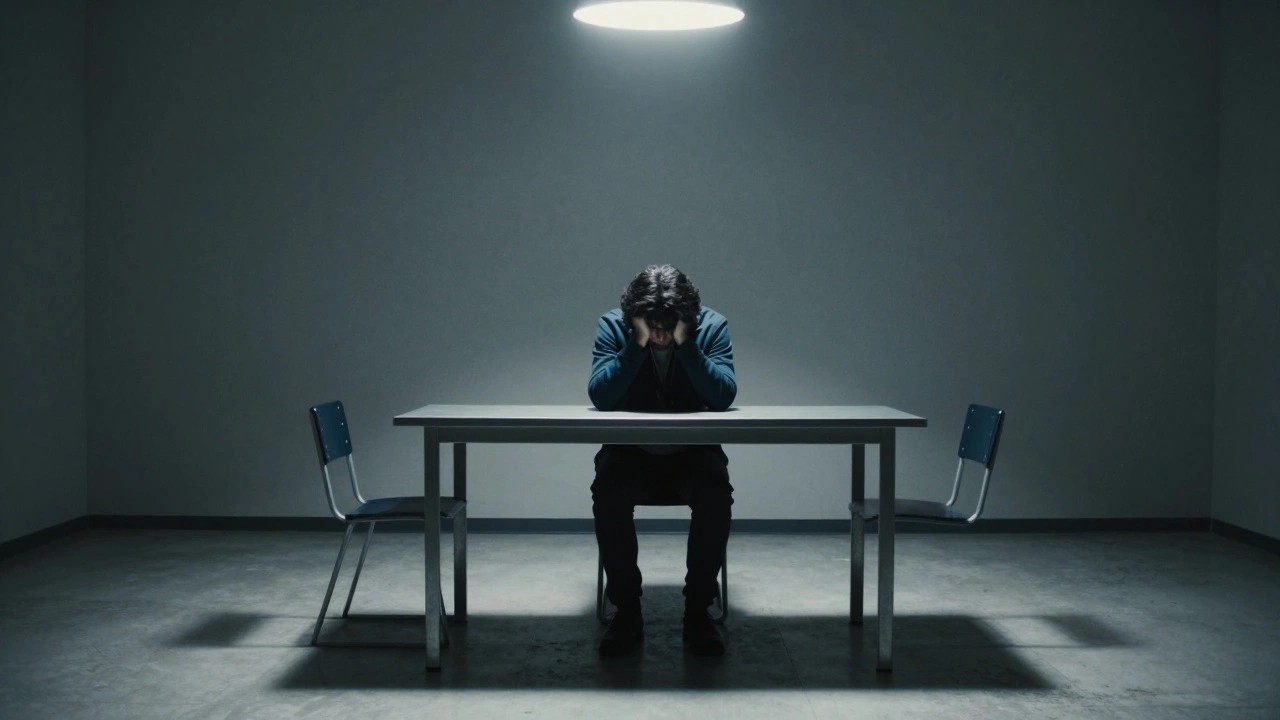
We also see Authority Compliance, where the natural human instinct to obey a figure of power takes over. In a sterile interrogation room, the power imbalance is total. The officer has the keys, the law, and the clock; the suspect has nothing. This imbalance makes it easy for a suspect to "go along" with a leading line of questioning just to appease the person in charge.
Finally, there is Memory Conformity. Memories aren't video recordings; they are reconstructions. If an interrogator provides a specific detail-like "the red car you used to get away"-and insists it's true, the suspect's brain may actually plug that detail into their memory of the night, creating a false but vivid recollection.

Who Is Most at Risk?
Certain people are far more likely to crack under pressure. Research involving 460 wrongful convictions has highlighted a few high-risk groups. People with Intellectual Disability are significantly more prone to false confessions because they may struggle to understand the long-term legal consequences of their words or be more suggestible to leading questions.
Youth is another massive vulnerability. Teenagers often lack the emotional regulation and cognitive maturity to resist a high-pressure environment. They are more likely to be influenced by peers and more likely to believe that a confession will lead to a quicker trip home. Forensic psychologist Gisli Gudjonsson has spent years studying these susceptibilities, showing that a combination of high suggestibility and a compliant personality creates a "perfect storm" for a false admission.
Environmental factors also play a role. If a suspect is deprived of sleep, isolated for hours, or subjected to abuse, their decision-making capacity evaporates. When the brain is starved of sleep, the prefrontal cortex-the part responsible for rational thought-essentially shuts down, leaving only the primal urge to escape the current misery.
The Error Pathways: How it Goes Wrong
Legal experts Leo and Drizin have mapped out how these errors happen in a sequence. It usually starts with a Misclassification Error, where police wrongly decide a suspect is the only one who could have committed the crime. Once they've locked onto the wrong person, they move into a Coercion Error, using pressure tactics to force a confession. Finally, a Contamination Error occurs when police feed the suspect details about the crime, which the suspect then repeats back in the confession, making it look like "insider knowledge" when it was actually just fed to them.
To fight this, defense attorneys must prove that the confession was inconsistent with factual evidence or resulted from a compromised mental state. It's a grueling process of peeling back the layers of a psychological breakdown to show that the "truth" found in the interrogation room was actually a manufactured product of stress.

Moving Toward a Fairer System
The old way of thinking was that no sane person would ever confess to a crime they didn't do. We now know that's a dangerous myth. To fix this, many are pushing for mandatory recording of all interrogations from start to finish. This prevents "contamination errors" by showing exactly what information the police gave the suspect.
We also need a shift in how we view suspects. Instead of assuming everyone is equally capable of resisting pressure, the law should recognize individualized vulnerabilities. Whether it's a teenager's impulsivity or a disabled person's suggestibility, the legal system must account for the fact that some minds are more fragile than others when faced with the machinery of the state.
Can a person actually forget they committed a crime and then "remember" it during a confession?
While "repressed memories" are often cited by police, psychological research suggests that these are frequently false memories created during the interrogation. If a suspect is under extreme stress and is told they committed the act, their brain may create a narrative to resolve the conflict, leading to a persuaded false confession rather than a recovered memory.
Why would someone with a criminal record be more likely to falsely confess?
It seems counterintuitive, but people with history in the system sometimes confess falsely because they are more familiar with the pressure of the police and may feel that resisting is futile. Conversely, some research suggests that those with more delinquent peers may be more susceptible to the specific social pressures used during joint interrogations.
What is the difference between a "compliant" and a "persuaded" confession?
The key is the suspect's belief. In a compliant confession, the person knows they are innocent but lies to end the interrogation or get a promised reward. In a persuaded confession, the person has been manipulated into actually believing they might have committed the crime, even if they have no memory of it.
Do DNA exonerations prove that false confessions are common?
Yes. Roughly 30% of people exonerated by DNA evidence had previously confessed to the crime. This provides concrete proof that a confession is not an infallible indicator of guilt and can be a product of psychological coercion.
How does sleep deprivation lead to a false confession?
Sleep deprivation impairs the prefrontal cortex, which handles logic and impulse control. This makes a person more suggestible, less able to track the consistency of their own story, and desperate for the interrogation to end, making them more likely to agree to any narrative the police suggest.
Next Steps and Troubleshooting
If you are advocating for someone who has potentially given a false confession, the first step is to secure the full, unedited recording of the interrogation. Look for patterns of leading questions or "information leakage" where the police provide a detail that the suspect then repeats.
For legal professionals, bringing in a forensic psychologist to testify about the suspect's specific vulnerabilities-such as a low IQ or a history of compliance-is crucial. Proving that the suspect's mental state was compromised can shift the jury's perception of the confession from a "statement of fact" to a "product of coercion."