When you buy a box of factory ammunition, you expect it to perform the same as the last box you bought-same velocity, same point of impact, same reliability. But what if the next box you pick up, even if it’s the exact same brand and model, shoots differently? That’s not a defect. It’s manufacturing variability, and it’s built into every round produced. This isn’t just a concern for competitive shooters or hunters. It’s a core issue in forensic ballistics, military logistics, and even criminal investigations. Understanding how and why ammunition lots differ is critical if you care about accuracy, safety, or traceability. The truth is, no two lots of ammunition are perfectly identical. Even when made on the same生产线, using the same blueprint, small changes in raw materials, machine settings, or handling procedures create measurable differences. These differences aren’t random noise-they’re patterns. And those patterns can be traced.
How Ammunition Lots Are Made (And Why They Differ)
Every round of ammunition starts with raw materials. For centerfire cartridges, that means copper-jacketed bullets, brass or steel cases, primers, and propellant. Each of these components comes from suppliers, often across the country. A 50-caliber round might use steel from one mill, while a .223 might use brass from another. Even within the same supplier, batches of metal can vary in hardness, density, or trace element content. Here’s where it gets interesting: when these materials arrive at the factory, they don’t always get used immediately. Slugs-those tiny metal cylinders that become bullets-are cut from wire on machines that run for hours. If a machine switches from one wire spool to another, and the new spool has slightly different composition, the slugs cut from it are different. Those slugs go into a bin. If the bin isn’t emptied completely before the next run, slugs from the old wire mix with slugs from the new one. That’s called "tail-in-tail-out" mixing. The result? A single lot of ammunition contains bullets with multiple compositions. The same thing happens with cases. Brass cases are formed, annealed, and resized. If the annealing temperature shifts by even 10 degrees between batches, the case’s elasticity changes. That affects how the case expands in the chamber and how consistently it seats. A case that expands differently will alter pressure curves, which changes velocity. Propellant is another source of variation. Powder granules aren’t uniform. Their size, shape, and burn rate vary slightly from batch to batch. Even small differences in how the powder is metered into each case-down to a tenth of a grain-can shift muzzle velocity by 50 to 100 feet per second.What Does This Mean for Performance?
Let’s say you’ve spent months zeroing your rifle with a specific lot of Hornady Precision Hunter 7 PRC ammo. You’ve dialed in your scope. You’ve logged every shot. Then, after you’ve fired 20 rounds, you run out. You buy another box of the same ammo. Same box. Same label. Same lot number? Maybe not. Brandon at AllTerra Arms tested this exact scenario. He fired three different lots of the same ammunition. The fastest lot averaged 2,980 fps. The slowest? 2,830 fps. That’s a 150 fps difference. In hunting terms, that’s a 6-inch drop at 400 yards. Your point of impact shifts. Your holdover changes. Your confidence drops. Walter Jankowski of Cook Bullets ran controlled experiments with 6mm bullets. He took two weights-65 grain and 75 grain-with identical jackets and shapes. Theoretically, a 15.4% increase in weight should reduce velocity by 3.7%. His actual test results? A 3.2% drop. That’s close. But here’s the kicker: even bullets of the same weight, from the same manufacturer, showed velocity differences of up to 80 fps between lots. That’s enough to throw off a precision shot at 600 yards.Why Some Ammunition Is More Consistent Than Others
Not all ammo is created equal. Modern centerfire rifle ammo has come a long way. Tighter tolerances, automated quality control, and better machinery have reduced variability compared to ammo made 30 years ago. But rimfire? Not so much. The .17 HMR is infamous for inconsistency. Shooters report wild variations in velocity and accuracy-even within the same box. Why? Because rimfire cartridges are harder to control. The primer is in the rim, and ignition depends on the thickness of the brass, the shape of the rim, and how the firing pin strikes. These factors are harder to standardize than the primer in a centerfire cartridge. Military ammo, on the other hand, is built for consistency under extreme conditions. The U.S. Army uses a centralized Load, Assemble, Pack (LAP) system. Components from different suppliers are brought to one facility, assembled into lots of 100,000 rounds, and tested as a group. Each lot gets a unique identifier. If a round fails, they can trace it back to the batch of powder or the case supplier.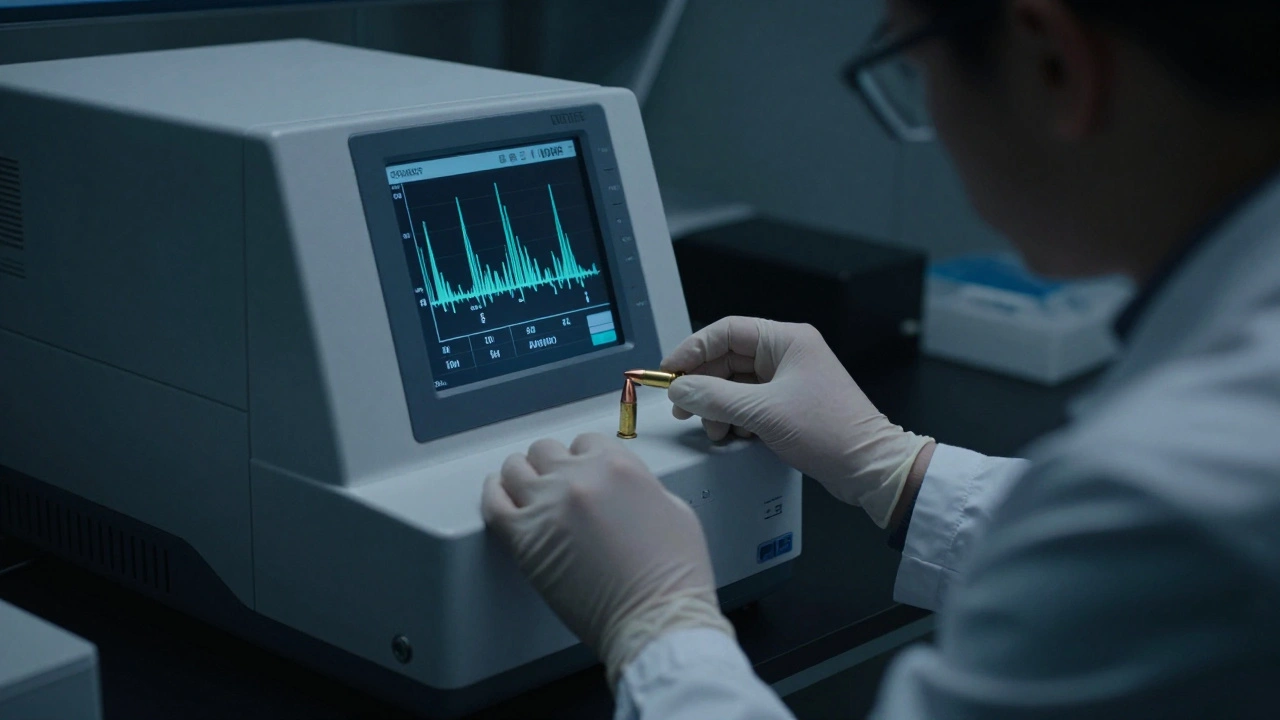
How Forensics Uses Lot Linking
This isn’t just a shooter’s problem. Law enforcement and forensic labs use lot linking to solve crimes. When a bullet is recovered from a crime scene, analysts don’t just look at the rifling marks. They look at its chemical fingerprint. Techniques like WDXRF (Wavelength Dispersive X-ray Fluorescence) analyze the trace elements in a bullet’s metal. Copper, zinc, antimony, tin, lead-they’re all present in different ratios depending on the source of the raw material. A bullet from one lot might have a unique signature: 2.1% antimony, 0.8% tin. The next lot might have 1.9% and 0.6%. That’s enough to link a bullet to a specific production batch. In one case, a forensic team matched bullets from two separate shootings using WDXRF. The bullets had identical rifling patterns but different chemical compositions. That meant they were fired from the same gun, but from different lots. The suspect had bought ammo from two different purchases. That timeline helped build the case.The Bigger Picture: Supply Chain and Cost
Manufacturing variability isn’t just about accuracy. It’s tied to cost and availability. A study using ProModel simulation showed that 50mm ammunition had a cost standard deviation of $16,578.60 per lot, while 30mm rounds were at $15,786.28. Why? Because 50mm rounds rely more heavily on steel, and steel prices swing wildly. When a steel mill shuts down, or exports get restricted, the cost of 50mm rounds spikes. The same thing happens with brass, copper, or lead. This isn’t theoretical. In 2024, a shortage of copper led to delays in .223 production. Manufacturers had to substitute alloys. Those substitutions changed how the bullets behaved in barrels. Shooters noticed increased fouling and inconsistent velocity. The problem wasn’t the rifle. It was the ammo.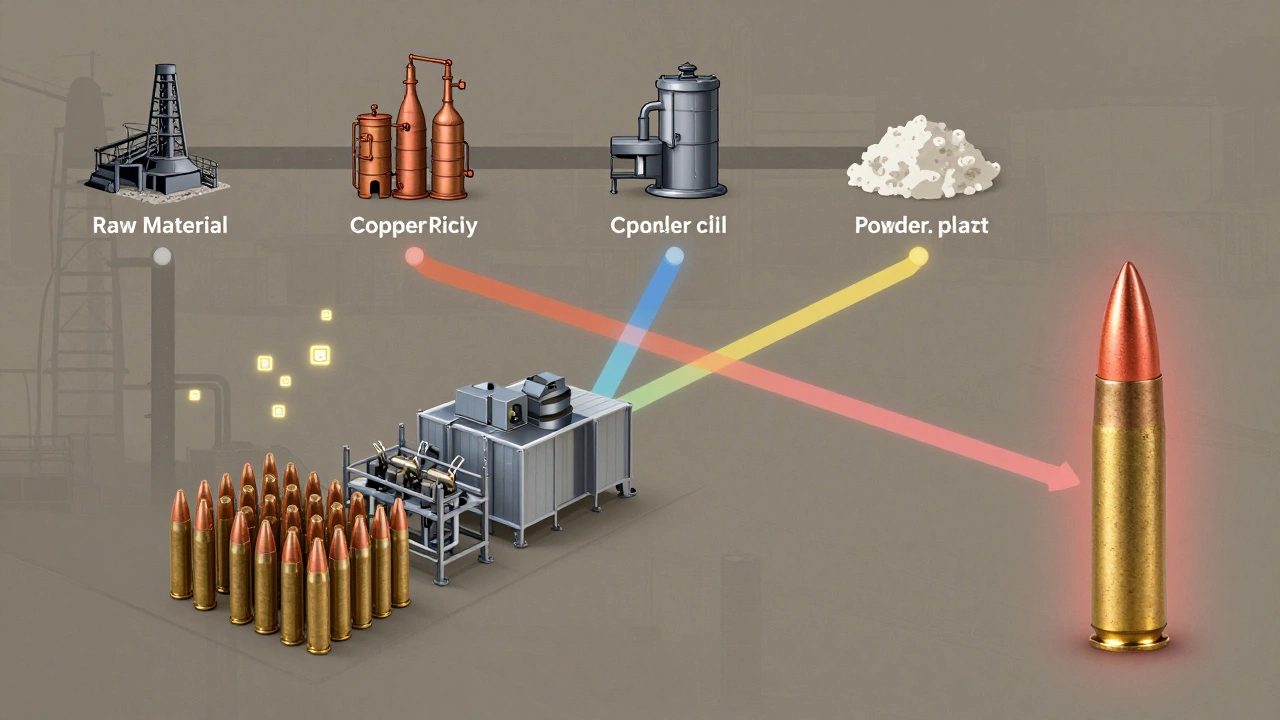
What You Can Do About It
If you’re a precision shooter, hunter, or someone who relies on consistent performance, here’s what you need to know:- Buy in bulk, but track lots. Don’t assume two boxes with the same label are the same. Write down the lot number on the box. If you’re happy with a lot, buy extra.
- Test new lots before you rely on them. Fire 5-10 rounds at 100 yards. Compare group size and point of impact. If it’s off by more than an inch, re-zero your rifle.
- Don’t mix lots in a single shooting session. Switching between lots mid-match or mid-hunt will hurt your accuracy more than any scope adjustment.
- For long-range shooting, consider handloading. You control every variable: primer, powder, bullet weight, case prep. You eliminate lot variability entirely.
Future of Lot Linking
The industry is moving toward better traceability. Some manufacturers are starting to embed QR codes on ammo boxes that link to production data: when it was made, which machines were used, what batch of powder was loaded. Digital lot tracking is still rare, but it’s coming. Forensic science is advancing too. Researchers are combining WDXRF with machine learning to build predictive models of lot linkage. Soon, a single bullet might be matched to a production run with 95% accuracy-not just by its composition, but by its shape, weight distribution, and even microscopic tool marks. For now, the lesson is simple: ammunition lot linking isn’t a mystery. It’s a fact of manufacturing. And if you ignore it, you’re leaving accuracy-and safety-to chance.Why do two boxes of the same ammo shoot differently?
Even if two boxes have the same brand and model, they may come from different production lots. Variations in raw materials, machine settings, or handling procedures during manufacturing can cause differences in bullet weight, powder charge, and case dimensions. These small changes affect muzzle velocity and point of impact, requiring you to re-zero your firearm when switching lots.
Is rimfire ammo more inconsistent than centerfire?
Yes. Rimfire ammunition, especially .17 HMR and .22 LR, is notoriously inconsistent due to its design. The primer is embedded in the rim of the case, and ignition depends on the thickness and shape of the rim, which varies more than in centerfire cartridges. Centerfire ammo has more uniform primer placement and better manufacturing controls, making it significantly more consistent.
Can forensic labs really link bullets to a specific lot?
Yes. Using techniques like WDXRF (Wavelength Dispersive X-ray Fluorescence), forensic labs analyze the trace metal composition of bullets. Each manufacturing lot has a unique chemical fingerprint based on the source of raw materials and production methods. This allows experts to link recovered bullets to specific production batches, even across different brands.
Does ammo consistency improve over time?
Modern manufacturing has reduced variability compared to older ammo. Automated machinery, tighter tolerances, and better quality control have made today’s factory ammo more consistent than it was 20 years ago. However, variability still exists, especially in high-volume production runs or when raw material supplies fluctuate.
Should I buy multiple boxes of the same lot?
If you’ve found a lot that performs well in your firearm, yes. Many shooters buy extra boxes of a consistent lot, especially for hunting or competition. This avoids the need to re-zero your rifle later. Always note the lot number on the box so you can track performance over time.