Imagine a crime scene where the perpetrator wore gloves, wiped down every surface, and left no fingerprints. On the surface, it looks like a perfect crime. But as they struggled with the victim or brushed against a jagged window frame, they left behind something invisible to the naked eye: a few microscopic strands of polyester and wool. These tiny threads, known as fiber analysis is the forensic examination of textile fibers to establish contact between individuals, objects, and locations , can be the difference between a cold case and a conviction.
The Science of the Invisible Exchange
Everything in forensics boils down to one core idea: Locard's Exchange Principle is the forensic theory that whenever two objects come into contact, there is an exchange of materials between them . In the world of clothing, this means your jacket is constantly shedding and picking up material from everything you touch. Whether it's a fleece sweater, a cotton t-shirt, or a nylon windbreaker, these garments are essentially "fiber magnets."
But here is the part that often surprises people: you don't even have to touch someone to exchange fibers. Research using fluorescently dyed garments like jumpers and fleeces has shown that passive transfer is the movement of fibers between garments via air or proximity without direct physical contact can occur in significant numbers. In one study, investigators found up to 66 fibers transferred between garments without the people ever actually touching. This means a suspect could pick up fibers just by standing near a victim in a crowded elevator or on a bus.
Ticking Clock: The Timeline of Trace Evidence
If you're an investigator, the most important question isn't just "what" was found, but "when" was it transferred? Fiber evidence is notoriously fleeting. Because fibers are small and loosely attached, they fall off quickly during normal movement. Studies show that a huge portion of transferred fibers are lost within just a few hours of the initial contact.
This creates a powerful tool for narrowing down a timeline. If a suspect is arrested six hours after a crime and their clothes are covered in fibers from the victim's unique sweater, it suggests the contact happened very recently. If those fibers were still there three days later, it would be much more unusual, as routine activity-like walking, sitting, or changing clothes-would likely have shaken them loose. This temporal aspect helps detectives decide if a suspect's alibi holds water or if they were physically present during the window of the crime.
From Bedrooms to Getaway Cars: Where Fibers Hide
We usually think of clothing, but textile fibers are threadlike materials of natural or synthetic origin that form the basis of all fabrics are everywhere. In a burglary, a perpetrator's clothing might snag on a broken piece of glass or a window screen. In a kidnapping, fibers from a car's upholstery or floor mats can transfer to the victim's clothing. Even specialized gear like wetsuits, wigs, or fishing lines can provide crucial clues.
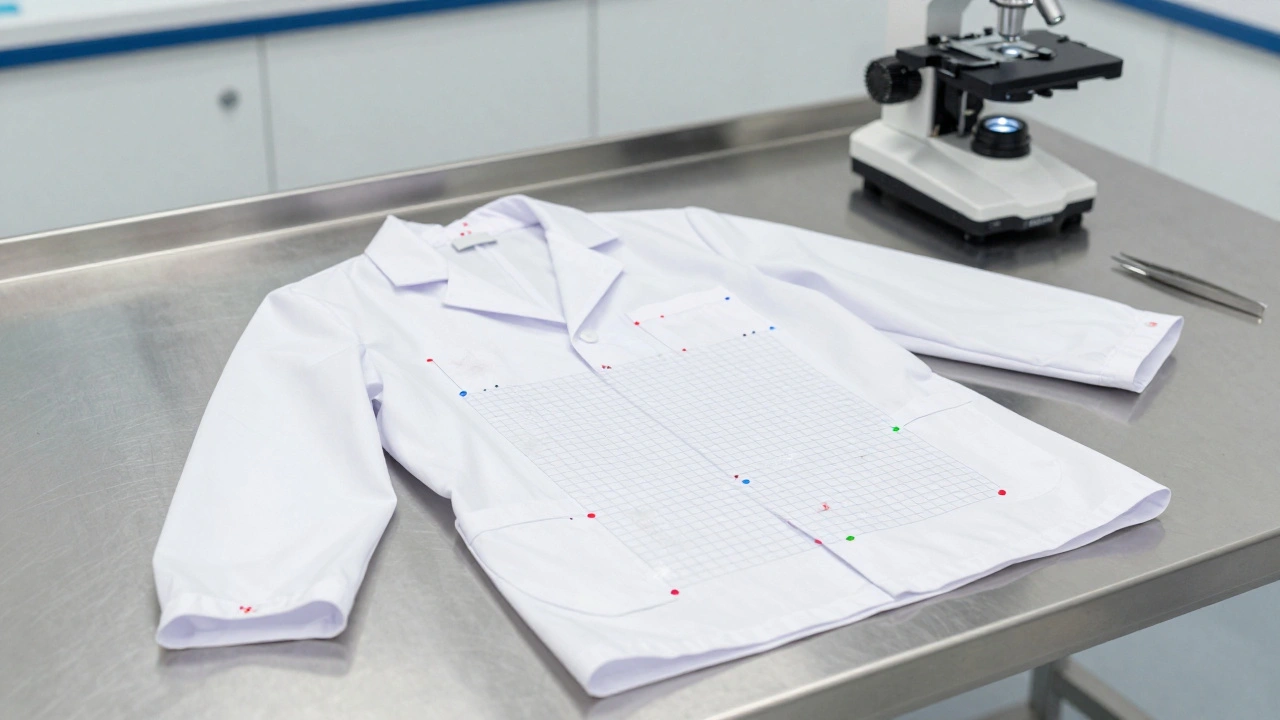
To make sense of this, forensic teams often use a technique called trace mapping. Instead of just bagging a victim's clothes, they systematically sample the entire body-skin, hair, and every inch of fabric-and document exactly where each fiber was found. This map can tell a story: fibers concentrated around the neck might indicate strangulation, while fibers on the wrists suggest the victim was bound. It turns a random collection of threads into a blueprint of the struggle.
| Method | What it Detects | Primary Use |
|---|---|---|
| Micro spectrophotometry (MSP) | Color similarities | Comparing the exact hue of a questioned sample to a control |
| Polarising light microscopy (PLM) | Optical properties | Identifying synthetic fiber types and refractive indices |
| FT-IR Spectroscopy | Chemical composition | Determining the exact polymer or chemical makeup of a fiber |
| Burn/Solubility Tests | Reaction to heat/chemicals | Distinguishing between natural (cotton/wool) and synthetic fibers |
Working Backward: The Investigative Approach
What happens when the police don't have a suspect yet? They can't compare a fiber to a jacket if they don't have the jacket. In these cases, analysts use an "investigative approach." They examine the adhesive tapes used to collect fibers from the crime scene and look for patterns. If they find a group of fibers-say, a specific shade of neon green acrylic-that appear consistently on the victim but aren't part of the victim's own clothes, they mark that as a "target fiber."
The lab then sends a description of this fiber group back to the detectives. Now, instead of searching for "a suspect," they are searching for "a person wearing a neon green acrylic garment." This narrows the search field significantly, allowing police to target specific pieces of clothing during searches or interviews. Once the garment is seized, it can be analyzed for other evidence, like touch DNA or blood, which provides a much stronger link than the fiber alone.
The Weight of Evidence: Is One Fiber Enough?
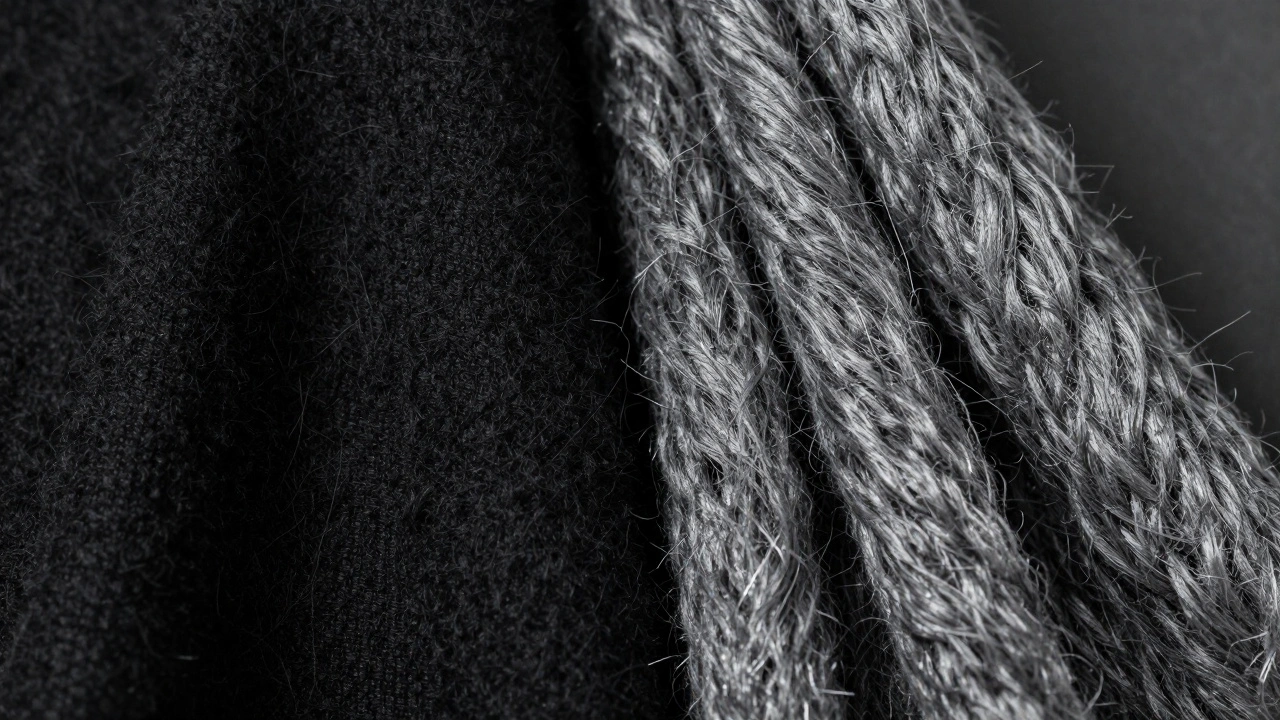
Not all fibers are created equal. The strength of the evidence depends on rarity and quantity. If a suspect is wearing a black Hanes t-shirt-one of the most common garments on earth-finding a black cotton fiber on a victim doesn't prove much. However, if the fiber is a rare, high-end cashmere from a specific Italian mill, the evidentiary value skyrockets.
A classic example of this is the case of Andrew Everson. Investigators found 39 fibers on a victim's clothing. These weren't just random threads; they represented three different fiber types that perfectly matched the fabric of the car seats in Everson's Peugeot 309 GTi. Because the match was so specific and the quantity was high, this fiber evidence became the cornerstone of the forensic conclusion.
The "Reasonable Doubt" Factor
It is vital to understand that fiber analysis is almost never a "smoking gun" on its own. The FBI has been very clear about this: a forensic analyst cannot state with 100% certainty that a fiber came from one specific garment. Why? Because thousands of shirts might be made from the same batch of red polyester. Unless the garment was the only one of its kind ever produced, there is always a margin of error.
This is where the passive transfer mentioned earlier becomes a legal hurdle. A defense attorney can argue that their client didn't commit the crime but simply sat next to the victim on a crowded subway train. Because fibers move so easily through the air and via secondary transfer (person A touches person B, who then touches person C), fiber evidence is best used as corroborating evidence-it supports other facts rather than standing as the sole proof of guilt.
Can a single fiber prove someone was at a crime scene?
No. A single fiber is rarely enough for a conviction because it cannot be traced back to one specific garment. It only proves the person was in contact with a certain class of fiber. However, when combined with other evidence like DNA or CCTV footage, it adds a strong layer of corroboration.
What is the difference between natural and synthetic fibers in forensics?
Natural fibers come from plants (cotton, linen) or animals (wool, silk), while synthetic fibers are human-made polymers (polyester, nylon, acrylic). Forensics use solubility and burn tests to tell them apart, as synthetics often melt and smell like chemicals, while naturals burn and smell like charred paper or hair.
How long do fibers stay on clothing after a crime?
Fibers are lost very quickly. Many are shed within the first few hours due to movement, wind, and gravity. This is why prompt collection of clothing is critical for investigators to establish an accurate timeline of contact.
What is a trace map?
A trace map is a detailed diagram of a victim's body and clothing where investigators mark the exact location of every recovered fiber. This helps determine the nature of the contact-for example, whether the fibers were concentrated in a way that suggests a struggle or a specific type of physical restraint.
Can fibers be transferred without touching?
Yes, this is called passive transfer. Fibers can move through the air or via proximity, meaning two people standing near each other in a small space can exchange textile fibers without any direct physical contact.
Next Steps for Investigators
If you are dealing with a scene where fiber evidence is suspected, the first priority is isolation. Prevent any one person from walking through the scene multiple times, as they will contaminate the area with their own clothing fibers. Use adhesive lifting tapes immediately upon seizure of clothing to ensure the most volatile evidence is captured before it falls off.
For legal professionals, the focus should be on the rarity of the fiber. When questioning the validity of fiber evidence in court, ask if the material is a mass-produced commodity or a unique textile. The more common the fabric, the easier it is to argue that the presence of the fiber was an innocent coincidence rather than a criminal link.