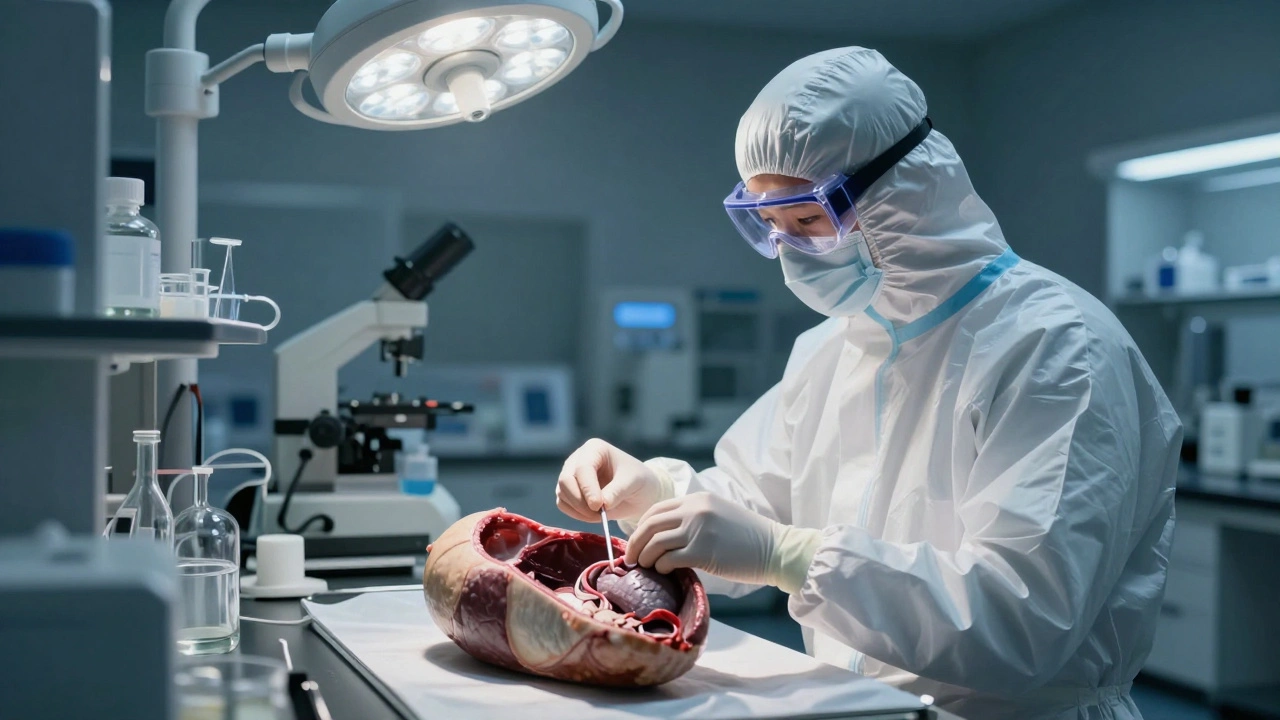
Death due to sepsisa life-threatening organ dysfunction caused by a dysregulated host response to infection remains one of the hardest conditions to confirm after someone has passed away. In the clinic, doctors look at fever, blood pressure, and lactate levels. Once a person dies, those signals vanish. You cannot measure blood pressure on a corpse, and body temperature equalizes with the room. This creates a massive gap between what clinicians suspect before death and what pathologists find during an autopsy.
The challenge isn't just about finding bacteria. It is about proving the body reacted with a systemic inflammatory response that led to failure. Many people carry bacteria without dying of sepsis. Others die of sepsis with no visible infection at the scene. This ambiguity forces forensic experts to become detectives of biology rather than simple observers.
The Diagnostic Dilemma in Forensic Settings
When a pathologist opens an autopsy report, they often face nonspecific findings. You might see redness in the lungs or swelling in the liver, but these signs could stem from trauma, heart failure, or toxicity just as easily as from an infection. Historically, this situation was described simply as the body reacting violently to an invader rather than the invader itself doing the damage.
This reality makes postmortem diagnosisthe determination of the cause and manner of death following biological examination after death a process of exclusion. A pathologist must rule out cardiac arrest, toxins, and blunt force trauma first. Only when nothing else explains the picture does sepsis rise to the top of the list. Without modern tools, many cases get classified vaguely as "cardiopulmonary arrest" or remain undetermined.
Research indicates significant discrepancies between clinical records and autopsy conclusions. Insurance data often codes deaths as sepsis based on billing information, but those numbers are notoriously unreliable for tracking true incidence. To get the truth, we need laboratory science that survives the rigor of death.
Biomarkers That Survive the Process
Blood tests taken before death are rarely available in forensic cases, especially sudden or unexpected deaths. This necessitates the use of biomarkers that remain stable long after circulation stops. Among the candidates, Procalcitonina peptide hormone precursor that serves as a marker for bacterial infection stands out.
| Marker | Sensitivity | Specificity | Sample Type | Reliability |
|---|---|---|---|---|
| Procalcitonin (PCT) | ~90% | ~89% | Pericardial/Blood | High |
| C-Reactive Protein (CRP) | Moderate | Moderate | Serum | Variable |
| Lipopolysaccharide-Binding Protein (LBP) | High | High | Blood | High |
| sTREM-1 | Moderate | Moderate | Serum | Low Standalone |
Data suggests PCT measured in pericardial fluid can achieve a 90% sensitivity rate. This means if you test the fluid around the heart, you have a very strong chance of identifying a septic event. Unlike general inflammation markers, PCT spikes specifically when gram-negative bacteria are involved in the bloodstream.
Another contender is Lipopolysaccharide-binding protein, or LBP. This protein binds to endotoxins released by bacteria. When combined with PCT, the diagnostic accuracy improves significantly. However, relying on a single marker is risky. Using a panel-measuring multiple indicators simultaneously-provides the strongest evidence. Soluble interleukin-2 receptor (sIL-2R) also shows promise, though it requires precise timing relative to death.
Where to Sample Matters Most
You cannot always rely on peripheral blood samples taken from a vein in the arm. As circulation fails, blood pools in certain areas, leading to contamination or hemolysis (breakdown of cells). Pathologists increasingly turn to alternative matrices that are less prone to these changes.
Pericardial fluidfluid accumulated within the pericardial cavity surrounding the heart offers a unique advantage. It is more isolated from the external environment than blood in the limbs. Studies show it retains stable concentrations of inflammatory markers even when peripheral blood has degraded. If the sample container is sealed tight, this fluid can remain viable for analysis up to 48 hours after death.
Vitreous humor, the fluid inside the eye, is another critical resource. Because the eye is physically enclosed, it resists contamination from gut bacteria migrating after death. While vitreous is excellent for chemical toxicology, its role in sepsis is growing. Specifically, polymerase chain reaction (PCR) testing on vitreous samples can detect DNA from pathogens that traditional cultures miss.
In contrast, urine is generally not recommended for these specific biomarkers. Postmortem urine chemistry changes too rapidly, making interpretation difficult. Relying on urine for sepsis markers risks false positives or negatives.
The Impact of the Postmortem Interval
Time is the enemy of forensic precision. The postmortem interval (PMI) dictates how much degradation occurs. Within the first 72 hours, tissue quality is relatively good. Bacterial overgrowth from the intestines usually hasn't spread systemically yet. After 72 hours, autolytic changes (self-digestion of tissues) blur the lines between ante-mortem infection and postmortem decay.
As the body breaks down, bacteria naturally migrate from the gut to the blood and organs. This mimics the pattern of a real sepsis case but happened entirely after the heart stopped. To distinguish them, pathologists look at vascular staining. E-selectin expression on blood vessel walls indicates activation of the endothelium, which happens during a live immune response. If you stain the vessels and find E-selectin positive results, it strongly supports that the body fought an infection before death.
Hemolysis is another major factor. If red blood cells burst open, they release substances that interfere with chemical readings. This is why some tests fail in older bodies. The choice of biomarker depends heavily on how long ago the person died. Stable markers like PCT hold up better than others that degrade quickly with pH shifts in dying cells.
Special Case: Meningococcal Sepsis
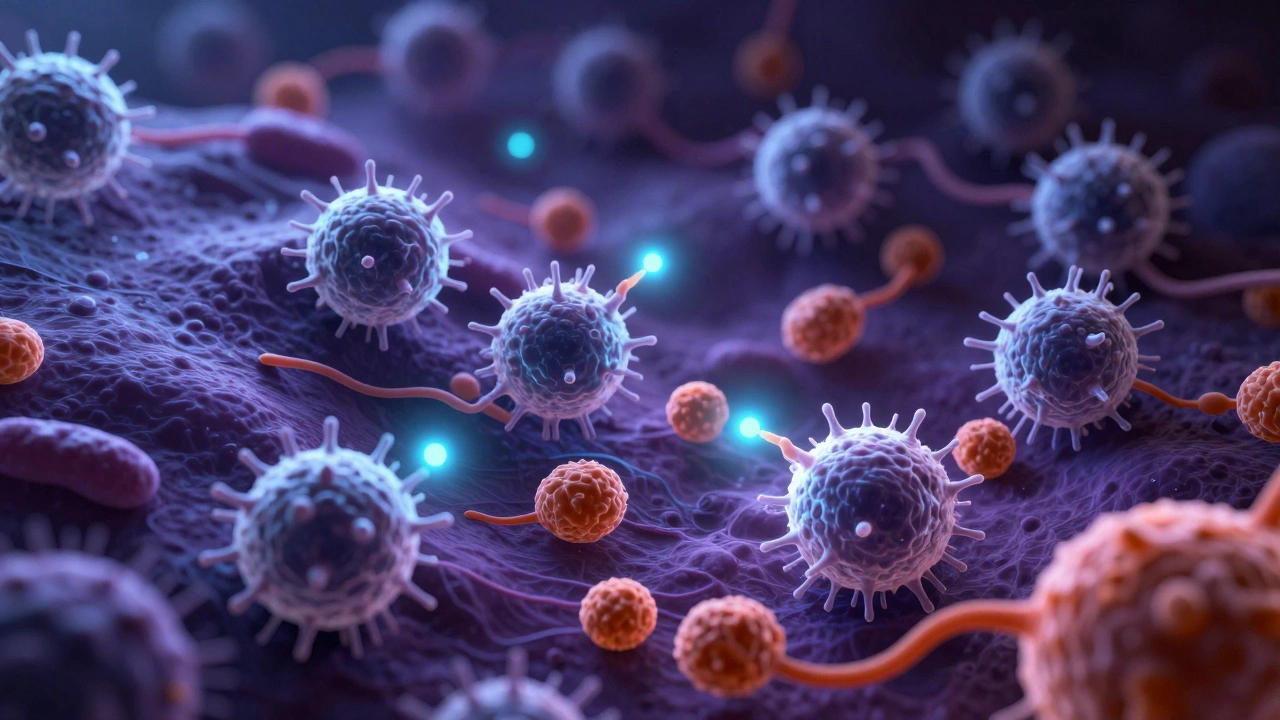
Some infections leave distinct signatures, allowing for more confident diagnoses. Meningococcal sepsis, caused by Neisseria meningitidis, is rare but devastating. It causes rapid collapse and often leaves bruising on the skin called petechiae. In forensic cases involving young people or outbreaks, distinguishing this becomes a public health priority.
Standard cultures work well only if the autopsy happens quickly. After 72 hours, culture positivity drops to roughly 20%. This low success rate forces labs to use molecular methods. PCR analysis of vitreous humor detects the organism's genetic material even when the bacteria are dead. Immunohistochemistry on skin biopsies can also localize the organism in blood vessels.
Because this disease spreads through respiratory droplets, confirming the diagnosis helps protect family members and contacts. Forensic laboratories now recommend a protocol for suspected cases:
- Collect vitreous humor for PCR testing immediately.
- Take skin tissue for immunohistochemistry regardless of time since death.
- Sample visceral organs if PMI is under 96 hours.
- Use E-selectin staining as corroborating evidence.
Bridging Clinical and Forensic Knowledge
The ultimate goal of refining postmortem sepsis diagnosis benefits living patients too. Clinical medicine lacks a rapid test equivalent to a troponin test for heart attacks. Doctors still guess based on symptoms. By understanding what stays reliable in dead tissue, researchers hope to isolate specific proteins that appear early in life.
There is currently a push for FDA-approved tests that mimic the speed of emergency diagnostics. Technologies like TriVerity or Intellisep aim for that 10-minute turnaround. If forensic data validates the stability of these targets post-death, it gives clinicians confidence that those targets are fundamental to the disease process. It closes the loop between prevention and investigation.
For the pathologist, the lesson remains consistent: never rely on one test. A combination of macroscopic observation, histology, microbiology, and biochemistry provides the only true answer. When clinical records are missing, these tools reconstruct the final days of a life.
Can you diagnose sepsis years after death?
No, accurate diagnosis requires samples collected shortly after death. Beyond 72 to 96 hours, autolysis and bacterial translocation make it nearly impossible to distinguish ante-mortem infection from postmortem decay.
Is blood culture the best method for autopsy sepsis diagnosis?
Peripheral blood culture has low yield in autopsies due to postmortem contamination. Pericardial fluid and vitreous humor offer higher reliability, especially when combined with PCR techniques.
Why is C-reactive protein (CRP) not reliable after death?
CRP levels fluctuate significantly in the postmortem period due to cellular breakdown and diffusion. It does not retain specificity for infection once circulation stops, unlike Procalcitonin.
What is the most stable biomarker for sepsis in forensics?
Procalcitonin (PCT) is considered the most robust marker. It maintains high sensitivity and specificity in pericardial fluid compared to serum or plasma.
Does finding bacteria in blood prove sepsis occurred before death?
Not necessarily. Bacteria can enter the blood after death (translocation). You need inflammatory markers like PCT or histological evidence to confirm the body responded to the infection while alive.