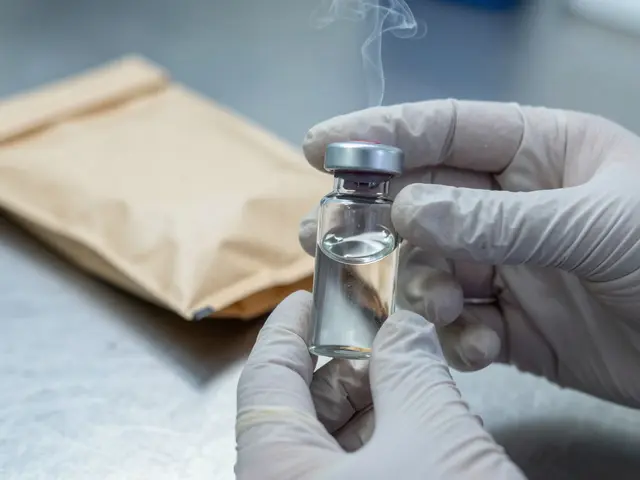
When a crime scene is processed, investigators don’t just look for fingerprints or blood spatter. They also look at the walls, ceilings, and insulation-because building materials leave behind traces that can tell a story no witness can. Drywall dust, cement board fragments, and insulation fibers are often overlooked, but they’re some of the most reliable forms of trace evidence in residential and commercial investigations. These materials don’t just hold up a room-they hold clues.
Drywall: The Most Common Trace, Often Ignored
Drywall, or gypsum board, is used in over 90% of U.S. homes. It’s lightweight, easy to install, and cheap. But that’s also why it’s so common at crime scenes. When someone kicks a door, punches a wall, or drags a heavy object across a surface, drywall breaks. And when it breaks, it leaves behind fine white dust-gypsum particles mixed with paper fibers.
This isn’t just dirt. It’s a fingerprint of the building. Each manufacturer uses slightly different ratios of gypsum, paper thickness, and additives. Type X drywall, for example, contains fiberglass strands to improve fire resistance. Those fibers show up under a microscope as tiny glass-like strands, often trapped in shoe treads, clothing fibers, or even on tools used in the crime. In a 2023 case in Portland, a suspect’s boot sole matched the exact fiber composition of drywall from a home in Beaverton. The material had been disturbed during a forced entry.
Even more telling: drywall dust has a unique moisture signature. Gypsum absorbs water slowly. If a wall was damaged during a storm, or if water was used to clean up, the dust will show different crystallization patterns. Forensic labs now use Raman spectroscopy to identify the source of drywall dust based on its chemical fingerprint.
Cement Board: The Heavy Hitter with a Unique Profile
Where drywall fails, cement board steps in. It’s used in bathrooms, kitchens, laundry rooms, and exterior sheathing because it doesn’t rot, swell, or grow mold. But that durability makes it a forensic goldmine.
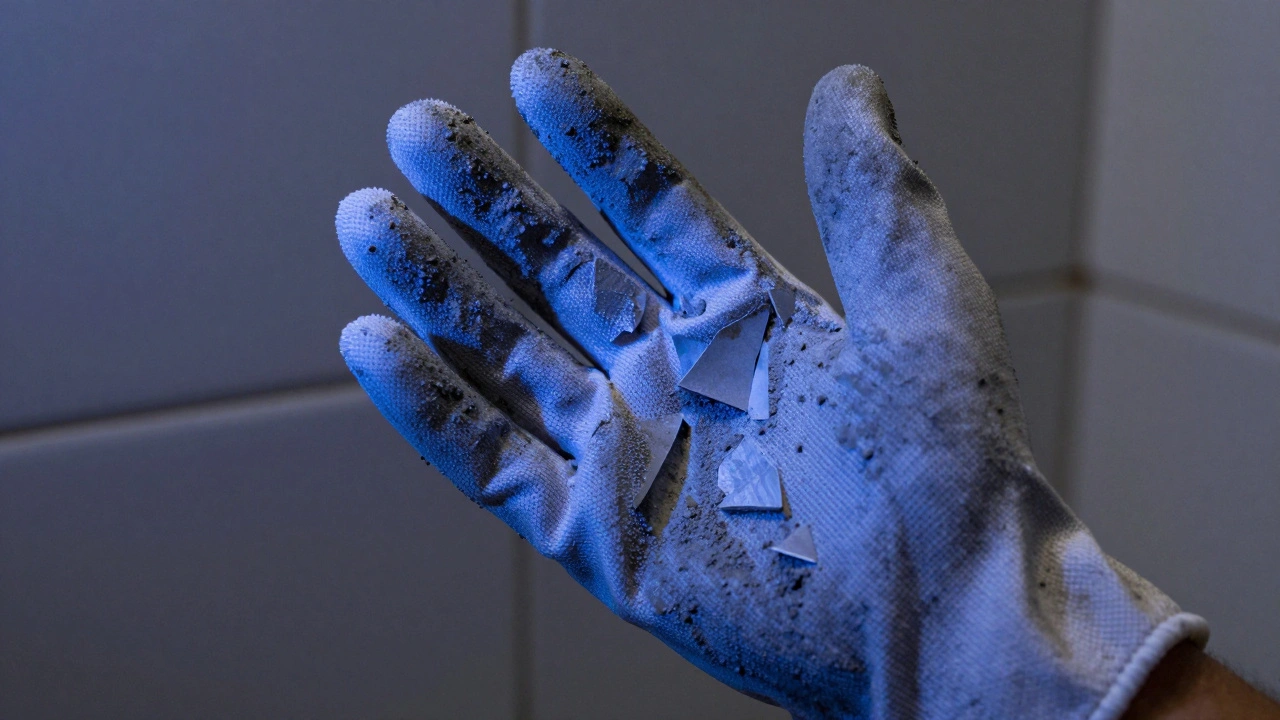
Cement board is made from Portland cement, sand, and fiberglass mesh. It’s dense, heavy, and brittle. When it breaks, it doesn’t turn to dust-it fractures into sharp, angular shards. These fragments are often found embedded in footwear, under fingernails, or caught in vehicle undercarriages after a hit-and-run or burglary.
In a 2024 investigation in Eugene, a suspect’s work gloves contained cement board particles that matched the tile backing in a bathroom where a violent altercation occurred. The lab identified the brand by its fiberglass mesh pattern and cement density. Only three manufacturers in the Pacific Northwest produce that exact formulation. The suspect had worked as a tile installer. The evidence tied him directly to the scene.
Unlike drywall, cement board doesn’t absorb moisture. That means if a fragment is found wet, it was likely exposed to water after the break-helping investigators determine the timeline of events. A wet shard on a dry floor? That’s a red flag.
Insulation: The Invisible Witness
Insulation is hidden behind walls, but it doesn’t stay hidden forever. When walls are breached, insulation fibers spill out like cotton candy from a broken cone. And each type leaves a different trace.
Fiberglass insulation-the most common type-is made of fine glass fibers. These fibers are brittle and break easily. When disturbed, they become airborne and cling to clothing, hair, and skin. A 2022 study from the University of Oregon found that 78% of suspects in home invasion cases had fiberglass fibers on their clothing, even after showering. The fibers are so small they can pass through washing machines.
But not all insulation is the same. Cellulose insulation, made from recycled paper treated with borate, has a distinct odor and texture. It’s darker, fluffier, and smells faintly of sawdust. In a fire investigation in Salem, investigators found cellulose fibers in a suspect’s car trunk. The fibers matched the attic insulation of the burned home. The suspect claimed he’d never been inside-but the borate signature in the fibers confirmed it.
Spray foam insulation is even more revealing. Polyurethane foam expands and hardens into a rubbery mass. If it’s sprayed during a crime-say, to seal a vent or hide evidence-it leaves behind a unique chemical residue. Forensic chemists can test for isocyanates, the building blocks of spray foam. These compounds degrade slowly and can be detected months later.
Putting It All Together: The Material Timeline
Forensic teams don’t just collect materials-they reconstruct events using them. Here’s how:
- A broken wall? Look for drywall dust on the floor. Is it fresh? Then the break happened recently. Is it layered under dirt? Then it’s old.
- Shards of cement board on a shoe? The suspect was likely in a bathroom or kitchen. Did they step in water? Then the board was wet when broken-maybe during a struggle.
- Fiberglass fibers in the victim’s hair? The attacker was likely working in an attic or wall cavity.
- Spray foam residue on a tool? That tool was used to seal something after the crime.
In a 2025 case in Hillsboro, a suspect tried to cover up a burglary by patching a hole in a wall with spray foam and drywall. But the foam didn’t cure properly. The lab found uncured polyurethane beneath the patch. The suspect didn’t know that spray foam needs 24 hours to fully harden. He left a chemical trail.

Why This Matters Now
Building codes have changed. More homes use cement board in bathrooms. More attics use spray foam. More walls use Type X drywall. That means the trace evidence we find today is different than it was 10 years ago.
Forensic labs are catching up. The FBI’s Trace Evidence Unit now maintains a database of drywall, cement board, and insulation samples from 47 states. They can match a fragment to a manufacturer, a batch, even a job site.
And it’s not just about catching criminals. It’s about clearing the innocent. In 2023, a man in Bend was accused of breaking into a home. But the drywall dust on his jacket didn’t match the home’s material-it matched a nearby construction site. He was cleared within 72 hours.
What You Can Do
If you’re a homeowner, contractor, or investigator, remember this: don’t ignore the walls. When you’re documenting a crime scene, take photos of damaged surfaces. Collect dust with tape lifts, not just swabs. Bag insulation fragments separately. Label them with location and depth.
And if you’re cleaning up after a renovation? Don’t vacuum drywall dust into the HVAC system. It might become evidence later.
Can building materials really be traced back to a specific home?
Yes. Each manufacturer uses unique blends of gypsum, cement, fiberglass, and additives. Labs can match fragments to specific batches using chemical analysis, fiber patterns, and density tests. In one case, a drywall shard was traced to a single home in Clackamas County by its paper facing thickness and gypsum crystallization pattern.
Do these materials degrade over time?
Drywall dust and insulation fibers can last for years if kept dry. Cement board fragments are extremely stable-they don’t decompose. Spray foam residue degrades slowly, but its chemical markers can still be detected for over a year. Moisture, heat, and sunlight are the main factors that break down these traces.
Is drywall the same everywhere in Oregon?
No. Portland-area homes built after 2020 mostly use Type X drywall with fiberglass reinforcement. Older homes use standard drywall. Rural areas sometimes use imported panels from Washington or Idaho, which have different paper facing weights. These differences help forensic teams narrow down the origin of material traces.
Can insulation fibers be washed off clothing?
Regular washing doesn’t remove all fibers. Fiberglass and cellulose fibers are too small and cling to fabric at a microscopic level. Even after multiple washes, forensic labs can still detect them using ultraviolet light and scanning electron microscopy. This is why suspects often have trace evidence even if they cleaned up.
Why isn’t this taught in basic forensic courses?
Most forensic programs focus on DNA, fingerprints, and ballistics. Building material analysis is still emerging. But since 2022, the National Institute of Justice has funded training programs in the Pacific Northwest specifically on construction trace evidence. More labs are adopting it, and it’s becoming a standard tool in residential crime investigations.