Most people picture forensic scientists in lab coats, analyzing DNA or fingerprints. But behind every forensic report, there’s a team being led-by someone who didn’t just do the work, but made sure the whole system worked. Leadership paths in forensic laboratories aren’t just about promotions; they’re about shifting from doing the science to owning the outcome.
From Analyst to Technical Leader
The journey often starts as a Forensic Scientist or Lab Technician. You learn how to extract DNA from a bloodstain, match bullet striations, or interpret digital evidence. You’re good at it. Maybe even excellent. But if you want to move up, you can’t just keep doing the same tasks. The first real step into leadership is becoming a Technical Leader. Technical Leaders aren’t managers. They’re the go-to experts in their discipline. In a big lab like New York City’s, you might have one Technical Leader for nuclear DNA, another for mitochondrial DNA, and one for serology. They’re the ones who know the limits of the method, who spot when a protocol is drifting, and who decide whether a test result is reliable enough to present in court. This role demands two things: deep technical skill and the ability to teach others. A Technical Leader still runs casework-sometimes the most complex cases-but they also train junior analysts, review quality control data, and respond to issues that could delay a case. They have the authority to pause testing if something’s wrong. That’s not just a job title; it’s a responsibility that can stop a wrongful conviction.Managing the Machine: Laboratory Managers
Once you’ve mastered leading a technical discipline, the next step is managing the whole machine. That’s where Laboratory Managers come in. They’re the ones who keep the lab running day to day. They don’t just supervise staff-they handle budgets, order equipment, manage evidence intake, and make sure every piece of evidence moves through the system without getting lost. In Mississippi, the Forensic Laboratory Manager doesn’t just oversee the crime lab. They also handle procurement, maintain records, and set operational standards across the state’s system. They’re the link between the scientists and the administrators. A good manager knows when to push for more funding, when to retrain staff, and when to say no to a request that would compromise quality. These roles often require someone who’s still hands-on. Many Laboratory Managers still process evidence, respond to crime scenes, or testify in court. But now, they’re also writing reports for city councils, negotiating with vendors, and training supervisors. The shift isn’t just about titles-it’s about thinking in systems, not just samples.Statewide Oversight: The Technical Leader at the State Level
In states like Michigan, the role of Technical Leader goes even further. These aren’t just lab-based roles-they’re statewide. A State Police Forensic Technical Leader might oversee DNA testing across five different labs. Their job isn’t just to manage one team. It’s to make sure every lab in the state follows the same protocols, passes the same audits, and meets ISO 17025 standards. They monitor Daubert challenges-legal attacks on the science behind forensic methods. They review court rulings and update policies overnight if a judge rules a technique inadmissible. They track equipment failures, coordinate statewide purchases of mass spectrometers or sequencing machines, and design training programs for police officers who collect evidence. This level of leadership requires a rare mix: scientific credibility, policy knowledge, and political savvy. You’re not just a scientist anymore. You’re the reason the state’s entire forensic system stays defensible in court.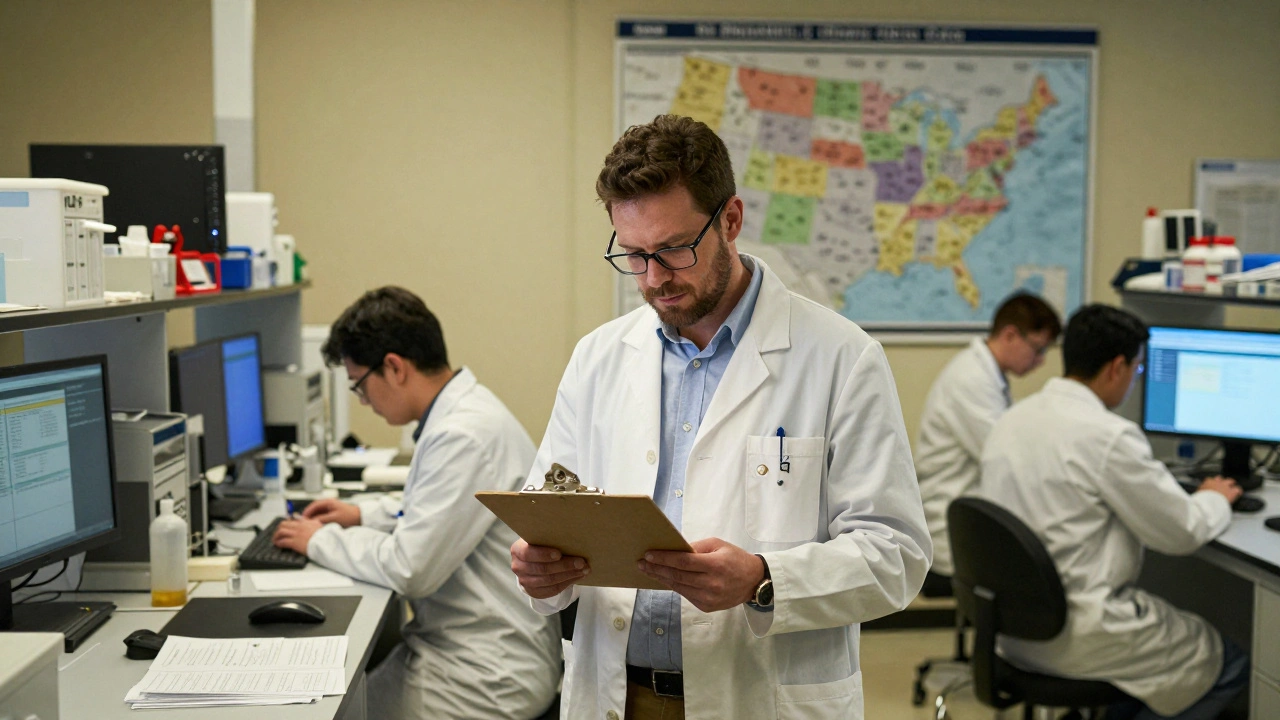
The Director: Running the Whole Show
At the top sits the Director. This isn’t just another manager. This is the person who answers for everything. They report to the Chief Medical Examiner or a county administrator. They’re responsible for hiring, firing, and evaluating every single person in the lab. They prepare annual reports on caseload, turnaround times, and error rates. They testify before legislatures about funding needs. A Director doesn’t just manage people. They shape policy. They decide whether the lab adopts new technology-like rapid DNA or AI-assisted fingerprint matching. They negotiate contracts with private labs during backlogs. They ensure compliance with national standards from the FBI or ASCLD/LAB. They’re the ones who have to explain why a case took six months instead of two. The best Directors still understand the science. They don’t just read reports-they’ve run the tests themselves. But their real skill is translating technical needs into budgets, and scientific integrity into public trust.Behind the Scenes: Supporting Leadership Roles
Leadership isn’t just about titles at the top. Other roles quietly hold the system together. The Value Stream Manager tracks how long evidence sits in the LIMS queue. They identify bottlenecks-like a backlog of rape kits-and design workflows to clear them. The Quality Assurance Team audits every step: from evidence collection to report signing. The Training Team doesn’t just teach new hires-they design certification programs for advanced techniques. These aren’t support roles. They’re leadership roles in disguise. A Quality Assurance Specialist who designs a new audit protocol is influencing how thousands of cases are handled. A Training Coordinator who creates a course on digital evidence handling is shaping how police departments collect data.
What It Really Takes to Move Up
There’s no single path. Some rise through technical expertise. Others become managers by accident-because they were the only one who could handle the budget meeting. But the ones who make it to the top share three traits:- They never stop doing the work. Even Directors still review casework. If you lose touch with the science, you lose credibility.
- They speak both science and bureaucracy. You need to explain PCR amplification to a judge and a budget line item to a city councilor.
- They protect the integrity of the lab. It’s easy to cut corners under pressure. Leaders say no-even when it’s unpopular.
What’s Next?
If you’re an analyst wondering how to grow, start by asking for responsibility-not a title. Volunteer to lead a training session. Help draft a new procedure. Track a backlog and propose a fix. Leadership in forensic labs isn’t given. It’s earned by showing up when it matters.Can you become a forensic leader without a PhD?
Yes. While advanced degrees help, especially for director roles, many forensic leaders started as technicians with bachelor’s degrees. What matters is experience, demonstrated competence, and the ability to lead. Labs in Ohio, Texas, and California have promoted individuals to Technical Leader and Manager roles based on performance, not degrees.
How long does it take to become a forensic laboratory director?
It typically takes 10 to 15 years. Most directors start as analysts, spend 4-6 years as technical leaders, then 3-5 years as managers before being promoted. Some move faster if they take on extra responsibilities-like leading accreditation prep or managing a new facility-but the path is rarely quick. The best directors are the ones who’ve seen every kind of case and every kind of mistake.
Do forensic leaders still do lab work?
Yes, especially at the Technical Leader and Manager levels. Directors may not run tests daily, but they still review results, validate new methods, and occasionally step in during emergencies. A leader who hasn’t touched a pipette in five years loses touch with what the team actually does. That’s why most labs require leaders to maintain active casework.
Are there leadership roles outside of government labs?
Yes. Private forensic labs, university research centers, and federal agencies like the FBI or DEA all have leadership tracks. The structure might be different-less bureaucracy, more flexibility-but the core responsibilities are the same: ensure quality, manage people, and uphold scientific integrity. Some private lab directors even have more freedom to innovate, but they also face pressure to turn a profit.
What’s the biggest mistake people make trying to move into forensic leadership?
Thinking leadership is about authority, not responsibility. Many analysts assume a promotion means they’re in charge. But real leadership means you’re now responsible for every error, every delay, every missed deadline. The best leaders don’t look for credit-they look for problems before they happen.