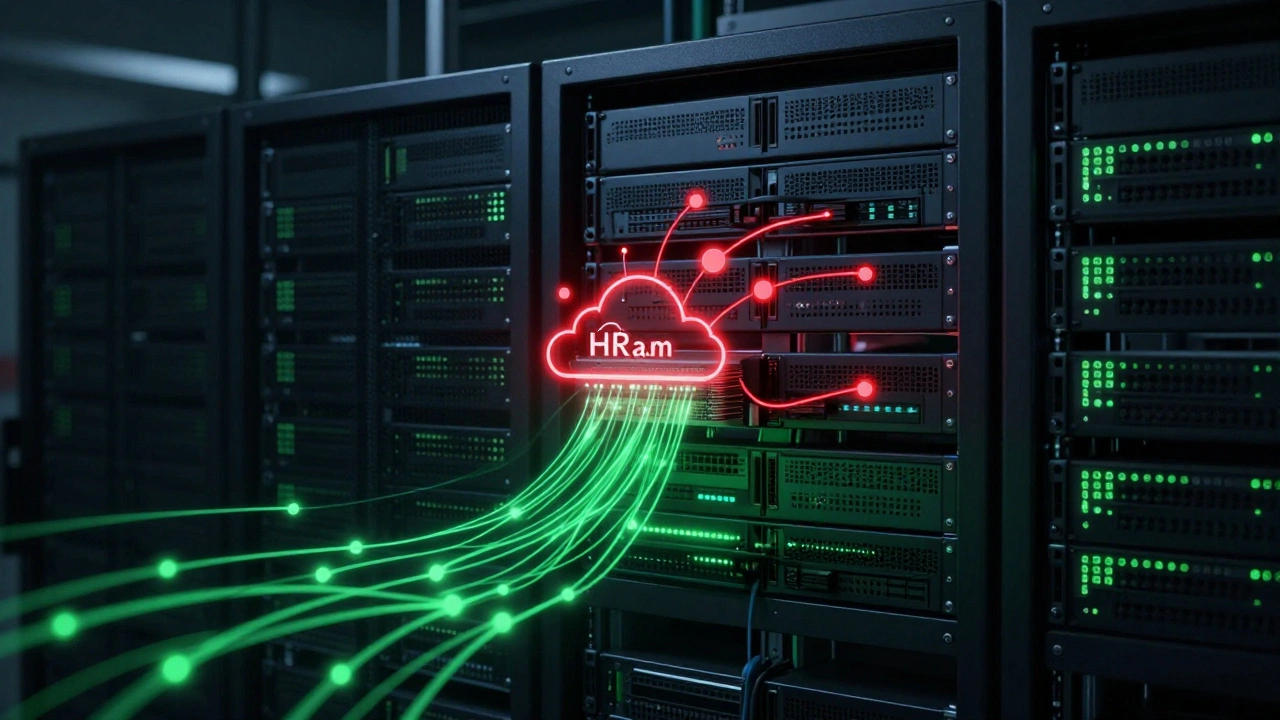
When something goes wrong on a network - a server crashes, files disappear, or an employee reports suspicious activity - most people look at their endpoints: laptops, phones, servers. But the real story often lives in the network traffic. Every time a device sends or receives data, it leaves a trail. That trail is what network traffic analysis (NTA) uncovers. And in digital forensics, that trail is often the only thing that tells you what really happened.
What Is Network Traffic Analysis?
Network traffic analysis is the process of watching how data moves across a network. It’s not just counting how many packets are flying around. It’s asking: Who is talking to who? When did they talk? What kind of data was exchanged? And why does it look strange?
Think of it like traffic surveillance on a highway. You don’t need to see every car’s license plate to know something’s off. If 200 trucks suddenly leave a warehouse at 3 a.m. and head toward a remote location, you’d investigate. Network traffic analysis works the same way. It looks for patterns that break the norm.
NTA doesn’t replace firewalls or antivirus software. It fills the blind spots they leave. Firewalls block known bad things. Antivirus scans files. But if an attacker is already inside the network - and they’re quietly stealing data over weeks - those tools won’t catch it. NTA does.
How NTA Works: The Core Methods
There are two main ways to analyze traffic: flow data and packet inspection. Each has strengths, and smart teams use both.
- Flow Data Analysis: This is the high-level view. Tools like NetFlow, IPFIX, and sFlow collect metadata about conversations - source IP, destination IP, port, protocol, bytes transferred, duration. It’s like a log of every phone call made: who called, when, how long, how much data passed. It’s lightweight, scalable, and perfect for spotting big shifts: a single user suddenly sending 200 GB to an unknown server, or a device talking to a known malware command-and-control domain.
- Packet Inspection: This digs into the actual content of each packet. Deep Packet Inspection (DPI) can decode what’s inside - was it a password? A document? A ransomware encryption command? This level of detail is critical for forensic investigations. If you need to prove a data breach happened, you need to see the actual files or commands that moved across the network.
Flow data tells you something happened. Packet inspection tells you what exactly happened. Together, they give you the full picture.
Why NTA Is Essential for Forensics
In digital forensics, timing and context matter more than anything. A file deleted on a laptop? That’s just a file. But if network logs show that same file was copied out to an external server 17 minutes before deletion? That’s evidence.
Here’s how NTA helps in real investigations:
- Tracking attacker movement: After a breach, attackers often move laterally - hopping from one system to another. NTA shows which internal devices communicated with each other after the initial compromise. Did the compromised printer suddenly start sending data to the finance server? That’s a red flag.
- Identifying data exfiltration: Ransomware encrypts files. But before that, attackers often steal data. NTA can detect unusual outbound traffic: a user account that never normally accesses cloud storage suddenly uploading 50 GB of files to a file-sharing site.
- Reconstructing timelines: Forensic investigators need to answer: When did the breach start? When was data stolen? When was cleanup attempted? Flow records and packet captures provide timestamps for every network event, helping build a precise sequence of actions.
- Proving compliance: In regulated industries (healthcare, finance), you must prove you detected and responded to breaches. NTA logs serve as auditable evidence that you saw the threat and acted.
Without network traffic data, you’re guessing. With it, you’re fact-based.

Spotting Anomalies: The Real Power of NTA
Old-school security relied on rules: “Block traffic to this IP.” “Alert if this file is downloaded.” But attackers adapt. New malware doesn’t use known signatures. So modern NTA uses behavioral baselines.
Instead of looking for known bad things, NTA learns what’s normal. For example:
- Every morning, the accounting team downloads reports from a specific server. That’s normal.
- One day, a developer’s machine starts downloading the same reports - at 2 a.m. - and sends them to a personal cloud account. That’s not normal.
Machine learning models build these baselines automatically. They notice when a device that usually talks only to internal servers suddenly starts communicating with 12 external domains in 10 minutes. Or when a printer, which should never initiate outbound connections, sends data to a country known for cybercrime.
These anomalies are often invisible to humans. But NTA tools flag them in real time. That’s how you catch advanced threats before they cause damage.
Where to Monitor: Edges, Cores, and Internal Firewalls
You can’t analyze traffic you can’t see. Placement matters. Most organizations make the mistake of only monitoring at the perimeter - where traffic enters or leaves the network. But the biggest threats come from inside.
Here’s where to focus:
- Internal firewall interfaces: This is the sweet spot. Monitoring traffic between network zones (e.g., between HR and IT) shows lateral movement. If a user in Sales suddenly starts accessing payroll servers, you’ll see it.
- Core network switches: These handle traffic between departments. Monitoring here gives you a holistic view of east-west traffic - the kind most attackers use to move undetected.
- Cloud gateways: If your company uses AWS, Azure, or Google Cloud, traffic between cloud services needs monitoring too. Cloud traffic isn’t invisible - it just needs the right tools to capture it.
Don’t just monitor the edge. Monitor the inside. That’s where the real forensic value lies.

Tools and Vendors in the Field
You don’t need to build NTA from scratch. Several vendors offer mature platforms:
- ExtraHop: Focuses on real-time network detection with deep packet insights. Strong in behavioral baselining.
- Vectra AI: Uses AI to detect attacker behavior patterns. Excellent for identifying lateral movement and data theft.
- Kentik: Specializes in flow analytics. Great for large networks and cloud environments.
- Rapid7: Integrates NTA into its broader detection and response platform, combining network data with endpoint and log analysis.
These tools aren’t magic. They work best when configured by someone who understands the network. A poorly tuned NTA system floods analysts with false alarms. A well-tuned one? It becomes the most reliable source of truth in an investigation.
The Limits of NTA
NTA isn’t perfect. Encrypted traffic (like HTTPS) hides content. If you can’t decrypt it, you can’t see what’s inside - only that data moved. That’s why modern NTA tools include decryption capabilities. But decryption requires careful policy. You can’t just decrypt everything - that’s a privacy and legal minefield.
Also, NTA doesn’t stop attacks. It detects them. You still need firewalls, endpoint protection, and response plans. NTA is the detective. It doesn’t wear a badge - it just has the evidence.
And if your network is too big or too messy? NTA can drown in data. That’s why flow analysis is often the starting point. It’s lighter, faster, and still gives you 80% of what you need.
What Comes Next
NTA is no longer optional. As networks get more complex - hybrid cloud, remote workers, IoT devices - the number of blind spots grows. Attackers know this. They move quietly. They don’t blast through firewalls. They walk in, blend in, and steal.
Organizations that rely only on perimeter defenses are playing defense with their eyes closed. NTA gives them sight. It turns vague suspicions into concrete facts. It turns chaotic logs into clear timelines. It turns guesswork into evidence.
In digital forensics, that’s not just helpful - it’s essential.
Can network traffic analysis detect ransomware?
Yes. Ransomware doesn’t just encrypt files - it often communicates with external servers before and after the attack. NTA detects unusual outbound traffic: a device suddenly connecting to a new IP, sending large volumes of data, or communicating with known malicious domains. Behavioral analysis spots deviations from normal patterns - like a user account that never accesses the internet suddenly downloading encryption tools or uploading files. These patterns are often visible before encryption even begins.
Is packet capture necessary for forensic investigations?
For definitive proof, yes. Flow data tells you something happened - who, when, how much. But packet capture shows you what happened. If you need to prove a specific file was stolen, a command was sent, or credentials were transmitted, you need to see the actual data inside the packets. Packet capture is the gold standard in forensics. However, due to storage limits, it’s often used selectively - triggered by anomalies detected in flow data.
Does NTA work with encrypted traffic like HTTPS?
It can, but not without decryption. Modern NTA tools can decrypt TLS/HTTPS traffic using certificates or key logs - but this requires careful configuration and legal compliance. Without decryption, NTA still sees metadata: which IP sent data to which server, how much, and how often. That’s enough to spot anomalies - like a user suddenly talking to a new domain - even if you can’t see the content. Decryption adds depth, but isn’t always required for detection.
How does NTA differ from SIEM or EDR?
SIEM (Security Information and Event Management) collects logs from firewalls, servers, and apps. EDR (Endpoint Detection and Response) monitors individual devices. NTA watches the network itself - the conversations between devices. It’s complementary. SIEM tells you a login failed. EDR tells you a file was changed. NTA tells you that after the login failed, the attacker moved from the web server to the database server and exfiltrated data. You need all three to see the full attack chain.
Can NTA help with insider threats?
Absolutely. Insider threats are hard to detect because the user has legitimate access. But NTA spots behavioral deviations: an employee who normally only accesses HR systems suddenly downloading 300GB of customer records to a USB drive - and then sending them to a personal email. Or a finance worker accessing servers outside their normal hours. These patterns don’t match their role. NTA flags them because they break the baseline of normal behavior.