When you send a message on your phone, you assume it’s private. That’s the whole point of end-to-end encryption (E2EE). But in 2026, that assumption is breaking down-not because of hackers, but because of broken promises, inconsistent features, and government pressure. Even apps you trust are leaving backdoors open, and forensic investigators are seeing the fallout every day.
What End-to-End Encryption Really Means
End-to-end encryption isn’t just a buzzword. It means your message is locked on your device using a key only your recipient’s device can unlock. Not even the company running the app can read it. That’s the gold standard. But not all apps do it the same way.Signal uses the Signal Protocol a cryptographic protocol that refreshes encryption keys with every message, ensuring past conversations stay secure even if a current key is stolen. This is called perfect forward secrecy. Every time you send a message, the key changes. If a hacker gets your phone tomorrow, they can’t decrypt yesterday’s chats.
Wire and Threema use similar systems. Wire uses the Proteus a double ratchet algorithm that continuously rotates keys and supports encrypted group chats. Threema relies on NaCl an open-source cryptography library known for its speed and resistance to side-channel attacks. Both apps store almost no metadata-no logs of who you talked to, when, or how often.
Then there’s Briar. It doesn’t even use servers. Messages travel peer-to-peer via Bluetooth or Wi-Fi mesh. No cloud. No company tracking your contacts. That’s why activists and journalists in restrictive countries use it. If the internet goes down, Briar still works.
The Big Gaps: Where Encryption Fails
Here’s the problem: many apps claim to offer E2EE, but they don’t deliver it everywhere. The Electronic Frontier Foundation’s 2026 "Encrypt It Already" report breaks it down into three categories: broken promises, disabled defaults, and missing features.First, the broken promises. Facebook Messenger still doesn’t encrypt group messages, even though Signal and Wire have done it for years. That’s a massive hole. If you’re organizing a protest or sharing sensitive documents with a group, those chats are stored unencrypted on Facebook’s servers.
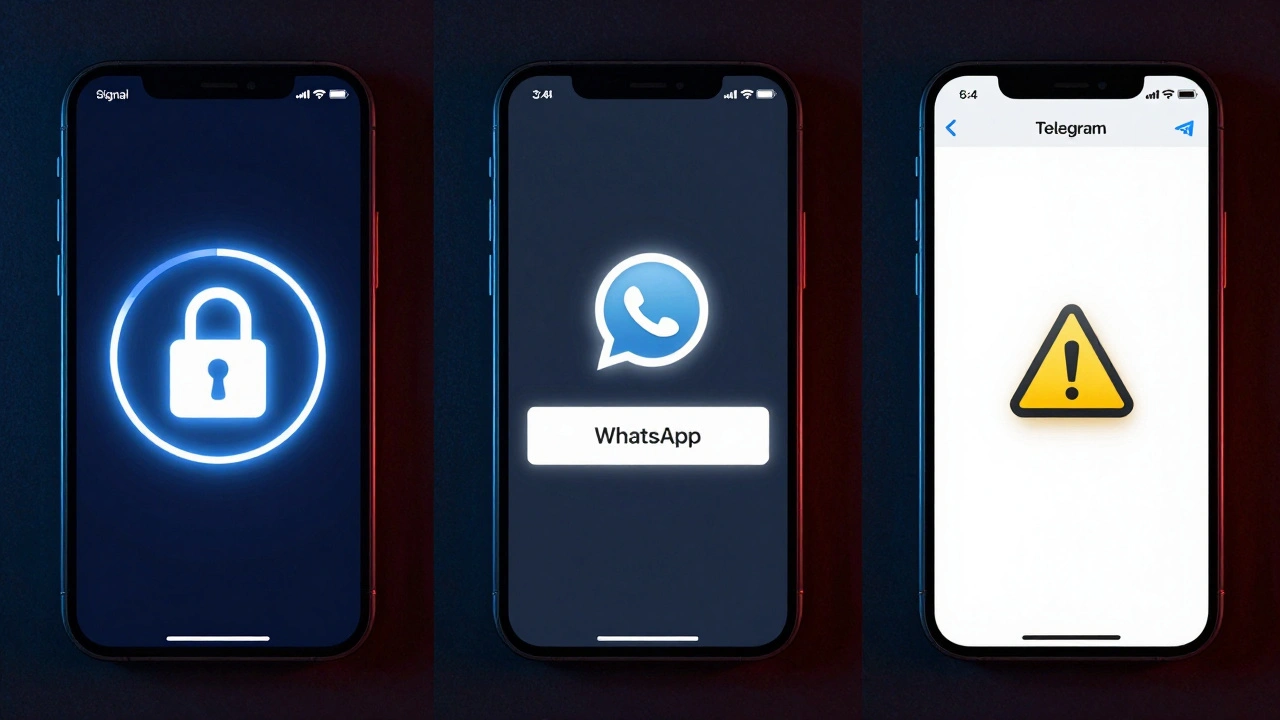
Then there’s WhatsApp which uses Signal Protocol for messages but leaves backups unencrypted by default. If you back up your chats to iCloud or Google Drive, anyone with access to your cloud account-hackers, law enforcement, even your ex-can read everything. That’s not end-to-end. That’s end-to-cloud.
And what about Telegram where only "Secret Chats" are E2EE, and you have to manually turn them on? Most users don’t. Default chats are stored on Telegram’s servers, unencrypted. That means Telegram can read them. And if they get hacked-or handed over to authorities-your messages are exposed.
Then there’s RCS, the new standard replacing SMS. Apple and Google promised interoperable E2EE for RCS. As of early 2026, they haven’t delivered. Millions of Android and iPhone users are stuck with unencrypted messages because the two companies can’t agree on how to implement encryption across platforms. That’s not a technical problem. It’s a choice.
Metadata: The Silent Leak
Even if your message content is encrypted, your behavior isn’t. Metadata tells investigators who you talk to, when, and how often. In forensics, that’s often more valuable than the message itself.Signal stores only your last connection time and nothing else. No phone numbers in their database. No contact lists. Just enough to route messages.
Telegram collects your entire contact list, IP address, device model, and connection logs. Even if you use Secret Chats, they still know you talked to someone at 3 a.m. on a Tuesday. That’s enough to build a profile.
Briar eliminates metadata entirely by design. No server. No tracking. No logs. That’s why it’s used in conflict zones and by whistleblowers.

Government Pressure and the Backdoor Debate
In 2026, governments aren’t just asking for access-they’re demanding it. The UK’s Ofcom is pushing for scanning tools on cloud storage. The EU’s Chat Control proposal could force messaging apps to scan private messages for illegal content. That’s not a backdoor. It’s a front door.Here’s how it works: if a company must scan your messages to detect child abuse material, they need to decrypt them first. That means breaking E2EE. Once that door is open, it’s never closed. Law enforcement won’t stop at child abuse. They’ll expand to terrorism, fraud, even political dissent.
James Baker from the Open Rights Group says the UK is waiting to see what Europe does. If the EU mandates scanning, the UK will follow. That means Signal, WhatsApp, and Telegram could be forced to weaken encryption-or lose access to European markets.
And it’s not just Europe. In the U.S., law enforcement agencies have repeatedly asked Apple and Google to build surveillance features into their operating systems. Apple has resisted. Google? Less so.
Enterprise Messaging: A Minefield
Businesses are stuck between convenience and compliance. Teams, Slack, and Zoom offer "encryption," but it’s often optional, poorly implemented, or doesn’t cover everything.Microsoft Teams offers E2EE only for select calls, and even then, it uses outdated protocols with no perfect forward secrecy. That’s a compliance nightmare for banks, healthcare, and legal firms.
Chanty is one of the few enterprise apps that gets it right: AES-128-GCM encryption at rest, TLS in transit, GDPR compliance, and data loss prevention built in. It’s designed for teams that can’t afford leaks.
But most companies still use WhatsApp or Slack for work. Why? Because it’s easy. That’s the real danger. A single compromised employee account can leak years of sensitive data through unencrypted backups or unsecured group chats.
Why Signal Still Leads in 2026
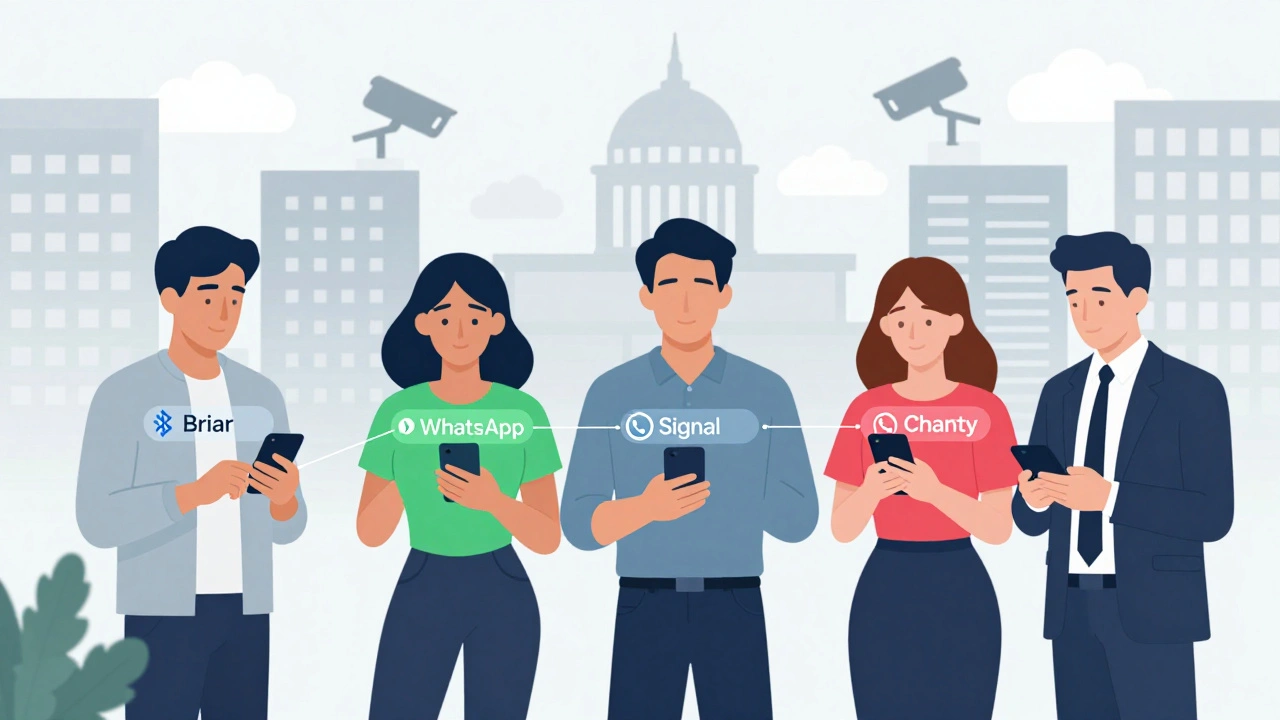
Despite all the noise, Signal remains the only app that delivers full E2EE everywhere-messages, calls, files, and even group chats-with minimal metadata, open-source code, and no ads or data harvesting. It’s not perfect. But it’s the closest thing to true privacy.Its open-source nature means anyone can audit the code. Security researchers from MIT, Stanford, and the EFF have verified its protocols. No hidden backdoors. No corporate incentives to weaken encryption. That’s why it’s the standard.
But adoption is still low. Why? Network effects. If your family uses WhatsApp, you’re stuck. If your coworkers use Slack, you can’t switch. The tech is there. The will isn’t.
The Future Is in Your Hands
In 2026, the battle over encryption isn’t being fought in courtrooms or legislatures alone. It’s being fought in your settings menu.Turn on E2EE backups in WhatsApp. Switch to Signal for sensitive conversations. Demand your employer use Chanty or Wire. Stop using Telegram for anything important. Pressure Apple and Google to finally deliver on RCS encryption.
Every time you choose an app without full E2EE, you’re not just picking a tool. You’re choosing to leave a trail. And in digital forensics, trails lead to evidence. Evidence leads to consequences.
Privacy isn’t about having something to hide. It’s about having control over who gets to look.
Does WhatsApp have end-to-end encryption?
Yes, WhatsApp uses the Signal Protocol to encrypt messages, calls, and media between devices. But backups stored on iCloud or Google Drive are not encrypted by default. That means anyone with access to your cloud account can read your full chat history.
Is Telegram secure for private conversations?
Only if you use Secret Chats-and even then, it’s risky. Default chats are stored on Telegram’s servers and are not end-to-end encrypted. Telegram can read them. Plus, Telegram collects your entire contact list, device info, and IP address. For high-risk users, that’s a liability.
What’s the difference between E2EE and regular encryption?
Regular encryption (like TLS) protects data between your device and the server. The company still holds the keys. End-to-end encryption means only your device and the recipient’s device have the keys. Even the company can’t read your messages.
Can law enforcement break end-to-end encryption?
Not if the app is properly implemented. Signal, Wire, and Briar use protocols that can’t be cracked with current technology. But law enforcement doesn’t need to break encryption-they can access your device, steal your backup files, or pressure the company to weaken encryption through legislation.
Why doesn’t everyone use Signal?
Because it’s not the default. Most people use WhatsApp because their family does. They use iMessage because it’s built into iPhones. Switching requires effort. And until more platforms adopt Signal Protocol, users are stuck with the systems they already have.
Is RCS encryption coming soon?
As of early 2026, Apple and Google have not delivered on their promise to implement interoperable E2EE for RCS. The technology exists, but the political and technical coordination hasn’t. Until they do, millions of Android and iPhone users are still sending unencrypted messages through what’s supposed to be the next-generation SMS system.
What should businesses use for secure messaging?
For compliance and security, businesses should use Chanty, Wire, or Threema. These apps offer full E2EE, GDPR compliance, data loss prevention, and audit trails. Avoid Slack, Teams, and WhatsApp for work-related communication unless you’ve locked down backups and enabled all security settings.