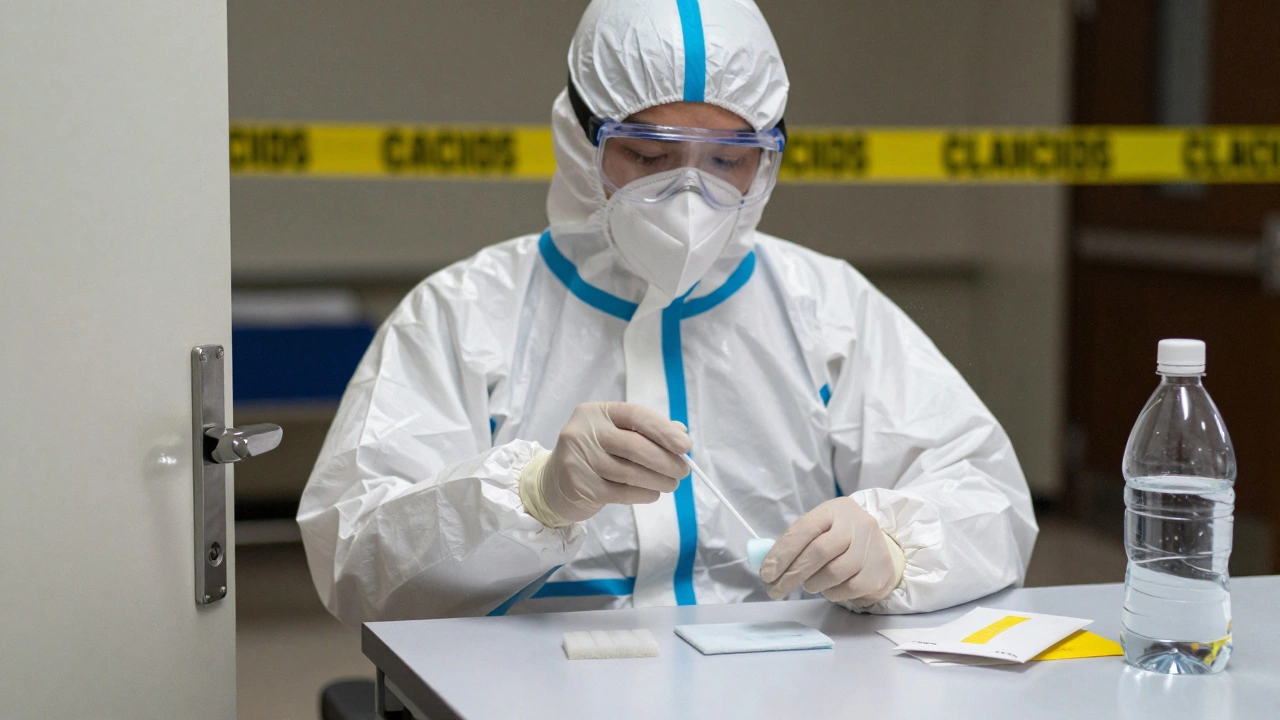
When a crime happens, the smallest trace can change everything. A fingerprint. A strand of hair. A bit of skin left behind on a doorknob. These aren’t just clues-they’re DNA evidence, and how it’s collected makes all the difference between solving a case and losing it forever.
DNA doesn’t lie. But it can be ruined-easily. One wrong move, one contaminated glove, one plastic bag instead of paper, and the entire sample becomes useless. That’s why collecting DNA at a crime scene isn’t just about gathering stuff. It’s a precise science with rules written in blood, sweat, and sterile swabs.
What Counts as DNA Evidence?
DNA comes from biological material. Not just blood or semen, though those are common. It’s also from skin cells, saliva, sweat, even hair roots. Every time someone touches something, they leave behind epithelial cells. These are tiny, invisible, and everywhere. Door handles. Light switches. A coffee cup. The inside of a car door. A victim’s clothing. All of these can hold enough DNA to identify someone.
According to the National Institute of Justice, 76% of homicide investigations involve clothing stained with bodily fluids. In sexual assault cases, semen is found in 42% of cases. Hair roots show up in 29% of property crimes. And touch DNA-skin cells left from casual contact-is now the most common type collected at property crime scenes like burglaries and thefts.
The Right Way to Collect: Swabbing
The most common method? Wet/dry swabbing. It sounds simple, but it’s not. You don’t just swipe a cotton swab across a surface and call it done.
Here’s how it works:
- Put one or two drops of sterile water on a sterile cotton swab.
- Gently swab the area, rotating the swab as you go to cover the full circumference of the cotton tip.
- Let it air-dry for a few seconds.
- Use a second, dry swab and repeat the exact same motion on the same spot.
This two-step process catches both the wet and loose cells. Studies show it yields 37% more DNA than using just one swab. But if you use too much water, you wash away the sample. Too little, and you don’t pick up enough. It’s a balance.
Why not just use one swab? Because DNA doesn’t always stick to the surface. Some cells are barely clinging on. The dry swab acts like a second pass-like vacuuming a carpet twice to get the dust you missed the first time.
Other Methods for Different Evidence
Not everything is swabbed. Different materials need different tools.
- Cuttings: If blood or semen is on fabric or carpet, you cut out the stained section. This gives the cleanest sample, but you destroy part of the evidence. Only used when the item isn’t valuable-like a rug or shirt.
- Wet absorption: For stains on hard surfaces, you moisten a swab slightly, press it onto the stain, then let it dry. This method works best on non-porous surfaces like countertops or glass.
- Tape-lifting: Used on smooth, non-porous surfaces like metal or glass. You press fingerprint tape onto the area, then stick it to clear acetate. It’s 92% effective for dried blood, but useless on fabric or wood.
- Scraping: Rarely used at scenes. A razor blade scrapes cells into a paper envelope. But it’s messy. The FBI says it has a 22% higher chance of contamination than swabbing.
- Brushing: For hair or small skin flakes. A sterile brush gently collects material, then it’s wrapped in paper and stored dry.
The NIJ found that wet absorption followed by dry swabbing worked best in 78% of real-world cases. Tape-lifting was the top choice for glass and metal-89% success rate.
Contamination Is the Enemy
DNA evidence can be ruined before it even leaves the scene. The biggest threat? Cross-contamination.
Dr. Terry D. Moses, former director of the FBI Laboratory, said keeping a 2-foot distance between collection points prevents 98.7% of cross-contamination-when combined with frequent glove changes. That means: change gloves after every item. Even if you think the glove is clean. Even if you touched only one surface. Change them.
And don’t forget masks. Forensic technicians wear full protective suits, gloves, masks, and sometimes even shoe covers. Why? Because you’re shedding DNA all the time. Every breath. Every sneeze. Every flake of skin. If you’re not protected, you’re contaminating the scene.
Reference samples are mandatory. That means swabbing the inside of the cheek of every person who entered the scene-officers, medics, investigators. These samples are used to eliminate their DNA from the evidence. Otherwise, you might wrongly point to an innocent person.
Packaging Matters More Than You Think
Here’s a shocking fact: 67% of DNA evidence errors happen during packaging.
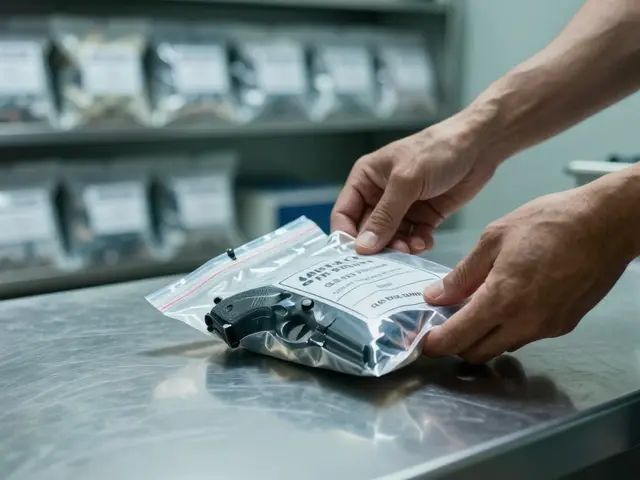
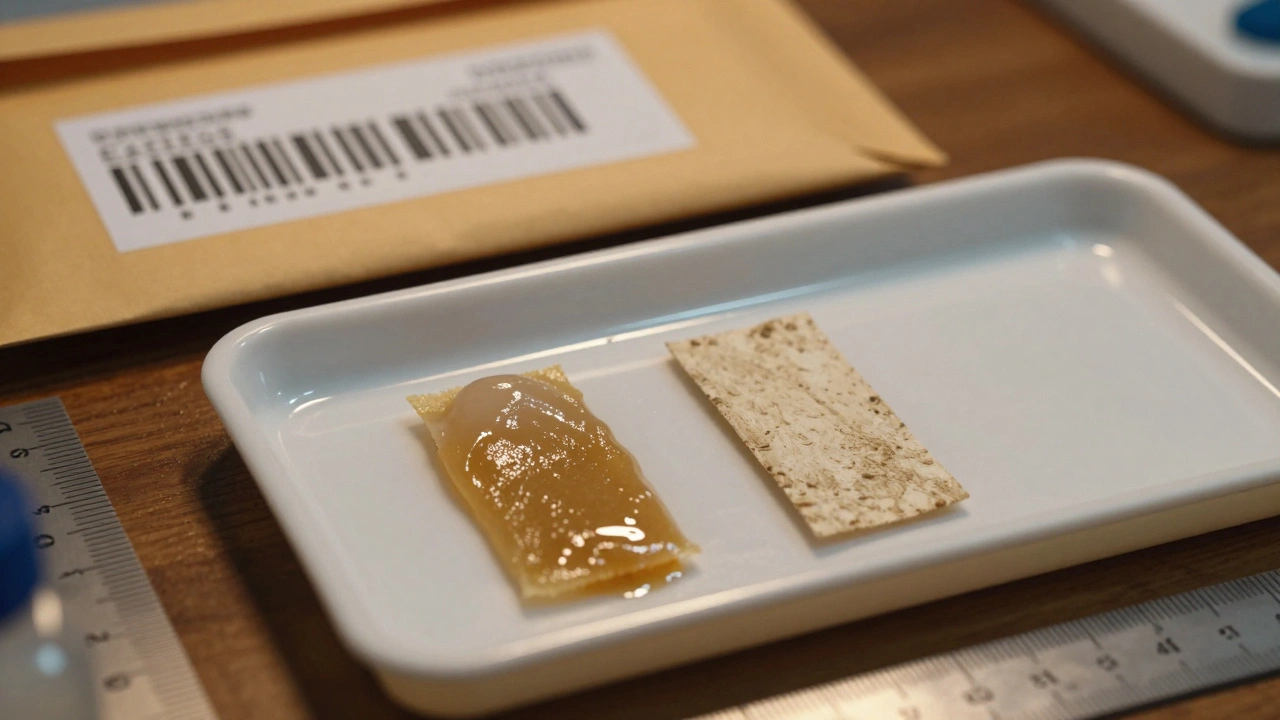
Plastic bags? Bad. They trap moisture. DNA degrades in 72 hours inside plastic. Paper envelopes? Good. They breathe. They keep samples dry. They preserve DNA for up to 180 days.
Temperature matters too. The International Society for Forensic Genetics says keeping evidence below 25°C during transport is critical. Above 30°C? DNA viability drops 15% per hour. That’s why evidence is often shipped in coolers-not just for safety, but for science.
Training and Tools
Collecting DNA isn’t something you learn in a day. The International Association for Identification says it takes 40 hours of supervised practice to hit 90% proficiency. Most mistakes? Too much pressure (28% of samples degraded) or not rotating the swab properly (41% of novices mess this up).
Basic kits cost between $125 and $350. They include:
- Sterile swabs (wet and dry)
- Distilled water
- Paper envelopes
- Labeling tools
- Disposable gloves and masks
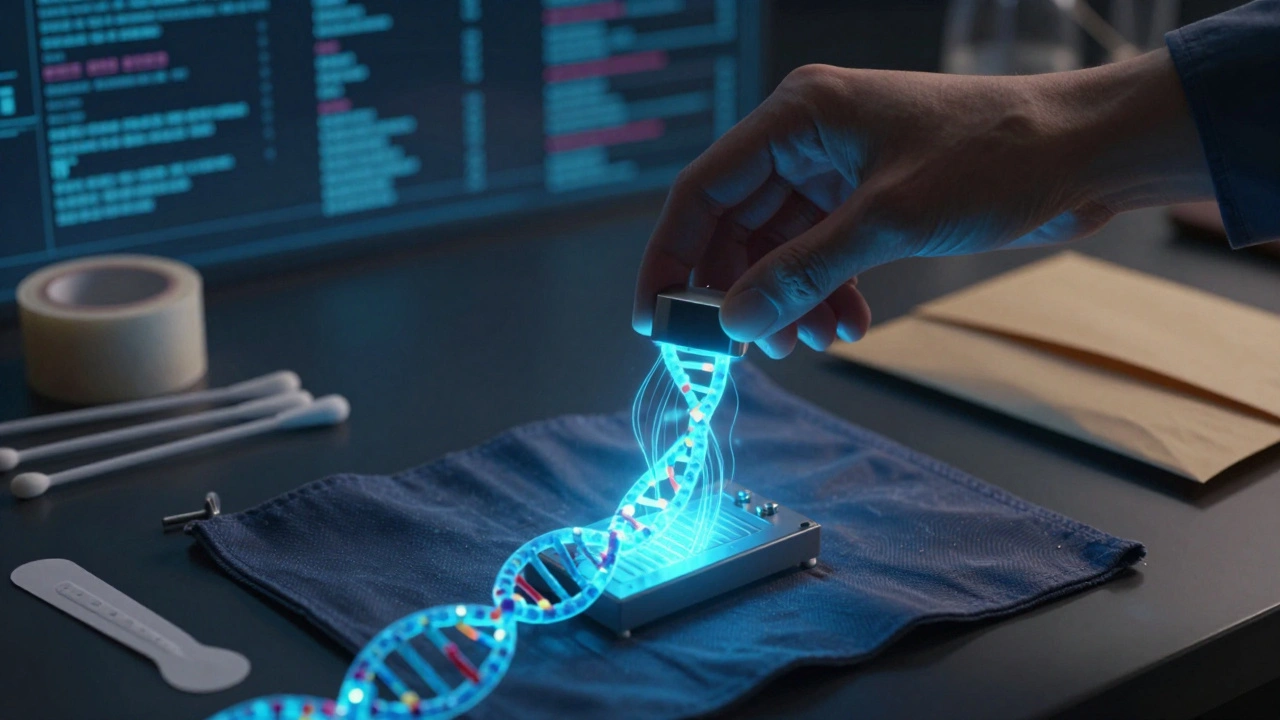
But the tools are changing. In 2025, microfluidic devices started appearing in crime labs. These tiny, high-tech tools pull DNA from surfaces with 58% more efficiency than traditional swabs. And by 2026, field testing is underway for cellulose-based collection media designed specifically for textiles and outdoor environments-places where DNA usually disappears.
The Bigger Picture: CODIS and Real-World Impact
Collecting DNA is only half the battle. The real power comes from matching it.
The Combined DNA Index System (CODIS) has been running since 1998. As of December 2025, it had helped link 550,000 cases. In 2025 alone, 16,500 crime scenes were connected through DNA matches that would’ve stayed hidden otherwise.
There are 18.5 million offender profiles in the National DNA Index System. Every state requires DNA collection from convicted offenders. That’s not just punishment-it’s prevention. A burglar’s DNA from last year can solve a robbery from last month.
And it’s getting faster. In 2025, 42% of major crime labs started using rapid DNA instruments. These machines can process a sample in 90 minutes. No more waiting weeks for results. Now, DNA can be analyzed at the scene-on a mobile unit, in the back of a police car.
Even AI is getting involved. The FBI’s pilot program uses machine learning to scan crime scene photos and predict where DNA is most likely to be found. In tests, it improved detection by 44%. It doesn’t replace the technician-it helps them focus.
What’s Next?
The future of DNA collection isn’t just about better swabs. It’s about changing how we think about evidence.
By 2030, experts predict most major labs will use environmental DNA sampling. That means collecting DNA from the air, from dust, from surfaces without even touching them. Imagine swabbing a room’s air filter instead of a doorknob. It sounds like science fiction. But it’s already being tested.
For now, the rules stay the same: sterile tools, paper packaging, glove changes, no plastic, no shortcuts. Because one contaminated sample can ruin a case. One correct sample can bring justice.
Can DNA be collected from clothing?
Yes. Clothing stained with blood, semen, saliva, or sweat is one of the most common sources of DNA evidence. The preferred method is cutting out the stained area and placing it in a paper envelope. Swabbing can also be used if the stain is small or on delicate fabric. Plastic bags must never be used-they trap moisture and destroy DNA within days.
How long does DNA last at a crime scene?
DNA can survive for months or even years if stored properly. But at the scene, it degrades quickly under heat, humidity, or sunlight. In high humidity (above 65%), DNA recovery drops by 32%. Direct sunlight can destroy DNA in hours. That’s why evidence is collected as soon as possible and stored in cool, dry conditions.
Can DNA be wiped away from a crime scene?
Yes, but not completely. Even if someone tries to clean up, trace DNA often remains. Studies show that 70% of cleaned surfaces still retain enough genetic material for identification. Touch DNA from skin cells can cling to surfaces for days. That’s why forensic teams use alternate light sources and specialized swabs-they find what the naked eye can’t.
Why do investigators wear full protective suits?
Because every human sheds 30,000 to 40,000 skin cells per day. Even a sneeze or a breath can deposit DNA. If an investigator doesn’t wear a mask, gloves, and suit, they risk contaminating the evidence with their own DNA. This could lead to false matches or invalidate an entire case. It’s not paranoia-it’s protocol.
What’s the difference between touch DNA and blood DNA?
Touch DNA comes from skin cells transferred by casual contact-like brushing against a doorknob. It’s usually low-quality, low-quantity DNA. Blood DNA is much richer in genetic material and easier to analyze. Touch DNA requires more sensitive techniques and often needs amplification. But it’s increasingly valuable because it can link suspects to scenes without obvious biological stains.