When a gun is fired, it leaves behind more than just powder residue and bullet fragments. Hidden in the metal of the spent cartridge case are microscopic fingerprints - not from a person, but from the gun itself. These are called toolmarks, and two of the most important ones are the breechface signature and the extractor signature. Together, they help forensic examiners link a fired cartridge to the specific firearm that shot it. This isn’t science fiction. It’s routine in criminal investigations across the U.S., and it’s backed by decades of research and real-world casework.
What Is a Breechface Signature?
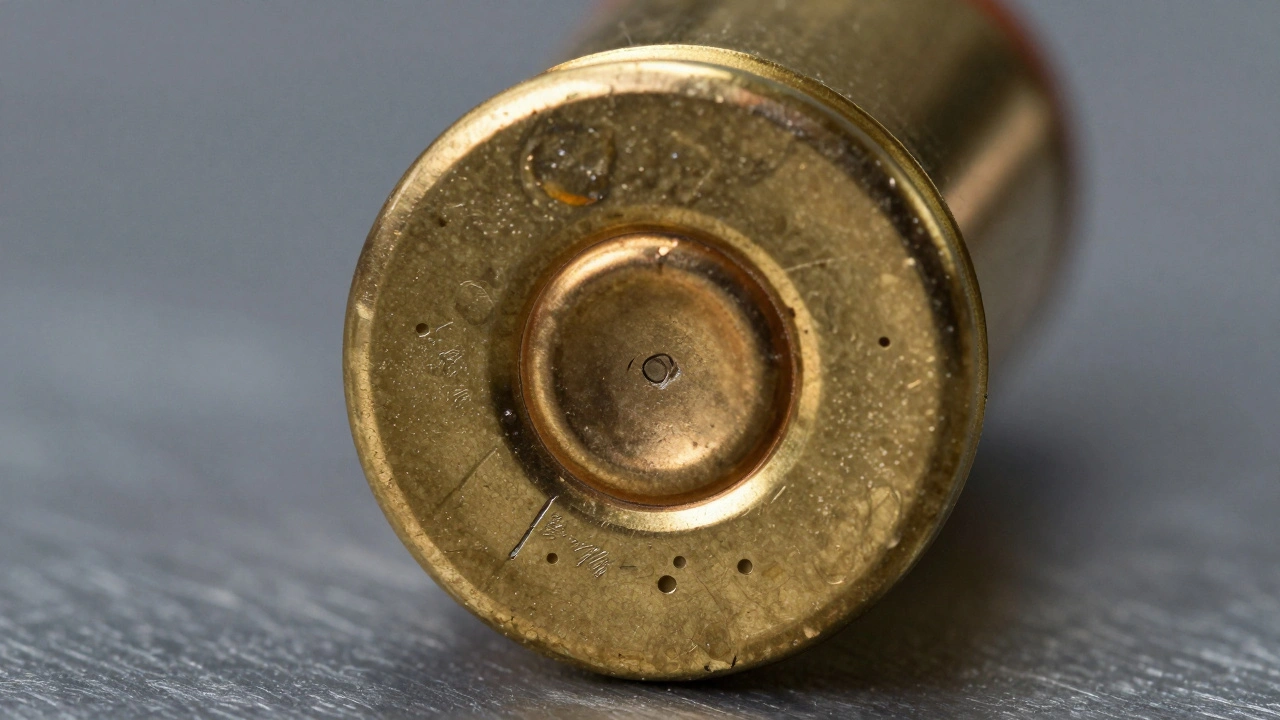
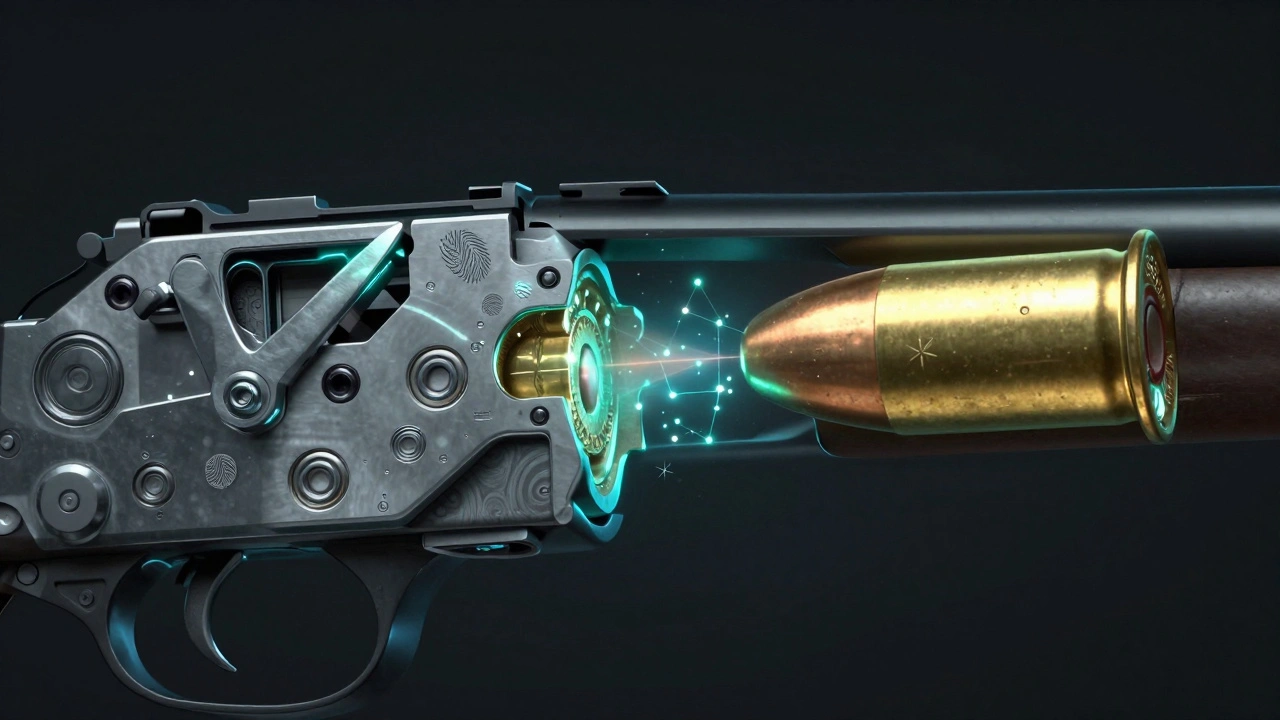
The breechface is the flat, solid surface at the back of a firearm’s chamber. When the gun fires, the expanding gases push the cartridge case backward with tremendous force - about 10,000 psi in a typical handgun. That force slams the cartridge against the breechface. The surface of the breechface isn’t perfectly smooth. It has tiny scratches, pits, and irregularities from manufacturing, wear, and use. These imperfections get stamped into the softer brass of the cartridge case like a stamp on clay.
These impressions are usually 7 to 12 millimeters wide, centered where the base of the cartridge makes contact. What makes them valuable is that they’re unique. No two breechfaces are identical, even from the same factory model. A Glock 17 and a SIG Sauer P320 might look the same, but their breechfaces have different microscopic textures. That’s because each surface develops its own pattern over time - from metal fatigue, cleaning, or even how it was assembled.
Forensic examiners use this uniqueness to match cartridge cases found at crime scenes to test-fired rounds from a suspect gun. According to the National Institute of Standards and Technology (NIST), breechface marks are the primary feature examiners rely on. In controlled studies, the error rate for matching breechface signatures is under 0.8%. That’s better than many fingerprint comparisons. The reason? Breechfaces have more random surface variation than other parts of the gun. They’re not polished or machined to a fine tolerance - they’re functional, not decorative. And that’s exactly what makes them perfect for identification.
What Is an Extractor Signature?
While the breechface leaves a broad, flat impression, the extractor leaves a narrow, linear mark. The extractor is a small claw or hook inside the bolt or slide that grabs the rim of the cartridge case after firing and pulls it out of the chamber. As it yanks the case backward, it scrapes across the rim, leaving behind striations - fine lines or grooves - that are typically 0.5 to 1.5 millimeters wide.
These marks are less unique than breechface impressions. Why? Because extractors are often mass-produced with tighter tolerances. A manufacturer might use the same tool to make hundreds of extractors, so their surface textures are more similar. That’s why examiners don’t rely on extractor marks alone. But they’re still critical. When the breechface mark is damaged - maybe the case was crushed, or the primer blew out - the extractor mark might still be intact. It’s the backup signature.
Some guns leave stronger extractor marks than others. Revolvers, for example, rarely leave clear extractor marks because they don’t use a sliding extractor. But in semi-automatic pistols, the extractor is always active. And in high-volume casework, examiners have found that extractor marks can help confirm a match when breechface marks are borderline. The Washington State Patrol Training Manual notes that extractor marks are especially useful when other areas of the cartridge case are damaged. They’re not the star of the show, but they’re the reliable sidekick.
How Are These Signatures Analyzed?
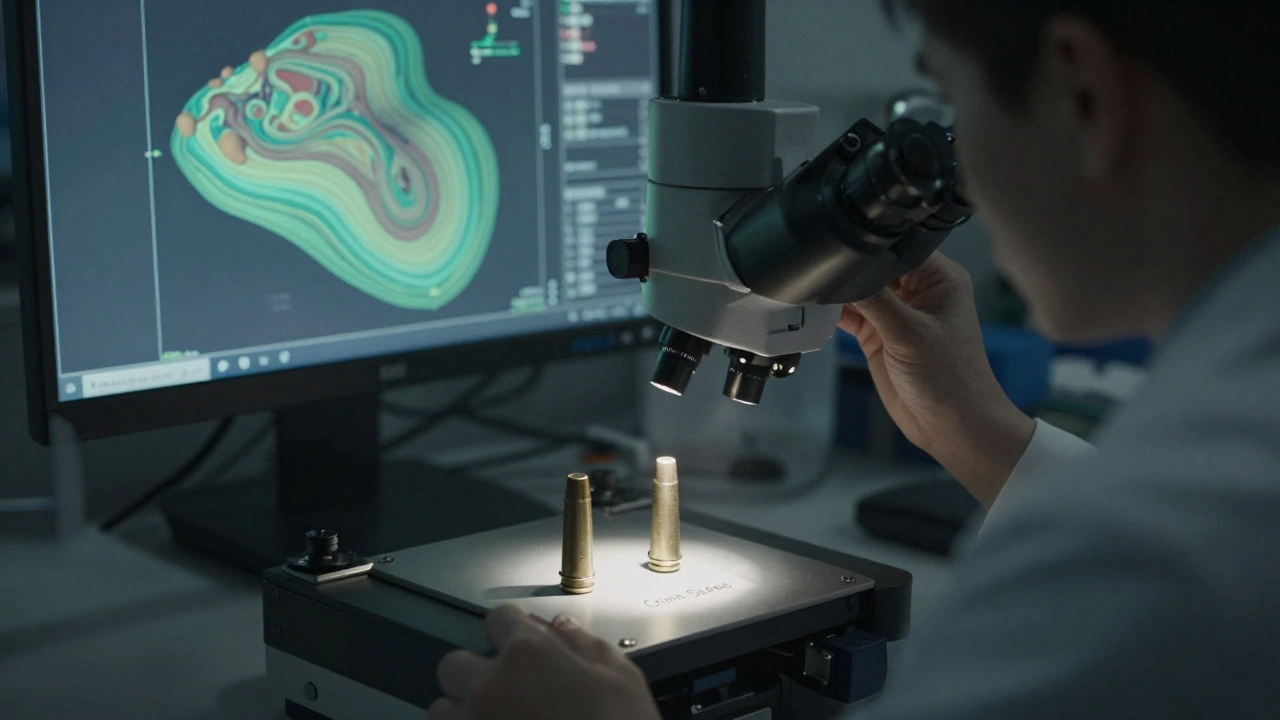
Back in the 1920s, examiners used microscopes and had to line up images by hand. Today, it’s digital. Labs use 3D surface scanners that capture every bump and groove with precision down to 0.1 micrometers - that’s 1/1000th the width of a human hair. These scanners create a topographical map of the cartridge case, turning a physical mark into a data file.
But raw data isn’t enough. A cartridge case picks up all kinds of noise: dirt, oil, primer flowback, even scratches from handling. Examiners have to clean it up. They apply filters - mathematical algorithms that remove surface features smaller than 25 micrometers and larger than 250 micrometers. This isolates the true toolmark signal. Think of it like noise-canceling headphones for forensic evidence.
The next step is comparison. Examiners don’t just compare one test-fired case to one crime scene case. They fire 3 to 5 rounds from the suspect gun and compare all of them. Why? Because no two rounds from the same gun are identical. Cartridge cases vary in thickness, brass hardness, and even how they were loaded. By averaging multiple samples, examiners build a reliable profile of what that gun’s marks look like. Studies show this increases accuracy by 18% compared to using just one example.
Computer algorithms now help with this. The FBI’s Ballistic Toolmark Research and Analysis System (BTRAS), rolled out in 2021, uses machine learning to generate similarity scores between surfaces. It can scan hundreds of cases in minutes. But here’s the catch: the computer can’t make the final call. It can say two marks are 92% similar, but it can’t tell you if that’s enough. Only a trained examiner can. Why? Because they understand context. They know when a mark is a manufacturing flaw versus a true individual characteristic. They’ve seen hundreds of cases. They’ve seen what wear looks like. They’ve seen how a dirty gun changes its marks.
Why This Matters in Real Cases
In 2022, the National Integrated Ballistic Information Network (NIBIN) processed over 250,000 ballistic evidence items. That’s not just data - it’s leads. In one case in Chicago, a shooter fired six rounds at a convenience store. Two cartridge cases were recovered. NIBIN matched them to a gun recovered in a separate shooting in Milwaukee. Without breechface and extractor analysis, that connection would’ve stayed hidden. The same gun was later linked to three other shootings across three states.
These matches don’t just solve crimes. They stop them. A 2022 report by the Bureau of Alcohol, Tobacco, Firearms and Explosives showed that NIBIN-generated leads led to arrests in 12.7% of cases where ballistic evidence was collected. That might sound low, but in violent crime, even a 1 in 8 lead rate is huge. It means every time an examiner finds a match, they’re not just closing a case - they’re preventing the next one.
But it’s not foolproof. Cartridge cases can be damaged. Guns can be modified. Someone might clean a gun with a wire brush and wipe out the microscopic marks. Or, worse, use a different brand of ammo that leaves different pressure patterns. That’s why examiners are trained to look for consistency across multiple features - not just one. They check the firing pin impression, the ejector mark, the chamber marks, and yes, the breechface and extractor. If all of them point to the same gun, the confidence goes up.
The Human Element
There’s no AI that can replace a trained forensic examiner. The American Board of Criminalistics requires at least two years of supervised training before certification. New examiners spend 6 to 12 months reviewing cases under mentorship, looking at 200 to 300 cartridge comparisons before they’re allowed to testify. Why so long? Because distinguishing a true individual mark from a subclass feature - something common to a whole batch of guns - takes experience.
One examiner in Virginia told me about a case where a suspect’s gun had a worn extractor. The marks looked like they came from a different model. But after comparing five test-fired cases, they noticed the same subtle ridge pattern in all of them - a ridge that matched the crime scene case. It wasn’t obvious. The computer flagged it as a 78% match. The examiner saw the pattern. The suspect was convicted.
That’s the heart of this field. It’s not about automation. It’s about pattern recognition built on thousands of hours of practice. The tools have changed. The science has gotten sharper. But the person behind the microscope still matters most.
What’s Next for Toolmark Identification?
The future is digital. NIST projects that within five years, most initial screenings will be done by automated systems. Microscopic comparison will be saved for complex cases - like when a cartridge is deformed, or when a gun has been heavily used. Standardized reference materials are being developed so labs can test their own accuracy. Error rates will be formally measured, not estimated.
But the core principle won’t change: no two guns leave the same marks. The breechface signature is still the gold standard. The extractor signature is still the supporting evidence. Together, they form a chain of evidence that ties a bullet to a gun, and a gun to a person. And as long as people use firearms, forensic examiners will be there to read the hidden story in the metal.
Can breechface and extractor signatures be altered or removed?
Yes, but it’s difficult and usually incomplete. Heavy polishing, sandblasting, or aggressive cleaning can damage these marks, but they rarely erase them completely. Microscopic features are embedded in the metal’s surface, not just on top. Even after surface treatment, examiners can often detect residual patterns or use other features like firing pin impressions to confirm a match. In most cases, attempts to remove toolmarks leave telltale signs of tampering.
Are breechface and extractor marks the same on all guns of the same model?
No. While guns of the same model may have similar markings (called subclass features), the individual characteristics - the random scratches, pits, and wear patterns - are unique to each firearm. This is why examiners compare multiple test-fired cases from the same gun. Even two identical Glock 19s will have different breechface signatures due to manufacturing variances and how each gun has been used.
How many cartridge cases are needed for a reliable comparison?
Forensic labs typically fire 3 to 5 test rounds from a suspect firearm to build a reliable comparison profile. Using multiple cases accounts for natural variation in ammunition, firing pressure, and how the gun cycles. Studies show that comparing five or more cases increases discrimination accuracy by up to 18% compared to using just one.
Can computer algorithms replace human examiners in toolmark analysis?
No - not yet, and maybe never fully. Algorithms like those in the FBI’s BTRAS system can process and score similarities faster, but they can’t interpret context. They can’t tell if a mark is from wear, damage, or a manufacturing flaw. Human examiners bring experience, pattern recognition, and judgment. The current standard is to use computers for screening and humans for final confirmation.
Is toolmark identification accepted in court?
Yes, but with scrutiny. While some critics questioned its scientific basis in the past, recent studies - especially the 2018 NIST Foundation Report - have provided strong empirical support. Courts now routinely admit testimony from certified firearm examiners, especially when backed by digital comparisons and multiple exemplar cases. The key is proper methodology, documentation, and expert testimony.