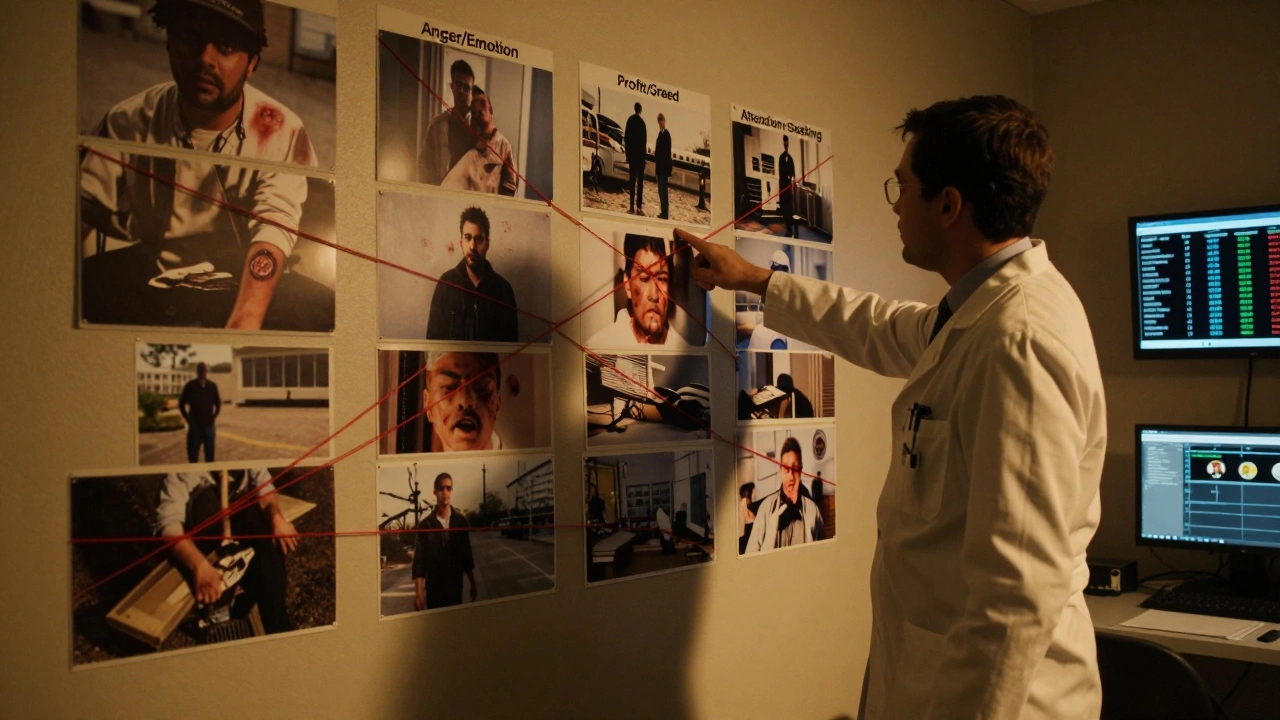
Why do people commit crimes? It’s not just about what they did-it’s about motive. Understanding the "why" behind a crime can turn a cold case into a solved one. Motive analysis isn’t guesswork. It’s a structured, evidence-based approach used by forensic psychologists and law enforcement to uncover the psychological drivers behind criminal behavior. Unlike traditional profiling, which asks "Who did this?" motive analysis asks "Why did they do it?" And that shift changes everything.
What Motive Analysis Really Is
Motive analysis is a forensic psychology tool that looks at crime scene details-not just to identify a suspect, but to decode the emotional, cognitive, and psychological forces that led to the crime. It emerged in the 1970s when the FBI’s Behavioral Science Unit began interviewing serial killers to find patterns beyond fingerprints or DNA. Agents like John E. Douglas and Robert K. Ressler didn’t just want to catch killers; they wanted to understand what made them tick.
This isn’t about legal intent (mens rea), which is whether someone knew their actions were wrong. Motive is deeper. It’s the reason behind that intent. For example, someone might intend to kill (mens rea), but their motive could be rage, financial gain, or a need for control. The difference matters in investigations, courtrooms, and even rehabilitation.
The Four Main Types of Homicide Motives
Based on the FBI’s analysis of over 2,400 homicide cases across 48 jurisdictions, motives fall into four clear categories:
- Anger/Emotion (42%) - These crimes are impulsive, chaotic, and often happen in the heat of the moment. Think domestic disputes, bar fights, or arguments that spiral. The crime scene usually shows overkill-multiple stab wounds, excessive force. This pattern shows a loss of emotional control.
- Profit/Greed (28%) - Financial gain drives these crimes. Burglaries turned lethal, insurance fraud murders, or eliminating a business rival. The scene is often clean, with items stolen and minimal signs of struggle. The offender is calculating, not emotional.
- Attention-Seeking (17%) - These offenders want to be seen, heard, remembered. Bomb threats, arson fires, or staged crime scenes meant to go viral. In 2023, a series of false bomb threats in Ohio were solved because the suspect left personal items at each location-his way of saying, "Look at me."
- Mental Illness/Psychological Need (13%) - These are the hardest to predict. Offenders may believe they’re acting on divine command, eliminating "impure" people, or fulfilling a delusional fantasy. Crime scenes often include ritualistic elements: specific positioning of bodies, objects left behind, or symbolic messages.
How Crime Scene Behavior Reveals Motive
Motive analysis doesn’t rely on confessions. It reads the crime scene like a book. Here’s what experts look for:
- Overkill - More violence than needed? That’s usually anger. Research shows 87% of cases with excessive force are linked to rage-driven motives.
- Staging - If the scene looks like a burglary but nothing’s stolen, the offender might be trying to hide the real motive. In 76% of homicide cases with staging, the offender feared being caught.
- Precision - A single, clean shot to the head? No struggle? That suggests control and calculation. In 68% of sexual assaults with precise execution, the motive was power, not sexual gratification.
- Body Disposal - Moving a body isn’t just about hiding evidence. 63% of offenders do it out of fear of discovery. The other 37%? Their actions suggest ritualistic behavior tied to psychological disorders.

Motive vs. Profiling: The Key Difference
Criminal profiling tells you the suspect’s likely age, gender, or employment. Motive analysis tells you why they chose this victim, this method, this time. The FBI found that investigations using motive analysis reduced suspect pools by 64%-compared to just 48% with standard profiling.
Why? Because motive narrows the field. If the crime shows signs of attention-seeking, you stop looking for a stranger. You start looking for someone with a history of social media posts, failed relationships, or previous attention-seeking behavior. You stop chasing ghosts. You start chasing patterns.
The Dark Side: Bias, Errors, and Overreliance
Motive analysis isn’t perfect. It’s a human tool-and humans are biased.
A 2021 Stanford study found that when identical crimes were attributed to racial minority suspects, investigators recommended punishment 43% more harshly than when the same motives were assigned to white suspects. Motive analysis can reinforce stereotypes if analysts aren’t trained to recognize their own assumptions.
Another problem: organized offenders. People with antisocial personality disorder often manipulate crime scenes to mislead investigators. A 2023 study in the Journal of Forensic Sciences found a 39% error rate in motive determination for these offenders. They know how to fake rage, stage a robbery, or mimic mental illness.
And then there’s confirmation bias. When investigators think they know the motive, they start interpreting ambiguous evidence to fit that story. Nadler and McDonell’s 2012 research showed investigators were 78% more likely to reinterpret unclear evidence to confirm their initial hypothesis. That’s dangerous.
Real-World Wins-and Failures
Motive analysis has cracked cases others couldn’t. In 2023, a series of fake bomb threats in a small Midwestern town were solved because analysts noticed the suspect always left a specific brand of candy at each location. That wasn’t random. It was a signature. The motive? Attention. The suspect was a 24-year-old unemployed man who’d been fired from three jobs in a year. He wanted to feel powerful.
But there are failures too. The New York County DA’s office stopped using motive analysis in sexual assault cases after a 2022 review found that analysts misidentified power-control motives as sexual gratification in 35% of cases. That led to wrongful charges and overturned convictions.
One former cop on Reddit, u/ExCop1978, recalled a domestic violence case where analysts assumed financial motive-"she was going to leave him, so he killed her for the money." But the real motive? Emotional dysregulation. He couldn’t handle rejection. The case was overturned on appeal. The analysis didn’t fit the person. It fit the stereotype.
Training, Tools, and the Rise of AI
Motive analysis isn’t something you learn from a book. The FBI’s National Academy offers a 10-week certification program. In 2023, 1,247 officers completed it at $18,500 per person. Those who finished reported an 87% improvement in case resolution within six months.
But the field is changing. In January 2025, the FBI launched Project MOTIVE-a machine learning system trained on 14,000 solved cases. During beta testing, it classified motives with 83% accuracy. It doesn’t replace analysts. It supports them. It flags patterns humans might miss.
Still, AI has risks. The Innocence Project found 14 wrongful convictions since 2020 tied to overreliance on AI-generated motive reports. That’s why the National Institute of Justice now requires 85% inter-rater reliability before any motive analysis can be used in court. Human judgment still matters.
Where It’s Used-and Where It’s Not
Adoption varies wildly. Federal agencies use motive analysis in 92% of major cases. Large city departments use it in 67%. But in rural areas? Only 29%. Why? Cost, training, and resources. Not every sheriff’s office can afford a forensic psychologist.
There’s also a growing gap between physical and digital crimes. Traditional motive analysis works well for homicides or sexual assaults. But what’s the motive behind a $20 million crypto fraud? Is it greed? Revenge? A thrill? Most analysts still struggle here. The National White Collar Crime Center found that agencies using integrated digital-physical motive frameworks solved fraud cases 41% faster.
What’s Next?
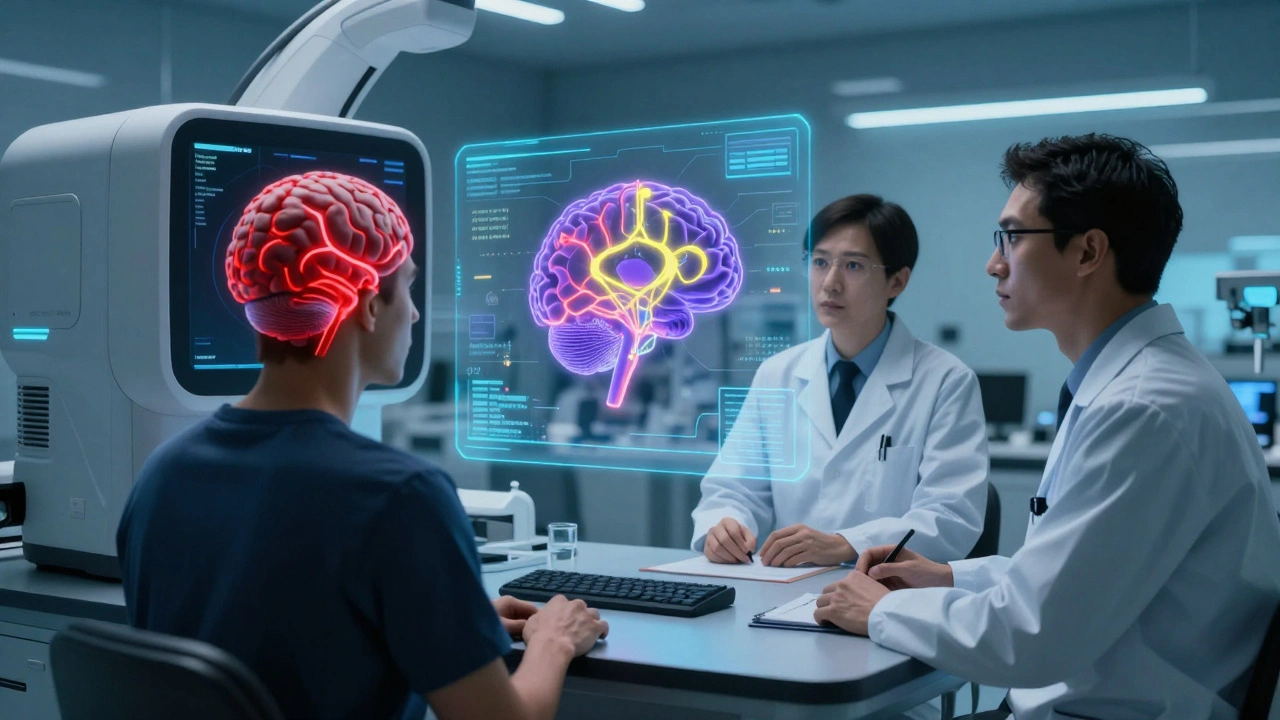
The future of motive analysis is in neuroscience. Dr. Adrian Raine’s 2026 study at the University of Pennsylvania used fMRI scans during crime scene reconstructions and predicted violent motive patterns with 76% accuracy. Imagine a suspect sitting in a lab, reliving the crime, while brain activity reveals whether their actions were driven by rage, fear, or delusion.
But even with AI and brain scans, the core principle stays the same: people don’t commit crimes randomly. There’s always a reason. Finding it requires skill, skepticism, and a deep understanding of human behavior.
Is motive analysis the same as criminal profiling?
No. Criminal profiling focuses on who committed the crime-looking at age, gender, location, and behavior patterns to build a suspect profile. Motive analysis asks why the crime happened. It digs into the psychological drivers: rage, greed, attention, or mental illness. Profiling helps narrow suspects. Motive analysis helps understand them.
Can motive analysis be used in court?
Yes-but only under strict rules. Since the 2022 Supreme Court ruling in Williams v. Pennsylvania, motive analysis testimony must meet Daubert standards. That means it must be based on peer-reviewed methods, have known error rates, and be testable. Analysts must also show they avoided bias. Many states now require certification from the American Board of Professional Psychology before testimony is allowed.
Why do some agencies avoid motive analysis?
Cost and training. A full motive analysis unit requires psychologists, specialized software, and ongoing education. Rural departments often lack funding. Some agencies also fear bias-especially after cases where motive analysis led to wrongful charges. Others just don’t see the value unless they’re dealing with serial crimes or unsolved homicides.
Can AI replace human analysts in motive analysis?
No-not yet, and maybe never. AI can spot patterns faster and flag inconsistencies, but it can’t understand context, emotion, or cultural nuance. A human analyst knows that a man who leaves flowers at a crime scene might be grieving, not ritualistic. AI might flag it as "abnormal." Only a trained professional can interpret that correctly. AI supports. Humans decide.
How accurate is motive analysis?
Accuracy depends on the case. For unorganized crimes-like rage-driven homicides-it’s 80-85% accurate. For organized offenders who mask their motives, accuracy drops to 61%. The FBI’s 2021 data showed behavioral analysis helped solve 78% of serial homicide cases, but only when combined with physical evidence. Motive analysis works best as part of a larger investigation, not in isolation.