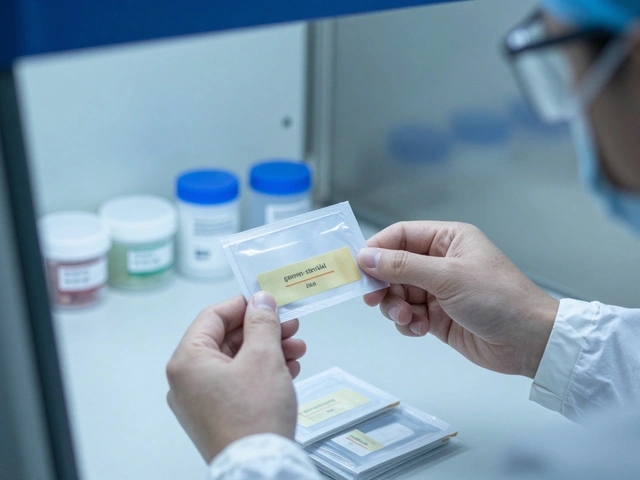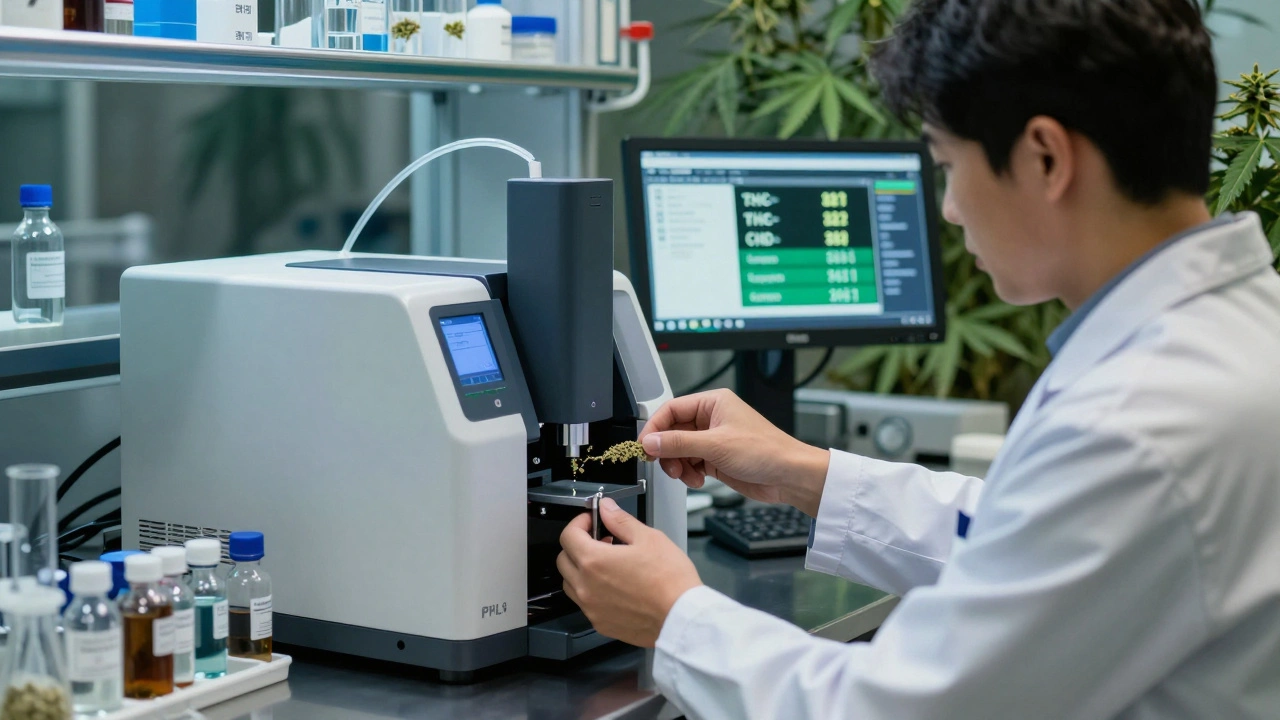
When you buy a cannabis product today, you expect to know what you’re getting. Is it strong? Is it safe? Does it have the terpenes that make it smell like citrus or diesel? None of that comes from guesswork. It comes from cannabis potency testing - a precise, regulated science that tells you exactly how much THC, CBD, and terpenes are in your flower, oil, or edible.
Why Potency Testing Isn’t Optional Anymore
In the early days of legal cannabis, labels were unreliable. A bag of bud labeled "20% THC" might have been 12% - or 28%. That’s not just misleading; it’s dangerous. Someone with low tolerance could end up in the ER because the product was way stronger than advertised. Potency testing was introduced to fix that. Today, every licensed product in states like California, Colorado, and Oregon must pass lab testing before it hits shelves. The rules aren’t just about accuracy. They’re about safety. Hemp, legally defined as having less than 0.3% delta-9 THC, must be tested to avoid crossing into marijuana territory. A single batch of hemp flower testing at 0.35% THC isn’t just "a little over" - it’s illegal under federal law. Labs catch that before it gets sold.What’s Actually Being Measured: THC, CBD, and Terpenes
Cannabis potency testing doesn’t just look at THC. It measures a full profile:- THC (delta-9-tetrahydrocannabinol) - the main psychoactive compound. But what you see on the label isn’t just THC. It’s total THC, which includes THCA (the non-psychoactive precursor). Labs convert THCA to THC using a formula: THC + (0.877 × THCA). That 0.877 factor accounts for molecular weight change during decarboxylation.
- CBD (cannabidiol) - the non-intoxicating compound used for anxiety, pain, and inflammation. A product labeled "15% CBD" must be within 15% of that claim. If it’s only 8%, you’re not getting the dose you paid for.
- Terpenes - aromatic oils like limonene, myrcene, and caryophyllene. They’re not just for smell. They interact with cannabinoids to create the "entourage effect." A lavender-scented oil should have high myrcene. A citrusy strain should have limonene. If the profile doesn’t match the label, the product is misleading.
The Science Behind the Numbers: HPLC vs. GC
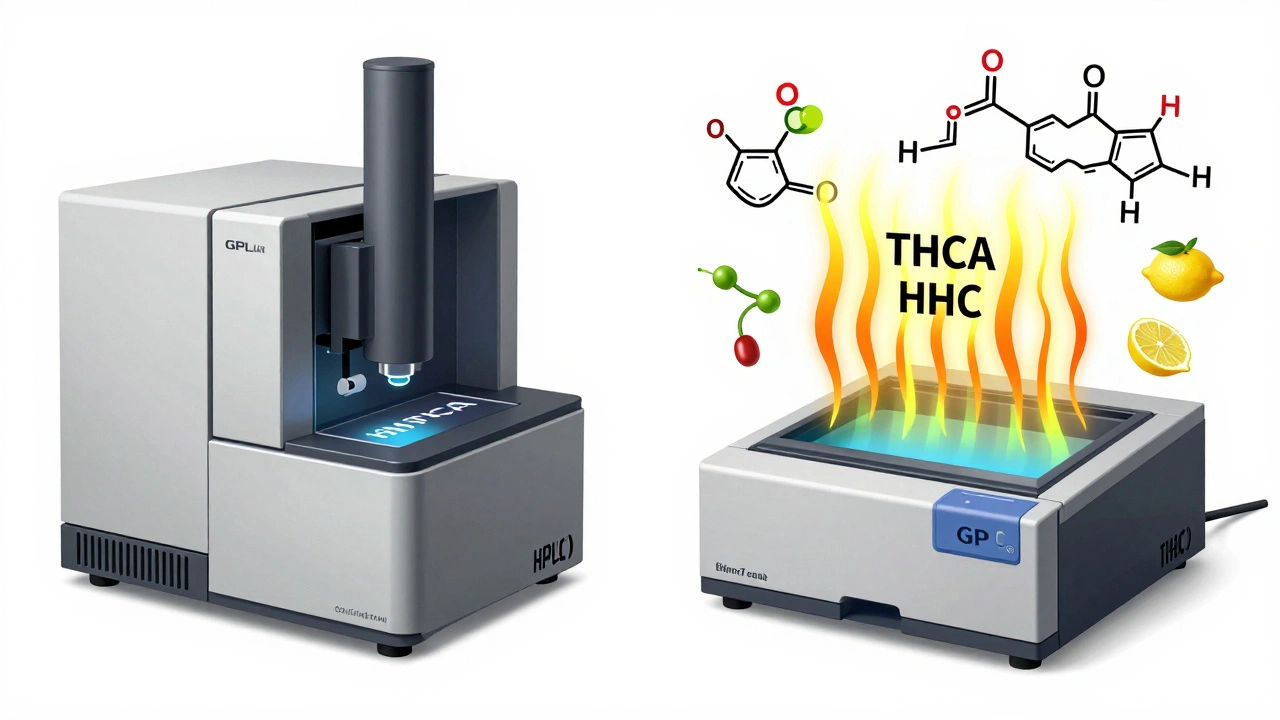
Two main methods are used to measure these compounds: High-Performance Liquid Chromatography (HPLC) and Gas Chromatography (GC). They’re not interchangeable.HPLC is the gold standard for accuracy. It doesn’t heat the sample, so it measures THCA and CBD as they naturally exist. This gives you the true total THC calculation before decarboxylation. HPLC systems cost $50,000-$150,000 and require trained technicians. A single sample costs $15-$25 to test.
GC heats the sample to vaporize it. That heat turns THCA into THC - so you can’t measure the original acidic form. If you don’t correct for this, you’ll underreport total THC by 5-10%. GC machines are cheaper ($30,000-$80,000) and faster, but they’re less precise for legal compliance. Many labs still use GC for cost reasons - but they must apply correction formulas to stay compliant.
For terpenes, GC is the go-to. Terpenes are volatile and break down under HPLC conditions. GC with cryogenic cooling (keeping the system below freezing) is needed to capture the full profile. Missing even one terpene like pinene or linalool means the entourage effect claim is incomplete.
What Happens in the Lab: A Day in the Life of a Cannabis Test
A sample doesn’t just go in a machine. It goes through a strict process:- Homogenization - A 200 mg sample is ground to a fine powder. If it’s not mixed evenly, results vary by up to 20%. This is one of the biggest sources of error.
- Extraction - The powder is soaked in solvents like ethanol or methanol to pull out cannabinoids and terpenes.
- Calibration - The lab runs known standards - pure THC, CBD, and terpene reference materials - to ensure the machine reads correctly.
- Analysis - HPLC or GC runs the sample. Results show peak areas for each compound.
- Validation - California requires labs to spike blank samples (like cellulose powder) with known amounts of cannabinoids to prove their method works. They do this before every batch.
One lab in Portland told me they test 300 samples a week. Each one takes 45 minutes. That’s 225 hours of machine time - not counting prep, cleanup, and QA checks.
Why Two Labs Can Give Two Different Results
You might think a lab test is like a blood test - always the same. It’s not. A 2023 study by LGC Standards found that while 68% of labs accurately measured THC, only 52% got minor cannabinoids like CBG right. Why?- Mobile phase pH - If the solvent’s acidity drifts by 0.2 units, THC readings can shift 5-15%.
- Column temperature - A 2°C change in the HPLC column can alter retention times and peak areas.
- Operator skill - A technician needs 80-120 hours of training to handle HPLC correctly. Many small labs cut corners.
- Reference materials - If your lab uses untraceable standards from an unaccredited supplier, your numbers are garbage.
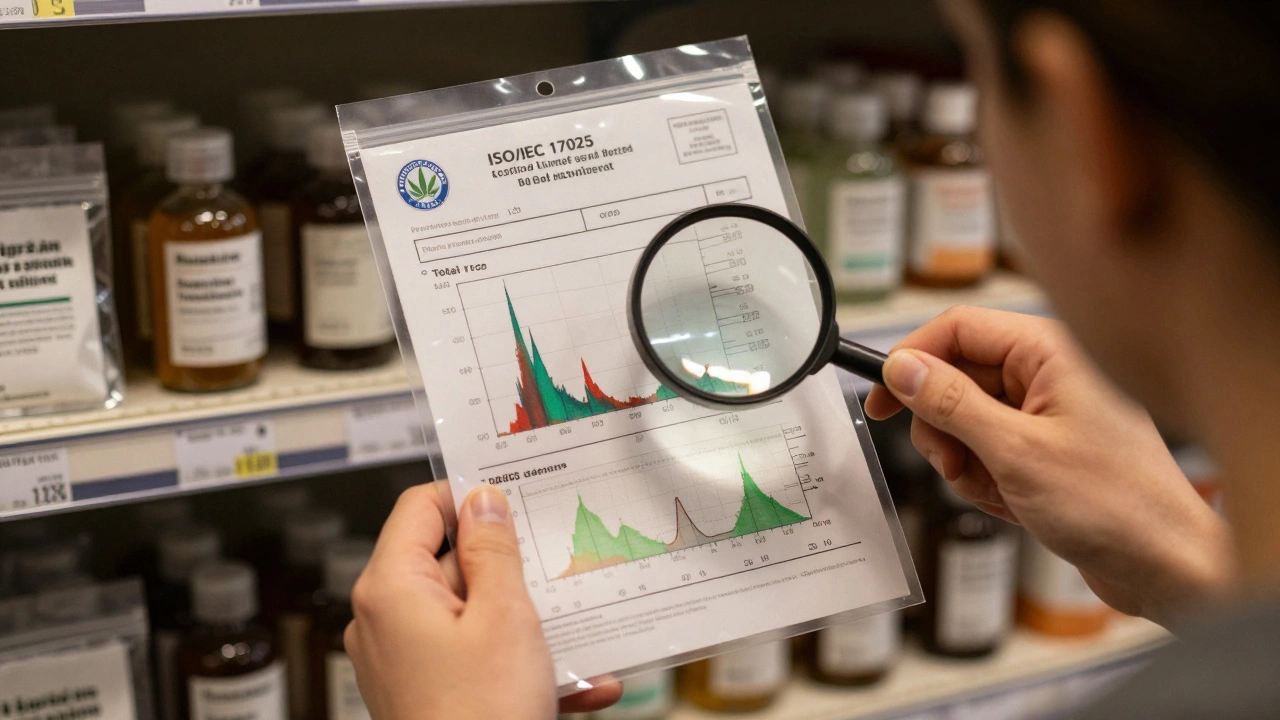
That’s why accreditation matters. ISO/IEC 17025 is the global gold standard. But as of 2022, only 35% of U.S. cannabis labs had it. If a lab doesn’t show you their accreditation, ask why.
The Future: Faster, Cheaper, and More Accurate
Portable NIR spectrometers are starting to appear at grow facilities. Devices like the SCiO Cannabis Analyzer can give a rough estimate of THC in 20 seconds. But they’re not lab-grade. Error margins? 15-25%. Useful for sorting harvests, not for compliance.The real game-changer is coming from the American Chemical Society. They’re developing certified reference materials for 15 cannabinoids, traceable to NIST standards. That means every lab in the U.S. will be using the same baseline. No more "my lab’s THC is higher than yours."
By 2026, the number of testing labs in the U.S. will drop from 1,200 to around 700. Why? Because the rules are getting tighter. California’s 2024 mandate requires every lab to use their standardized method. If you can’t meet it, you’re out. The market is cleaning up.
What You Should Do as a Consumer
You don’t need to understand HPLC. But you should know how to read a lab report:- Look for the total THC - not just "THC." It should include THCA.
- Check the CBD amount. If it’s supposed to be high, make sure it’s above 10%.
- Find the terpene profile. It should list at least 10-15 terpenes with percentages.
- Verify the lab’s name. If it’s not a known, accredited lab, be skeptical.
- Don’t trust "lab tested" on the package unless you can find the full report online.
Some brands now link directly to their test results. That’s a good sign. If they don’t, ask for it. You’re paying for quality - you deserve to know what you’re getting.
What’s the difference between THC and total THC?
THC is the active, psychoactive compound. THCA is its non-psychoactive precursor. Total THC is the sum of both, calculated as THC + (0.877 × THCA). This accounts for the fact that heating (like smoking or baking) converts THCA into THC. Labels must show total THC to reflect actual potency.
Why do some labs use GC instead of HPLC?
GC is cheaper and faster, making it attractive for high-volume labs. But it heats the sample, converting THCA into THC. If labs don’t apply the proper correction factor, they underreport total THC by 5-10%. HPLC doesn’t heat the sample, so it’s more accurate for legal compliance.
Can terpenes be measured in edibles?
Yes, but it’s harder. Heat and processing in edibles destroy many terpenes. Most labs only test terpenes in flower, vape cartridges, and concentrates. If an edible claims a terpene profile, it’s likely added back after extraction - not naturally occurring.
How accurate are at-home cannabis testing kits?
Most are unreliable. Portable devices like NIR spectrometers have error margins of 15-25%. They’re useful for rough sorting, but not for knowing exact potency. Only lab-grade HPLC or GC methods meet regulatory standards.
What happens if a product fails potency testing?
It’s destroyed or reprocessed. If THC exceeds legal limits (0.3% for hemp, or state caps for marijuana), the batch can’t be sold. If CBD is under 80% of the label claim, it must be relabeled or discarded. Labs report failures to state regulators, which can trigger inspections or fines.