When someone tries to clean up blood after a violent incident, they think they’re erasing the evidence. But in forensic science, that cleanup often does the opposite-it leaves behind clues that are even harder to miss. Blood doesn’t just disappear when you scrub it away. It seeps into cracks, soaks into padding, clings to grout lines, and reacts in ways that turn cleaning attempts into accidental confessions. Detecting washed blood isn’t about finding big stains anymore. It’s about finding what’s left behind after someone thought they got rid of everything.
Why Cleaning Blood Makes It Harder to Hide
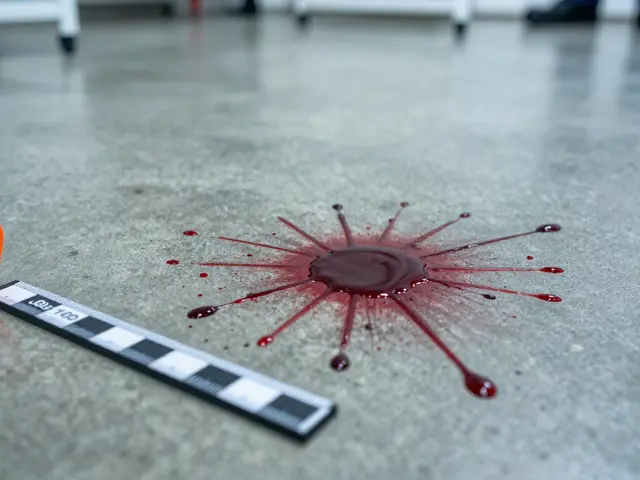
People assume that water, bleach, or soap will erase blood. But research shows otherwise. In one study, investigators sprayed pig’s blood on four common surfaces: ceramic tile, concrete, laminated wood, and drywall. After cleaning with household products like Clorox bleach, Dawn soap, Mr. Clean Magic Eraser, and Mrs. Meyer’s Multi-Purpose Concentrate, they tested each surface with forensic reagents. The results were clear: concrete and drywall held onto blood residue no matter what. Even after scrubbing, those surfaces still glowed under detection tools. Ceramic tile and laminated wood were easier to clean-but even then, traces remained. Blood doesn’t sit on top of a surface. It flows. It drips into gaps between floorboards. It soaks into carpet backing. It gets trapped behind baseboards. Cleaning only removes what’s visible. What’s hidden? That’s where the real evidence lives.Luminol: The Classic Tool That Still Works
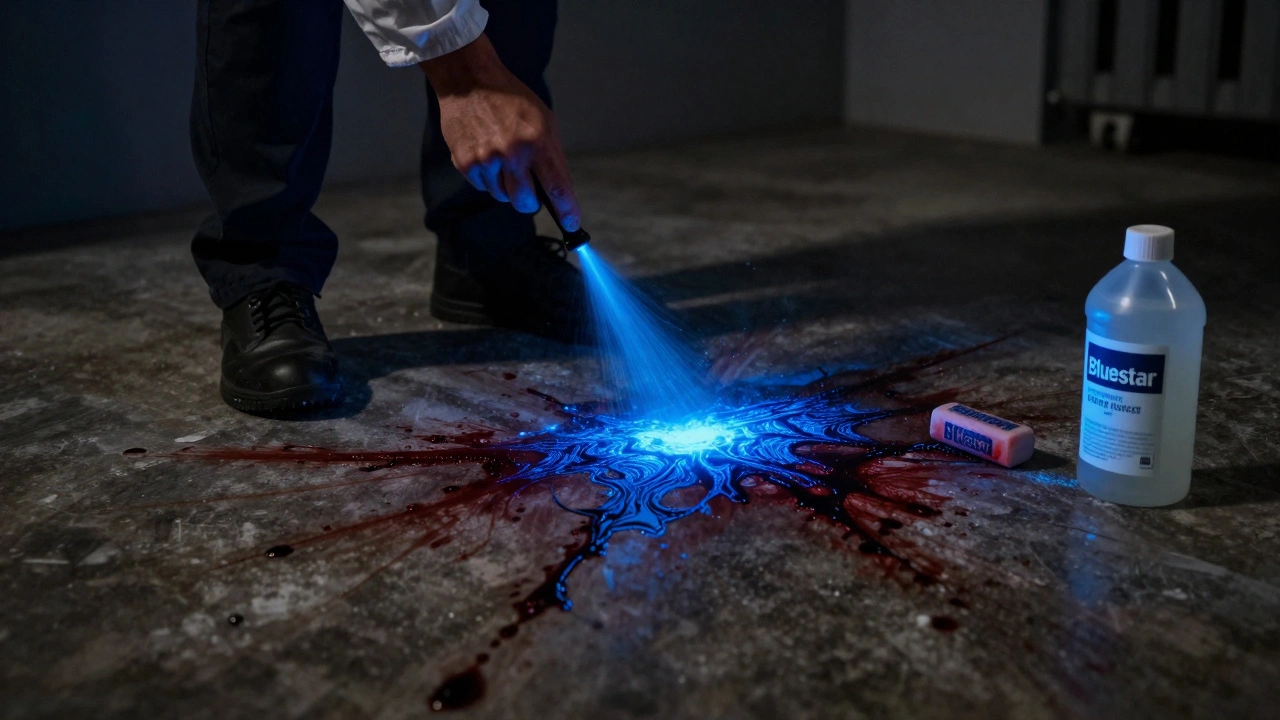
Luminol has been used since the 1930s. It’s the go-to chemical for detecting blood in dark rooms. When sprayed, it reacts with the iron in hemoglobin and glows blue under low-light conditions. It’s sensitive enough to detect blood diluted one part in a million. That means even if someone washed the floor ten times, luminol can still find the ghost of the original stain. But luminol has quirks. In a 2005 study, researchers cleaned bloodstained tiles with bleach. At first, the glow faded. But after eight hours of drying, the chemiluminescence came back-stronger than before. Bleach didn’t destroy the blood; it changed its chemistry. The reaction became more intense. Investigators who rushed in right after cleaning might have missed the evidence entirely. Waiting even a few hours made it easier to detect. Another surprise? Older blood reacts better. A researcher once found glowing blood on an outdoor surface that had been exposed to rain, sewage, and two weeks of weather. The blood was degraded, faded, and partially washed away. Yet luminol lit it up for 10 to 15 minutes. Time doesn’t erase blood-it transforms it into something more reactive.Bluestar Forensic: The New Standard
Bluestar Forensic entered the scene as a more advanced alternative. Unlike luminol’s dim blue glow, Bluestar produces a bright, long-lasting fluorescence that’s easier to photograph and document. In direct comparisons, Bluestar outperformed luminol at every level: sensitivity, brightness, and ease of use. One study tested both reagents on blood diluted to 1:10,000 and 1:50,000. Luminol barely reacted. Bluestar lit up clearly. On surfaces cleaned with bleach or soap, Bluestar still gave strong signals. In fact, when investigators used Dawn soap to clean concrete, Bluestar produced the brightest glow of all tested combinations. That’s not a coincidence. It means Bluestar doesn’t just detect blood-it cuts through cleaning interference better than anything else. It also preserves DNA. In a lab at Nantes University Hospital, scientists tested whether Bluestar interfered with DNA extraction. They found that even after applying Bluestar to dried blood diluted 1:1000, they could still extract usable DNA for profiling. Luminol doesn’t always allow that. Bluestar is now the preferred tool in many forensic units because it doesn’t just find blood-it helps build a case.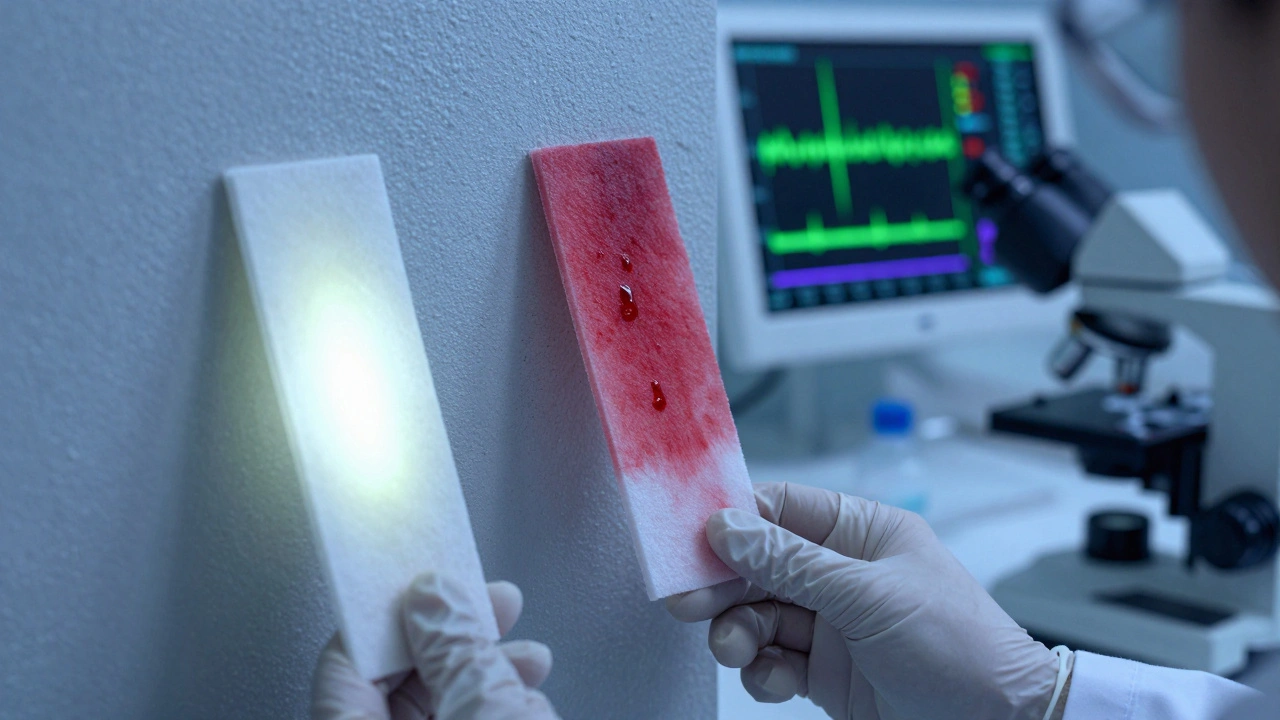
Other Tools in the Kit
Bluestar and luminol aren’t the only options. Fluorescein is another chemical that glows under UV light. It’s especially good for faint smears, like handprints or footprints left in blood. It’s less sensitive than Bluestar, but it’s useful when you need to scan large areas quickly. Leuco Crystal Violet (LCV) works differently. Instead of glowing, it turns blood a deep purple, making it easier to photograph and analyze under normal lighting. It’s often used when investigators need to confirm whether a stain is actually blood before using more aggressive detection methods. These tools aren’t used alone. They’re layered. If Bluestar finds something, investigators might follow up with LCV to confirm it’s blood and not another substance. Then they’ll use fluorescein to map out the full pattern. Redundancy matters. One tool can give a false positive. Two or three confirm it.What Cleaning Products Actually Do
Not all cleaners are equal. Bleach is the most common tool used to try to hide blood. But as shown in studies, bleach doesn’t destroy hemoglobin-it alters it. After drying, it makes luminol reactions stronger. So if someone used bleach, they didn’t clean the crime scene. They made it brighter. Dawn soap, on the other hand, is surprisingly ineffective at removing blood from porous surfaces. On concrete, it left the clearest traces for Bluestar to detect. Mrs. Meyer’s Multi-Purpose Concentrate was one of the worst cleaners for hiding blood. It left faint stains that were easy to spot under UV light. The Magic Eraser? It works great on scuff marks. But on dried blood? It just smears it. It doesn’t remove the proteins-it redistributes them. That’s why investigators look for smudges, not just stains. The takeaway? No household cleaner can fully erase blood from a crime scene. Some just make it harder to see with the naked eye. Forensic tools don’t care about what looks clean. They care about what’s chemically still there.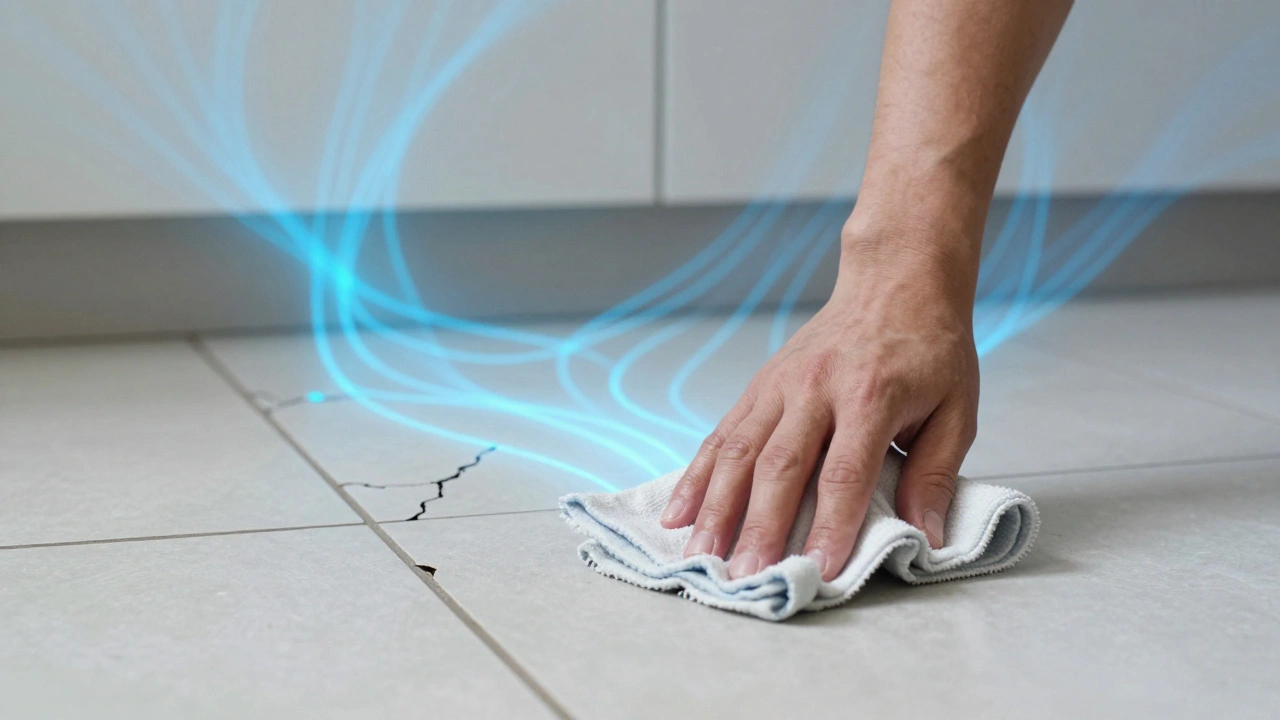
How Investigators Find What’s Hidden
Detecting washed blood isn’t about spraying chemicals and hoping. It’s methodical. Investigators start with a full-room scan using high-intensity white light. They look for discoloration-brownish rings, streaks, or uneven patches. These are clues that cleaning happened. Then they check hidden spots: under rugs, behind baseboards, inside air vents, along door frames. Blood doesn’t just stay on the floor. It flies. It drips. It gets tracked. Investigators often find blood on the underside of doorknobs, on light switches, or inside trash cans where someone tried to dispose of a cloth. They use swabs on non-absorbent surfaces. If the item can’t be moved-like a tile floor-they take wet swabs from multiple spots. For porous surfaces like drywall, they cut out small sections. The National Institute of Justice recommends submitting the entire object if possible. If not, swabbing must follow strict protocols to avoid contamination. They never rely on one test. If Bluestar glows, they confirm with LCV. If LCV turns purple, they send samples for DNA. If DNA is too degraded, they use fluorescence patterns to reconstruct the sequence of events.Why This Matters in Court
A defense attorney might argue that blood was cleaned away, so it’s not reliable evidence. But forensic science now has the data to counter that. Studies show that cleaning doesn’t remove blood-it changes its chemical signature. That change itself becomes evidence of an attempt to conceal. Courts accept this. In multiple cases, prosecutors used Bluestar results to prove that a suspect cleaned up after a stabbing, even when no visible blood remained. The glowing patterns matched the suspect’s reported movements. The timing of the cleaning-after 8 hours of drying-was critical. The defense didn’t have an answer. It’s not just about finding blood. It’s about proving intent. The fact that someone tried to clean it means they knew what happened. That’s often more damning than the blood itself.What You Should Never Do
Don’t use luminol as your first step. It’s powerful, but overuse can interfere with other tests. If you spray it everywhere, you might mask DNA traces or contaminate samples. Always start with visual inspection and photography. Use chemical reagents only after documenting everything else. Don’t assume a surface is clean because it looks clean. That’s how evidence gets missed. Always test. Always confirm. Always use multiple methods. Don’t clean a scene yourself. If you’re a homeowner or property manager and you find blood, don’t scrub it. Call professionals. Your cleaning could destroy evidence that might help someone else-whether it’s a victim’s family, a suspect’s defense, or a future investigation.Can bleach completely remove blood from a crime scene?
No. Bleach alters blood’s chemical structure, which can make it more detectable by luminol after drying. Studies show that after 8 hours, bleach-treated blood produces stronger chemiluminescence than untreated blood. Bleach masks the stain visually but enhances forensic detection.
Is Bluestar better than luminol for detecting cleaned blood?
Yes. Bluestar Forensic is more sensitive, produces brighter fluorescence, and works better on dried, cleaned, or aged blood. It also preserves DNA for testing at dilutions as high as 1:1000, while luminol often degrades samples. Bluestar is now the preferred field tool for most forensic units.
Can you see washed blood with the naked eye?
Sometimes, but rarely. Blood often leaves faint brownish stains or discoloration after cleaning, especially on porous surfaces like concrete or drywall. On smooth surfaces like tile, it may appear completely gone. That’s why chemical reagents are essential-they reveal what the eye cannot.
What surfaces hold onto blood the most after cleaning?
Concrete and drywall retain blood residue far more than ceramic tile or laminated wood. Blood soaks into the pores and fibers of porous materials, making it nearly impossible to remove completely-even with bleach or scrubbing.
Why does older blood glow brighter with luminol?
As blood ages and dries, its hemoglobin breaks down in ways that make it more reactive with luminol. Studies have shown that blood left for days or weeks under outdoor conditions produces stronger and longer-lasting chemiluminescence than fresh blood. Aging doesn’t destroy the evidence-it enhances the detection.
The truth is simple: you can’t clean away blood. You can only change how it looks. Forensic science has turned that into a strength. What criminals think hides them-actually points right at them.