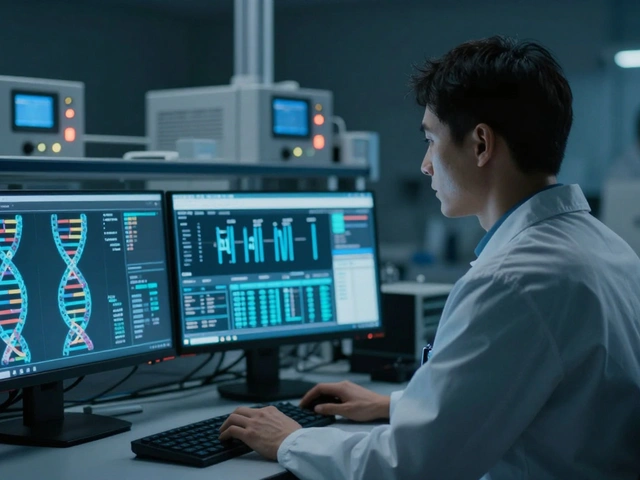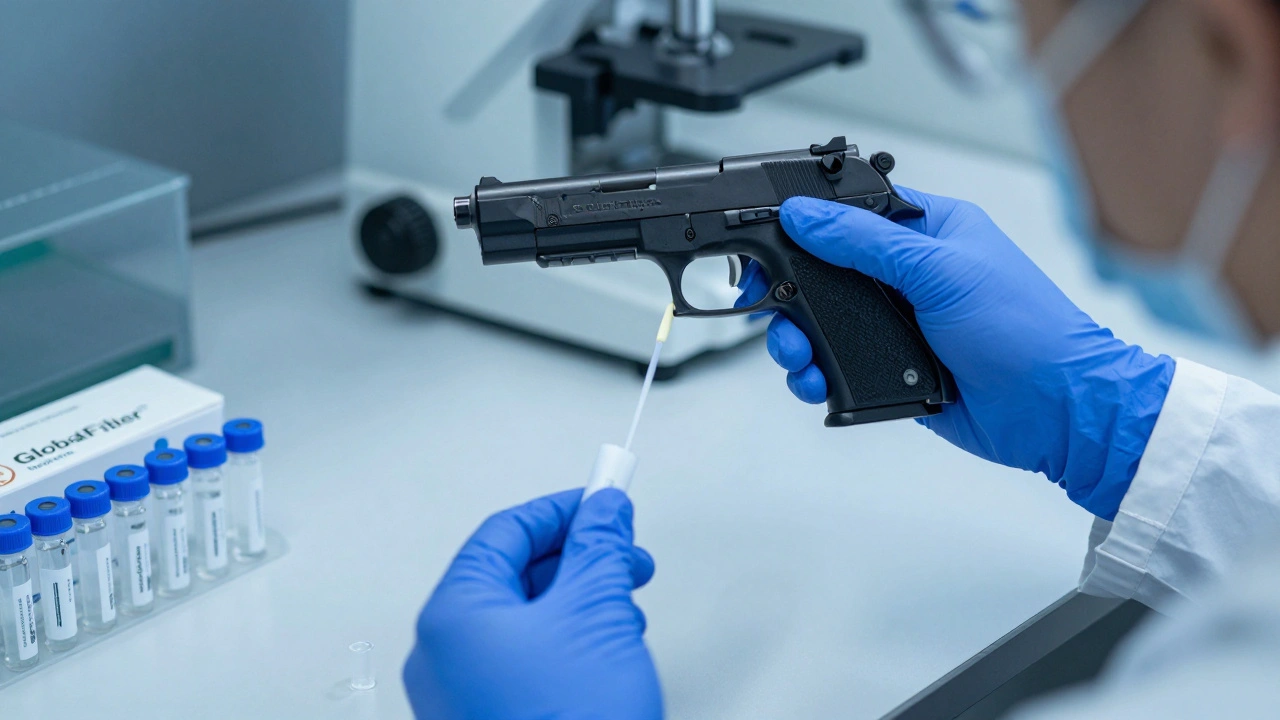
Forensic labs have long struggled with one stubborn problem: direct PCR methods are quietly revolutionizing how DNA is recovered from trace evidence - but most labs still can't use them. Why? Because regulations haven't caught up with the science.
For years, forensic DNA processing followed the same rigid path: collect a swab, extract the DNA, measure how much you have, then run PCR. Each step introduced risk - loss of material, contamination, human error. For touch DNA samples - a fingerprint on a doorknob, a hat left at a crime scene - this process often destroyed the very thing investigators needed. A single drop of sweat, a few skin cells. Too little to survive extraction. Too little to quantify. Too little to amplify.
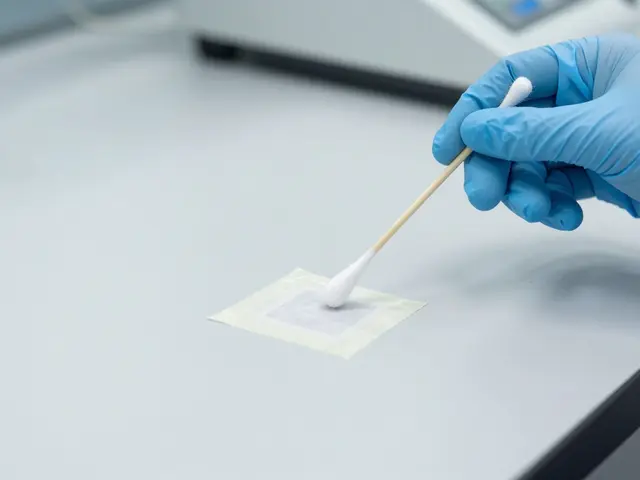
Direct PCR changes all that. No extraction. No quantification. Just take the swab, drop it into the PCR tube, and go. The sample - skin cells, saliva, blood - goes straight into the reaction mix. Specialized kits like the GlobalFiler™ from Thermo Fisher Scientific handle the rest. The PCR process itself hasn’t changed: heat to separate DNA strands, cool to let primers bind, then build new copies. But by skipping the middle steps, labs cut processing time from 8-12 hours down to under three. Hands-on time? Reduced by 3 to 4 hours per sample. Reagent costs? Down by 25%.
What Evidence Works Best With Direct PCR?
Not everything responds the same. Research funded by the National Institute of Justice and led by Jonathan Davoren at Bode Technology tested 11 common evidence types using both traditional and direct PCR. The results were clear: direct PCR outperformed traditional methods on specific surfaces.
- Plastic slides - high-quality profiles
- Polyester clothing - consistent, usable DNA
- Metal tools - better than extraction
- Handgun grips - reliable match rates
- Wood handles - surprisingly good, especially unfinished wood
- Foam cups - excellent DNA retention
On these surfaces, direct PCR didn’t just match traditional methods - it beat them. DNA profiles were cleaner, more complete, and more likely to meet CODIS upload standards. That’s huge. CODIS is the national DNA database. If your profile doesn’t meet their thresholds, it’s useless for matching suspects.
But not all materials play nice. Direct PCR struggled on:
- Vinyl shutters - low yield
- Denim - fiber interference
- 100% wool - inconsistent, especially after six months
- Concrete bricks - poor recovery
- Cartridge casings - barely detectable
The takeaway? Direct PCR isn’t a magic bullet. It’s a precision tool. You have to know what you’re testing. Swabbing a wool sweater? Stick with extraction. Swabbing a gun grip? Direct PCR is your best bet.
What Happens to the Sample?
This is where direct PCR gets controversial. Once you run a direct PCR test, the sample is gone. No leftover DNA extract. No backup. No retest. In traditional processing, you save a vial of purified DNA. If the profile is weak, you can reanalyze. If a defense attorney challenges the result, you can pull the sample again.
With direct PCR? You burn the sample. There’s no going back. That’s a dealbreaker for many labs. It means every test must be perfect the first time. It means you have to decide - before you even run the test - whether the sample is worth the risk.
Some labs have started reserving a small portion of the swab before direct PCR. Just a few cells. Enough to retest if needed. But that cuts into the efficiency gains. It’s a compromise - and one that’s still being debated.
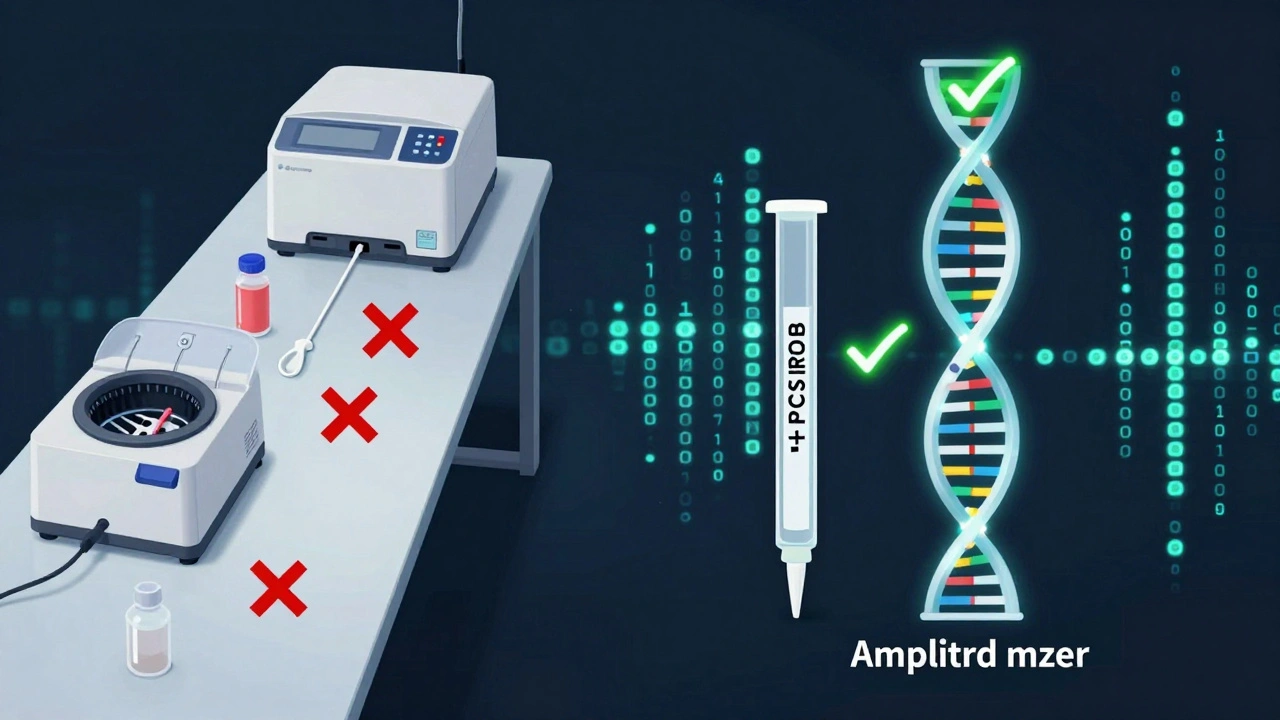
Contamination: The Hidden Risk
Direct PCR is sensitive. Too sensitive. In about 6% of samples tested, foreign DNA showed up. Not from the suspect. Not from the victim. From somewhere else.
Some came from lab technicians - skin cells transferred during handling. Some came from reagents. Some? No one knows. The lack of extraction means you’re amplifying everything on the swab - including contaminants. A sneeze. A cough. A glove that touched another case. It all gets copied.
That’s why direct PCR isn’t used for high-profile cases without strict controls. Labs that use it require separate workspaces, dedicated pipettes, and air filtration. They track every swab. Every tube. Every technician. It’s not just faster - it’s more demanding.
Why Aren’t More Labs Using It?
The biggest barrier isn’t technical. It’s legal.
In the U.S., federal quality assurance standards require all forensic DNA samples to be quantified before amplification. That means - by regulation - you can’t skip the extraction and measurement steps. Even if you have a swab with only 10 skin cells, you still have to extract, measure, and confirm. That’s a rule written in 2009. Before direct PCR was even tested.
The Organization of Scientific Area Committee for Forensic Science was created in 2016 to fix exactly this kind of gap. They called for updated standards. The NIJ pushed for research. Studies proved direct PCR works - better, sometimes - on common evidence types. But the rules haven’t changed.
Labs are stuck. They can run direct PCR for internal research. They can use it for databanking (where samples are known, like arrestees). But for unknown evidence - the kind from crime scenes? They’re forced to use the old, slower, lossy method.
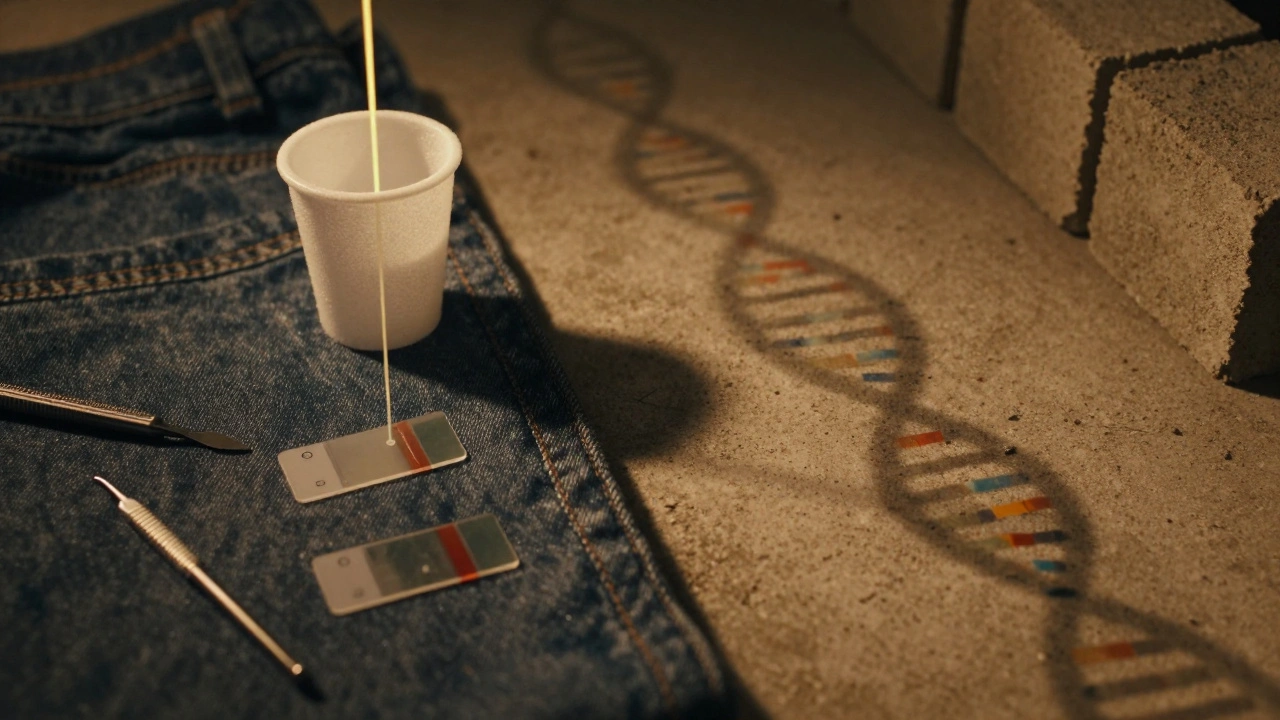
Direct PCR vs. Rapid PCR
Don’t confuse direct PCR with rapid PCR. They’re cousins, not twins.
Rapid PCR also skips quantification. But it uses special instruments and chemistry to cut amplification time from hours to minutes - sometimes under 90 seconds. It’s faster. But it still needs extraction. It doesn’t skip the middle step. It just speeds up the last one.
Direct PCR skips extraction entirely. It’s a different philosophy. One is about speed. The other is about recovery.
For trace DNA on plastic or metal? Direct PCR wins. For high-volume processing of known samples? Rapid PCR might be better. The two aren’t rivals - they’re tools for different jobs.
The Future: What Needs to Change
The science is done. The data is solid. Direct PCR works better than traditional methods on half the evidence types labs encounter daily.
What’s holding it back? Two things:
- Regulations - the federal requirement for quantification must be updated. It’s outdated.
- Validation - labs need clear guidelines on which materials are safe to use direct PCR on. No more guessing.
Until then, labs are forced to choose between compliance and efficiency. That’s not science - it’s bureaucracy.
But change is coming. More labs are quietly testing direct PCR on low-yield samples. More prosecutors are asking for profiles from items that used to be considered "untestable." More investigators are training to collect swabs with direct PCR in mind - not just for the lab, but for the case.
Direct PCR isn’t the future. It’s already here. It’s just waiting for the rules to catch up.
Can direct PCR be used on all types of forensic evidence?
No. Direct PCR works best on non-porous, low-absorbency surfaces like plastic, metal, wood, and foam. It performs poorly on porous or fibrous materials like denim, wool, concrete, and cartridge casings. Research shows DNA recovery varies significantly by material type - so labs must match the method to the evidence.
Why can't forensic labs use direct PCR even though it's more efficient?
U.S. federal quality assurance standards require DNA quantification before amplification. This rule, established before direct PCR was widely tested, prevents labs from skipping extraction and measurement steps for evidentiary samples. Until these regulations are updated, most labs can't legally use direct PCR for unknown crime scene samples.
Does direct PCR increase the risk of contamination?
Yes - slightly. Because direct PCR skips extraction, it amplifies everything on the swab, including environmental DNA from handlers or lab surfaces. Studies show about 6% of direct PCR samples had detectable foreign DNA. Strict lab protocols, separate workspaces, and dedicated equipment are required to minimize this risk.
Can you retest a sample after running direct PCR?
No - not without a backup. Direct PCR consumes the entire sample. No DNA extract is saved. If the profile is weak or challenged, you can't go back. Some labs now reserve a small portion of the swab before testing to allow for reanalysis, but this reduces efficiency gains.
How does direct PCR compare to rapid PCR?
Rapid PCR speeds up the amplification step using specialized instruments, but still requires DNA extraction and quantification. Direct PCR skips extraction entirely, allowing trace samples to be amplified directly. Direct PCR is better for low-yield evidence; rapid PCR is better for high-throughput labs with known samples.