What Flashover and Backdraft Really Look Like
Firefighters don’t just fight fires-they read them. The difference between life and death often comes down to recognizing two deadly phenomena: flashover and backdraft. These aren’t just technical terms. They’re silent killers that can turn a routine structure fire into a death trap in seconds. You can’t stop what you don’t see. And if you wait until you feel the heat through your gear, it’s already too late.
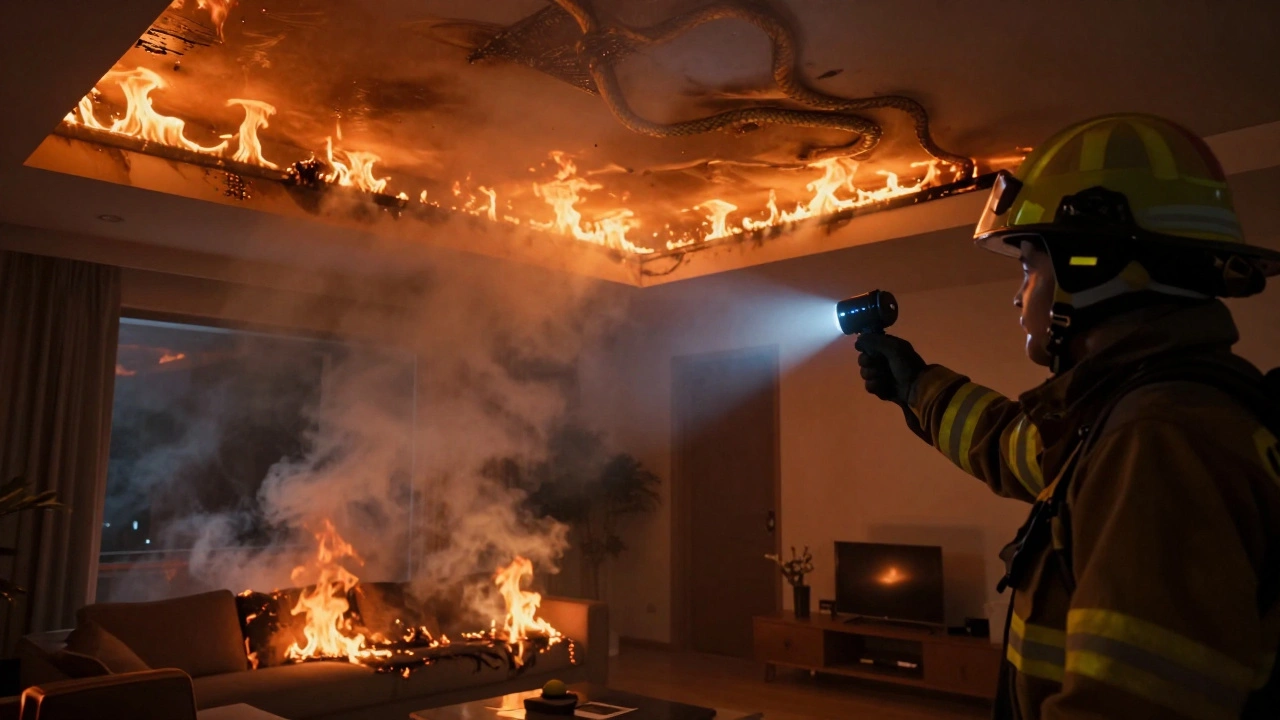
Flashover happens when every object in a room-furniture, carpet, curtains, even the drywall-reaches its ignition temperature at the same time. It’s not a fire spreading. It’s everything catching fire, all at once. The room turns into a furnace. Temperatures spike past 1,000°F. Flames roll across the ceiling. There’s no warning scream. Just silence, then fire.
Backdraft is different. It’s not about heat. It’s about air. When a fire burns in a sealed room, it consumes oxygen and fills the space with hot, toxic smoke. The gases are ready to explode. But they’re trapped. Then someone opens a door. A window breaks. Fresh air rushes in. And boom-like a bomb going off. The smoke ignites. The force can blow out walls, throw firefighters across rooms, and collapse stairwells. It doesn’t care how experienced you are. It only cares if you saw the signs.
The B-SAHF System: Your Fire Reading Toolkit
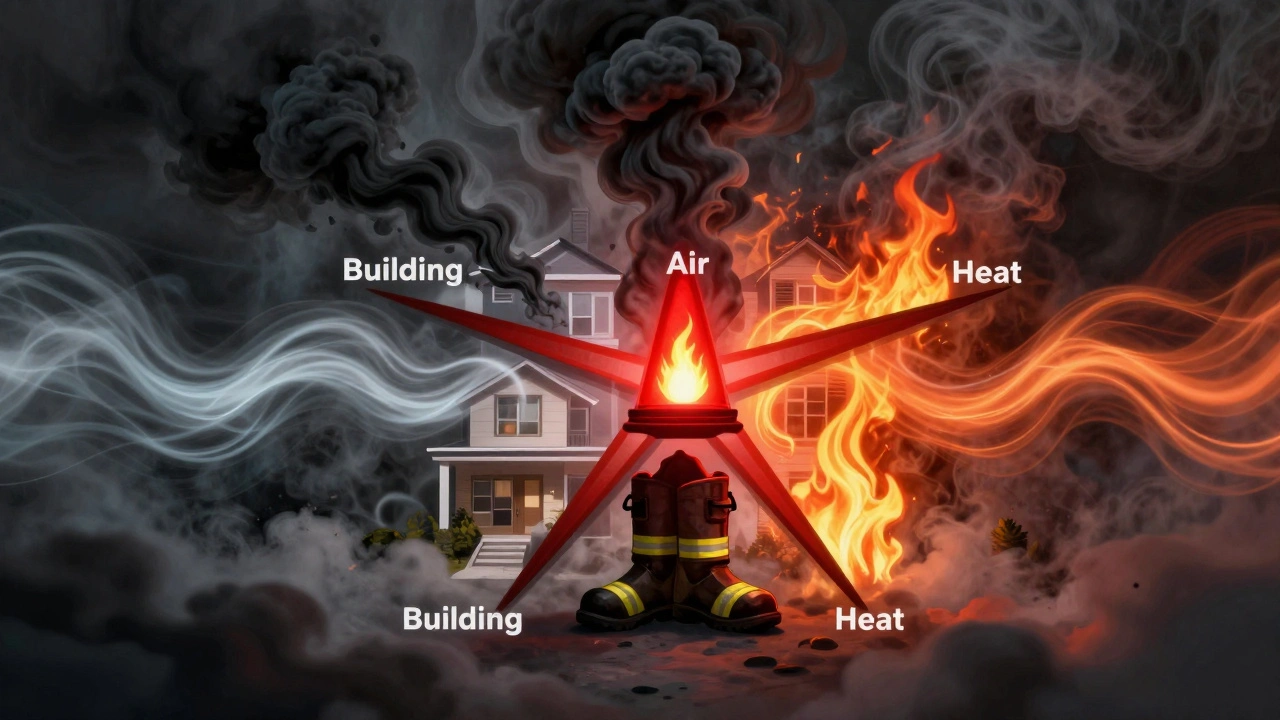
There’s no magic sixth sense for spotting these dangers. Firefighters use a simple, proven system called B-SAHF. It stands for Building, Smoke, Air, Heat, and Flames. It’s not fancy. But it saves lives.
- Building - Is it a modern home with synthetic materials? Those burn hotter and faster. Older homes with wood? Slower to flashover, but still deadly. A house with closed windows? That’s a pressure cooker waiting to explode.
- Smoke - Thick, black smoke? That’s bad. Smoke puffing in and out like a breathing lung? That’s worse. It means the fire is starved for air and building up gases. That’s backdraft territory.
- Air - How much air is entering? Is the fire ventilation-controlled? That means the fire isn’t burning because it’s out of fuel. It’s burning because it’s out of oxygen. Add air, and you feed the beast.
- Heat - You don’t need a thermometer. If you feel heat through your turnout gear, you’re already in danger. Heat radiating from doors, windows, or walls? That’s flashover building.
- Flames - Flames out of a window? Maybe. But no flames and only thick smoke? That’s the most dangerous sign. It means the fire is hidden, cooking below the surface.
These five factors don’t work alone. They work together. A single indicator might mean nothing. But three together? That’s a red alert.
Smoke Tells the Story
Smoke isn’t just smoke. It’s a language. Learn to read it.
Rollercoaster smoke? That’s rollover. Dark, rolling fingers of flame moving through the smoke layer. It looks like snakes slithering along the ceiling. This is the first real warning that flashover is coming. It means the gases above you are hot enough to ignite. The room is nearing its tipping point.
Smoke pushing out slowly? That’s normal. Smoke puffing in and out? That’s backdraft. It’s like the building is breathing. Inhale-smoke pulls back. Exhale-smoke bursts out. That’s pressure building. The fire is starving. The moment you open a door or break a window, you’re handing the fire a match.
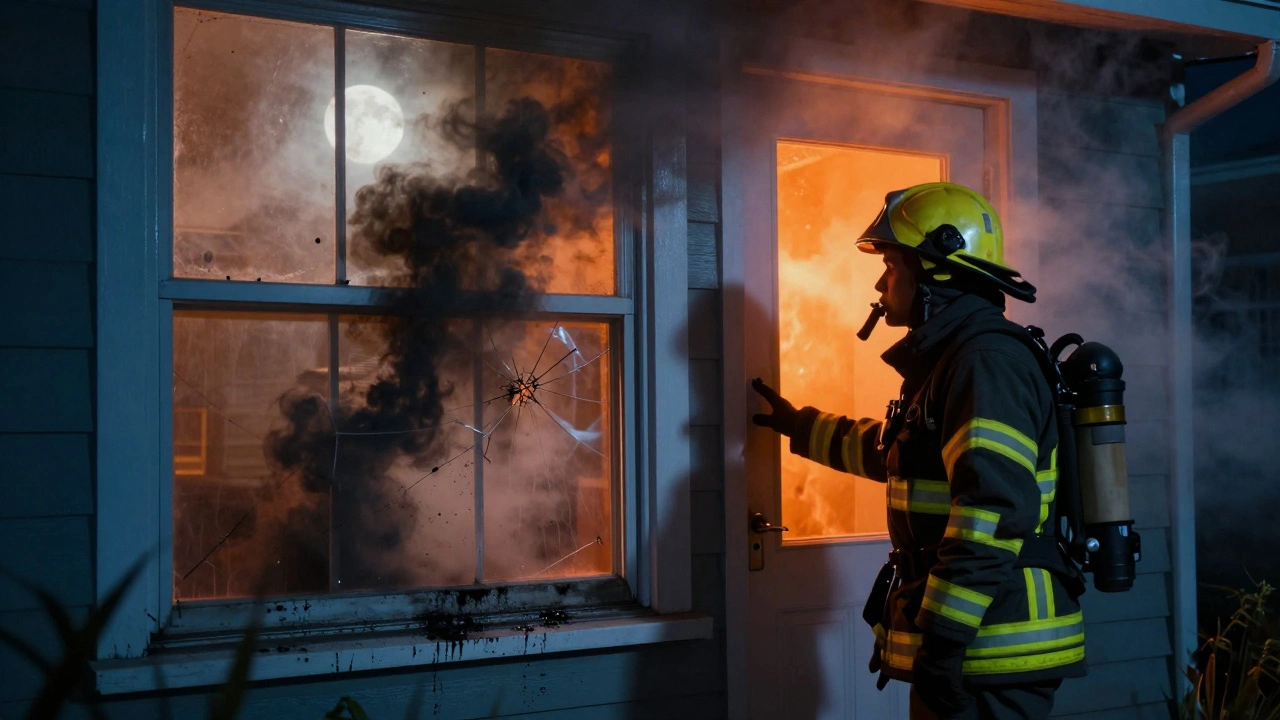
Blackened windows? No flames, just oily residue on the glass? That’s a classic backdraft sign. The fire’s been burning so hot it’s carbonized the inside of the window. The heat is trapped. The gases are saturated. One breath of air-and it’s over.
And don’t ignore the sound. A low whistle or rumble from behind a closed door? That’s not wind. That’s superheated gases vibrating. It’s the fire screaming for oxygen. If you hear it, step back. Don’t open anything. Cool it first.
The Neutral Plane: Your Hidden Warning Line
Every room with a fire has a neutral plane. It’s the invisible line between hot smoke above and cooler air below. You can’t see it. But you can read it.
If the neutral plane is high-close to the ceiling-you’re in the early stages. The fire is still growing. But if it drops lower-say, just a foot off the floor-you’re in deep trouble. That means heavy smoke is filling the room. The fire is choking. It’s close to flashover.
If the neutral plane suddenly drops? That’s a red flag. It means heat and smoke are building fast. If it rises suddenly? That means someone ventilated the building-maybe by breaking a window. That might have just triggered flashover.
Firefighters who rely only on what they see from the doorway are blind. The real danger is above them. The smoke layer is where the fire lives. And if you walk into it without cooling it first, you’re walking into a gas canister.
Thermal Imaging and the Myth of Early Detection
Modern homes have smoke alarms. They’re great. But they’re also dangerous.
Early detection means firefighters arrive before the fire is visible. That’s good, right? Not always. Firefighters walk into a house thinking it’s a small fire. They see smoke. They hear alarms. They assume it’s manageable. But what they don’t see is the fire growing silently in the attic, behind walls, under floors. By the time they realize it’s out of control, the room is already saturated with superheated gases.
Thermal imaging cameras (TIC) change that. They let you see heat. You can see the neutral plane. You can see where the fire is hiding. You can see if the ceiling is glowing. You can see if the smoke is hot enough to ignite.
But TICs aren’t magic. They don’t replace training. They replace guesswork. If you don’t know what to look for, the image means nothing. A red blob on a screen doesn’t tell you if it’s a heater or a fire. You need context. You need B-SAHF.
Real-World Mistakes That Cost Lives
There’s a story from Rockland County, New York. A chief saw the signs: black smoke, no flames, a low neutral plane, heat building on the door. He ordered everyone out. Twenty seconds later, the room flashed over. Three firefighters would’ve died if he hadn’t acted.
He didn’t have a lucky guess. He had training. He’d trained on a flashover simulator-a modified shipping container that lets firefighters experience real flashover in a controlled environment. That’s rare. Most departments still train with old-school burn buildings that don’t replicate modern fire behavior.
Another incident: a team broke a window to ventilate a fire. The smoke was thick, but they didn’t cool the space first. The moment air rushed in, the gases ignited. The explosion threw one firefighter 20 feet. He survived. The others didn’t.
These aren’t rare. They happen every year. Not because firefighters are reckless. But because they weren’t taught how to read fire. They were taught to attack.
How to Survive: What to Do When You See the Signs
Recognition isn’t enough. You need a plan.
- If you see rollover or a low neutral plane: cool the smoke layer before advancing. Spray short bursts into the ceiling. Don’t wait for the heat to hit you.
- If you suspect backdraft: don’t open doors or windows. Cool the area first. Use a fog stream to lower the temperature of the gases. Wait until the smoke stops pulsing.
- If the heat suddenly increases: get out. Don’t wait for orders. Your gear can’t protect you from flashover. Retreat. Regroup. Reassess.
- If you’re on the outside: watch the smoke. Puffing? Whistling? Blackened windows? That’s your signal to warn the crew inside. Don’t wait for them to call for help.
The biggest mistake? Thinking you have time. Flashover and backdraft don’t give warnings. They give seconds. You have to act before you feel it.
Why This Matters Now More Than Ever
Modern homes burn faster. Synthetic materials-foam, plastic, polyester-ignite at lower temperatures and release more toxic gases. A living room today can flashover in under three minutes. Ten years ago? Five to seven.
Firefighters are still using old tactics. Opening doors. Breaking windows. Advancing without cooling. It worked in the 1980s. It doesn’t work now.
The fire service is changing. Departments in Oregon, California, and New York are now using B-SAHF as standard. Flashover simulators are being installed. Training is shifting from attack-first to read-first.
But it’s not universal. Too many departments still rely on instinct. That’s not enough. Fire doesn’t care about instinct. It follows physics. And if you don’t understand the physics, you’re just guessing.
What’s the difference between flashover and backdraft?
Flashover is a temperature-driven event where everything in a room ignites at once due to radiant heat. Backdraft is an air-driven explosion that happens when oxygen rushes into a room full of superheated, oxygen-starved gases. Flashover happens because it’s too hot. Backdraft happens because there’s too little air-and then too much.
Can you survive flashover if you’re inside?
Survival is possible, but extremely rare. Flashover temperatures exceed 1,000°F. Turnout gear protects against short-term exposure, not full-room ignition. Most firefighters who experience flashover don’t survive. That’s why recognition and retreat are the only reliable strategies.
Do smoke alarms prevent flashover or backdraft?
No. Smoke alarms only alert occupants early. They don’t stop fire growth. In fact, early alarms can be dangerous-they lead firefighters into structures that look small but are about to flash over. Fire behavior has changed. Detection hasn’t kept up.
Why is ventilation dangerous in modern fires?
In older homes, ventilation helped. In modern homes, it often triggers flashover or backdraft. Fires today are ventilation-controlled-they’re limited by air, not fuel. Adding air-by opening a door or breaking a window-can cause the fire to explode. Cooling before ventilation is now standard practice.
How long do firefighters have once they see warning signs?
As little as 10 to 30 seconds. Flashover can happen faster than you can say "fireball." That’s why training focuses on reading indicators before entering, not after. The goal is to avoid being inside when it happens.
Next Steps for Firefighters
If you’re in the field, start using B-SAHF every time you arrive. Don’t skip it. Don’t rush it. Write it down. Talk about it. Train with it.
If you’re in command, demand better training. Push for flashover simulators. Bring in instructors who’ve seen real backdrafts. Stop using outdated burn buildings that don’t reflect modern fires.
And if you’re learning? Don’t just memorize terms. Learn to read smoke. Feel the heat. Watch the neutral plane. The fire doesn’t care about your rank. It only cares if you understand it.