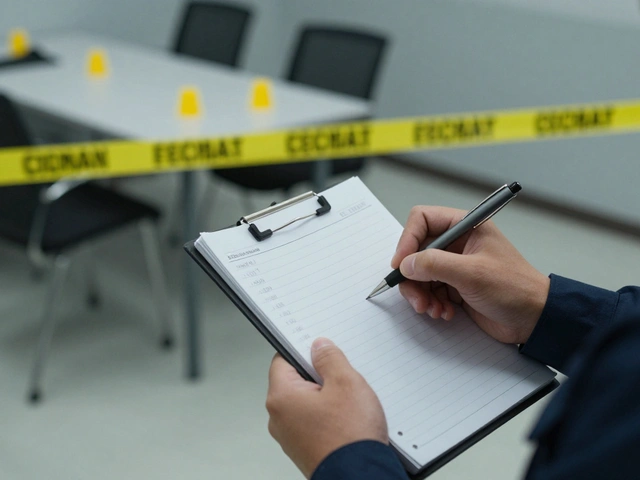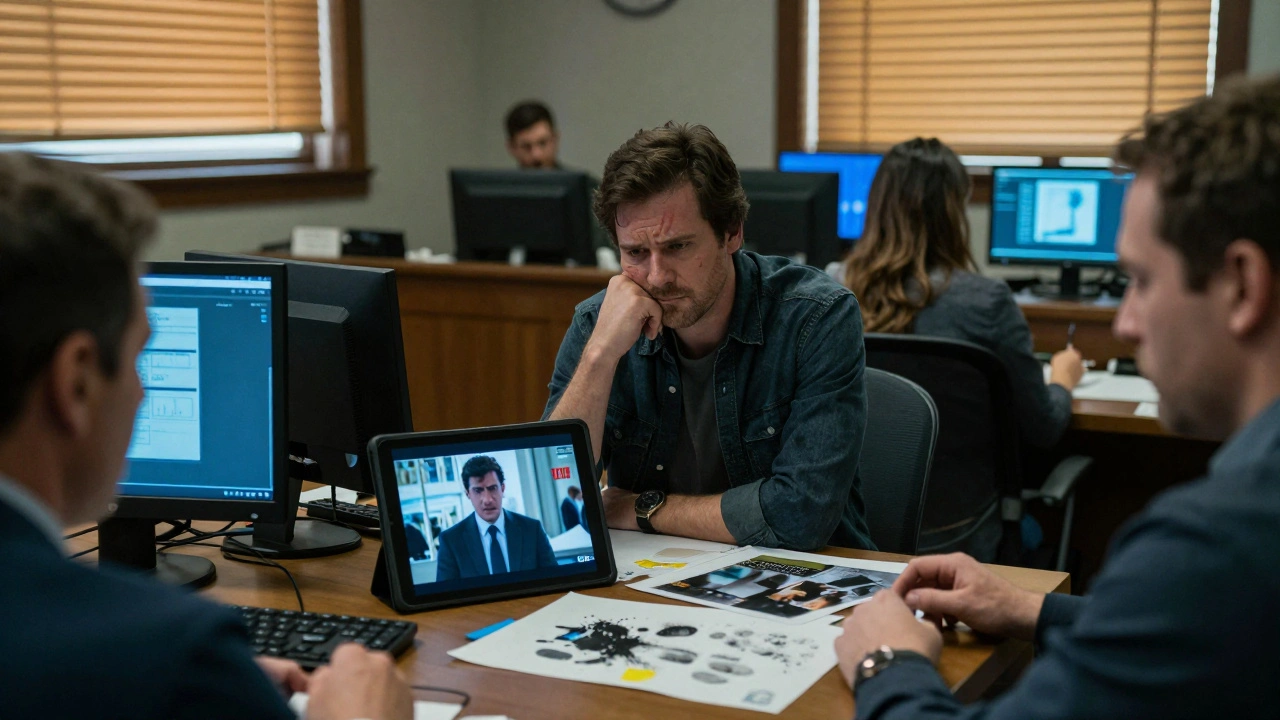
When you watch a crime show like CSI, NCIS, or Bones, it’s easy to forget you’re watching fiction. Scenes unfold with flawless DNA matches, fingerprints lifted from glass, and ballistic tests that pinpoint a bullet to a specific gun in under ten minutes. But in real life? It’s not that simple. The gap between TV drama and real-world forensics has a name: the CSI Effect.
What Is the CSI Effect?
The CSI Effect isn’t just about people believing TV shows are real. It’s about how those shows have changed how jurors, police, and even criminals think about crime scene investigations. Since the early 2000s, crime procedurals have saturated TV schedules. Millions of viewers now carry a mental checklist of what a “real” crime case should include: DNA, fingerprints, trace evidence, and instant lab results. But real forensics doesn’t work that way.
Studies show that jurors who regularly watch these shows expect forensic evidence in nearly every case-even when it’s not relevant. In one survey, 73% of jurors said they expected DNA evidence in rape cases. 71% expected fingerprints in burglary cases. That’s not because those crimes always leave behind trace evidence. It’s because TV told them they should.
How It Skews Jury Decisions
Juries are supposed to weigh evidence based on logic, not TV scripts. But when prosecutors don’t deliver the flashy lab results shown on screen, jurors don’t just feel confused-they feel cheated. In the 2005 trial of Robert Blake, the jury acquitted him despite strong circumstantial evidence because there was no DNA, no fingerprints, and no gunshot residue. The prosecution had eyewitnesses, motive, and opportunity. But without the “science” TV taught them to expect, they walked.
On the flip side, the CSI Effect can also lead to wrongful convictions. In the case of John Webster, jurors convicted him partly because tire tread marks matched his vehicle. On TV, that kind of match is treated as definitive. In reality, tire track analysis is subjective, rarely conclusive, and often misinterpreted. But jurors who’d seen dozens of episodes believed the evidence was ironclad. They didn’t question it. They trusted the show’s version of science.
Real Forensics vs. TV Forensics
Here’s how reality stacks up against the screen:
- DNA evidence: Only available in about 10% of cases. Requires intact biological material-blood, saliva, semen-not just a handshake or a doorknob.
- Fingerprint analysis: Takes days to process, not minutes. Prints are often partial, smudged, or nonexistent on smooth surfaces like plastic or glass.
- Ballistics: Matching a bullet to a gun requires a test-fired round and a comparison microscope. It’s not foolproof, and many guns leave no unique marks.
- Lab turnaround: Real labs are backed up. A DNA sample can take weeks or months to process. On TV? It’s done before the credits roll.
- Forensic scientists: Real forensic experts rarely testify in court. Most work behind the scenes, and their findings are often challenged by defense attorneys.
On TV, every crime scene is a clean, well-lit, perfectly preserved zone. In real life, scenes are chaotic, weathered, contaminated, and often overlooked because investigators are stretched thin.
Crime Shows Influence Criminals Too
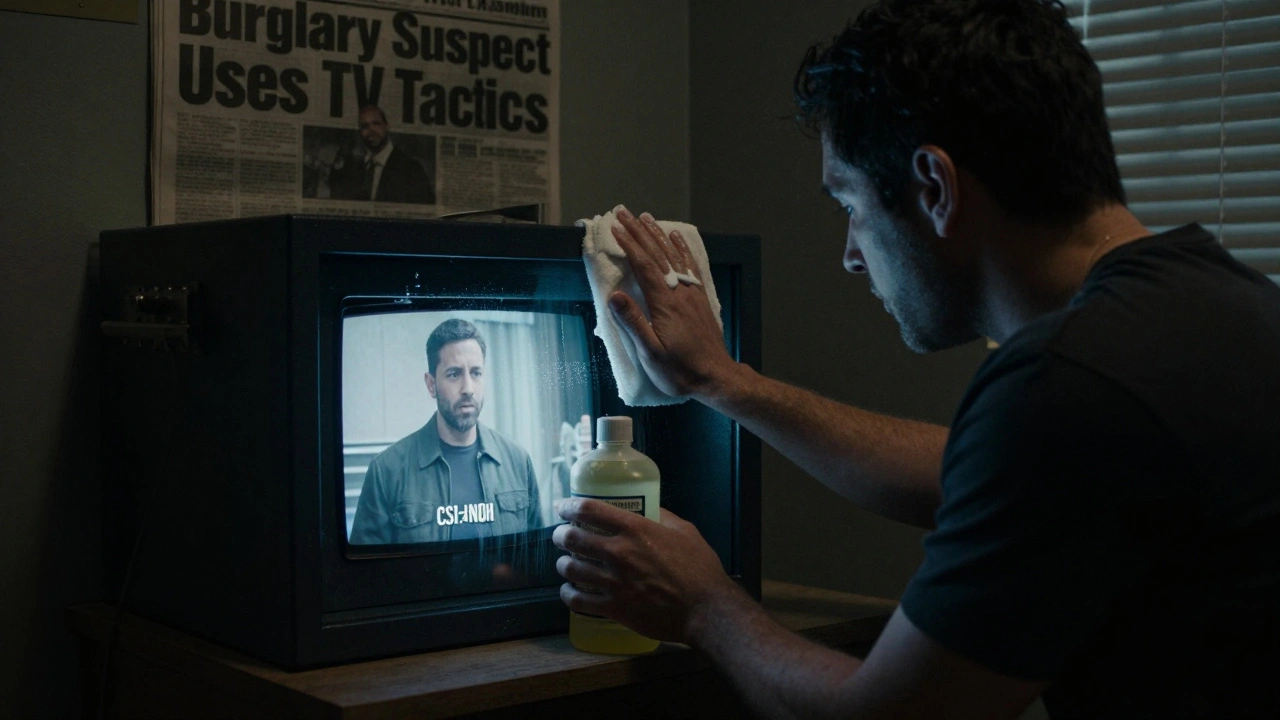
The CSI Effect doesn’t just affect jurors-it affects criminals. Law enforcement officers have reported that suspects now ask questions like: “Did you get my DNA?” or “Did you check for fingerprints on the gun?” Some have even changed their behavior after watching episodes. One burglar in Ohio wiped down a safe with bleach after seeing a CSI episode about latent prints. Another suspect in Florida removed his gloves after a robbery, then called the police himself to report a “mysterious death” nearby-because he thought the show had taught him how to fake an alibi.
Police chiefs in cities like Los Angeles and Chicago have openly said these shows are training manuals for criminals. They’re not just entertaining-they’re educating offenders on how to avoid detection.
Real Crime Shows Are Even More Influential
It’s not just fictional shows like CSI that shape perception. Documentaries like Forensic Files and Dateline NBC have an even stronger impact. Why? Because they’re based on real cases, use real evidence, and present findings with the same dramatic pacing as scripted dramas. A 2015 study found that viewers of real crime shows were more likely to mention forensic evidence in their opinions than those who watched fictional ones. People didn’t just watch-they internalized the methods as truth.
That’s dangerous. Real forensic science is messy, uncertain, and often inconclusive. But when a documentary shows a bloodstain pattern analysis leading to a conviction, viewers assume it’s infallible. They don’t realize that the same technique has been discredited in multiple court rulings.
Why This Matters Beyond Courtrooms
The CSI Effect doesn’t stop at verdicts. It’s reshaping how police departments allocate resources. Many departments now spend money on high-tech equipment they can’t afford just to meet public expectations. Budgets shift from community policing to DNA labs, even when those labs sit idle for months.
It’s also changing how crimes are reported. People call 911 over minor incidents because they think “real detectives” will show up with UV lights and evidence bags. And when investigators can’t deliver TV-style results, public trust erodes. “If they didn’t find DNA, how do they even know he did it?” is a common refrain.
Even the public’s understanding of crime rates is warped. One study found that viewers of crime shows estimated the murder rate in the U.S. to be 2.5 times higher than it actually is. They think there are more police officers and lawyers than there are. They believe crime is everywhere-and science can solve it all.
The Debate: Is It Real or Just Anecdotal?
Some legal experts argue the CSI Effect is overstated. They point to studies showing jurors still convict without forensic evidence if the circumstantial case is strong. Others say the effect is real but misunderstood: jurors aren’t rejecting cases because they lack science-they’re rejecting cases because they lack clear science.
But the evidence is mounting. Jurors who watch crime shows more than three hours a week are significantly more likely to demand forensic evidence than those who watch less. And when they don’t get it, they’re more likely to vote not guilty-even if other evidence is overwhelming.
It’s not about whether people are dumb. It’s about how deeply TV shapes our sense of what’s normal. When something is repeated enough-DNA matching, instant results, perfect evidence-it becomes the new standard. And reality can’t keep up.
What Can Be Done?
Lawyers and judges are starting to adapt. Some now include jury instructions that say: “Forensic evidence shown on television is dramatized. Real investigations take time, and not every case has scientific proof.” Others bring in real forensic technicians to explain the limitations of evidence during trial.
But the bigger fix? Education. Crime scene investigators need to be more vocal. Police departments should host public tours. Forensic labs should publish plain-language explainers. The public needs to understand that science doesn’t always give answers-and that’s okay.
Until then, the gap between TV and truth will keep growing. And every time a jury acquits because there’s no DNA, or convicts because of a tire track, the CSI Effect wins another round.
What is the CSI Effect?
The CSI Effect is the phenomenon where popular crime television shows distort public understanding of forensic science, leading jurors to expect unrealistic levels of scientific evidence in real trials. It also influences how criminals avoid detection and how law enforcement allocates resources.
Do real crime scene investigations use the same methods as on TV?
No. Real investigations are slower, less certain, and often lack the high-tech tools shown on TV. DNA results take weeks, fingerprints aren’t always recoverable, and many crimes leave no trace evidence at all. TV simplifies and dramatizes for entertainment.
Can watching crime shows cause wrongful convictions?
Yes. Jurors influenced by TV may overvalue weak forensic evidence-like tire tracks or hair fibers-believing it’s definitive. In real cases, such evidence is often inconclusive, but jurors who’ve seen too much CSI treat it as proof of guilt.
Do crime shows make it harder to convict guilty people?
Yes. Jurors expect DNA, fingerprints, or ballistic matches in every case. When prosecutors can’t provide that-because it doesn’t exist in the real world-juries sometimes acquit, even when other evidence strongly points to guilt.
Are real crime documentaries more influential than fictional ones?
Yes. Studies show viewers of real crime documentaries like Forensic Files are more likely to reference forensic evidence in their opinions than viewers of fictional shows like CSI. This is because real shows present actual cases with real procedures, making their influence feel more credible.