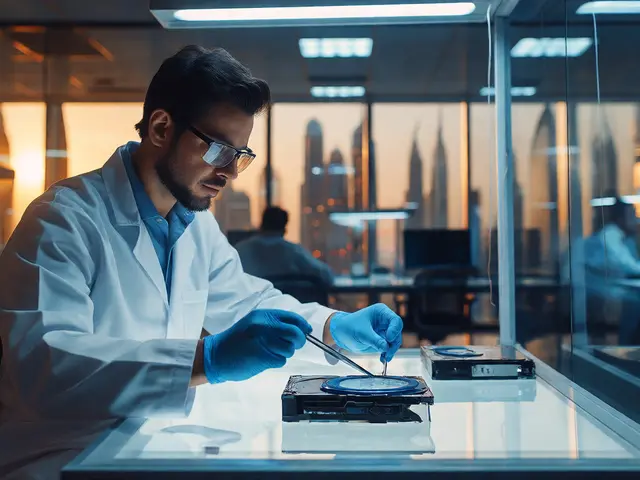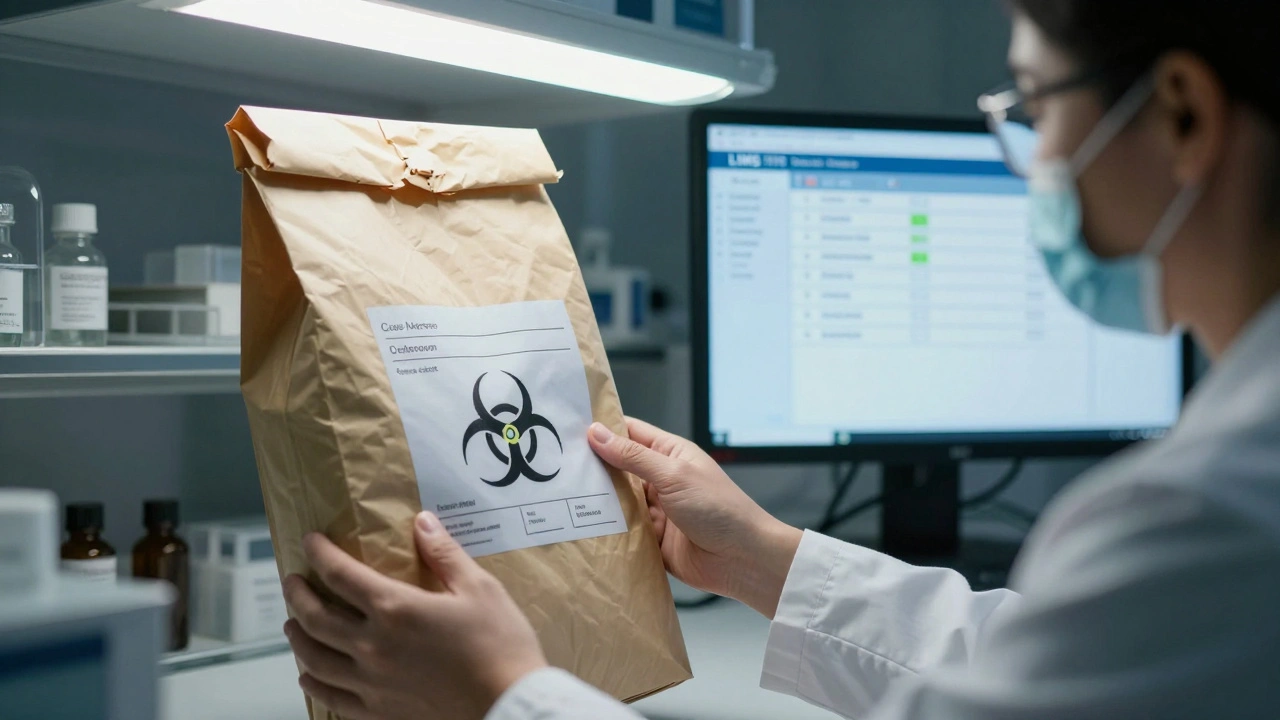
When police officers or investigators collect evidence from a crime scene, their job isn't done when they put it in a bag. The real test begins when that evidence hits the forensic lab door. If the packaging is wrong, the paperwork is incomplete, or the chain of custody breaks even slightly, that evidence can be thrown out in court - no matter how critical it is to solving the case. This isn't hypothetical. In fact, improper evidence handling accounts for 17% of all forensic testing errors that lead to inadmissible evidence, according to the NISTIR 7928 Biological Evidence Preservation Handbook. And it’s not just about mistakes - it’s about consistency. Across the U.S., labs have wildly different rules, and that inconsistency is the leading cause of contamination and chain-of-custody breaches.
What Exactly Is Evidence Intake?
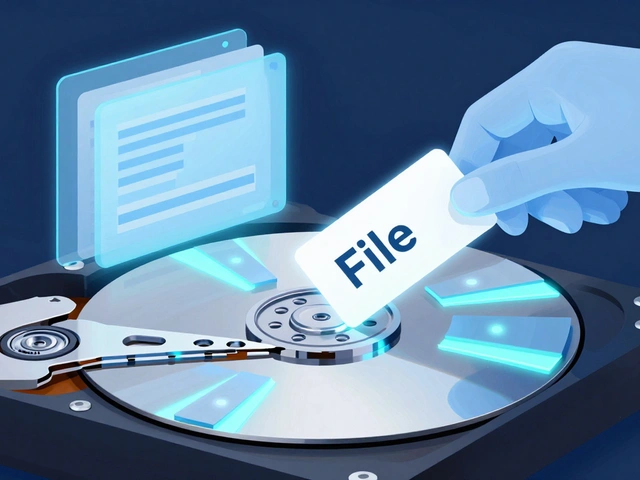
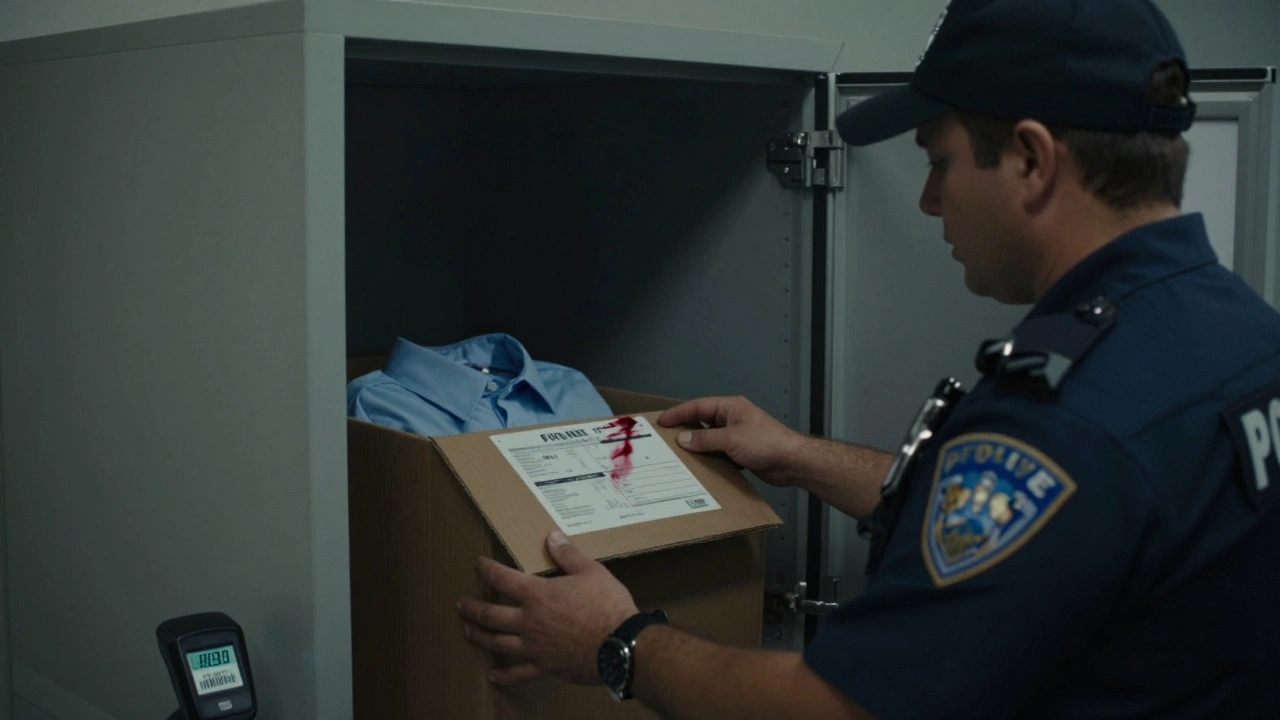
Evidence intake is the formal process where law enforcement agencies hand over physical evidence to a forensic laboratory. It’s not a handshake and a box. It’s a legal and scientific checkpoint. Every item - a bloody shirt, a syringe, a phone, a bag of pills - must be documented, sealed, labeled, and logged before it’s accepted. The lab doesn’t just take anything. They have strict rules, and if you don’t follow them, they’ll refuse it. No exceptions.
The goal is simple: keep the evidence untampered, traceable, and legally valid. If a defense attorney can show that the evidence wasn’t properly handled from the moment it was collected, the whole case can unravel. That’s why intake procedures are written in detail - down to the type of tape used to seal a bag.
The Core Rules: Packaging, Labeling, and Documentation
There are three pillars of evidence intake: packaging, labeling, and documentation. Get any one wrong, and the entire submission can be rejected.
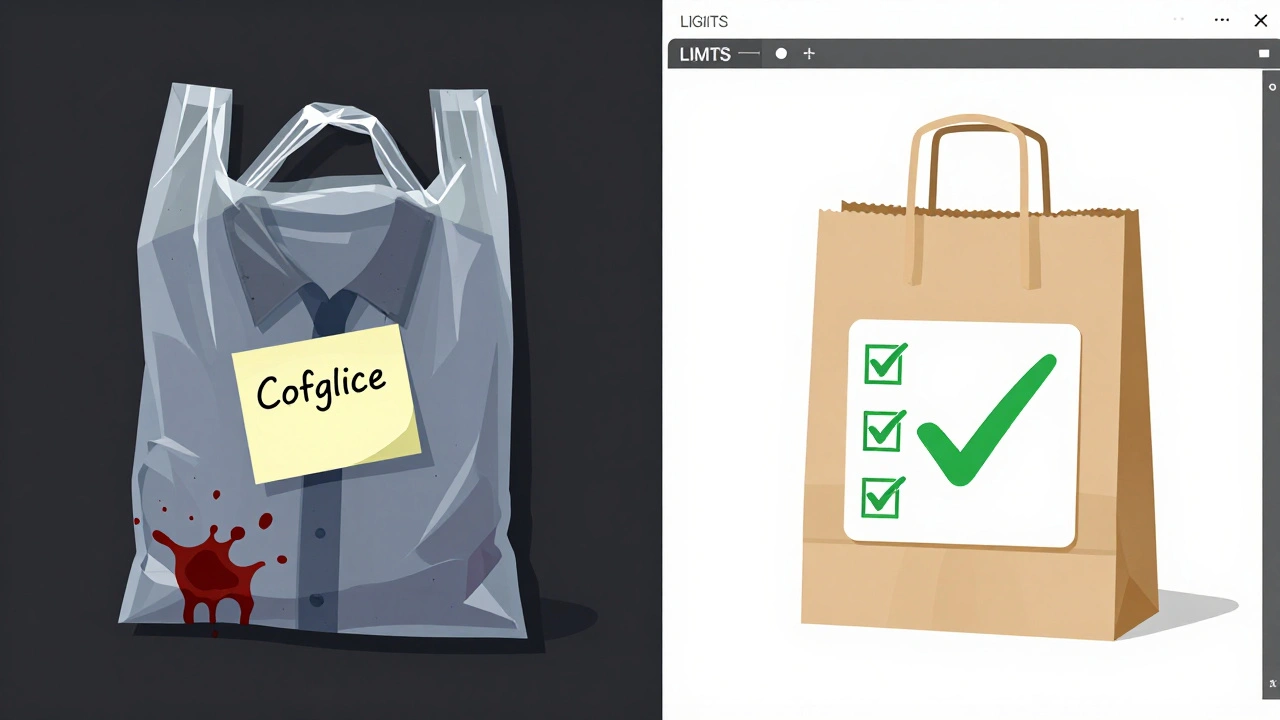
Packaging matters because contamination ruins forensic analysis. Blood, DNA, fibers, and chemicals can transfer between items if they’re not separated. Biological evidence - like blood, saliva, or tissue - must be stored in breathable containers, never plastic bags. Plastic traps moisture and causes mold, which destroys DNA. Instead, paper bags or cardboard boxes are required. For drugs, sealed plastic evidence envelopes are used, but only after the substance is dried and isolated. Oversized items, like a vehicle or a large weapon, must be wrapped in thick butcher paper or covered with clean sheets and tagged with a unique identifier.
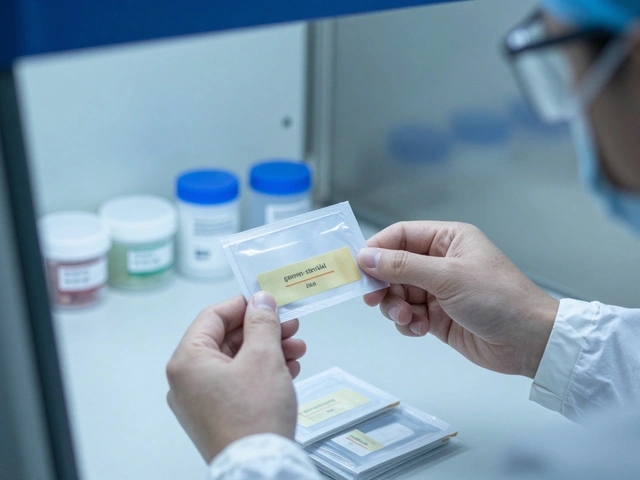
Labeling isn’t just writing a name on the box. The Evidence Management Institute (EMI) recommends using permanent polypropylene adhesive labels that won’t peel or fade over time. Labels must include:
- The case number
- The item number (e.g., “2 of 4”)
- The date and time collected
- The collector’s name and badge number
- A biohazard symbol if blood or bodily fluids are present
Bexar County’s protocol requires that every sealed package be initialed by the person who sealed it. If that’s missing, the lab won’t accept it. Even a missing initial can delay a case by weeks.
Documentation is where most agencies fail. Every submission needs a completed Request for Laboratory Examination (RFLE) form. Bexar County requires seven specific elements on this form:
- The case number
- The submitting agency
- The name of the investigator
- An itemized list of all evidence
- The type of analysis requested
- The reason for submission
- The signature of the submitting officer
Free-text descriptions like “stuff from the scene” are rejected. Why? Because if every officer writes “knife” differently - “stabbing weapon,” “blood-covered blade,” “knife found near body” - the lab can’t track, search, or analyze data. Digital systems now use dropdown menus with standardized terms to avoid this. Agencies using these systems have 37% fewer documentation errors than those still using paper.
Submission Windows and Time Limits
Most labs have strict hours. You can’t just drop off evidence anytime. In Bexar County, submissions must be received by 4:00 PM every workday. If you miss it, your evidence sits overnight - which violates policy. In Florida, the FDLE lab accepts evidence from 8:00 AM to 5:00 PM, with a lunch break from 12:00 to 1:00 PM. Onondaga County closes at 3:30 PM.
But here’s the problem: rural deputies often drive 90 minutes each way to reach the nearest lab. Many can’t make the deadline. The FBI’s 2024 survey found that 41% of agencies report insufficient training on evidence handling, and 68% struggle with proper sealing. Some departments now use secure lockboxes outside the lab for after-hours drop-offs, but this isn’t standardized. Only labs with digital systems can track these drop-offs securely.
Special Cases: Syringes, Oversized Items, and Digital Evidence
Not all evidence is treated the same. Hypodermic syringes, for example, are a major point of contention. Onondaga County refuses to analyze them unless a prosecutor or law enforcement supervisor requests it in writing and gets approval from the lab director. Why? Because syringes carry a high risk of needlestick injury and contamination. Other counties don’t have this rule - which creates confusion when evidence moves across jurisdictions.
Oversized items like furniture, vehicles, or large weapons require special handling. The EMI Standards say they should be wrapped in thick paper, not plastic. Yet, the ASCLD 2025 report found that 28% of agencies still use plastic for large items, increasing contamination risk.
Digital evidence - phones, computers, cloud data - is now a major part of intake. Labs require evidence to be powered off, placed in Faraday bags to block signals, and labeled with the device’s serial number. Bexar County’s LIMS system automatically logs when a phone is received and who handled it. Without this, digital evidence is easily tampered with or lost.
Chain of Custody: The Legal Lifeline
The chain of custody is the paper trail that proves who had the evidence, when, and where. Every time the evidence changes hands - from officer to evidence tech to lab analyst - it must be signed and dated. If one signature is missing, the defense can argue the evidence was switched or planted.
Dr. John Paul Jones of George Washington University found that 34% of chain-of-custody breaches between 2020 and 2023 happened because of inconsistent protocols across agencies. One officer signs with a first name. Another uses a badge number. One lab accepts handwritten logs. Another requires barcodes.
That’s why digital systems are changing everything. Bexar County’s blockchain-based system, rolled out in Q3 2025, reduced documentation fraud by 89%. Each step is time-stamped and encrypted. No one can alter it. Onondaga County’s BEAST-LIMS system cut handling errors by 52% in one year. These aren’t gimmicks - they’re necessities.
Training and Compliance: The Hidden Gap
Even the best system fails without trained staff. The EMI Standards say evidence technicians need at least 80 hours of certified training. But the FBI’s 2024 survey found that 33% of agencies give less than 40 hours. In some rural departments, evidence handling is assigned to the office clerk who’s never taken a forensic course.
Training gaps show up in the data. The EMI’s 2024 audit of 157 agencies found that 22% of evidence tracking errors came from inconsistent labeling and free-text entries. Officers who don’t know how to seal a bag, label a syringe, or fill out a form aren’t just making mistakes - they’re risking convictions.
Bexar County’s evidence technicians spent 37 hours training just to use their new LIMS system. But once they did, case processing time dropped from 45 minutes per submission to 18 minutes. That’s a 60% improvement. The payoff is real.
The Future: Digital, Automated, and Standardized
The field is moving fast. In 2026, NIST announced that by 2028, all federally accredited labs must use standardized biological packaging protocols. Right now, there’s a 31% variance in how labs handle biohazard materials. That’s dangerous.
AI is coming. The EMI is testing AI-powered packaging verification tools in five major labs. Early results show it can spot improper sealing, missing labels, and incorrect materials with 63% fewer errors than human inspectors.
And adoption is rising. As of January 2025, 92% of Bexar County’s submissions were digital. Nationally, 67% of accredited labs now use automated LIMS systems that generate tamper-proof custody records. Only 15% of rural agencies still rely on paper - but they’re the ones missing deadlines and making mistakes.
The Justice Department now requires all federal grant recipients to follow NISTIR 7928 by December 2026. That’s not a suggestion - it’s a mandate. Labs that don’t comply risk losing funding. Agencies that don’t train their staff risk losing cases.
What Happens If You Don’t Follow the Rules?
Let’s say you collect a bloody shirt, put it in a plastic bag, write “shirt” on a sticky note, and hand it to the lab at 5:15 PM. What happens?
- The lab rejects it.
- The case is delayed.
- The suspect stays out of jail.
- The victim’s family gets no closure.
- The prosecutor may drop charges.
It’s not just about procedure. It’s about justice.
What happens if evidence is submitted after hours?
Most labs have strict cutoff times - often 4:00 or 5:00 PM - and will not accept evidence outside those hours unless prior arrangements are made. Some labs offer secure drop boxes, but these require pre-approval and documentation. Submitting after hours without authorization can result in evidence being rejected or stored improperly, risking contamination and chain-of-custody violations.
Why can’t biological evidence be stored in plastic bags?
Plastic traps moisture, which causes biological samples like blood, saliva, or tissue to degrade and grow mold. Mold destroys DNA, making forensic analysis impossible. Paper bags or cardboard boxes allow air to circulate, preserving the integrity of the sample. This is a standard requirement across all major forensic protocols, including NISTIR 7928.
Do all forensic labs have the same intake rules?
No. While national standards from NIST and OSAC are growing, each jurisdiction - county, state, or lab - can set its own rules. For example, Onondaga County requires special approval for syringes; Bexar County does not. Submission hours, labeling formats, and documentation requirements vary. This inconsistency is a leading cause of evidence contamination and legal challenges.
What is a Laboratory Information Management System (LIMS)?
A LIMS is a digital system that tracks evidence from collection through analysis. It logs who handled the evidence, when, and where, using barcodes or RFID tags. It replaces paper logs and reduces human error. Labs using LIMS report up to 37% fewer documentation mistakes and faster processing times. Bexar County’s system also uses blockchain to prevent tampering.
How can law enforcement improve their evidence intake process?
Start with training: ensure every officer handling evidence completes at least 80 hours of certified training. Adopt standardized digital forms with dropdown menus instead of free-text fields. Use proper packaging materials - paper for biological evidence, Faraday bags for digital devices. Implement a LIMS system, even if basic. And always follow the rule: if it’s not documented, it didn’t happen.