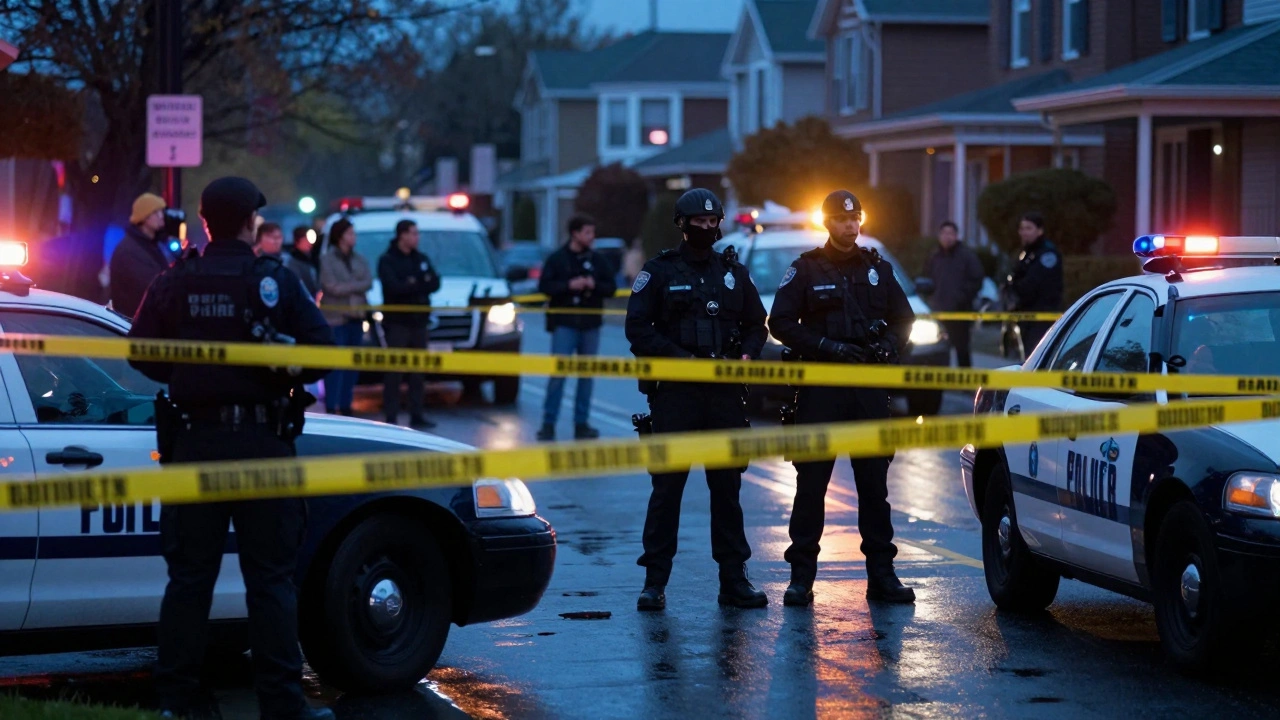
You arrive at the scene. A body lies in the street, or perhaps inside a home. The sirens are still wailing, neighbors are gathering, and your phone is blowing up with calls from dispatch. In those first few minutes, you aren't just an officer; you are the guardian of the truth. If you mess up the perimeter now, no amount of advanced DNA testing later will save the case. Securing a homicide scene isn't about being dramatic-it’s about creating a defensible bubble where evidence stays pure until it reaches the courtroom.
Most people think crime scene tape is just for show. It’s not. That yellow plastic is the first line of defense against contamination. But tape alone doesn’t cut it. You need a system. You need layers. And you need to know exactly who walks through those lines and why. This guide breaks down how to establish a rock-solid perimeter and manage access control so that every piece of evidence holds up under scrutiny.
The Three-Layer Perimeter Model
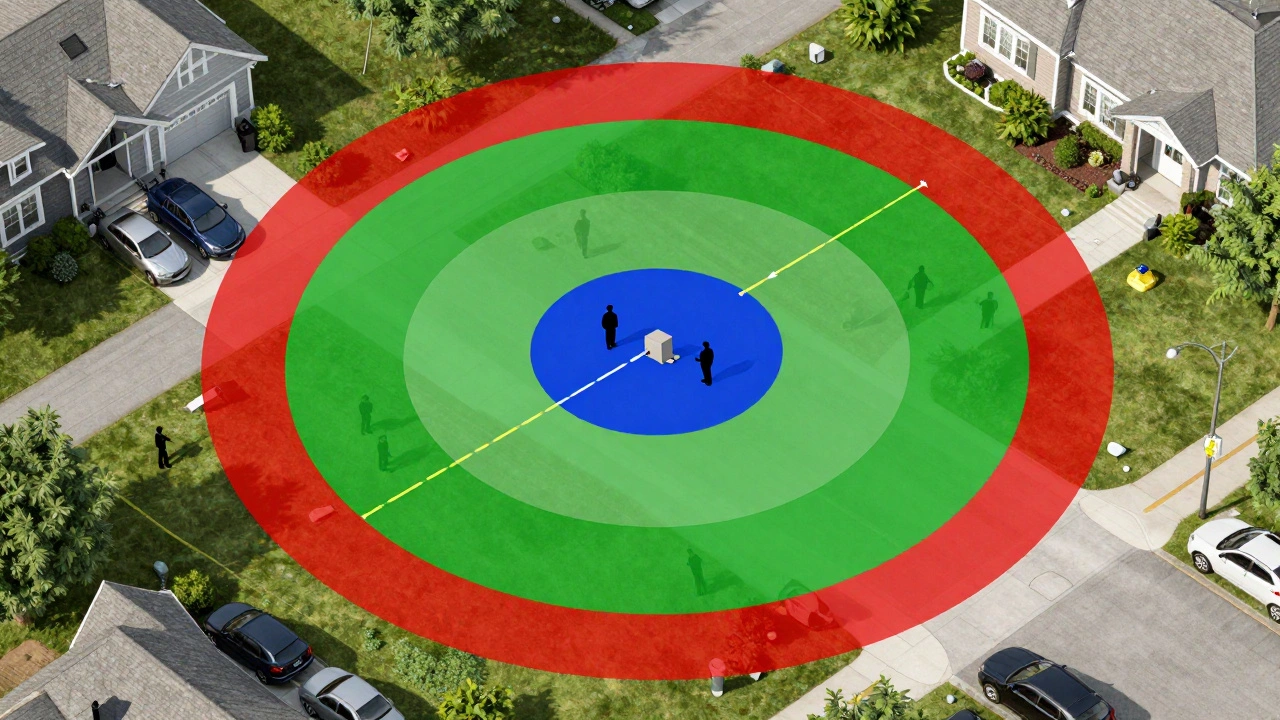
Imagine an onion. You don’t just peel off one layer; you work outward. Effective homicide scene security relies on a multi-level containment strategy. Most experts, including guidelines from the National Institute of Justice (NIJ), recommend at least two, but ideally three, distinct perimeters. Why? Because chaos happens at the edges. By pushing the public back further, you protect the inner sanctum where the body and primary evidence sit.
| Perimeter Level | Primary Function | Typical Barriers | Who Can Enter? |
|---|---|---|---|
| Outer (Public) Barrier | Keep media, public, and non-essential traffic away | Police vehicles, barricades, roadblocks | No one except authorized command staff moving inward |
| Inner (Command) Barrier | Create a buffer zone for staging and supervision | Second line of crime scene tape | Detectives, CSU supervisors, Medical Examiner liaisons |
| Core Crime Scene | Protect the body and immediate evidence | Tightest cordon around the body/evidence cluster | Only essential personnel (CSU techs, lead detective, ME) |
The outer barrier is your first shield. In a residential neighborhood, this might mean blocking the entire street with patrol cars. In an open field, it could be a wide cordon extending 50 to 200 meters beyond the visible evidence. The goal here is simple: stop the curious crowd and the news vans. If a reporter gets too close, they might see something that compromises witness interviews or leaks details before you’re ready. Use physical barriers like police cruisers rather than just tape if possible. Tape can be stepped over; a car cannot.
Inside that outer ring sits the inner barrier. Think of this as your command center. This is where detectives gather to plan their approach, where forensic technicians stage their equipment, and where the incident commander makes decisions. It keeps the "noise" of the investigation separate from the "signal" of the evidence collection. Not everyone needs to be near the body. By keeping most personnel in this buffer zone, you reduce foot traffic in the critical areas.
Finally, there is the core crime scene. This is the smallest area, often defined by the location of the victim, major bloodstains, or weapons. Only vital personnel enter here. If a supervisor wants to look at the body, they should do it from outside the core tape unless absolutely necessary. Every step taken inside this circle risks disturbing trace evidence, shoe prints, or fiber patterns. Restricting access here is non-negotiable.
Access Control: The Single Entry Point
Having multiple doors into a house is convenient for living. It’s a disaster for a homicide investigation. One of the most common mistakes first responders make is allowing officers to enter from different sides of a building or property. This creates multiple pathways for contamination and makes it impossible to track who touched what.
You must establish a single controlled entry point. Whether it’s the front door of a house or a specific gap in the tape at a park, everyone goes in and out through that one spot. This chokepoint allows you to monitor every person entering the scene. It also forces investigators to follow a designated path, minimizing the area they walk on.
At this entry point, you need a log. Not a casual note on a napkin. A formal Crime Scene Access Log. This document tracks:
- Full name and badge number
- Agency affiliation
- Role (e.g., CSU Tech, Detective, Coroner)
- Time of entry
- Time of exit
- Purpose of entry
Why is this so important? Because in court, the defense attorney will ask, "Who else was in that room when the gun was found?" If you can’t prove that only three people entered between 10:00 AM and 10:30 AM, your evidence becomes vulnerable. The log creates a paper trail that supports the Chain of Custody. Without it, you’re guessing.
The Pathway of Contamination
Even with a single entry point, people have to move around. They can’t float. So, you create a pathway of contamination. This is a designated route-often marked with additional tape or cones-that leads from the entry point to the key evidence areas. Investigators are instructed to stay strictly within this path.
This concept acknowledges that some disturbance is inevitable. Instead of trying to prevent all movement, you control it. By concentrating foot traffic into a narrow corridor, you leave the rest of the scene undisturbed. Photographers document this pathway early on. If someone steps off the path, it must be noted in the log and explained. Maybe they had to reach a piece of evidence on the other side of the room. That’s fine, as long as it’s recorded.
In complex scenes, such as a multi-room apartment or a large outdoor area, you might have multiple pathways leading to different zones. But each pathway must be clearly defined and logged. This discipline prevents the "scattering" of evidence caused by well-meaning officers wandering around looking for clues without a plan.
Common Pitfalls and Historical Lessons
We learn best from others' mistakes. Two high-profile cases stand out as cautionary tales regarding perimeter and access control failures.
In the 1994 homicides of Nicole Brown Simpson and Ronald Goldman, the Los Angeles Police Department faced intense criticism for its scene management. Dozens of officers entered the property in the first 24 hours. Some were ungloved. Logs were inconsistent. Defense attorneys used these gaps to argue that evidence could have been planted or contaminated. The sheer volume of people moving freely undermined the integrity of the physical findings.
Similarly, in the 1996 JonBenét Ramsey case in Boulder, Colorado, family members and friends were allowed to roam the house before a formal perimeter was established. A detective even instructed the father to search for his daughter, leading him to discover and move the body. This lack of strict access control turned a potential goldmine of evidence into a chaotic mess that investigators are still debating today.
These examples highlight why rigid protocols matter. It’s easy to let a friend of the victim in "just to check." It’s easy to ignore the log because "we’re all busy." But that ease costs you credibility later. Stick to the rules. Keep the perimeter tight. Guard the log like your career depends on it-because it does.
Technology and Modern Tools
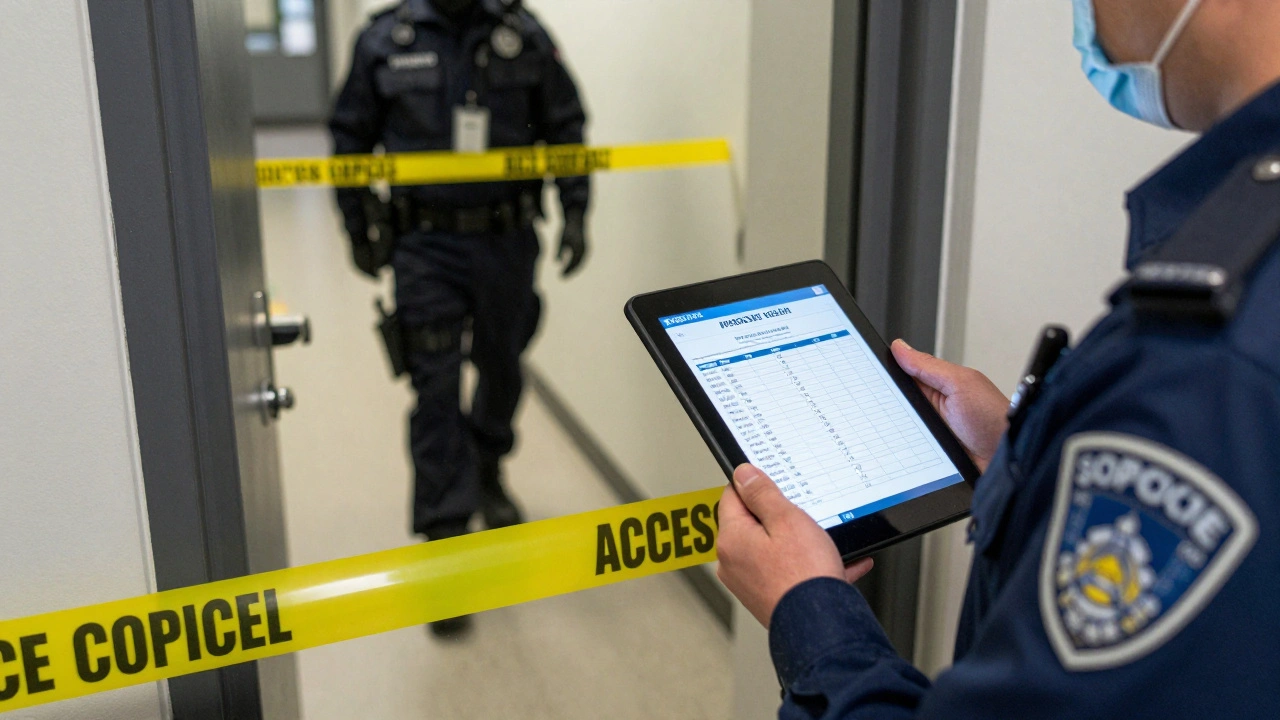
While the principles remain the same, the tools are evolving. Many agencies now use digital logging systems instead of paper clipboards. Tablets linked to centralized evidence management software allow real-time updates to the access log. This reduces handwriting errors and ensures that timestamps are precise.
Body-worn cameras (BWCs) have also become standard. When an officer enters the core scene, their BWC records exactly what they see and do. This footage serves as a secondary verification of the access log. If the log says Officer Smith entered at 10:15 AM, the video confirms it. It also shows whether they stayed on the designated pathway.
For large outdoor scenes, drones are increasingly used to map the outer perimeter. They provide an aerial view that helps commanders adjust the cordon size without sending officers into potentially dangerous or unsecured areas. These technologies don’t replace the need for human judgment, but they add layers of accountability and precision.
Next Steps for First Responders
If you’re the first officer on the scene, your actions set the tone for the entire investigation. Here’s a quick checklist to keep in mind:
- Ensure Safety First: Check for immediate threats to life or safety. Render aid if possible.
- Establish the Outer Perimeter Immediately: Use vehicles and tape to block access. Don’t wait for backup to define the boundaries.
- Identify the Core Area: Locate the body and obvious evidence. Draw a mental line around it.
- Set Up the Access Log: Start recording entries as soon as anyone approaches the inner barrier.
- Designate a Single Entry Point: Direct all incoming personnel to this spot.
- Limit Core Access: Politely but firmly tell non-essential personnel to stay outside the core tape.
Remember, you’re not just securing a scene; you’re preserving justice. Every step you take, every person you let in, and every boundary you draw affects the outcome of the case. Be thorough. Be disciplined. And never underestimate the power of a well-managed perimeter.
How many perimeter levels are recommended for a homicide scene?
Most experts recommend at least two, but preferably three, perimeter levels. These include an outer public barrier, an inner command barrier, and a core crime scene cordon. This layered approach minimizes contamination and separates investigative activities from evidence preservation.
What information should be included in a crime scene access log?
A proper access log should record the full name, badge number, agency, role, time of entry, time of exit, and the specific purpose of entry for every individual who crosses the perimeter. This documentation is crucial for maintaining the chain of custody and defending evidence integrity in court.
Why is a single entry point important for access control?
A single entry point allows investigators to monitor and log all personnel entering the scene. It prevents unauthorized access, reduces the risk of contamination from multiple directions, and simplifies the creation of a designated pathway of contamination for safe movement within the scene.
What is a pathway of contamination?
A pathway of contamination is a designated route, often marked with tape, that guides investigators from the entry point to key evidence areas. By restricting foot traffic to this specific path, agencies minimize disturbance to the rest of the scene, preserving trace evidence and bloodstain patterns.
Can technology replace traditional paper logs for scene access?
Yes, many agencies now use digital logging systems via tablets or smartphones linked to evidence management software. These tools offer real-time updates, precise timestamps, and integration with body-worn camera footage, enhancing accuracy and accountability compared to handwritten logs.