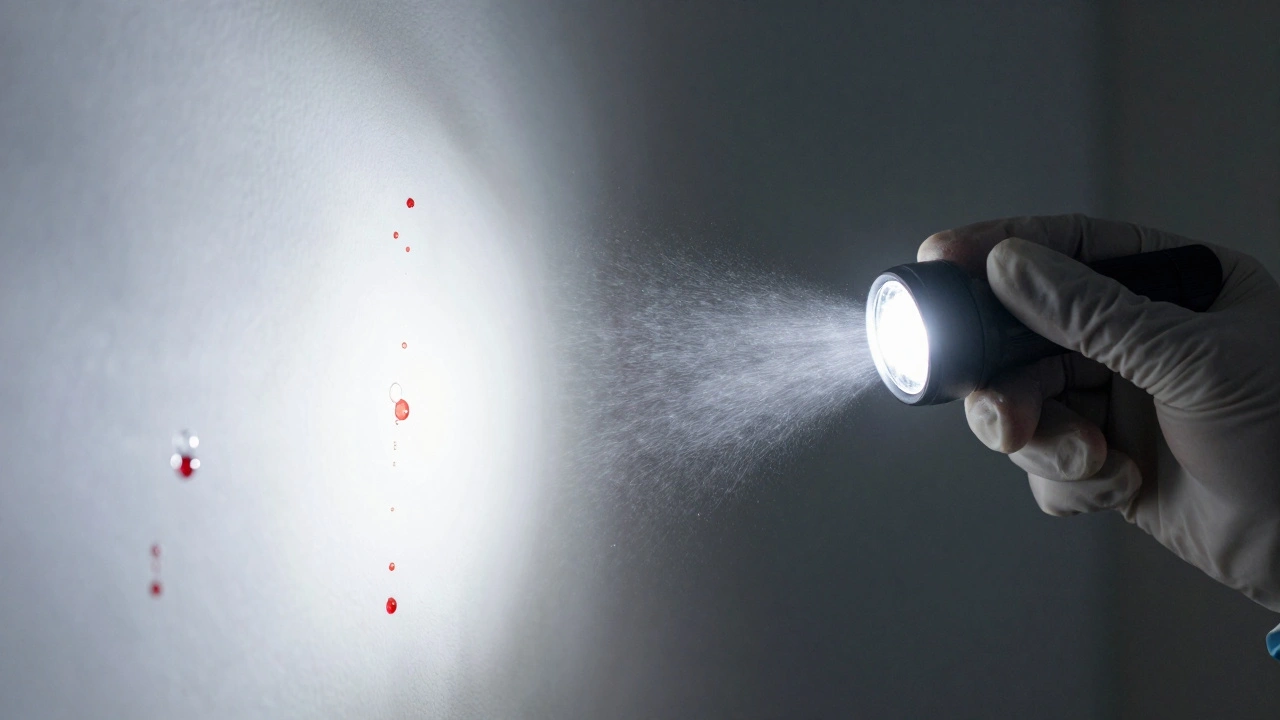
Imagine walking into a crime scene and seeing a spray of tiny blood droplets across a wall. At first glance, it looks like the result of a high-velocity impact-maybe a gunshot or a brutal beating. But if you look closer, you see tiny bubbles and odd, beaded strings of blood. You aren't looking at a weapon's impact; you're looking at the last breaths of a victim. This is the world of expirated bloodstain patterns is a specific category of bloodstains produced when blood is forced by airflow out of the nose, mouth, or an open wound. Understanding these patterns is the difference between correctly reconstructing a struggle and completely misreading the events of a crime.
What Exactly Are Projected Patterns?
In the world of forensics, not all bloodstains are created equal. Most stains are just a result of gravity-a drop falling from a knife, for instance. However, a projected bloodstain pattern is different. It happens when blood is released with a force that far exceeds gravity. Essentially, it's blood under pressure. Whether it's an artery pumping or a lung forcing air out, the blood is ejected with enough velocity to create distinct, often violent-looking patterns.
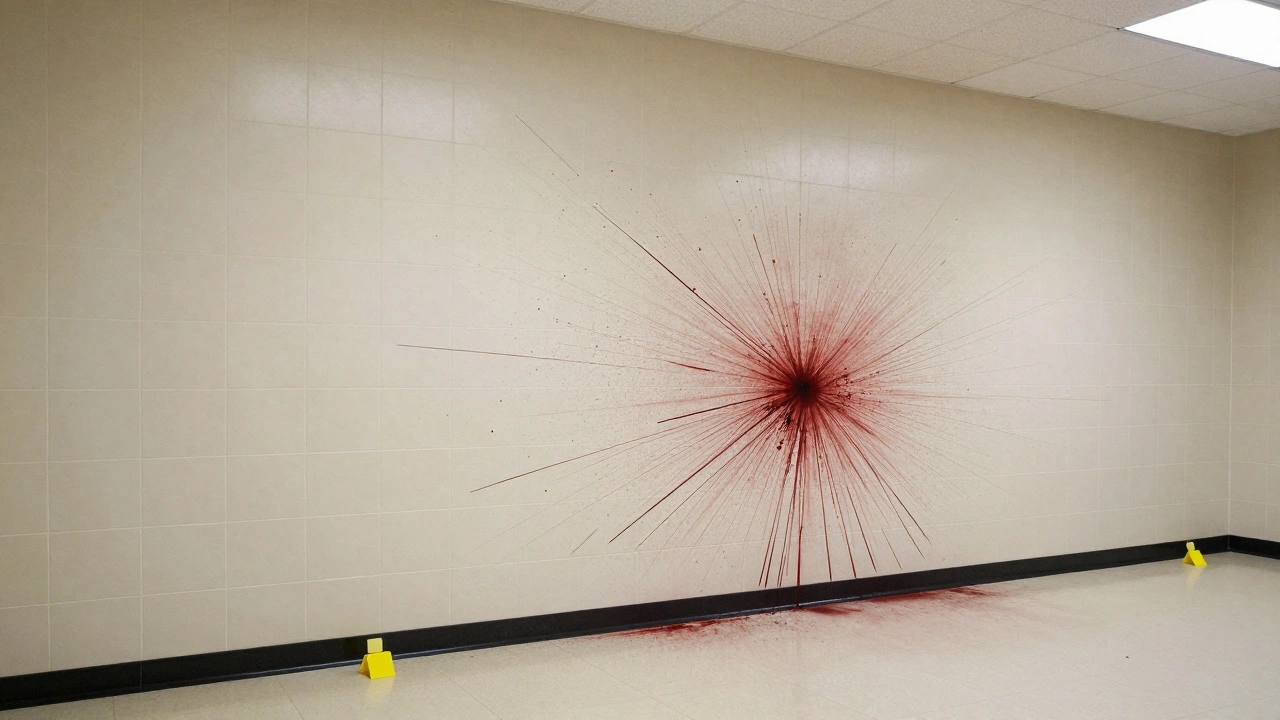
When a large volume of blood is projected horizontally or downward with this kind of force, it doesn't just land as a circle. It creates spines-narrow, streak-like projections that point in the direction the blood was traveling. This allows investigators to track the origin of the spray, but the real challenge is figuring out what caused that pressure in the first place.
The Mechanics of Expiration
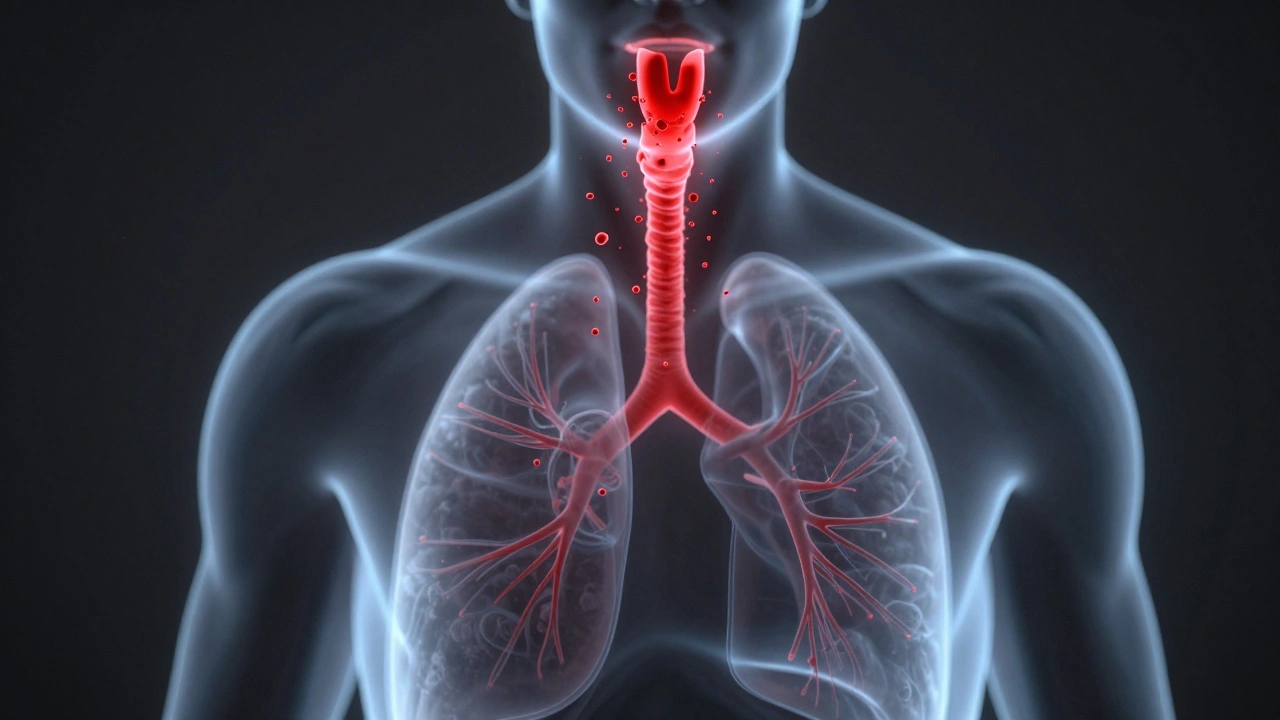
Expirated blood happens when blood accumulates in the airway, sinuses, or lungs. When a person is injured-perhaps from internal trauma or a chest wound-the body naturally tries to clear the airways to keep breathing. This forceful expulsion of air pushes the blood out through the nose and mouth.
This isn't a passive leak. It's a projection mechanism. Because the blood is mixed with air, the resulting spray is often very fine. In fact, these patterns are dominated by tiny stains, usually less than 0.5 millimeters in diameter. These microscopic droplets are ejected at high velocity during the early stages of the expiration process, often creating a radial spray that fans out from the source.
Telling Expiration Apart from Impact Spatter
This is where forensic analysts often sweat the details. If you're not careful, expirated blood looks almost exactly like impact spatter from a gun or a blunt object. Both produce a mist of tiny drops. However, there are a few "smoking guns" that prove the blood came from the lungs and not a bullet.
First, look for bubble rings. Because the blood is mixed with air as it leaves the body, it often forms tiny circular bubbles upon impact. Second, look for beaded stains. These happen when small blood drops are linked by strings of mucus or other biological fluids from the respiratory tract. If you see bubbles and beads, you're likely dealing with expiration.
| Feature | Expirated Pattern | Impact Spatter (e.g., Gunshot) |
|---|---|---|
| Primary Force | Airflow from lungs/sinuses | Direct physical force/impact |
| Visual Markers | Bubble rings, beaded stains | Clean edges, satellite spatter |
| Droplet Size | Often < 0.5mm | Varies, but can be similarly fine |
| Biological Mix | Contains mucus/saliva | Pure blood/tissue |
The Role of Distance and Surfaces
Not every expirated pattern will show the same clues. For example, those beaded stains we mentioned? They are distance-dependent. Research shows that if the person is more than 300 millimeters (about 12 inches) away from the surface, the beaded stains usually disappear. If you find beads, the victim was likely very close to the wall or object they were coughing on.
The surface itself also changes the game. If the blood lands on a smooth, non-porous surface-like a tiled bathroom wall or a glass door-the bubbles and beads stay visible. But if the blood hits a porous surface, like a carpet or a cotton t-shirt, the material absorbs the liquid. This process, called wicking, causes the blood to spread and blur, erasing the fine spines and bubbles that forensic examiners rely on for classification.
Coughing and Spatial Distribution
Coughing is one of the most common ways these patterns are formed, and the spatial footprint can be surprisingly large. In controlled experiments, coughing has produced bloodstain areas as large as 137 centimeters by 175 centimeters when the source was just one meter away. This means a single cough can paint a massive section of a room.
The projection isn't just forward; it can be horizontal or even downward depending on the person's position. If a victim is lying prone (face down), the blood can be projected horizontally up to 175 centimeters from the mouth. This wide range of distribution is why investigators have to map out the entire scene rather than just looking at a single cluster of drops.
Final Analysis Considerations
When an examiner is classifying these stains, they have to use a holistic approach. They can't just look at the size of the drop. They must ask: Was the surface porous? How far was the target? Are there mucus-linked beads? Is there a radial distribution? By combining these factors, they can distinguish a projection mechanism-where surface tension is disrupted without a direct blow-from a contact stain or a high-velocity impact. Only by ruling out every other possibility can they confidently label a pattern as expirated.
What is the main difference between expirated blood and impact spatter?
The main difference lies in the markers. Expirated blood often contains bubble rings (from air mixture) and beaded stains (from mucus), whereas impact spatter lacks these biological markers and is caused by a physical force hitting a blood source.
Why don't beaded stains appear on all surfaces?
Beaded stains require a non-porous, smooth surface to remain visible. On porous surfaces like fabric or unfinished wood, the blood wicks into the material, which destroys the delicate structure of the beads and bubbles.
How far can a cough project blood?
Coughing can project blood droplets horizontally up to 175 centimeters from the mouth, creating a pattern area that can span over 1.3 meters in width and 1.7 meters in height from a distance of one meter.
What are "spines" in a bloodstain?
Spines are narrow, streak-like projections that extend from the main body of a bloodstain. They occur when blood is projected with force exceeding gravity, and they typically point in the direction of the blood's travel.
Do all projected patterns involve air?
No. Projected patterns include any blood released under pressure. This includes arterial spurting (caused by heart pressure) and cast-off (blood flung from a moving object), not just expirated blood which specifically involves airflow.
Next Steps for Scene Analysis
If you are analyzing a scene with suspected expirated blood, start by identifying the most non-porous surfaces near the victim's head. Check for the presence of bubble rings using a magnifying glass or high-resolution photography. If the blood is on a textile, remember that the original pattern may be distorted by wicking, so look for secondary stains on nearby hard surfaces to confirm the mechanism. Finally, map the radial distribution to determine if the victim was stationary or moving during the expiration event.