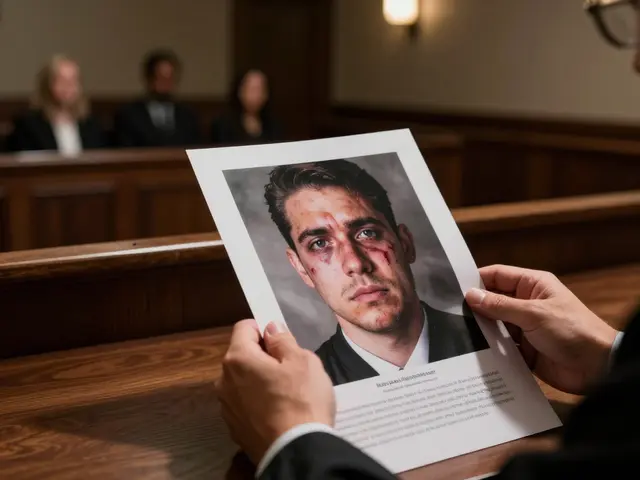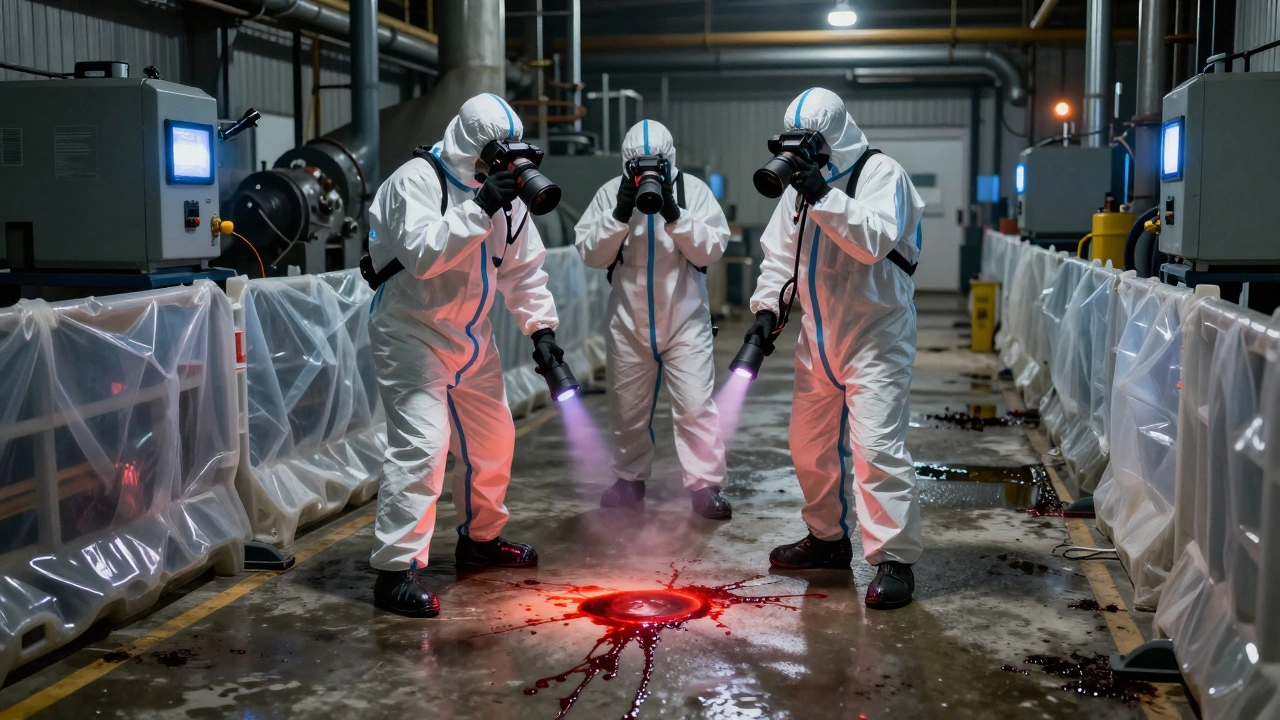
When an industrial accident spills blood, bodily fluids, or toxic chemicals across a factory floor, warehouse, or processing plant, it’s not just a mess-it’s a public health emergency. These aren’t simple spills you can mop up with bleach and a rag. Large-scale biohazards require a methodical, regulated, and highly specialized response. If you’ve ever wondered how a site gets cleaned after a fatal machinery accident, chemical leak, or violent trauma event, here’s exactly how it’s done-step by step.
Assessment: Seeing What’s Invisible
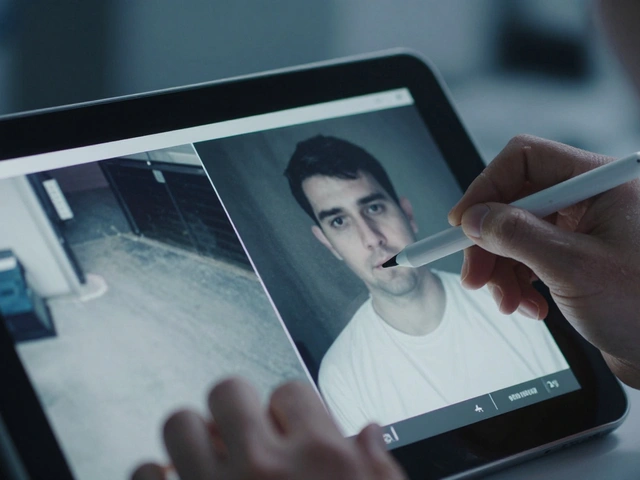
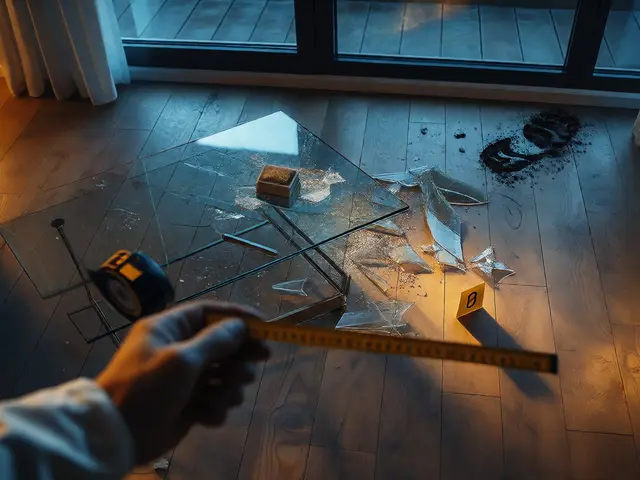
The first thing any professional team does is not start cleaning. They stop. They look. They scan. Before a single glove is put on, technicians use thermal imaging cameras to detect hidden biological residues. Heat signatures from dried blood, urine, or tissue can show up long after the area looks clean to the naked eye. They also take air samples, swab surfaces, and map out every square foot affected. This isn’t guesswork. It’s science. A single drop of blood can carry hepatitis B, HIV, or MRSA. If you miss even a small area, you risk exposing workers, cleaners, or future occupants to deadly pathogens.The assessment phase determines everything: how long the cleanup will take, what equipment is needed, and which regulations apply. In some cases, entire walls or floors must be removed because contamination has seeped into insulation, drywall, or subflooring. No one skips this step. Skipping it means failing the whole job.
Containment: Locking Down the Contamination
Once the extent of the damage is known, the team builds a barrier. Plastic sheeting seals off doorways, vents, and hallways. Negative air pressure machines pull air inward, preventing any airborne particles from escaping into other parts of the building. Think of it like a reverse vacuum-everything gets sucked toward the cleanup zone, not out of it.Workers enter through a decontamination corridor. They don full PPE: respirators with HEPA filters, disposable coveralls, double-gloving, boot covers, and face shields. No exposed skin. No exceptions. A decon station with 0.5% sodium hypochlorite solution sits just outside the hot zone. Every time a worker leaves, they go through a strict doffing procedure-removing gear in a specific order, rinsing gloves, stepping on disinfectant pads, and disposing of each layer as biohazard waste.
Meanwhile, air monitors track particle levels. If the pressure drops even slightly, the operation halts. One breach could spread contamination across a whole facility. This isn’t drama-it’s protocol.
Removal: Getting Rid of What Can’t Be Saved
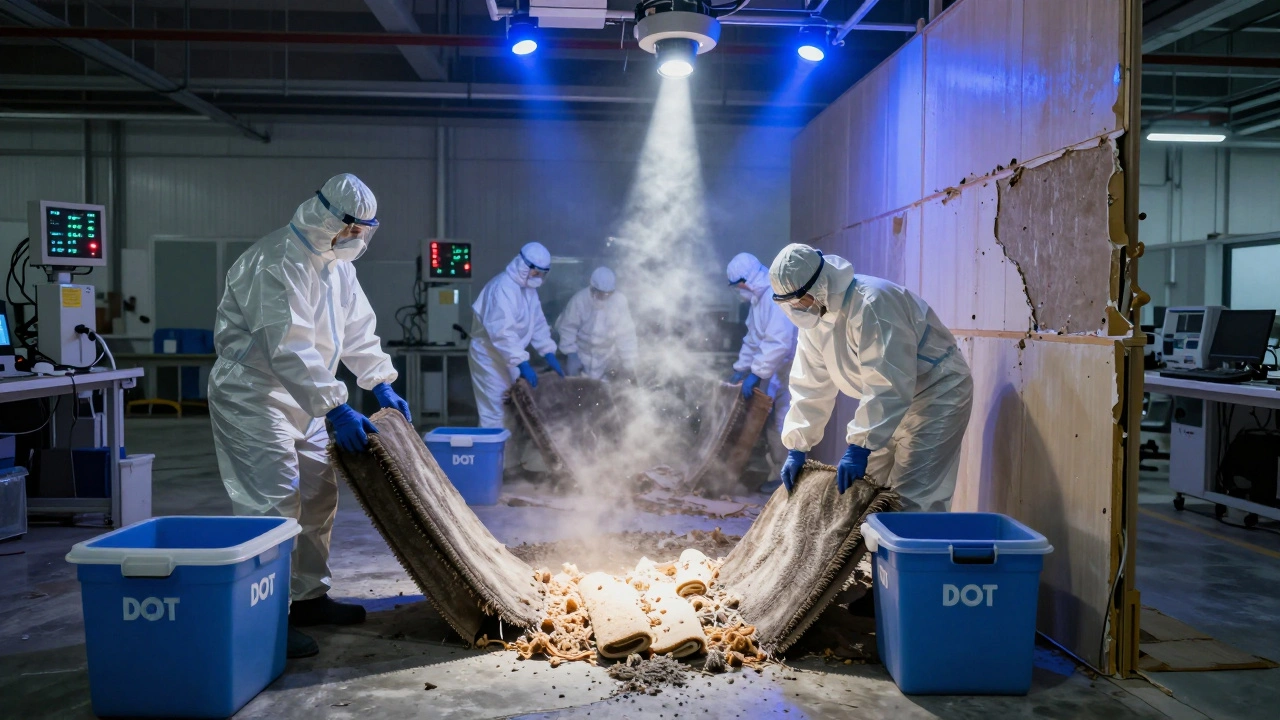
You can’t disinfect carpet soaked in blood. You can’t sanitize a chair that absorbed bodily fluids. You can’t scrub away contamination embedded in porous materials. So they take it all out.Carpet, insulation, ceiling tiles, furniture, drywall, flooring-anything that can’t be fully sterilized gets cut out, bagged, and labeled. Each item goes into DOT-approved biohazard containers marked with the universal biohazard symbol. These aren’t regular trash bags. They’re puncture-resistant, leak-proof, and labeled with tracking numbers for legal disposal.
Teams work from the least contaminated areas toward the most contaminated. That means cleaning walls before floors, ceilings before workbenches. Why? To avoid dragging pathogens into already-clean zones. It’s like cleaning a kitchen from the sink outward, not the other way around.
Disinfection: Killing What’s Left
After removal, the surfaces are scrubbed with EPA-registered disinfectants approved for bloodborne pathogens. Common choices include hydrogen peroxide-based cleaners or bleach solutions with specific dwell times-meaning the chemical must sit on the surface for 10 minutes or more to kill viruses. Spray, wipe, wait, repeat. No shortcuts.Then come the heavy tools: UV-C lights, ozone generators, and foggers. UV lights zap microbes on surfaces, especially in hard-to-reach corners. Ozone machines flood the air with reactive oxygen molecules that break down odor-causing bacteria at the molecular level. Foggers spray disinfectant mist into the air, coating ceilings, ducts, and equipment that can’t be manually cleaned.
ATP testing is the final check. Swabs are run across surfaces, then inserted into a meter that detects adenosine triphosphate-a molecule found in all living cells. If the reading is below 100 RLU (relative light units), the surface is considered clean. If it’s over 500? They go back. Again. And again.
Deodorization: Erasing the Smell
Biohazards don’t just leave stains-they leave smells. Rotting tissue, ammonia from urine, chemical residue. These odors stick to concrete, metal, and wood. Regular air fresheners don’t touch them.Professional teams use hydroxyl generators that break down odor molecules in the air. Thermal foggers release odor-neutralizing agents into crevices. Sealing agents are applied to porous surfaces like concrete to trap lingering particles. Multiple treatments over several days are common. One pass? Not enough. This phase can take longer than the actual cleaning.
Verification: Proof It’s Safe
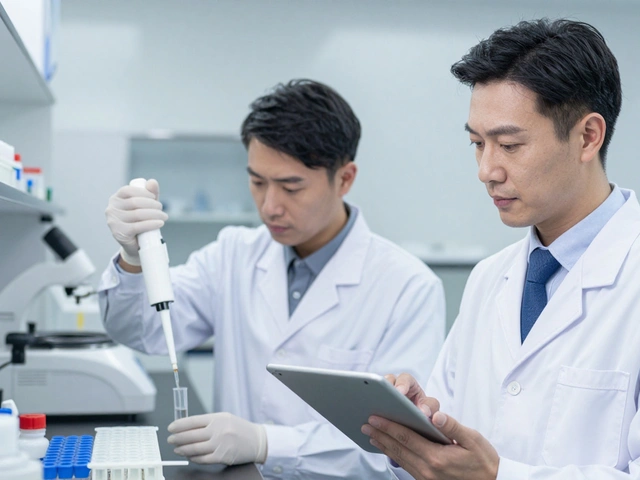
A cleanup isn’t done until someone independent confirms it. Third-party labs test swabs and air samples. Photos are taken before, during, and after. Waste manifests list every bag, container, and truckload shipped to a medical waste incinerator. Certificates of decontamination are issued-not just for insurance, but for legal protection.OSHA requires documentation. The EPA requires approved disinfectants. Local health departments require permits for waste transport. Without this paperwork, the site isn’t legally cleared. Even if it looks clean, without verification, it’s still a liability.
Waste Disposal: Where It All Goes
All biohazard waste doesn’t go to the dump. It goes to licensed medical waste facilities that incinerate or autoclave materials at temperatures over 1600°F. Landfilling is illegal for most industrial biohazard waste. Transport is done in sealed, labeled vehicles with GPS tracking. Each load has a manifest signed by the cleanup crew, the driver, and the receiving facility. One missing signature? A violation. A fine. A shutdown.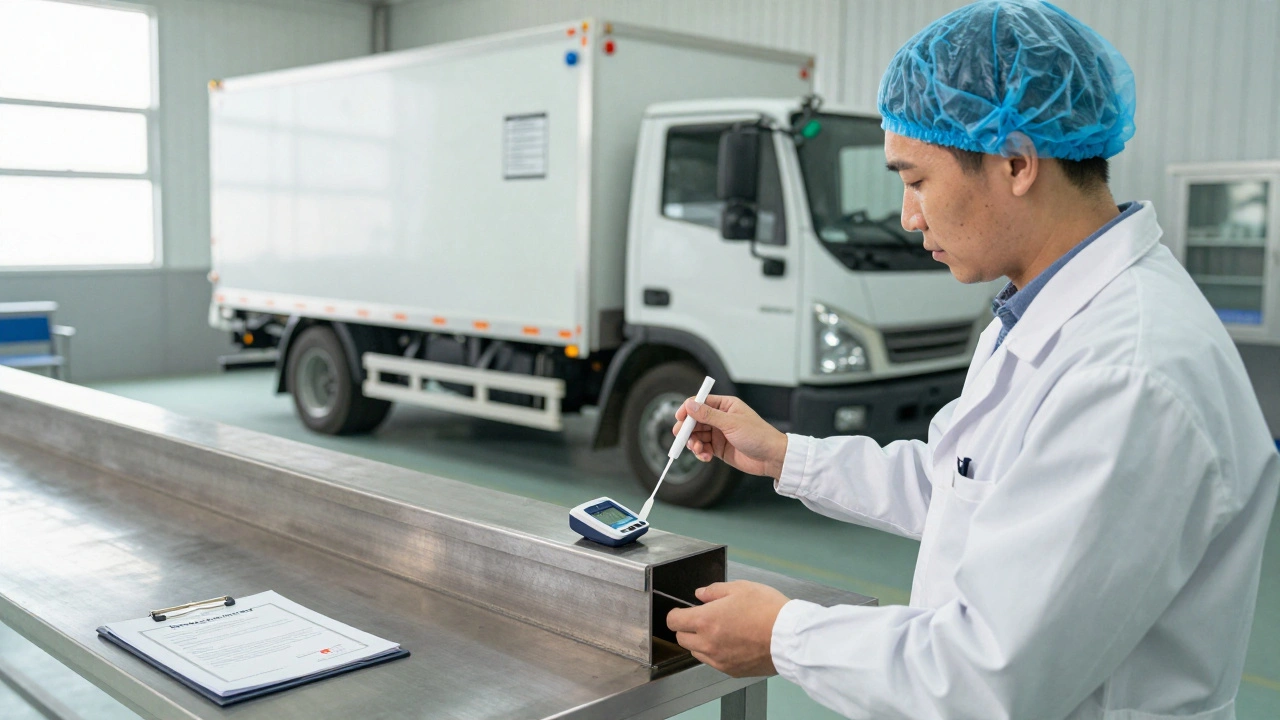
Timeline: How Long Does It Really Take?
A small bathroom cleanup might take 4 hours. An industrial accident? It’s measured in days. Most large-scale jobs take 2 to 5 days of continuous work. Factors that extend the timeline:- Size of the affected area (a 500 sq. ft. spill vs. a 5,000 sq. ft. facility)
- Number of materials needing removal (carpet, drywall, machinery, ductwork)
- Complexity of contamination (chemical + biological mix)
- Regulatory inspections required before re-entry
Some sites require multiple teams working in shifts. One team removes materials while another disinfects. A third handles air purification. Coordination is everything.
Why This Isn’t DIY
You might think, “I’ve cleaned up blood before. How hard can it be?” But industrial accidents aren’t single drops on a floor. They’re large-scale, mixed-contaminant events involving chemicals, sharp objects, structural damage, and airborne pathogens. Home cleaners don’t have HEPA filters, negative air systems, or EPA-approved disinfectants. They don’t know the OSHA Bloodborne Pathogen Standard. And if they get exposed? They don’t have access to post-exposure medical protocols.Professionals are trained, certified, and insured. They carry emergency kits with antiseptics, eye washes, and exposure response plans. They work in teams with a buddy system. If someone slips or gets splashed, help is right there. No one works alone.
What Happens After?
Once the site passes inspection, it’s handed back. But the work doesn’t end there. Insurance companies review the documentation. Employers use it for OSHA compliance reports. Legal teams rely on it for liability cases. The goal isn’t just to make it look clean-it’s to prove it’s safe. For good.Can I clean up an industrial biohazard myself?
No. Industrial biohazards involve complex contamination that requires specialized equipment, regulated disinfectants, and certified training. Attempting DIY cleanup puts you at risk of exposure to bloodborne pathogens like HIV, hepatitis B, and MRSA. It also violates OSHA and EPA regulations, which can lead to fines, legal liability, or shutdowns.
How long does industrial biohazard cleanup take?
Most large-scale jobs take 2 to 5 days, depending on the size of the area, the number of materials needing removal, and whether chemicals are mixed with biological waste. Simple cases might finish in a day, but complex incidents often require multiple teams working around the clock.
What kind of disinfectants are used?
Only EPA-registered disinfectants approved for bloodborne pathogens are used. Common ones include hydrogen peroxide-based cleaners and sodium hypochlorite (bleach) solutions with a 10-minute dwell time. These are proven to kill viruses like HIV and hepatitis B. Household cleaners like Lysol or vinegar are not effective.
Is ozone treatment safe?
Yes, when used correctly. Ozone generators are turned on only in sealed, unoccupied spaces. Technicians leave the area and monitor levels remotely. After treatment, air is tested to ensure ozone levels drop below 0.05 ppm before re-entry. Improper use can damage lungs or electronics, so it’s strictly controlled.
Do I need a certificate after cleanup?
Yes. A certificate of decontamination is legally required for insurance claims, OSHA compliance, and liability protection. It includes photos, waste manifests, lab test results, and the name of the certified company. Without it, the site isn’t officially cleared for reoccupation.