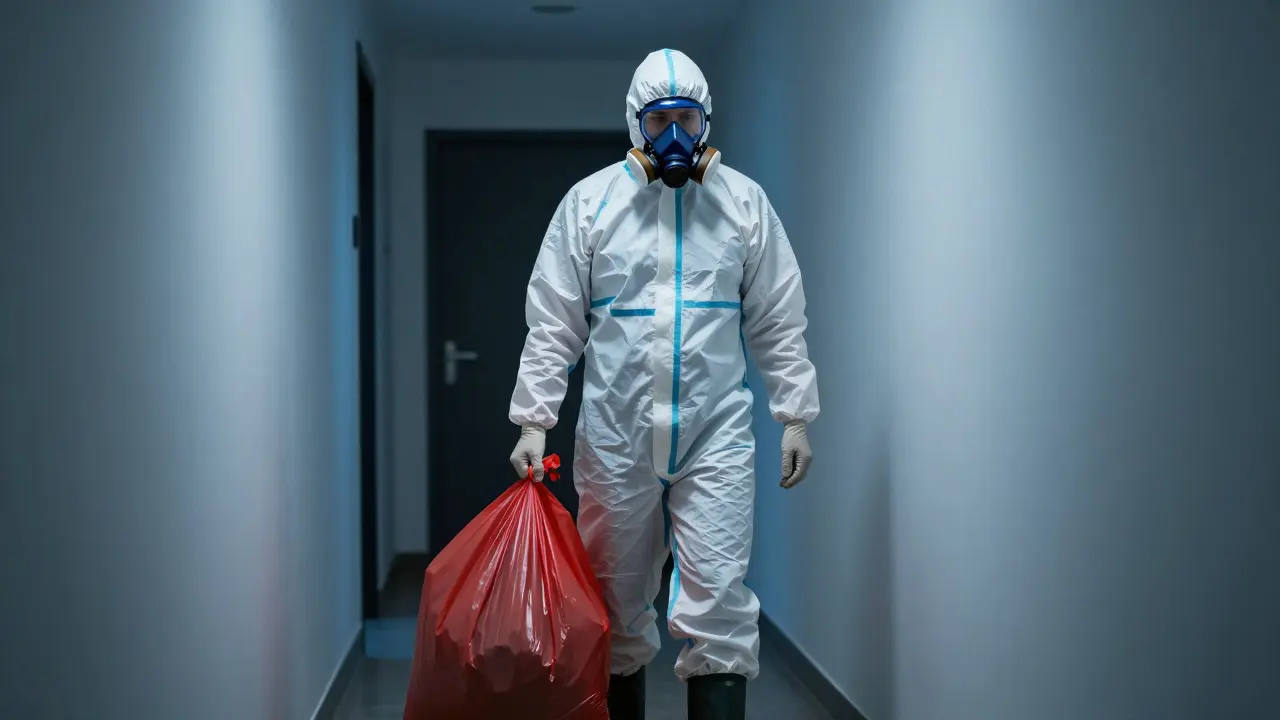
Walking into a crime scene or accident site isn't just about cleaning up; it's about surviving the invisible threats. One wrong move with a contaminated rag can mean weeks of hospitalization or worse. That’s why understanding certification requirements isn't just paperwork-it’s your lifeline. Whether you’re a solo contractor or part of a corporate restoration team, knowing exactly which credentials are legally required versus those that simply make you safer is the difference between getting paid and getting sued.
The landscape of biohazard cleanup is split between federal regulations, industry standards, and local health codes. Confusing these three often leads to gaps in protection. Let’s break down what actually matters when you’re standing in a pool of bodily fluids, trying to keep everyone alive while keeping your license intact.
The Federal Baseline: OSHA and HAZWOPER
Before we talk about specific trauma certifications, you need to understand the legal floor. The Occupational Safety and Health Administration (OSHA) sets the minimum safety rules for almost all workplaces in the US. For biohazard cleanup, the big one is the Hazardous Waste Operations and Emergency Response (HAZWOPER) standard.
Many people think HAZWOPER is only for oil spills or chemical plants. That’s a myth. If you are handling regulated medical waste or unknown biological hazards from a trauma scene, OSHA expects you to have at least 40 hours of initial training plus 8 hours of annual refreshers. This isn’t optional if you’re working for a company that has employees. If you’re self-employed, the rules are looser, but your liability insurance will likely require proof of this training anyway.
- Initial Training: 40 hours covering hazard recognition, PPE use, and decontamination procedures.
- Annual Refresher: 8 hours to keep skills sharp and update on new regulations.
- Site-Specific Training: Required before entering any new work area where hazards might change.
If you skip this, you aren’t just risking fines. You’re risking your life. A single puncture wound from a contaminated needle can transmit Hepatitis B or C. OSHA data shows that unprotected workers in healthcare and cleanup sectors face significantly higher exposure rates than those who follow strict protocols.
Industry Gold Standard: IICRC S500 Certification
While OSHA keeps you out of jail, the Institute of Inspection, Cleaning and Restoration Certification (IICRC) keeps you in business. The IICRC S500 standard is the recognized benchmark for professional biohazard remediation. It doesn’t just tell you how to clean; it tells you how to document, contain, and dispose of waste correctly so that no one else gets sick later.
Getting certified means passing an exam that tests your knowledge of containment strategies, air quality monitoring, and final clearance testing. Clients-especially insurance companies and property managers-often refuse to pay invoices unless they see an IICRC certificate on the wall. It signals that you know the difference between a simple spill and a complex contamination event requiring negative pressure barriers.
The certification process involves completing a course that covers:
- Assessment and containment planning.
- Packaging and labeling of infectious waste.
- Decontamination techniques for hard and soft surfaces.
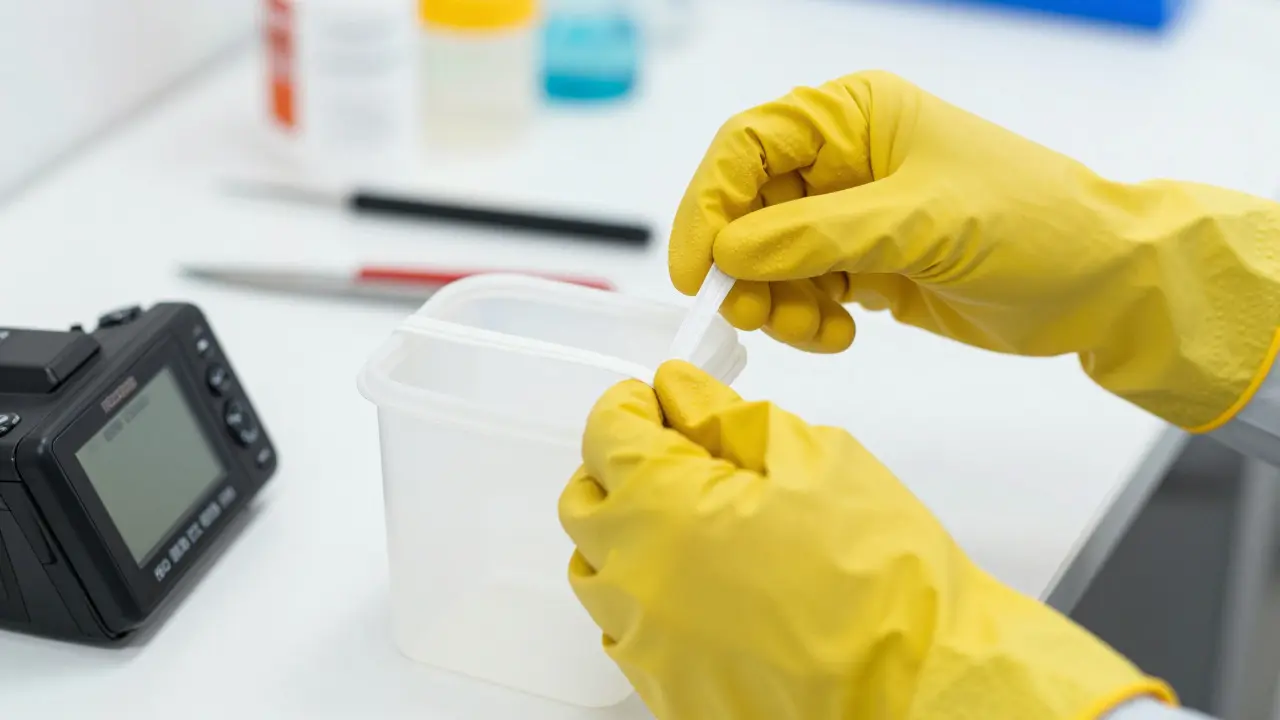
- Final verification using ATP swabs or fluorescent markers.
State and Local Variations: The Hidden Trap
This is where most new operators get burned. Federal law sets the baseline, but states like California, New York, and Oregon add their own layers. In Portland, for example, the Multnomah County Public Health Department has specific guidelines for what constitutes a "reportable" incident. If you find a body, you call the coroner. But if you find a large volume of decomposing organic matter without a body, you might still need to notify local health officials before starting cleanup.
Some states require a specific "Medical Waste Handler" license separate from general business licenses. Others integrate it into your existing environmental permit. Always check your state’s Department of Environmental Quality or equivalent agency before buying your first set of suits. Ignoring local codes can result in work stoppages that cost more than the fine itself.
PPE and Disposal Protocols: Where Certifications Meet Reality
Certification is useless if you don’t know how to apply it. The core of trauma scene waste management revolves around Personal Protective Equipment (PPE) and proper disposal. Your certification should teach you not just *what* to wear, but *how* to put it on and take it off without contaminating yourself.
| Contamination Level | Respiratory Protection | Skin Protection | Footwear | Typical Scenario |
|---|---|---|---|---|
| Low (Fresh Spill) | N95 Respirator | Nitrile Gloves + Apron | Rubber Boots | Single minor injury, small volume |
| Moderate (Decomposition) | P100 Half-Face | Disposable Coveralls + Double Gloves | Chemical Resistant Boots | Body present, moderate odor, potential aerosols |
| High (Unknown/Long-term) | Full Facepiece Air Purifying | Encapsulated Suit + Triple Glove System | Boots with Gaiters | Mass casualty, long-term neglect, suspected pathogens |
Notice the progression. As the risk increases, your barrier layers multiply. A common mistake is reusing gloves. Nitrile gloves degrade quickly under stress. If you’re moving heavy debris, your gloves tear. Once they tear, you’re exposed. Certified professionals rotate gloves frequently and use outer gloves for dirty tasks, keeping inner gloves clean for sensitive areas like light switches or door handles.
Documentation and Chain of Custody
You’ve cleaned the room. Now what? Documentation. In a trauma scene, everything you remove is potential evidence or hazardous material. You need a chain of custody log. This isn’t just for lawyers; it’s for your defense if someone claims they got sick later because you missed a spot.
Your logs should include:
- Time and date of entry and exit.
- Specific PPE used and disposal method.
- Volume of waste removed (in gallons or pounds).
- Photos of the before, during, and after states.
- Final clearance test results (if applicable).
Insurance adjusters love photos. They prove you did the job. They also protect you if the client complains about a smell that was already there before you arrived. Keep digital backups. Paper logs get wet, stained, or lost in the chaos of a busy job site.
Common Pitfalls and How to Avoid Them
Even certified professionals make mistakes. Here are the top three errors I see in the field.
- Underestimating Aerosols: When you agitate dried blood or bone fragments, particles become airborne. Wearing an N95 when you should be wearing a full-face respirator is a classic error. Always assess the state of the material. Dried is more dangerous than fresh in terms of inhalation risk.
- Improper Waste Segregation: Mixing sharps (needles, broken glass) with bulk biohazard waste can lead to injuries during transport. Use rigid, labeled containers for sharps. Never tape them shut loosely; use certified biohazard bags with zip ties.
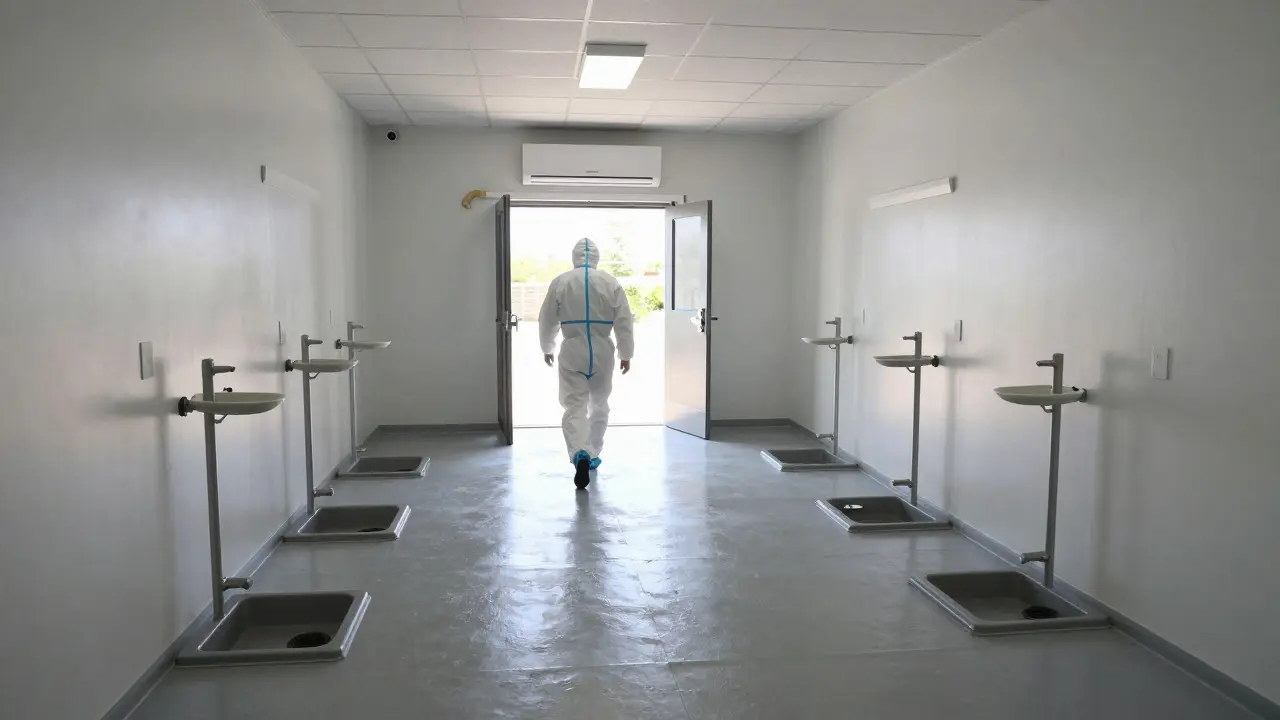
- Skipping Decon Zones: Every entry and exit point needs a decontamination zone. If you walk out of a contaminated room with dirt on your boots, you spread the problem to the hallway. Set up foot baths and hand washing stations outside the red zone.
Frequently Asked Questions
Do I need a license to clean a trauma scene?
It depends on your location. Some states require a specific medical waste handler license, while others only require a general business license and proof of OSHA compliance. Always check with your local county health department and state environmental agency before starting your first job.
How long does it take to get certified in biohazard cleanup?
The IICRC S500 certification typically takes 2-3 days of classroom training plus an exam. OSHA HAZWOPER training takes 40 hours, which can be completed over several weeks. Most providers offer combined courses to save time.
What happens if I miss a certification renewal?
Your certification becomes lapsed. While you can still work, many clients and insurers will reject your bids until you renew. Renewal usually requires paying a fee and sometimes taking a short refresher course. Don’t let it lapse, as it undermines your credibility.
Is biohazard waste considered hazardous waste by EPA?
Generally, no. Most biohazard waste is classified as infectious waste, not hazardous waste under RCRA, unless it contains chemicals like formaldehyde or mercury. However, some states treat it differently. Check local regulations for disposal facility requirements.
Can I use bleach for all trauma scene cleanup?
Bleach is effective against many viruses and bacteria, but it’s not universal. It works poorly on spores and some non-enveloped viruses. For most human bloodborne pathogens, a 1:10 dilution of household bleach is sufficient. However, for heavy decomposition, enzymatic cleaners are often better for breaking down organic matter before disinfecting.