Imagine a shipment of high-value pharmaceuticals or organic produce arriving at your facility. The truck looks fine. The paperwork is signed. But when you inspect the drums or cartons, something feels off. A seal is slightly loose. A tape flap doesn't sit right. In the world of chain of custody, this tiny discrepancy can mean the difference between a compliant delivery and a massive liability event.
Sealed container integrity isn't just about keeping things closed; it's about proving they haven't been opened since they left the manufacturer. Verifying tamper evidence is the critical step that validates that proof. If you can't verify the seal, you can't trust the contents. This guide breaks down how to properly assess sealed containers, understand the standards that govern them, and execute verification protocols that hold up in audits and courtrooms.
What Actually Constitutes Tamper-Evident Packaging?
There is a common misconception that "sealed" means "impermeable." It does not. In regulatory terms, particularly within the U.S. National Organic Program (NOP) under 7 CFR 205.101, tamper-evident packaging is defined by its failure mode, not its barrier properties. A package is tamper-evident if any attempt to break the seal, access the contents, remove material, or reclose the package leaves visible, irreversible evidence.
This distinction matters because gas or moisture might still permeate certain materials without breaking the visual seal. However, for the purpose of security and chain of custody, the goal is to detect unauthorized human intervention. If someone tries to open the box and put it back together, the observer must be able to see that it happened. This applies to everything from shrink-banded bottles in food supply chains to multi-wall bags in industrial chemical distribution.
Key Standards Governing Sealed Containers
Different industries rely on specific standards to define what constitutes acceptable tamper evidence. Understanding these frameworks helps you choose the right sealing method and verification protocol.
| Standard / Regulation | Primary Sector | Key Requirement | Verification Method |
|---|---|---|---|
| NSF/ANSI/CAN 60 | Water Treatment Chemicals | Seals on all openings >1,000L bulk containers; unique serial numbers required. | Visual inspection + serial number reconciliation with shipping docs. |
| US NOP (7 CFR 205) | Organic Food & Agriculture | Retail or non-retail packaging must show obvious signs of breach/reclosure. | Visual detection of broken/missing seals; audit trail for uncertified handlers. |
| GMP (Good Manufacturing Practice) | Pharmaceuticals & Clinical Trials | Integrated tamper-evident cartons; no separate labels if design ensures integrity. | Inspection of structural integrity (e.g., tuck flaps, perforated strips). |
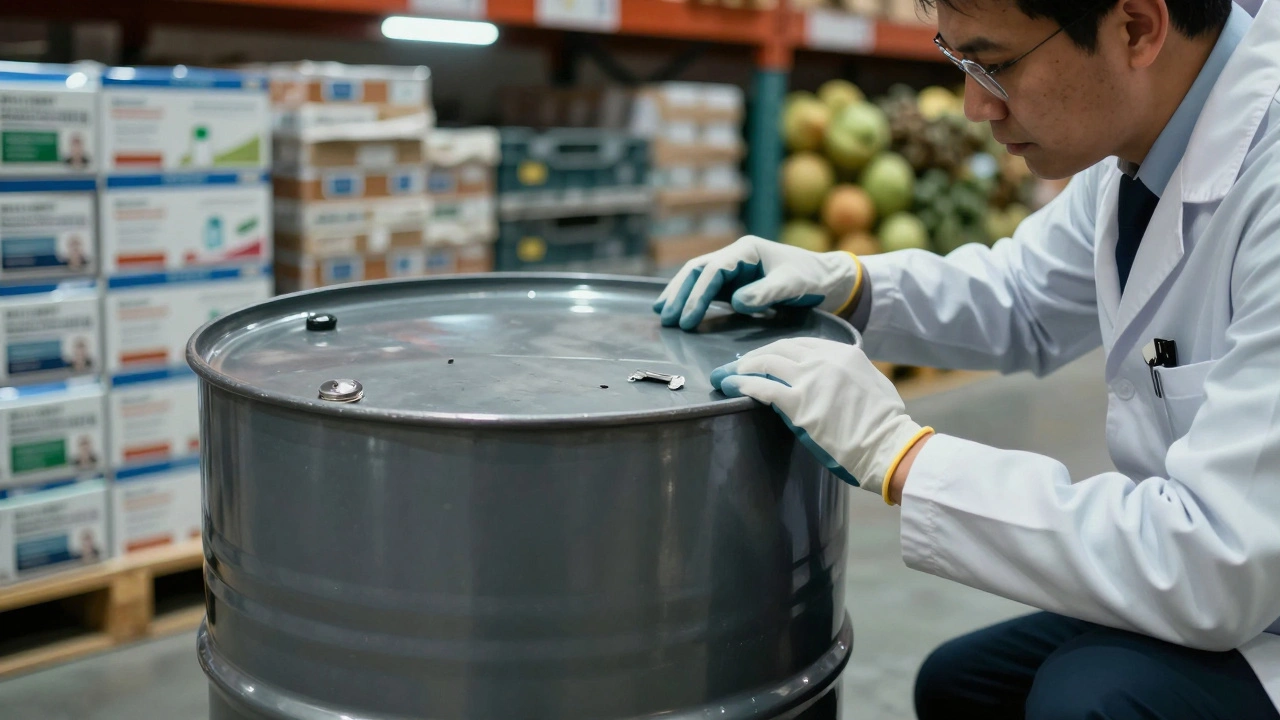
For instance, NSF/ANSI/CAN 60 sets strict rules for water treatment chemicals. It requires that drums and small containers under 1,000 liters have openings sealed with devices that are destroyed upon opening or difficult to reseal, such as ultrasonic seals or serialized tags. Bulk containers larger than 1,000 liters must have tamper protection on every loading and unloading opening. Vents must also be protected unless they are physically incapable of receiving chemicals.
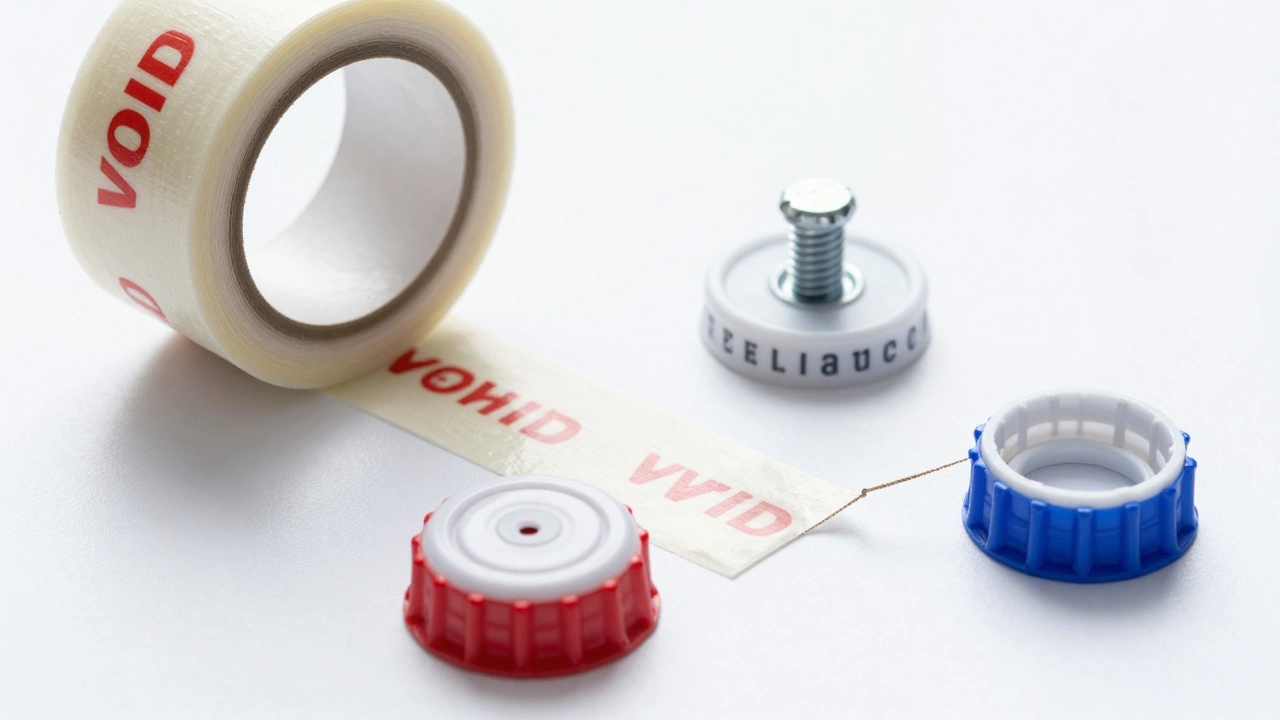
Types of Tamper-Evident Technologies
The technology used to secure a container varies based on size, value, and logistics. Here are the most common mechanisms you will encounter:
- Tape Seals: Pressure-sensitive security tapes applied across carton flaps. These are designed to delaminate or leave a "VOID" message on the substrate when removed. They are low-cost but require careful application to avoid false positives from rough handling.
- Security Seals (Indicative): Pull-tight plastic seals, bolt seals, and cable seals used for cargo containers and trucks. These feature unique serial numbers. Their primary function is indicative-they show evidence of opening rather than preventing it entirely.
- Breakaway Closures: Common in consumer goods like bottles and jars. These include frangible bridges or one-way locking mechanisms that deform permanently when first opened, making reclosure visibly different from the factory state.
- Integrated Cartons: Used in clinical trials and pharma. The tamper-evident feature is built into the box design (e.g., interlocking tuck flaps). This eliminates separate labels and reduces component count while maintaining security.
Step-by-Step Verification Protocol
Having a tamper-evident seal is useless if you don't know how to verify it. Follow this checklist when receiving shipments to ensure chain of custody integrity.
- Visual Inspection: Before touching the seal, look at it. Are there signs of cutting, stretching, heat manipulation, or substitution? Does the seal sit naturally, or does it look forced?
- Serial Number Reconciliation: For numbered seals (common in bulk chemical and high-value logistics), check the seal number against the bill of lading and shipping documents. Any discrepancy must be investigated before accepting the shipment.
- Integrity Check: Attempt to gently manipulate the seal. It should not move independently of the container. For tape seals, check for lifted edges or exposed adhesive residue that suggests prior removal.
- Documentation Review: Verify that the chain-of-custody record is complete. For milk-run deliveries (multiple partial offloads), a new seal must be applied after each stop, and the new number recorded. Ensure this log matches the physical seals present.
- Reject if Ambiguous: If you cannot definitively confirm the seal is intact, reject the delivery. Do not assume "it's probably fine." Document the issue with photos and notify the sender immediately.
Common Pitfalls and Limitations
Even the best systems have weaknesses. Being aware of these helps you avoid costly errors.
False Positives from Logistics: Standards like NSF/ANSI/CAN 60 acknowledge that seals must withstand "reasonable" handling. However, excessive mechanical stress, rough shipping, or environmental extremes can break seals. Inspectors must learn to distinguish between legitimate logistics damage (e.g., scuffing from pallet jacks) and hostile tampering (e.g., precise cuts around the seal perimeter).
Permeability vs. Security: Remember that tamper-evident does not mean hermetic. In organic food supply chains, guidance explicitly states that sealed, tamper-evident packaging may still be permeable to gas and water. You need additional barriers for shelf-life preservation; the seal only proves who accessed the product.
Skill-Based Bypass: Indicative seals are not high-security barriers. Skilled attackers may defeat seals with careful cutting or heating and substitute counterfeit seals, especially if serial-number tracking is lax. Always use uniquely numbered, non-reusable seals for high-risk items.
Best Practices for Maintaining Chain of Custody
To maximize the effectiveness of your sealed container integrity program, implement these operational controls:
- Design for Irreversibility: Choose seals and closures that cannot be removed without obvious and irreversible damage. Avoid reusable clips or ties for critical shipments.
- Train Your Team: Staff must be trained to recognize subtle signs of label lifting, reapplication, or seal substitution. Regular drills help maintain vigilance.
- Use Continuous Chain-of-Custody Protocols: Restrict direct access to sealed containers to designated, bonded individuals. Maintain a completed custody record that accompanies the shipment from origin to destination.
- Document Everything: Take timestamped photos of seals upon receipt. Record serial numbers in your inventory management system immediately. This creates an audit trail that supports investigations if discrepancies arise later.
By treating tamper evidence as both a physical attribute and a procedural discipline, you protect your brand, your customers, and your legal standing. In forensics and quality management, the devil is always in the details-and specifically, in the seal.
Does tamper-evident packaging prevent theft?
No, tamper-evident packaging is indicative, not preventive. Its primary purpose is to provide visible evidence that a container has been opened or altered. While it deters opportunistic tampering, skilled individuals may still bypass it. High-security applications require additional measures like locked containers or surveillance.
What is the difference between tamper-proof and tamper-evident?
Tamper-proof implies that the package cannot be opened without destroying it completely, often suggesting a higher level of physical resistance. Tamper-evident means that any attempt to open or reclose the package leaves visible signs of interference. Most commercial products use tamper-evident designs because true tamper-proofing is difficult and expensive to achieve.
How do I handle a damaged seal upon delivery?
If a seal is damaged, do not accept the shipment until the issue is resolved. Document the damage with photos, note the discrepancy on the delivery receipt, and contact the sender immediately. Investigate whether the damage occurred during transit (logistics) or indicates potential tampering. Never assume the contents are safe without verification.
Are tape seals reliable for chain of custody?
Tape seals can be effective if they are high-quality security tapes that leave a "VOID" message or delaminate upon removal. However, they are more vulnerable to environmental factors and rough handling than rigid security seals. For high-value or sensitive items, serialized bolt or cable seals are recommended for greater reliability and traceability.
What documentation is required for bulk chemical shipments?
Under standards like NSF/ANSI/CAN 60, bulk chemical shipments require uniquely numbered, non-reusable tamper-evident seals on all openings. The seal numbers must be recorded on shipping documents (bill of lading) and provided to the purchaser at delivery. For milk-run deliveries, a new seal must be applied after each partial offload, with the new number logged in consignment records.