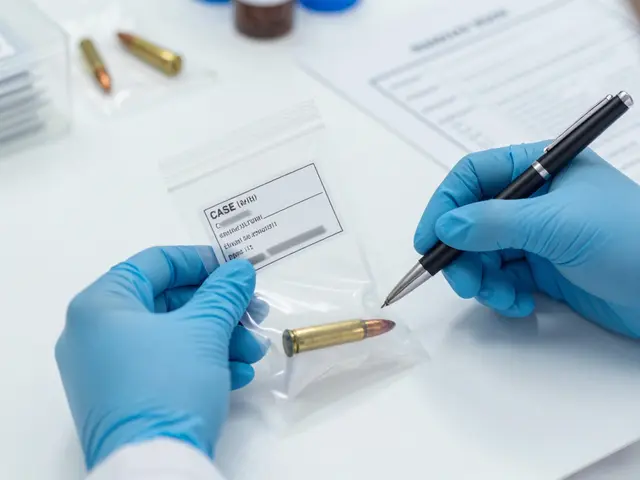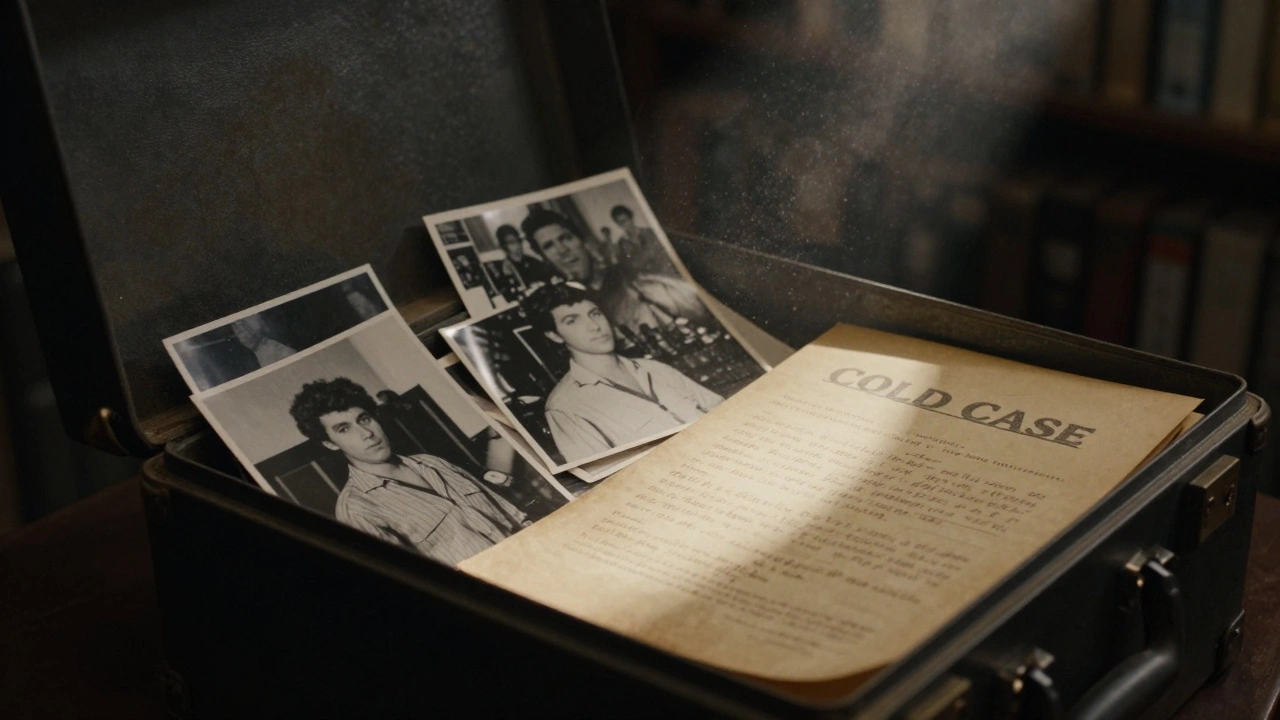
Imagine a crime scene from 1985. The photos are grainy, the witness statements are fading, and the original lead investigators have long since retired. For decades, the file gathered dust, labeled a "cold case." But the crime itself didn't change; only the tools we use to understand it did. Today, we don't just look at the evidence-we look at the mind behind it. By applying cold case profiling, investigators can step back into a decades-old crime and find the psychological fingerprints the killer left behind.
The Psychology of the Crime Scene
When a profiler looks at an old case, they aren't just looking for DNA; they are looking for "signatures." In the world of behavioral analysis, there is a big difference between a Modus Operandi (MO) and a signature. The MO is what the criminal does to get the job done-like wearing gloves or using a specific type of tie. It can change over time as the criminal gets "better" at their crime.
The signature, however, is the "why." It's the behavior that isn't necessary to commit the crime but fulfills a psychological need. For example, if an offender meticulously arranges a victim's clothing or leaves a specific object at the scene, that's a signature. Because these behaviors are rooted in deep-seated psychological urges, they rarely change. This consistency allows profilers to link crimes committed years apart to the same person, even if the MO has evolved.
Profilers also categorize scenes as "organized" or "disorganized." An organized scene suggests a planner-someone who chooses a specific victim, brings their own weapon, and cleans up. A disorganized scene often points to a spontaneous act, perhaps involving someone with a lower level of social competence or someone in a state of psychological crisis. By determining which category a cold case fits into, investigators can guess the offender's likely age, employment status, and relationship to the victim.
Victimology: Why This Person?
One of the biggest mistakes in early investigations was focusing entirely on the killer. Modern profiling flips the script and focuses on the victim. This is called Victimology, the study of the victim's life, routines, and vulnerabilities to understand why they were targeted.
If a victim was a jogger in a quiet neighborhood, the offender might have been someone who frequented that specific park. If the victim was a sex worker or experiencing homelessness, the offender likely targeted someone they perceived as "low risk"-meaning someone whose disappearance might not be reported immediately. Research shows that cases involving victims who were outdoors or in transit are often harder to solve because the "encounter zone" is wider and less predictable.
By mapping the victim's daily movements, profilers can determine the "targeting rationale." Did the killer hunt for a specific type of person, or was it a crime of opportunity? This distinction tells investigators whether to look for a predatory stranger or someone who was already in the victim's social circle.
Mapping the Mind with Geographic Profiling
Criminals aren't random; they are creatures of habit. Geographic Profiling uses spatial patterns to predict where an offender lives or works. Using Geographic Information Systems (GIS), profilers map the locations of multiple crimes to find the "center of gravity."
| Phase of Crime | Predictive Value | Likely Outcome |
|---|---|---|
| Pre-Crime (Hunting/Stalking) | High in unsolved cases | Offender took extra steps to remain undetected |
| Post-Crime (Disposal/Return) | High in solved cases | Offender made a mistake or left a traceable trail |
Most offenders operate within a "comfort zone." They commit crimes in areas they know, which reduces the risk of getting lost or encountering something unexpected. By analyzing the distance between the crime site and the body dump site (if applicable), profilers can determine if the killer is a "marauder" (who hunts close to home) or a "commuter" (who travels to a specific area to offend). This drastically narrows down which neighborhoods police need to canvas for witnesses.

The Role of Forensic Psychology
While a detective looks at the *what*, a Forensic Psychologist looks at the *how* and *why*. These experts provide the empirical data that keeps profiling from becoming guesswork. They apply psychological principles to determine if the offender likely has a personality disorder, such as antisocial personality disorder or psychopathy.
A forensic psychologist might review old interrogation tapes from the original investigation. They aren't looking at what the suspect said, but *how* they said it. Deception markers, shifts in tone, and a lack of genuine empathy in old interviews can suddenly become red flags when viewed through a modern psychological lens. They help detectives develop a specific interrogation strategy-deciding, for instance, whether to approach a suspect with an appeal to their ego or a confrontation with the evidence.
Modern Breakthroughs: DNA and Genealogy
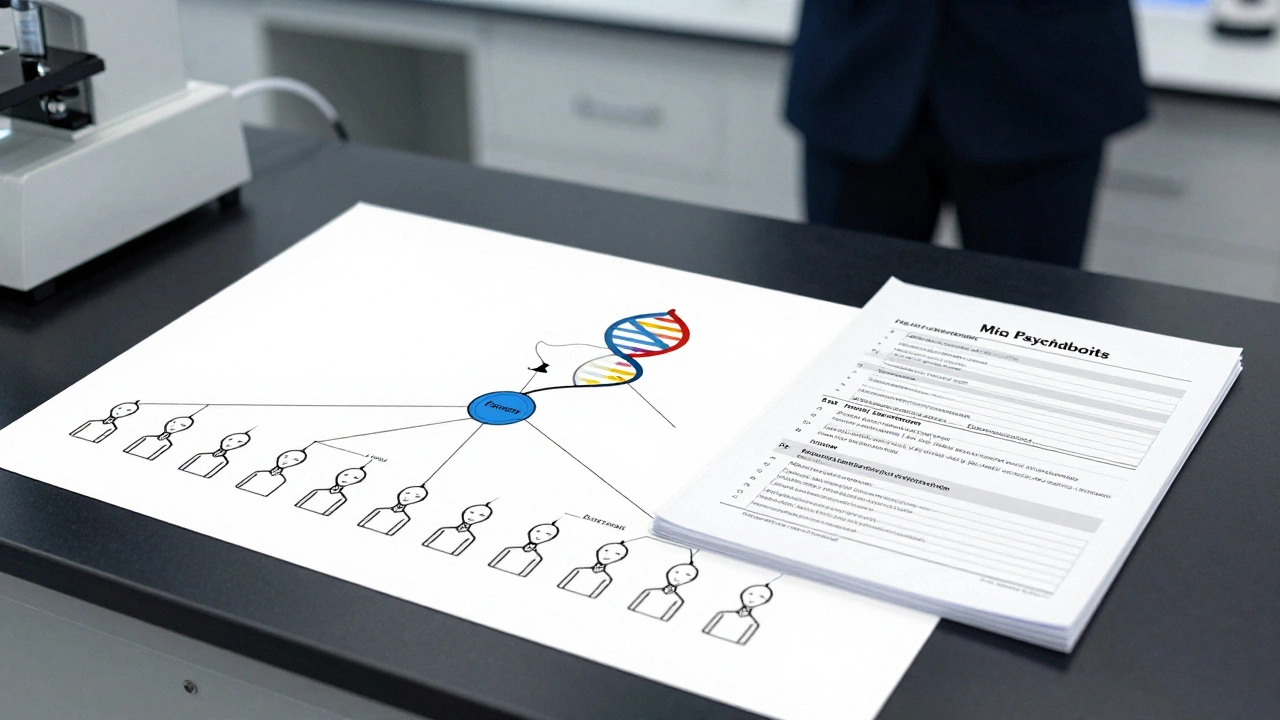
Psychology is powerful, but it works best when paired with hard science. The biggest game-changer in recent years is Forensic Genealogy. This is the process of using DNA from a crime scene to build family trees through public genetic databases.
This approach was famously used to catch the Golden State Killer. Instead of finding a direct match in a police database, investigators found a distant cousin. By mapping out that cousin's descendants, they narrowed the search to a few specific people. When you combine this with a behavioral profile, the results are devastatingly accurate. The profile tells you *who* the person is psychologically, and the genealogy tells you *where* they are on a family tree.
In places like North Carolina, specialized missions have used this integrated approach to identify remains in hundreds of unnamed cases. It's a synergy of web research, ancestral mapping, and behavioral analysis that gives victims' families the answers they've waited decades for.
Why Some Cases Stay Cold
Not every case can be solved with a profile. Some factors make it nearly impossible. If the evidence has degraded over forty years, or if the only witness has passed away, the path to a conviction is steep. However, statistics show that the most common reason for a cold case resolution isn't a lucky guess-it's new information from existing witnesses or the emergence of new witnesses.
Cases that had "solvability indicators" from the start-like a known motive or a prime suspect who just couldn't be proven guilty-have much higher clearance rates. On the other hand, cases reopened simply because a family asked for an update often struggle. The key to success is a systematic re-evaluation: looking at the old files not as a story that ended, but as a puzzle that was missing a few pieces.
Can a criminal profile be used as evidence in court?
Generally, no. A profile is an investigative tool used to narrow down suspects and guide interviews; it is not "proof" of guilt. While the *methods* used to find a suspect might be presented, the profile itself is usually considered too subjective to meet the rigorous standards of evidence required for a conviction.
What is the difference between a serial killer and a spree killer in profiling?
The main difference is the "cooling-off period." A serial killer has a gap of days, months, or years between murders, during which they return to their normal life. This makes them harder to catch but allows for the development of a stable behavioral signature. A spree killer commits multiple murders in a very short window, often in different locations, and usually doesn't return to a normal routine between events.
How accurate is geographic profiling?
It is highly effective at narrowing the search area, but it doesn't provide a GPS coordinate of the killer's front door. It identifies a "high-probability zone." When combined with other data-like where the offender worked or lived during the time of the crime-it significantly reduces the number of man-hours police spend searching the wrong areas.
Why is victimology so important for old cases?
Because the offender's choice of victim reveals their psychological needs. If an offender targeted a specific profession or age group, it suggests a specific motive (like power, anger, or a fetish). In cold cases, understanding the victim's routine can help investigators find where the offender might have been "stalking" or observing the victim before the crime.
Can DNA evidence be extracted from cases that are 50 years old?
Yes, though it's challenging. While DNA degrades, newer techniques like Mitochondrial DNA testing or SNP (Single Nucleotide Polymorphism) analysis can often retrieve usable profiles from old bones or clothing, even when traditional STR testing fails. This is what makes forensic genealogy possible.
Next Steps for Cold Case Success
If you are looking at a case that has gone cold, the first step isn't to look for new clues, but to re-read the old ones. Start by creating a comprehensive victimology report. Who were they? Who did they trust? Where did they go every Tuesday at 4 PM? Once you have a clear picture of the victim, look for the "signature" in the crime scene that separates the necessity of the crime from the desire of the killer.
For agencies, the best move is to integrate a behavioral analyst early in the re-opening process. Don't just assign a detective; assign a team that includes a forensic psychologist and a GIS specialist. The intersection of these three disciplines-psychology, geography, and genetics-is where the most successful cold case resolutions are happening today.