
When police interrogate a suspect, they’re not just asking questions-they’re managing a psychological game. The goal isn’t to scare a confession out of someone. It’s to get accurate information. And not just any information-the kind that holds up in court, leads to real justice, and doesn’t trap an innocent person.
For decades, the go-to method in the U.S. was the Reid Technique. Developed in the 1960s, it’s built on confrontation. Interrogators isolate suspects in small rooms, accuse them outright, and watch every twitch of their body language for signs of lying. They use minimization-saying things like, "I get why you did it," to make guilt feel less terrible. And they rely heavily on the "good cop, bad cop" routine: one officer is angry, the other is sympathetic. The suspect, caught between fear and relief, is supposed to open up to the "good" one.
But here’s the problem: this system doesn’t work as well as people think. Studies show that suspects-especially those who are young, stressed, mentally vulnerable, or just confused-often confess to crimes they didn’t commit. Why? Because pressure, isolation, and leading questions like "You were there, weren’t you?" can make someone believe that admitting guilt is the easiest way out. The Reid Technique was never designed to find the truth. It was designed to get confessions. And sometimes, that’s not the same thing.
What Actually Works: The Science Behind Effective Interrogation
Over the last 20 years, researchers have tested dozens of interrogation methods across hundreds of real cases and lab simulations. They didn’t guess. They measured. And what they found changed everything.
The most effective techniques don’t rely on pressure. They rely on connection. The top three methods backed by solid evidence are:
- Rapport and Relationship Building-creating trust, listening without judgment, and making the suspect feel heard.
- Presentation of Evidence-showing facts, documents, or recordings in a way that lets the suspect piece things together themselves.
- Cognitive Facilitation-helping the suspect remember details by using context, timing, and memory cues.
These aren’t just "nicer" approaches. They’re more successful. A meta-analysis of 60 studies found that interrogations using rapport-based methods gathered more accurate information than traditional accusatory ones. Not just a little more-significantly more. And fewer false confessions.
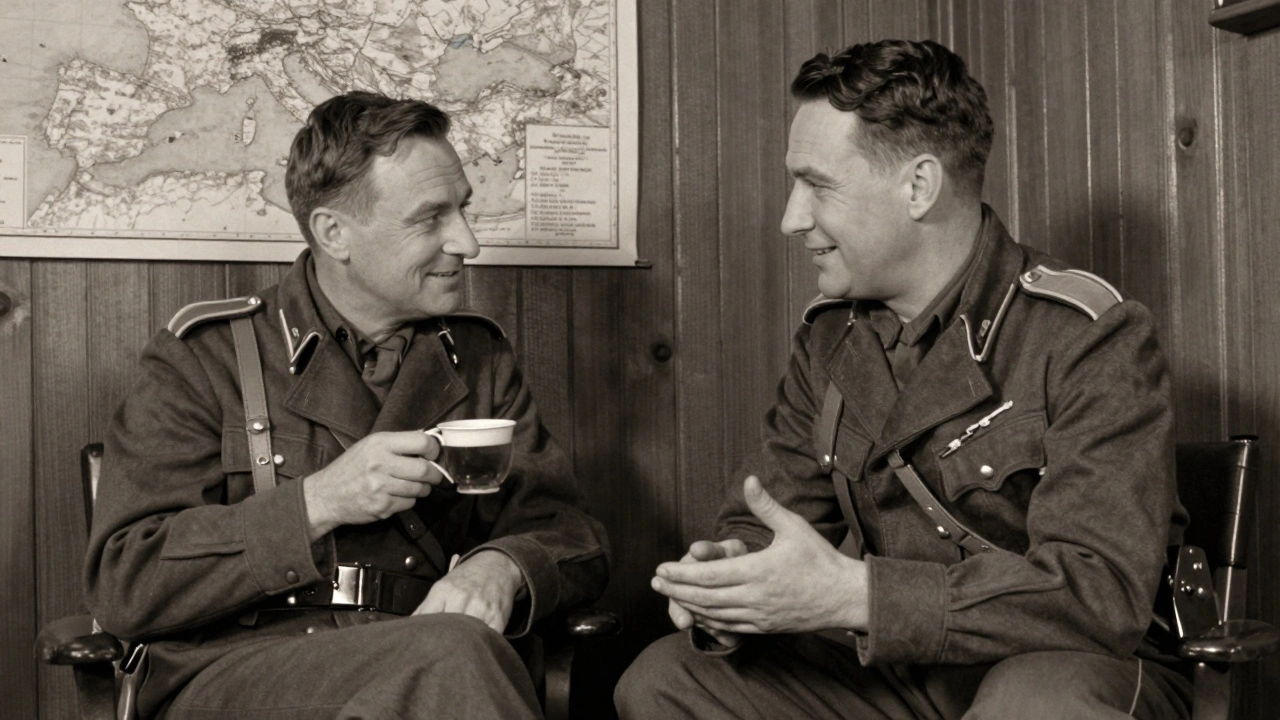
The Scharff Technique: How a German Interrogator Outsmarted the Nazis
During World War II, Hanns-Joachim Scharff interrogated Allied pilots captured by the Luftwaffe. He never yelled. He never threatened. He didn’t even ask direct questions. And yet, he got more valuable intelligence than anyone else in his unit.
How? He used four simple rules:
- He acted like a friend-not an enemy.
- He let suspects talk freely, even about things that seemed unimportant.
- He never said "I don’t know"-instead, he acted like he already knew everything, making the suspect feel like they were filling in gaps.
- He used confirmation: "So you were stationed in London, right?" instead of "Where were you stationed?"
Scharff didn’t extract information. He let suspects give it to him-voluntarily. His method is now studied in military and police training programs worldwide. It works because it removes the feeling of being trapped. When someone doesn’t feel attacked, they don’t shut down. They talk.
The PEACE Model: The Alternative to Confrontation
While the U.S. clings to the Reid Technique, countries like the UK, Canada, and Australia have shifted to something called the PEACE model. It’s not a trick. It’s a process:
- Prepare and plan: Know what you’re trying to find out before you walk in.
- Engage and explain: Build rapport. Tell the suspect why you’re talking to them.
- Account: Let them tell their story in full-no interruptions.
- Clarify and challenge: Gently point out inconsistencies using facts, not accusations.
- Evaluate: Decide if the story holds up based on evidence, not gut feeling.
PEACE doesn’t assume guilt. It looks for truth. And it works. Research from the Campbell Collaboration shows it reduces false confessions by up to 40% compared to accusatory methods. Police departments in Portland, Seattle, and Minneapolis have started training officers in PEACE-not because they’re soft, but because they’re smarter.

Why Leading Questions Are Dangerous
"You were at the scene that night, weren’t you?"
That’s a leading question. It doesn’t invite an answer-it invites agreement. And studies prove it’s one of the biggest reasons innocent people confess.
When you phrase a question that implies the answer, your brain doesn’t process it as a question. It processes it as a statement. So if you’re tired, scared, or confused, you might just say "yes" to make the pressure stop. That’s not cooperation. That’s compliance.
Real information comes from open-ended questions: "Tell me what happened after you left the house." Or, "What did you see when you got there?"
These questions don’t lead. They invite. And they give you details you can’t fake.
The Role of Evidence: Not as a Weapon, but as a Tool
Some interrogators still think evidence is something to throw at a suspect like a hammer. But the best interrogators use it like a map.
The Strategic Use of Evidence (SUE) technique, developed in Sweden, teaches interrogators to time their evidence carefully. Instead of dumping everything at once, they reveal pieces slowly-letting the suspect react. If someone says, "I didn’t know the gun was loaded," and you already have a text message showing they bought the bullets two days ago, you don’t shout "Liar!" You say, "That’s interesting. Can you tell me more about how you got the gun?"
This approach doesn’t shame. It invites reflection. And that’s when real details surface.
What Doesn’t Work-and Why
Not all psychological techniques are created equal. Some have no evidence. Some are harmful. Here’s what research says doesn’t work:
- Sleep deprivation-impairs memory and increases suggestibility.
- Isolation in small rooms for hours-causes disorientation and anxiety, not honesty.
- Bluffing about evidence-if the suspect finds out you lied, they stop trusting you entirely.
- Body language analysis-studies show people are terrible at reading "tells" like eye contact or fidgeting. Innocent people get nervous. Guilty ones stay calm.
The myth that you can spot a liar by their sweat or posture? It’s been debunked by dozens of studies. The most reliable lie detector? Not a machine. Not body language. It’s a well-timed question and a calm, patient listener.
Why This Matters Beyond the Interrogation Room
This isn’t just about police tactics. It’s about justice.
Innocent people have spent decades in prison because they confessed under pressure. The Central Registry of Exonerations shows that nearly 30% of wrongful convictions involved false confessions. Most of those happened during interrogations using accusatory, confrontational methods.
When we shift to evidence-based, rapport-driven techniques, we don’t just get better results. We protect the innocent. We honor the victims. And we make the system stronger.
Interrogation isn’t about winning. It’s about understanding. The best interrogators aren’t the ones who shout the loudest. They’re the ones who listen the hardest.
Is the Reid Technique still used today?
Yes, but its use is declining. Many U.S. police departments still train officers in the Reid Technique, especially in rural areas and smaller agencies. However, major cities like New York, Chicago, and Portland are transitioning to the PEACE model or similar evidence-based methods. The FBI and U.S. military have also reduced reliance on Reid-style interrogation in favor of rapport-based approaches. Critics argue it’s outdated and dangerous, while supporters say it’s effective for experienced interrogators. The trend, however, is clear: the field is moving away from confrontation.
Can rapport-building work with violent criminals?
Absolutely. One of the biggest myths is that rapport only works with "cooperative" suspects. In reality, the most hardened offenders often reveal critical details when they feel respected. A 2021 study in the Journal of Investigative Psychology found that serial offenders were more likely to confess to hidden crimes when interrogators used active listening and empathy-not threats. The key isn’t being nice-it’s being consistent, calm, and credible. Violence doesn’t make someone immune to human connection. It makes them more likely to shut down if they feel attacked.
What’s the difference between interviewing and interrogating?
Interviewing is open-ended and information-focused. Interrogating is accusatory and confession-focused. In the PEACE model, everything starts as an interview-even when the person is a suspect. The shift to interrogation only happens if new evidence emerges. Many departments now avoid the term "interrogation" entirely and call everything an "interview" to reduce psychological pressure. The goal isn’t to get a confession. It’s to find the truth, no matter who says it.
Are psychological techniques legal?
Yes, as long as they don’t involve physical harm, threats of violence, or prolonged deprivation. The U.S. Supreme Court has ruled that psychological pressure alone doesn’t make a confession involuntary-unless it crosses into coercion. That’s why techniques like sleep deprivation, extreme isolation, or threats of family harm are illegal. But using rapport, evidence, and cognitive strategies? Those are not only legal-they’re increasingly required by professional standards. The line isn’t between soft and hard. It’s between manipulation and truth-seeking.
Can anyone learn these techniques?
Yes-but not from YouTube videos or crime dramas. Proper training takes months of practice, feedback, and simulation. Many police academies now include certified courses in PEACE, SUE, and the Scharff method. These aren’t just about what to say. They’re about how to listen, how to pause, how to let silence work. The best interrogators aren’t the loudest. They’re the ones who can sit quietly for 17 seconds and let the suspect fill the space. That’s a skill you learn, not a trick you copy.