Walking into a real crime scene for the first time is a sensory overload. Between the chaos of the environment and the pressure to avoid contaminating evidence, it's easy for a rookie investigator to miss a crucial detail. This is where the gap between textbook knowledge and field reality becomes a liability. To bridge this, forensic professionals use a high-stakes simulation strategy: the mock scene. By creating controlled, artificial environments, trainees can fail, relearn, and eventually master the art of bloodstain patterns without the risk of ruining a legal case.
Why Mock Scenes Beat the Classroom
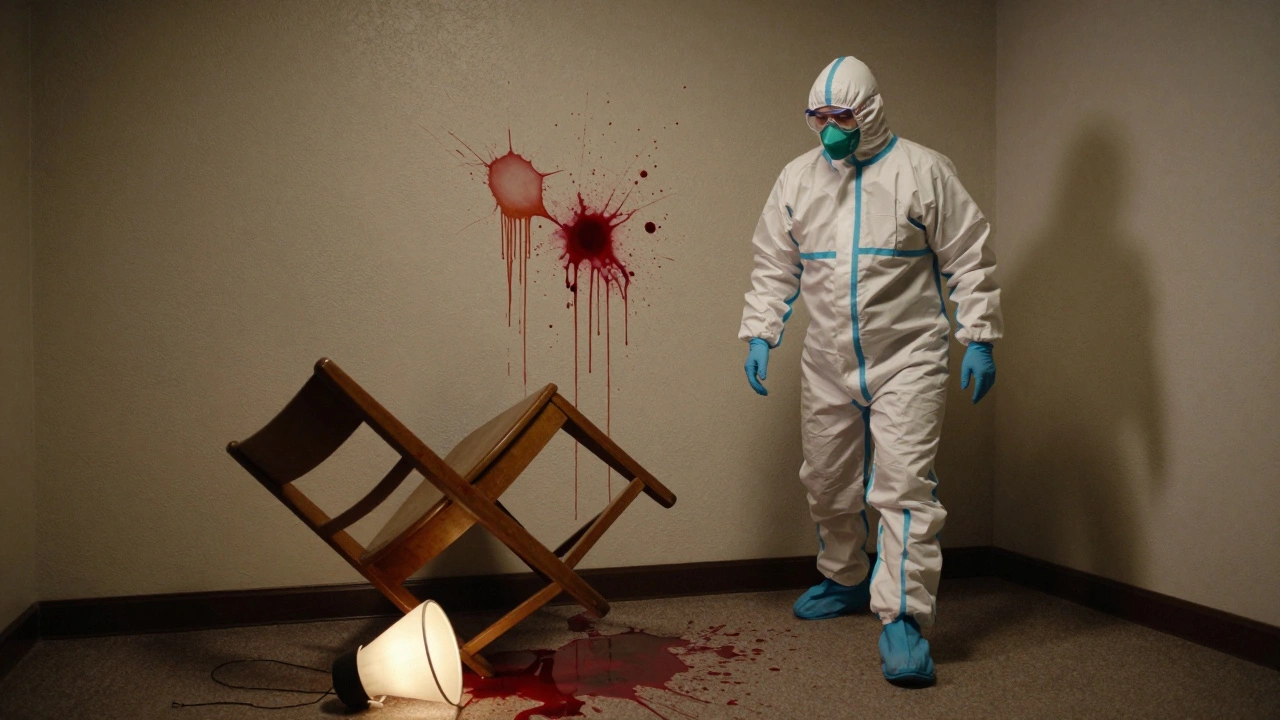
Reading about blood spatter in a manual is one thing; seeing it splashed across a textured wall in dim lighting is another. Mock crime scenes are simulated environments designed to replicate the physical and psychological pressures of an actual investigation. They aren't just "fake rooms"; they are pedagogical tools that force a trainee to apply theoretical physics and biology to a three-dimensional space.
The primary goal is immersion. When a trainee has to navigate overturned furniture and varied lighting to find a void pattern, they aren't just practicing a technique-they are building a cognitive map of how evidence behaves. If the scene is too clean or the patterns are too obvious, the training fails. Realism requires "noise": a knocked-over lamp here, a smeared footprint there, and bloodstains that don't always follow the perfect textbook examples of arterial spray or cast-off.
The Cognitive Side: Developing Pattern Recognition
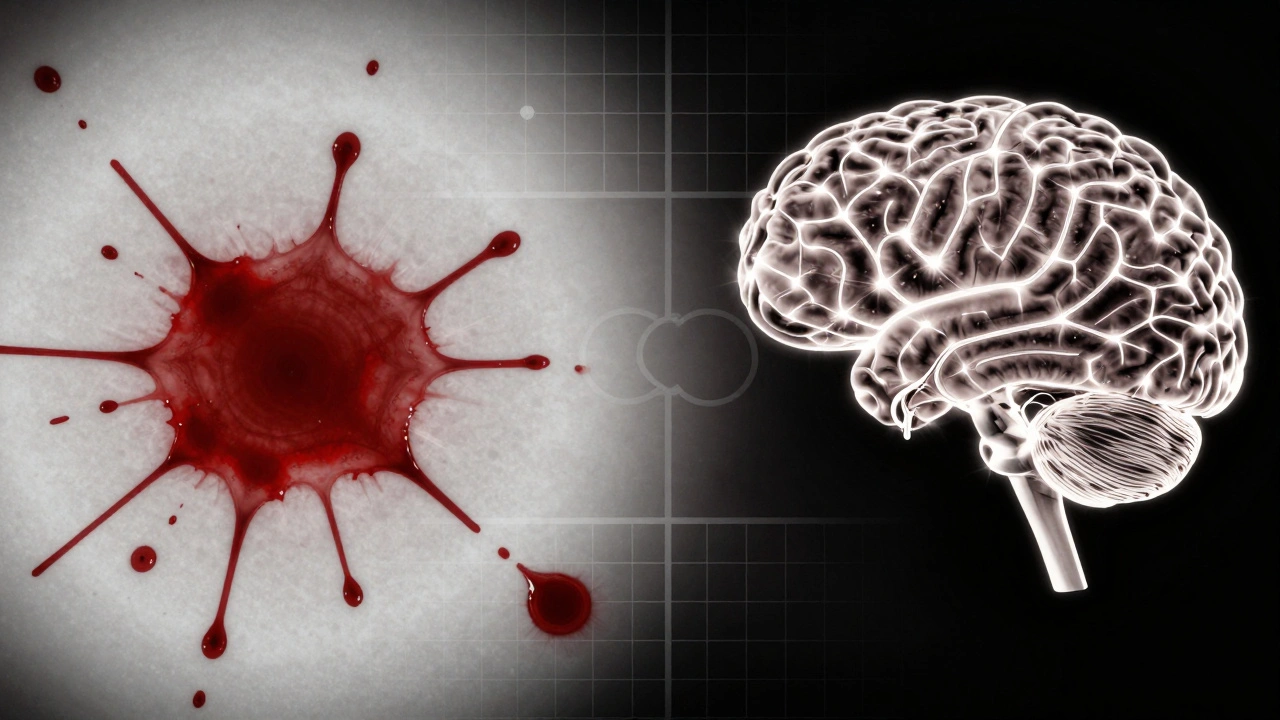
Before an investigator can interpret a bloodstain, they have to see it. This is where pattern recognition comes in. It is the cognitive ability to identify recurring shapes, forms, or arrangements within a visual field. In the context of forensics, this means distinguishing a passive drop from a high-velocity impact spatter at a glance.
To sharpen this skill, training programs often use "cognitive warm-ups" before hitting the mock scene. For example, some instructors use complex visual puzzles-like the "Where's Waldo" approach-where students must use specific search patterns (grid, quadrant, or line searches) to find a target. While it seems like a game, it trains the brain to scan an area systematically, ensuring that when they transition to a bloodstain analysis, they don't accidentally overlook a critical drop of blood because they were staring at the center of the room.
| Exercise Type | Cognitive Goal | Forensic Application |
|---|---|---|
| Matrix Reasoning | Identifying rules across rows/columns | Analyzing blood drop distribution across a floor |
| Visual Sequence Testing | Understanding transformation/rotation | Determining the angle of impact for a stain |
| Odd-One-Out | Detecting anomalies in a uniform set | Spotting a non-blood stain among blood patterns |
Designing a High-Impact Training Scenario
A great mock scene isn't built by throwing random evidence into a room. Every element must be contextual. If you're simulating a domestic dispute that ended in a homicide, the evidence-the bloodstains, the broken glass, the struggle marks-must tell a consistent story. Randomly placing a digital device in a corner where it doesn't belong confuses the trainee and detracts from the learning objective.
Modern training must also evolve with contemporary crime trends. It's no longer enough to simulate a basic shooting. Effective scenarios now include:
- Drug Overdoses: Analyzing the placement of paraphernalia and the specific nature of passive blood pooling.
- Domestic Violence: Mapping complex, multi-directional spatter patterns that indicate a struggle moving through multiple rooms.
- Digital Integration: Combining physical bloodstain interpretation with the retrieval of data from a nearby smartphone to establish a timeline.
By diversifying the types of crimes simulated, trainees learn that a "one size fits all" approach to evidence collection doesn't work. The methodology used for a burglary is vastly different from that of a complex violent crime scene.
The Multi-Phase Architecture of Learning
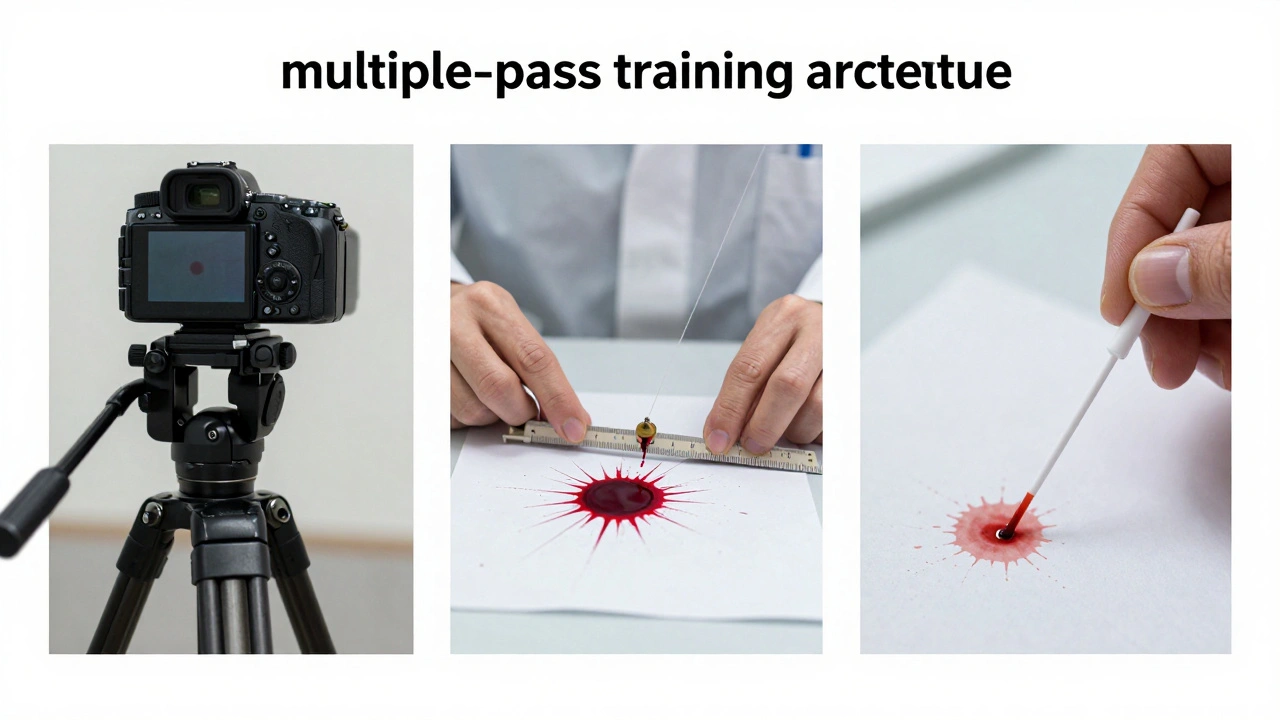
To avoid overwhelming a student, the best programs use a "single-scene, multiple-pass" architecture. Instead of building ten different rooms, they build one highly detailed scene and have the trainee interact with it in stages. This allows the complexity to scale as the student's confidence grows.
- Phase 1: Documentation. The student focuses solely on photography and sketching. They learn how to capture a bloodstain without distorting its perceived size.
- Phase 2: Observation. The focus shifts to note-taking and measurement. They begin to calculate the point of origin for the bloodstains.
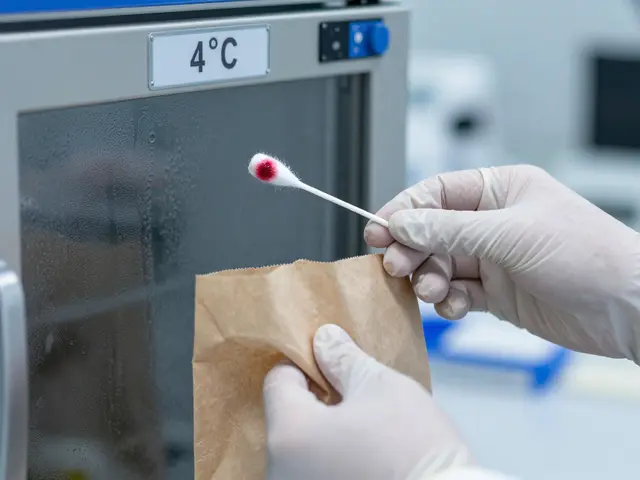
- Phase 3: Collection. The trainee identifies which stains are most critical and practices the physical collection of samples using swabs or lifts.
- Phase 4: Synthesis. The final step is report writing, where they turn their visual interpretations into a legal narrative that can stand up in court.
This graduated approach ensures that the student doesn't just "find the blood," but understands the entire lifecycle of the evidence from discovery to the courtroom.

Avoiding Common Pitfalls in Interpretation
One of the biggest dangers in pattern interpretation is confirmation bias-the tendency to see a pattern that supports a preconceived theory. For instance, a trainee might decide a scene was a suicide and then "see" bloodstains that support that theory, ignoring evidence of a struggle.
Mock scenes allow trainers to implement "trap" evidence. A trainer might place a stain that looks like a high-velocity spatter but is actually a result of a sneeze or a mechanical spray. When a trainee misidentifies it, it provides a powerful teaching moment about the necessity of rigorous verification and the danger of jumping to conclusions.
Putting it All Together: The Field Ready Result
When you combine immersive mock scenes with structured cognitive exercises, the result is an investigator who doesn't panic. They have the visual-spatial skills to see the patterns, the systematic methodology to document them, and the critical thinking skills to interpret them without bias. This integration of cognitive development and physical simulation is what transforms a student into a professional who can provide reliable, scientific testimony in a court of law.
What is the main goal of using mock scenes in forensic training?
The main goal is to provide a safe, immersive environment where trainees can apply theoretical knowledge to practical scenarios. It allows them to develop critical skills in evidence identification, pattern recognition, and scene processing without risking the integrity of a real criminal case.
How does pattern recognition help with bloodstain analysis?
Pattern recognition enables investigators to identify recurring visual elements, such as the shape and distribution of blood droplets. This skill is essential for distinguishing between different types of stains, such as arterial spray, cast-off, or passive drops, which in turn helps determine the events that occurred during a crime.
Why is it important to include contemporary crime trends in mock scenes?
Crime patterns evolve over time. Including current trends, such as drug-related deaths or digital forensics, ensures that trainees are prepared for the types of cases they will actually encounter in the field today, rather than relying on outdated scenarios.
What is the "single-scene, multiple-pass" training architecture?
It is a method where a single complex mock scene is used across different training phases. Trainees first practice photography, then move to measurement, then collection, and finally report writing. This maximizes resource efficiency and provides a graduated increase in difficulty.
How do instructors prevent confirmation bias during training?
Instructors often incorporate "trap" evidence-stains that mimic certain patterns but are caused by unrelated events. This forces trainees to question their initial assumptions and rely on objective data rather than jumping to a conclusion that fits a specific narrative.