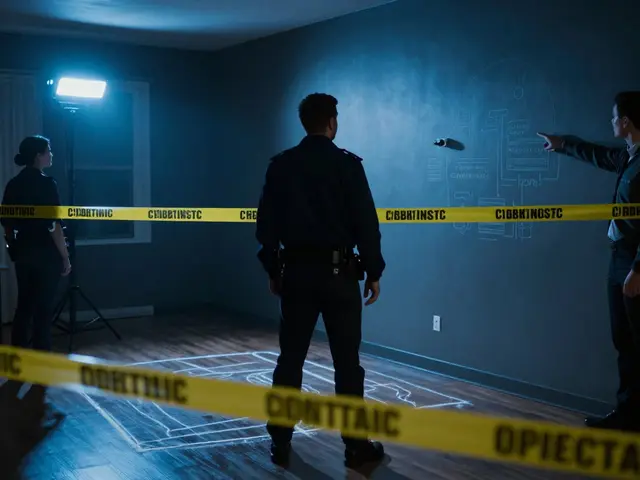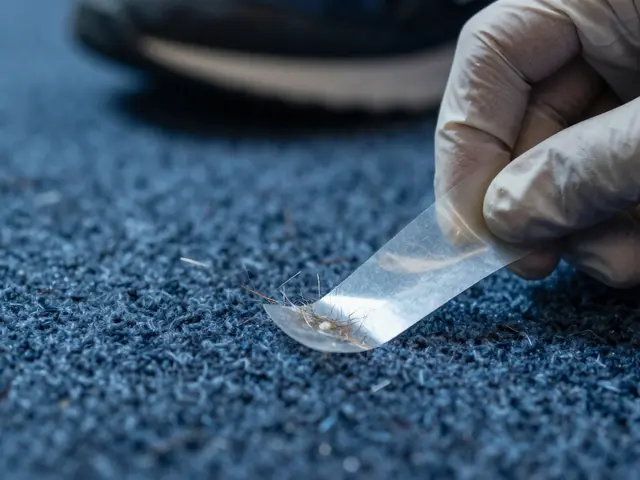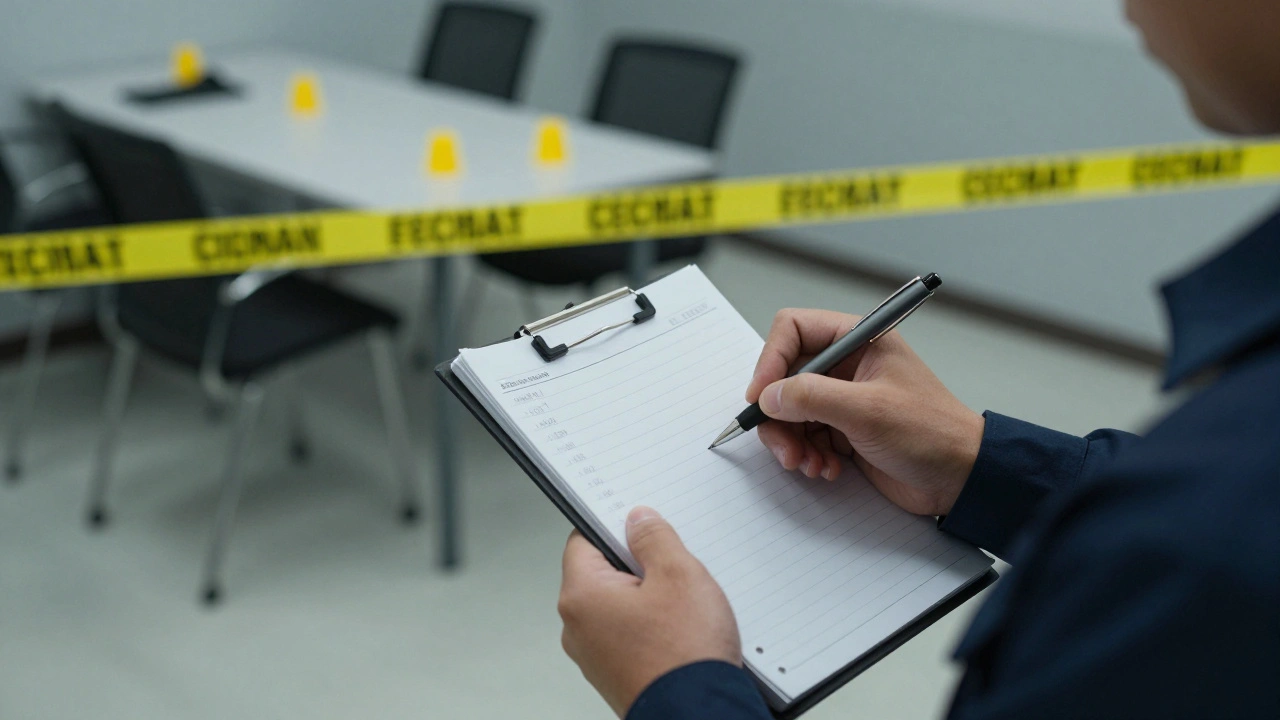
Imagine standing in a courtroom two years after a crime occurred. The defense attorney asks exactly where a shell casing was found in relation to the victim's hand. If your notes just say "near the body," you've just handed the defense a way to challenge your credibility. In forensic work, a scene is a fleeting moment; once it's cleaned or released, the physical truth vanishes. That is why crime scene notes is the foundational record of real-time documentation that preserves the original condition of a scene for future legal and investigative scrutiny . If it isn't written down the moment it happens, it effectively didn't happen.
The Golden Rule: Facts Over Feelings
The biggest mistake a rookie investigator can make is writing an interpretation instead of an observation. Your notes are not the place for a theory about how the struggle started or a guess about the suspect's motive. If you write "the suspect struggled with the victim," you are providing an opinion. If you write "the table is overturned and three chairs are knocked over," you are documenting a fact.
The goal is to create an objective narrative. Any analysis or conclusion belongs in a separate investigative report, not in the real-time field notes. Stick to what you can see, smell, and hear. If you detect a strong smell of bleach in a kitchen, record that. Don't record that "someone tried to clean up the blood." Let the facts lead the jury to that conclusion on their own.
What Your Notes Must Include
A complete set of notes acts as a map for anyone who wasn't there. You need to capture the environment and the logistics of the investigation with surgical precision. Start with the basics: the date, the exact time the crime was reported, and a detailed description of the location. Don't just list an address; describe the area. Is it a secluded wooded lot or a busy apartment complex?
You also need a roster of everyone who touched the scene. Document who took the photos, who handled the fingerprints, and who sketched the room. When you find evidence, the location must be precise. Instead of "on the table," use a reference point: "7 inches south of the east corner of the dining table." This level of detail is what allows a reconstruction expert to accurately place items back in their original spatial relationship months later.
| Category | Required Details | Purpose |
|---|---|---|
| Temporal Data | Report time, arrival time, timestamps from digital devices | Establish a chronological timeline |
| Environmental | Lighting (natural/artificial), weather, odors, temperature | Contextualize the scene's condition |
| Access Points | Status of doors and windows (locked, open, broken) | Determine entry and exit points |
| Personnel | Names and roles of every officer and technician on site | Accountability and witness verification |
| Spatial Data | Precise measurements from fixed landmarks | Enable accurate scene reconstruction |
Structuring the Narrative Report
Taking raw notes in a notebook is the first step, but organizing them into a formal report is where the real value is created. Most agencies use a structured model to ensure nothing is missed. A common approach is to divide the documentation into five distinct sections:
- Summary: A high-level overview of the call and the initial state of the scene.
- Scene Description: A detailed breakdown of the area, including a body description if it's a death investigation.
- Processing: A step-by-step log of the investigative procedures performed (e.g., "conducted a grid search of the perimeter").
- Evidence Collected: A comprehensive list of every item recovered, who recovered it, and where it was found.
- Pending: A list of outstanding tasks, such as waiting for lab results or additional warrants.
This structure prevents the "fragmented memory" problem. By following a set protocol, you ensure that your documentation is consistent across every case, which makes you a much more reliable witness on the stand.
Integrating Notes with Photos and Sketches
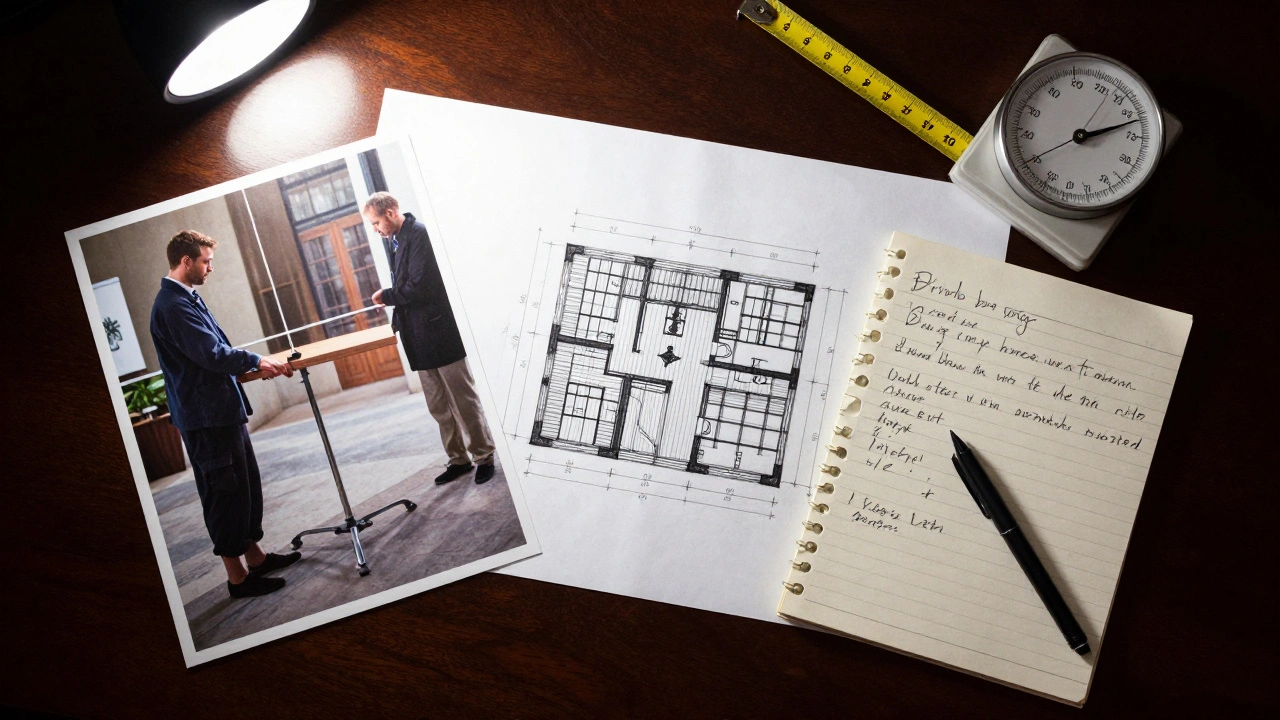
Notes don't exist in a vacuum. They are one leg of a three-part tripod: written notes, crime scene photographs, and sketches. If your notes say the gun was by the door, but the photo shows it by the window, the entire case can be thrown into doubt. Consistency between these three methods is paramount.
Photographs are the primary record, but they can be deceiving regarding scale and distance. That's where the sketch comes in. A sketch allows you to show the relationship between objects that a camera might miss due to perspective. Your notes bridge the gap, providing the specific measurements that make the sketch accurate and the photos meaningful. Remember, the officer's primary job is to keep the scene pristine; nothing should move until it is photographed and noted.
Modern Tech: Beyond the Notebook
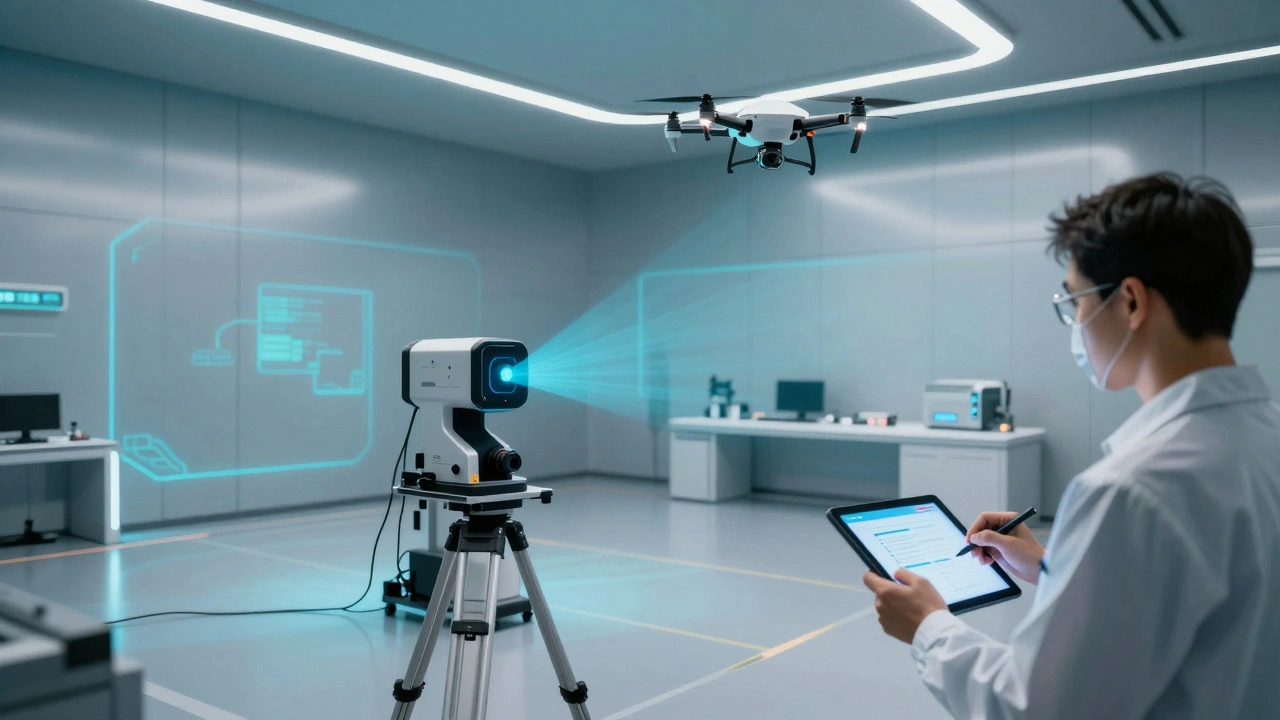
While the pen and paper are still vital backups, forensic technology has evolved. We now see the use of 3D laser scanners that can map an entire room in minutes with millimeter precision. These tools create a digital twin of the scene, which can be revisited in virtual reality during a trial.
Drones have also changed the game, especially for outdoor scenes. Instead of hiring expensive helicopters for aerial views, investigators use drones to capture high-resolution maps of the surrounding area. When you combine these tools with CADD software (Computer Aided Design and Drafting), the accuracy of scene reconstruction reaches a level that was impossible twenty years ago. However, the aural and olfactory notes-like the smell of gunpowder or the sound of a distant alarm-still require the human touch in a notebook.
The Critical Link to the Lab
The quality of your real-time notes directly affects the work done by forensic laboratory scientists. If a technician doesn't know exactly how a sample was collected or the conditions of the room, the lab results might be misinterpreted. High-value evidence is only useful if its provenance is documented.
Better communication between the field and the lab reduces response times. When an investigator provides detailed, real-time data, lab experts can focus their analysis on the most promising leads. This synergy is what turns a collection of clues into a suspect's identity or a confirmed alibi. The analytical value of the evidence is capped by the quality of the documentation at the scene.
Can I use a digital tablet for crime scene notes?
Yes, many agencies now use tablets. However, the key is using software that creates a time-stamped, uneditable log. If you are using a standard app, ensure there is a backup system so that the original entry cannot be altered without leaving a digital audit trail, as this is a common point of attack for defense attorneys.
What should I do if I make a mistake in my handwritten notes?
Never use white-out or scribble over a mistake to make it unreadable. Instead, draw a single line through the error, initial it, and write the correction next to it. This shows the court that you are being transparent and not attempting to hide or alter evidence after the fact.
How do I document smells or sounds?
Since these cannot be photographed, they must be described in detail. Instead of saying "it smelled bad," specify the type of odor-such as "strong scent of decomposition" or "smell of ammonia." For sounds, note the direction and approximate volume of the noise and the exact time it occurred.
Why is the order of notes so important?
Chronological order establishes a timeline of events. It proves that the evidence was documented before it was moved and that the scene was secured. If notes are out of order, it can look like the investigator is "filling in the blanks" later, which damages their credibility in court.
What happens if the first responder doesn't take notes?
It creates a "documentation gap." The first responder sees the scene in its most original state. If they don't record the position of a door or the presence of a specific person, that information is lost forever once the crime scene investigators arrive and begin their process.