Imagine getting a positive result on a workplace drug test. Your heart races. You think about the consequences-losing your job, facing legal trouble, or being flagged in a probation program. But here is the catch: that initial result isn't final. It’s just a flag. A warning light. Before any serious action is taken, your sample goes through a second, much more rigorous process called confirmatory testing, which is a critical second-stage analytical process used to verify presumptive positive results from initial screening tests with high precision. This step is the difference between a guess and a fact.
The Problem with Initial Screening Tests
To understand why confirmatory testing matters, you first need to understand how the first test works. Most initial screenings use a method called immunoassay, which is a rapid and cost-effective screening technique that detects broad classes of drugs but can produce false positives due to cross-reactivity. Think of an immunoassay like a metal detector at an airport. It beeps when it senses metal. That could be a gun, sure. But it could also be your keys, a belt buckle, or even a large coin. It’s fast, cheap, and good at catching potential issues, but it lacks specificity.
In drug testing, this lack of specificity leads to "false positives." For example, certain over-the-counter medications, like some cold remedies or antidepressants, can trigger a positive result for amphetamines or benzodiazepines because their chemical structures share similarities with those illicit substances. If a lab stopped at the screening stage, innocent people would face severe penalties based on a technicality. That’s where confirmatory testing steps in to separate the signal from the noise.
How Confirmatory Testing Works
When a screening test comes back non-negative (meaning it detected something), the lab doesn’t throw the sample away. Instead, they take a different portion of that same original specimen and send it to a specialized laboratory for confirmatory analysis. This process uses entirely different technology than the initial screen. While the screen looks for general drug classes, confirmatory testing identifies the exact molecular fingerprint of the substance.
The goal here is definitive identification. The lab needs to prove not just that a drug class is present, but exactly which drug it is, often down to specific metabolites-the breakdown products of the drug as your body processes it. This level of detail eliminates cross-reactivity. If the confirmatory test says you took fentanyl, it’s because the machine found the unique mass-to-charge ratio of fentanyl molecules, not just a vague similarity to opioids.
The Gold Standard: LC-MS/MS
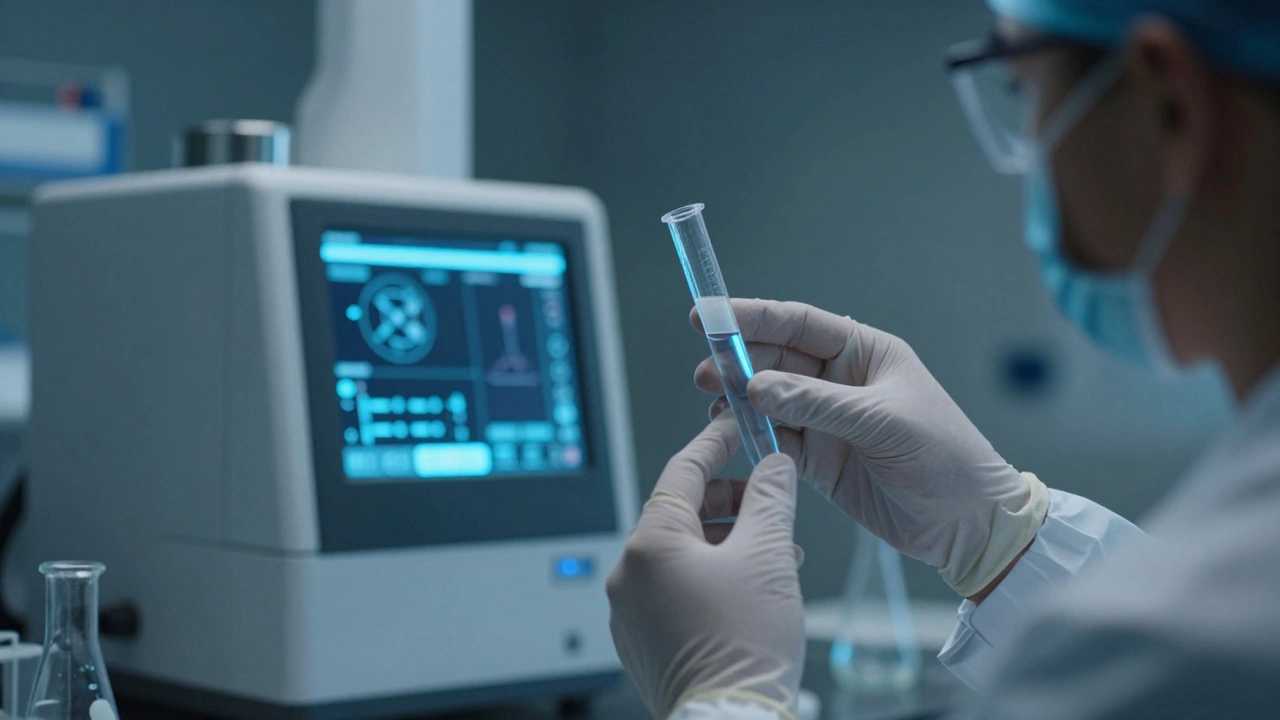
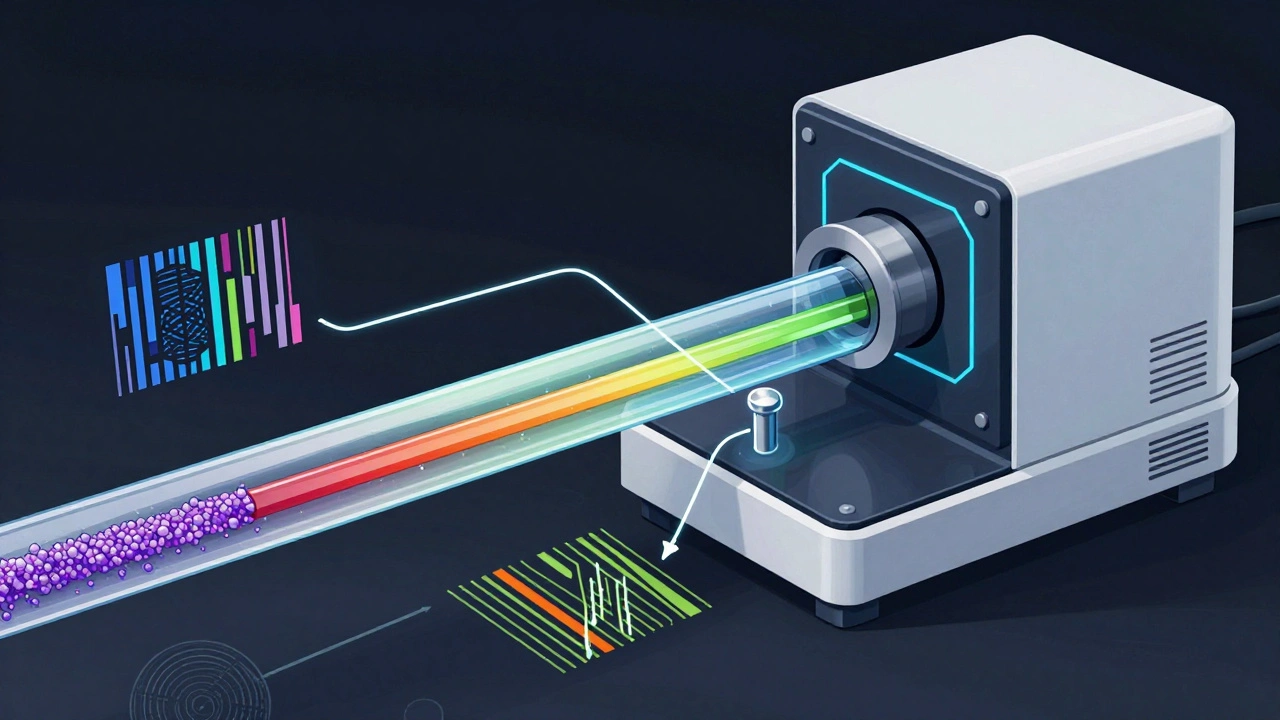
Among the various methods available, Liquid Chromatography-Tandem Mass Spectrometry, commonly known as LC-MS/MS, is the most reliable and legally defensible method for drug confirmation testing, offering unmatched accuracy and multi-drug detection capabilities. This technology has become the industry standard for forensic toxicology, workplace testing, and court-admissible evidence.
Here is how LC-MS/MS breaks down a sample:
- Sample Preparation: First, the lab cleans the sample. They remove salts, proteins, and other impurities that could interfere with the analysis. This ensures only the target compounds remain.
- Liquid Chromatography: The cleaned sample is injected into a column filled with tiny particles. As a liquid carrier pushes the sample through, different compounds move at different speeds based on their chemical properties. This separates the mixture into individual components.
- Tandem Mass Spectrometry: Each separated compound enters the mass spectrometer. Here, ions are generated and sorted by their mass-to-charge ratio. The "tandem" part means the machine does this twice. It isolates a specific ion, breaks it into smaller pieces, and then analyzes those fragments. This creates a unique chemical signature, or fingerprint, for each substance.
- Data Analysis: Finally, software compares these fingerprints against a library of known drug standards. If there’s a match, the result is confirmed.
LC-MS/MS is incredibly sensitive. It can detect drugs at concentrations as low as nanograms per milliliter. This sensitivity is crucial for identifying new psychoactive substances or adulterants that might be present in trace amounts. Because it identifies specific molecular structures, the risk of false positives is virtually eliminated.
| Feature | Initial Screening (Immunoassay) | Confirmatory Testing (LC-MS/MS) |
|---|---|---|
| Specificity | Low (detects drug classes) | High (identifies exact substances) |
| Sensitivity | Moderate | Very High (nanogram scale) |
| False Positives | Higher risk due to cross-reactivity | Negligible risk |
| Time Required | Minutes to hours | Hours to days (24-48 hrs typical) |
| Legal Admissibility | Limited (presumptive only) | High (court-defensible) |
| Cost | Low | High |
Other Confirmatory Methods
While LC-MS/MS is the dominant force, other techniques play important roles depending on the context. Gas Chromatography-Mass Spectrometry, or GC-MS, is a highly accurate method that combines chromatographic separation with mass spectral detection, ideal for volatile compounds and trace analysis. GC-MS works similarly to LC-MS/MS but uses a gas instead of a liquid to carry the sample through the column. It’s particularly effective for volatile substances and has been the gold standard for decades. However, it requires samples to be vaporized, which can degrade heat-sensitive compounds-a limitation that LC-MS/MS avoids.
For street-level drug checking, Fourier-Transform Infrared Spectroscopy, or FT-IR, is a technique that identifies substances by detecting unique infrared vibration patterns of chemical structures. FT-IR shines when analyzing solid pills or powders without needing complex extraction. It creates a spectrum based on how chemical bonds vibrate when exposed to infrared light. If the pattern matches a known library entry, the substance is identified. However, if a sample contains a complex mixture or a new substance not in the library, FT-IR may struggle, prompting a referral to LC-MS/MS.
Emerging technologies like Quantitative Nuclear Magnetic Resonance, or qNMR, is an advanced method capable of identifying known and unknown mixtures using a reference library approach. qNMR is gaining traction for its ability to analyze complex mixtures without extensive sample preparation. It’s particularly useful for identifying new psychoactive substances where traditional libraries might lag behind.
Why Timing Matters
Confirmatory testing takes time. While a screening test can give you results in minutes, confirmatory analysis typically requires 24 to 48 additional hours. This delay is necessary because the process involves meticulous sample preparation, instrument calibration, and data verification. Labs must ensure that every step meets strict quality control standards. Rushing this process compromises accuracy, which defeats the entire purpose of confirmation.
This timeline impacts real-world scenarios. In workplace testing, employees might face administrative leave while waiting for confirmation. In legal cases, defendants cannot rely on screening results alone to challenge charges. Understanding this window helps manage expectations and prevents premature decisions based on incomplete data.

Legal Defensibility and Real-World Impact
The stakes of drug testing are high. A positive result can lead to termination, loss of custody, or criminal charges. This is why legal defensibility is paramount. Courts and regulatory bodies demand evidence that withstands scrutiny. LC-MS/MS reports are widely accepted because they provide objective, reproducible data backed by scientific rigor.
In treatment courts, probation programs, and child welfare services, confirmatory testing protects both individuals and institutions. It prevents wrongful penalties for innocent people while ensuring that those who genuinely pose a risk are identified accurately. Without this layer of verification, the integrity of these programs would crumble under the weight of false accusations.
Consider the case of etizolam, a benzodiazepine-like substance not approved for medical use in many countries. Screening tests often misidentify it as diazepam or alprazolam due to structural similarities. Only confirmatory testing can distinguish etizolam from prescribed benzos, preventing unnecessary disciplinary actions against employees who may have taken legitimate medication.
Who Needs Confirmatory Testing?
Not every sample gets confirmed. Labs prioritize resources based on risk and necessity. Samples recommended for confirmatory testing include:
- Suspected Fentanyl Analogues: Given the potency and danger of fentanyl variants, precise identification is critical for public safety and harm reduction efforts.
- Benzodiazepines: Due to frequent cross-reactivity with common medications, confirmation helps differentiate between prescribed use and illicit consumption.
- No Library Match: If FT-IR fails to find a match, LC-MS/MS or qNMR can identify novel substances, updating databases for future reference.
- Complex Mixtures: When multiple drugs are present, advanced methods untangle the components, providing a complete picture of what was ingested.
- New Psychoactive Substances: As chemists tweak molecular structures to evade detection, confirmatory testing adapts to identify these evolving threats.
This targeted approach ensures that labs focus their expertise where it matters most, balancing efficiency with thoroughness.
The Future of Drug Identification
As drug chemistry evolves, so does testing technology. Point-of-care devices like lateral flow assays offer rapid initial screening, but they still require laboratory confirmation for definitive answers. Integration between field tests and lab systems is improving, allowing faster turnaround times without sacrificing accuracy.
Artificial intelligence is beginning to assist in data analysis, helping technicians interpret complex spectra and identify anomalies faster. Machine learning algorithms can predict likely compounds based on partial data, guiding analysts toward the right confirmatory tests. This synergy between human expertise and computational power promises even greater reliability in the coming years.
Ultimately, confirmatory testing remains the backbone of trustworthy drug identification. It transforms uncertainty into certainty, protecting rights and ensuring justice. Whether you’re an employer, a legal professional, or someone undergoing testing, understanding this process empowers you to navigate the system with confidence.
What is the main difference between screening and confirmatory testing?
Screening tests, like immunoassays, are fast and cheap but prone to false positives because they detect broad drug classes. Confirmatory testing, such as LC-MS/MS, is slower and more expensive but provides definitive identification of specific substances with near-zero error rates.
How long does confirmatory testing take?
Confirmatory testing typically takes 24 to 48 hours after the initial screening. This allows time for sample preparation, instrument analysis, and data verification to ensure accuracy.
Can confirmatory testing be wrong?
While extremely rare, errors can occur due to contamination or equipment malfunction. However, accredited labs follow strict quality control protocols to minimize risks. LC-MS/MS is considered the gold standard for its reliability and legal defensibility.
Why is LC-MS/MS preferred over GC-MS?
LC-MS/MS can analyze a wider range of compounds, including heat-sensitive ones, without requiring vaporization. It also offers higher sensitivity and better multi-drug detection capabilities compared to GC-MS.
Is confirmatory testing required for all positive drug tests?
In forensic, workplace, and legal contexts, yes. Any presumptive positive result must be confirmed before taking adverse action. This ensures fairness and accuracy in decisions affecting employment, liberty, or health.