You run a test. You get a number. But does that number actually mean anything?
In the world of laboratory testing, a result is only as good as its connection to reality. If your scale says an object weighs 10 grams, how do you know it’s not 9.8 or 10.2? More importantly, how do you prove it to a regulator, a client, or an accrediting body? This is where metrological traceability comes in. It is the unbroken chain of evidence that links your specific measurement result back to internationally recognized standards.
Without this chain, your data is just a guess with a decimal point. With it, your results are comparable, reliable, and legally defensible. For labs seeking or maintaining accreditation under standards like ISO/IEC 17025, understanding this link between your daily work and the International System of Units (SI) is non-negotiable.
The Unbroken Chain: What Traceability Really Means
Traceability is often misunderstood as simply buying a calibrated instrument. You might think, "I bought this balance from a reputable brand, so my measurements are traceable." That is incorrect. Traceability is a property of the result, not the tool.
To achieve true metrological traceability, you need an unbroken chain of comparisons. Imagine a relay race. Your measurement is the final runner. The baton passed to them came from a calibration step, which got its value from a higher-level standard, which got its value from a national metrology institute, all the way up to the definition of the unit itself. Every single handoff must be documented. Every single step must have a stated uncertainty.
If one link in that chain is broken-say, a calibration certificate lacks uncertainty data, or the equipment was used outside its specified conditions-the entire chain collapses. Your result is no longer traceable. The National Institute of Standards and Technology (NIST) makes this distinction clear: using an instrument calibrated by NIST does not automatically make your subsequent measurements traceable. You must perform the measurement correctly, document the process, and account for uncertainties at every stage.
The Anchor: The International System of Units (SI)
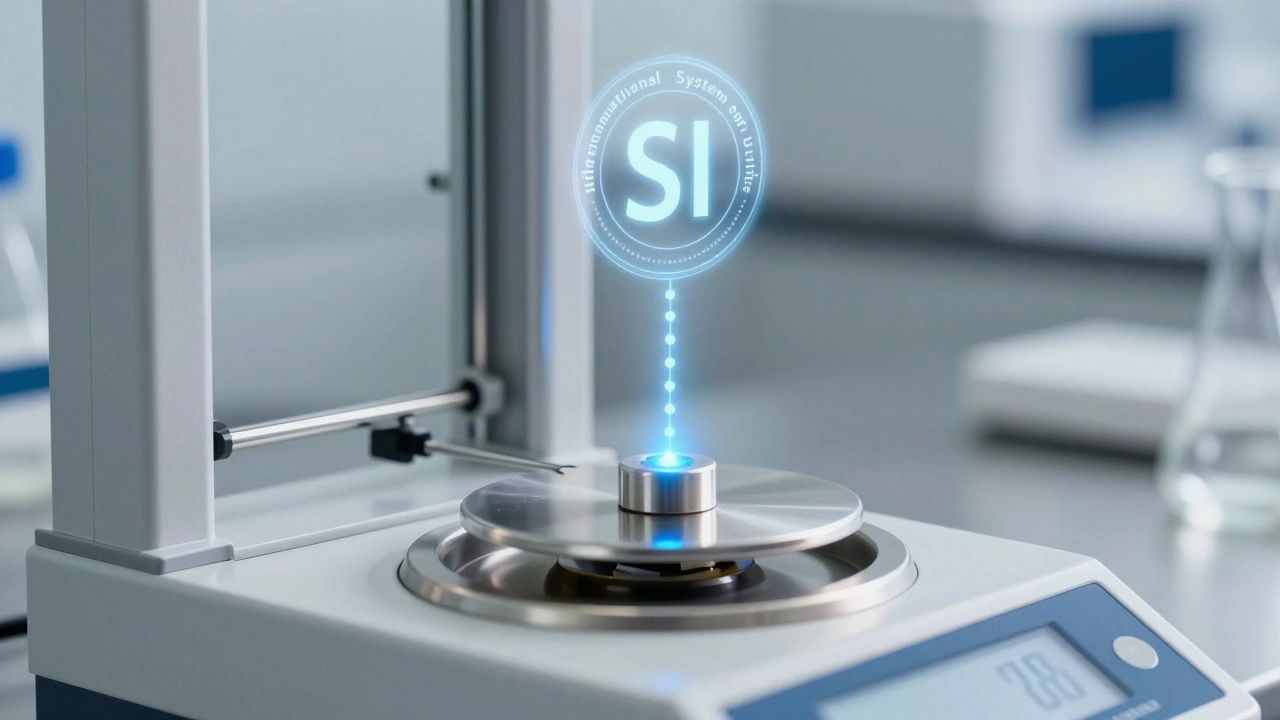
Where does this chain end? It ends at the SI. The International System of Units is the modern metric system and the global standard for almost all quantitative measurements. Since the major redefinition in 2019, the SI is based on fixed numerical values of fundamental constants of nature, such as the speed of light and Planck constant, rather than physical artifacts.
This shift matters because it means the standards are stable and accessible anywhere in the universe. When we talk about SI-traceability, we are talking about linking your local measurement to these universal definitions. For example, if you are measuring mass, your chain leads back to the kilogram, defined by the Planck constant. If you are measuring time, it leads back to the second, defined by the radiation cycles of cesium-133 atoms.
For most laboratories, you don’t realize the SI directly. You rely on National Metrology Institutes (NMIs) like NIST in the US, PTB in Germany, or BIPM internationally. These institutes maintain the primary standards and disseminate them down the chain to accredited calibration labs, then to manufacturers, and finally to you.
The Role of Reference Materials in Traceability
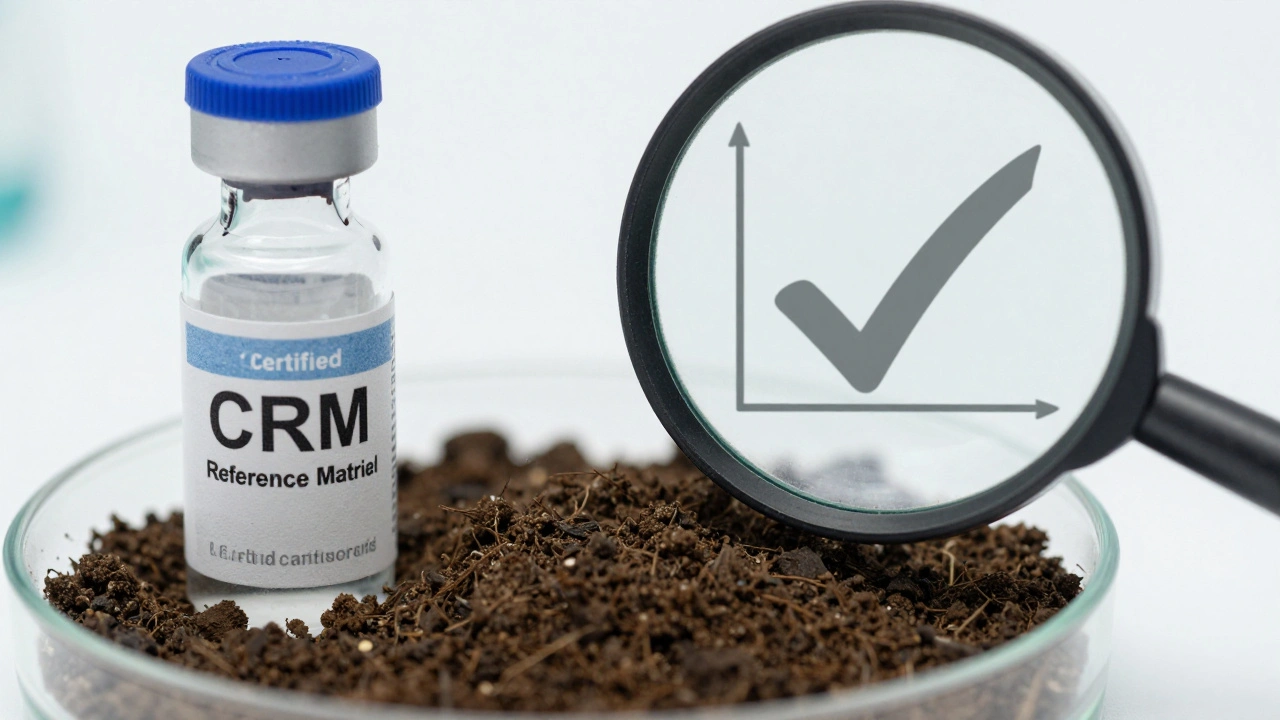
How do you bridge the gap between your sample and the SI? You use reference materials. Specifically, Certified Reference Materials (CRMs). A CRM is a material with one or more properties that are homogeneous and stable, accompanied by a certificate that provides the value of the property, its associated uncertainty, and a statement of metrological traceability.
| Material Type | Traceability Level | Certificate Includes | Best Use Case |
|---|---|---|---|
| Certified Reference Material (CRM) | Highest (to SI) | Value, Uncertainty, Traceability Statement | Calibration, Method Validation, Accreditation Compliance |
| Reference Material (RM) | Variable/Lower | Informational Values Only | Internal QC, Rough Screening |
| In-House Standard | Depends on Preparation | Lab-Specific Data | Daily Instrument Checks |
CRMs are produced by accredited entities, often NMIs themselves. They act as the tangible link in your chain. When you analyze a CRM, you are checking your method against a known truth. If your result falls within the uncertainty range of the CRM’s certified value, you have demonstrated that your method is accurate and traceable at that moment.
However, CRMs are not magic bullets. Using a CRM correctly requires understanding its matrix. If you are testing soil samples, you need a soil-based CRM. Using a water-based CRM to validate a soil method introduces matrix effects that break the traceability chain. The similarity between the CRM and your routine samples is critical.

NIST and the Dissemination of Standards
In the United States, NIST serves as the primary source for SI realizations. NIST doesn’t just define units; it distributes them through several key programs. One of the most important is the Standard Reference Material (SRM) program. SRMs are high-quality CRMs that provide total traceability for method development and validation.
NIST also offers NIST-Traceable Reference Materials (NTRMs) and Standard Reference Instruments (SRIs). These tools come with certificates that explicitly state their metrological traceability. When you purchase an NIST-traceable standard, you are buying into a system where every calibration step from the manufacturer to your bench is part of an unbroken chain.
But remember the earlier warning: buying the tool isn’t enough. NIST assures the traceability of the *standards* they provide. It is up to you, the user, to ensure that your measurement process maintains that traceability. This includes proper handling, storage, and usage of the SRM. If you contaminate a CRM or store it incorrectly, you break the chain yourself.
Building Your Traceability Chain: Practical Steps
Establishing traceability is a systematic process. Here is how you build it in your lab:
- Identify the Measurement Model: List all input quantities that affect your result. This includes the main variable (e.g., concentration) but also environmental factors like temperature, humidity, and pressure if they impact the outcome.
- Select Appropriate Standards: Choose CRMs or calibrators that match your sample matrix and measurement range. Ensure they are certified by an accredited producer.
- Document the Calibration Chain: Keep records of every calibration. Each certificate must show the reference standard used, the date, the uncertainty, and the traceability statement.
- Quantify Uncertainty at Each Step: Calculate the combined standard uncertainty for your measurement. This includes uncertainty from the CRM, the instrument, the operator, and environmental conditions.
- Verify with Quality Control: Regularly measure CRMs alongside routine samples. Plot these results on Levey-Jennings charts or similar control charts to monitor stability over time.
A common pitfall is ignoring minor inputs. For instance, in dimensional measurements, thermal expansion can significantly alter results. If you don’t measure and correct for temperature, your traceability claim is weak. Similarly, in chemical analysis, if the purity of your reagents isn’t traceable to SI units, your final concentration calculation lacks a solid foundation.
Accreditation and Regulatory Expectations
Why does this matter for accreditation? Bodies like ANSI National Accreditation Board (ANAB) or UKAS require evidence of metrological traceability as part of ISO/IEC 17025 compliance. During audits, assessors will ask to see your chain. They won’t just look at your calibration certificates; they will look at your uncertainty budgets and your quality control records.
If you cannot demonstrate an unbroken chain to SI units or other specified references, your accreditation may be withheld or withdrawn. In regulated industries like pharmaceuticals or forensics, non-traceable results can lead to failed inspections, rejected batches, or even legal challenges.
The responsibility lies with the provider of the measurement result. Whether you are a small clinical lab or a large industrial testing facility, you own the traceability of your data. Assessing the validity of that claim is the job of your customers and regulators, but building it is yours.
Common Misconceptions About Traceability
Let’s clear up some myths that trip labs up:
- Myth: "If I use a Class 1 weight, my mass measurements are automatically traceable."
Reality: Class 1 weights are reference standards, but they still need regular calibration against higher-order standards. Their traceability expires if not maintained. - Myth: "Matching the CRM value proves accuracy."
Reality: Matching the value is necessary but not sufficient. You must also show that your uncertainty budget accounts for all sources of error and that the difference is statistically insignificant. - Myth: "Traceability is only for quantitative results."
Reality: Qualitative tests (like pass/fail) also require traceable limits of detection and decision thresholds, which depend on quantitative calibration steps.
Understanding these nuances prevents costly errors. It shifts your mindset from "checking boxes" to "building confidence."
What is the difference between traceability and calibration?
Calibration is the technical process of comparing an instrument to a standard to determine its error. Traceability is the broader concept that ensures the result of that calibration (and subsequent measurements) can be linked to international standards through a documented chain with known uncertainties. Calibration is a step in achieving traceability.
Do I need SI traceability for all measurements?
Not always. While SI traceability is the gold standard, some fields use consensus-based standards or proprietary scales (like pH or hardness) where direct SI realization is impractical. However, even in these cases, you must establish traceability to a specified reference standard, which is often linked to SI units indirectly.
How often should I verify my traceability chain?
You should verify it continuously through internal quality control. Additionally, external assessments, proficiency testing, and periodic recalibration of instruments and reference materials ensure the chain remains unbroken. Typically, annual reviews of uncertainty budgets and calibration intervals are recommended.
Can I create my own reference materials for traceability?
Yes, but they become 'in-house standards' unless you undergo rigorous characterization and certification processes that meet ISO Guide 34 requirements. For most labs, purchasing certified CRMs from accredited producers is more efficient and less risky for accreditation purposes.
What happens if a link in my traceability chain is missing?
Your measurement result loses its claim of metrological traceability. This can invalidate your data for regulatory submissions, fail accreditation audits, and undermine customer trust. You must identify the gap, re-calibrate or re-test affected samples, and update documentation before resuming normal operations.