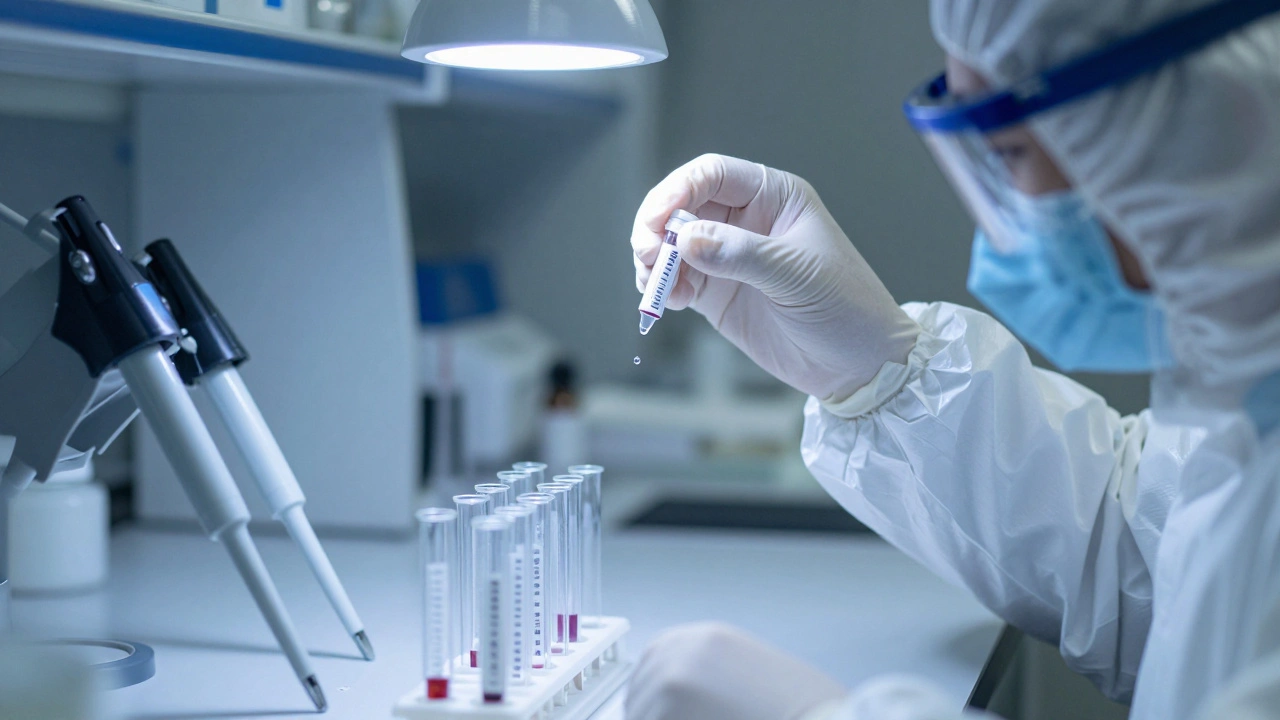
When a crime scene yields just a few skin cells, a single hair, or a smudge of sweat on a glass, traditional DNA testing often fails. The sample is too small. Too weak. Too quiet. But in the last two decades, forensic labs have pushed the limits of detection with a technique called low-copy number (LCN) DNA analysis. It’s not magic - it’s math, chemistry, and a lot of risk. And while it’s helped solve cases that would’ve gone cold, it’s also led to controversial convictions, mistaken identities, and lab scandals. Here’s what really happens when you try to build a DNA profile from less than a nanogram of genetic material - and how scientists are trying to fix it.
What Is Low-Copy Number DNA?
LCN DNA refers to samples with fewer than 200 picograms of DNA - roughly the amount from 10 to 20 human cells. That’s less than a grain of salt. Standard DNA tests use around 1 nanogram (1,000 picograms) and run 28 cycles of PCR (polymerase chain reaction) to amplify the genetic material. LCN pushes that limit: labs now run 31 to 34 cycles, sometimes more. This extra amplification lets machines detect DNA signals that would normally be invisible. But it also turns up noise - false signals, contamination, and errors that don’t exist in real life.
The technique was developed in the UK in the early 2000s. It quickly became a game-changer for cold cases, sexual assaults, and burglaries where suspects left behind trace evidence. A drop of sweat on a doorknob? A torn shirt cuff? A fingerprint smudged with skin cells? LCN made those usable. But the more you amplify, the more you break the rules of reliability.
The Two Big Problems: Drop-Out and Drop-In
At the heart of LCN’s danger are two silent errors: allele drop-out and allele drop-in.
Allele drop-out happens when a piece of DNA is simply too rare to be detected. In a normal sample, you see both copies of a gene - one from mom, one from dad. In LCN, one might vanish. That’s not a glitch - it’s physics. When you start with only a few DNA molecules, random chance decides which ones get copied. One study using the PowerPlex 16 HS kit found that with 31 PCR cycles, 19% of expected alleles disappeared. At 34 cycles, that dropped to 8%, but even that’s too high for court.
Allele drop-in is worse. It’s when DNA that isn’t there shows up anyway. Maybe it came from a technician’s sneeze. Maybe it stuck to a pipette tip. Maybe a stray DNA fragment got amplified because the signal was just above the noise floor. These false alleles can make a suspect look guilty - or create a fake profile that looks like a match. In one case, a suspect’s DNA was flagged because of a drop-in allele that matched a lab worker. No one knew until a second test was run.
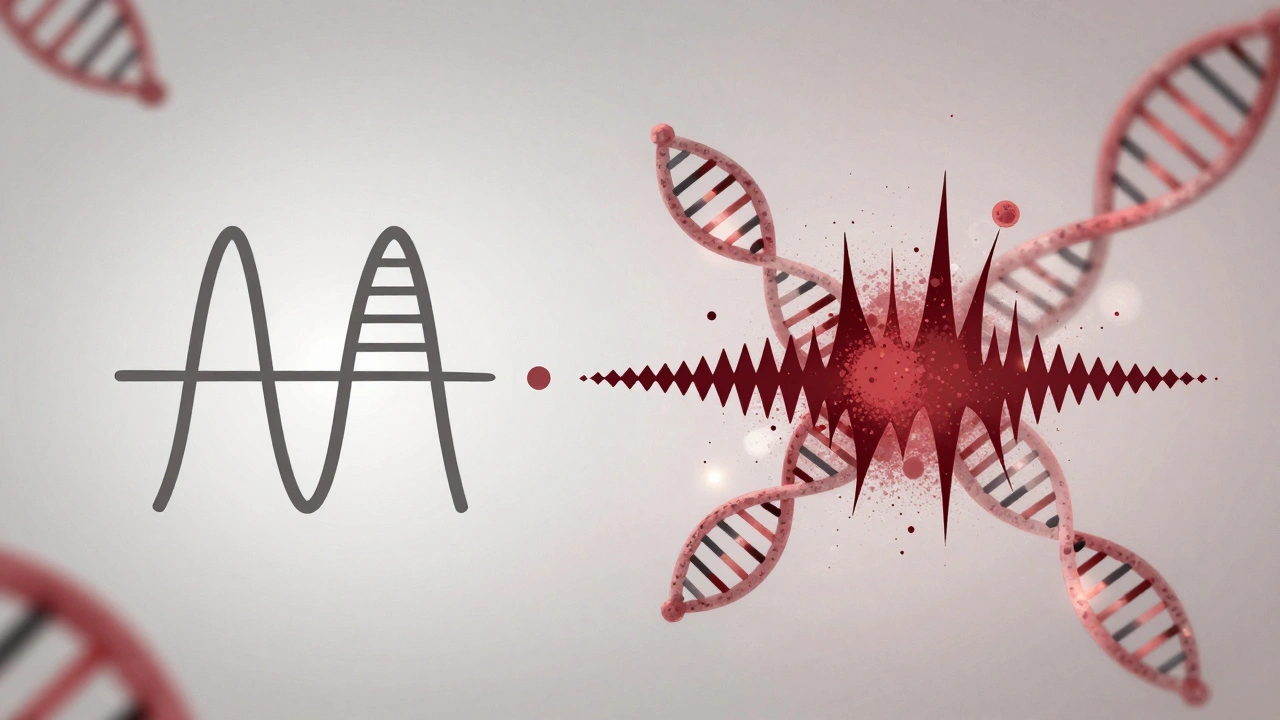
Both errors spike when you push past 30 cycles. And here’s the kicker: they don’t show up as errors on the machine. The data looks clean. The peaks look real. That’s why interpretation is everything.
How Labs Try to Fix It: Replicate Testing
The only proven way to cut through the noise is repetition. Not just one test. Not even two. Labs now run three separate amplifications from the same sample. Each one is independent - different tubes, different pipettes, different runs. Then they compare the results.
If an allele shows up in two or all three tests? It’s considered reliable. If it shows up only once? It’s flagged as suspect. This is called consensus profile generation. It’s not perfect, but it’s the best we’ve got. A study by Promega showed that with three replicates, heterozygous call accuracy jumped from 69% to 91%. That’s the difference between a guess and a solid lead.
But here’s the catch: this method requires more sample, more time, more money, and more lab space. It also doesn’t fix contamination. If the same contaminated pipette is used across all three replicates, you’ll get the same false allele three times - and think it’s real.
Contamination: The Silent Saboteur
LCN labs aren’t like regular ones. They need to be cleanrooms. Think surgical suite meets clean room. Air filters. UV lights. Separate rooms for pre- and post-PCR work. No jewelry. No cell phones. No talking near samples. Even then, contamination happens.
One study found that 1 in 10 LCN samples had detectable contamination from other samples in the same batch. That’s not rare - it’s expected. A single DNA molecule from a previous test can linger on a surface for months. And because LCN amplifies so aggressively, it’ll copy that stray DNA just as eagerly as the real sample.
Some labs use negative controls - blank samples that should show no DNA. If they do, you know contamination is in the air. But even that doesn’t catch everything. The worst contamination? It comes from the analysts themselves. A technician’s skin cells, saliva, or even their DNA from a prior case can slip in. And when the sample is this small, that DNA doesn’t look like a contaminant - it looks like the suspect.
Why Some Courts Are Rejecting LCN
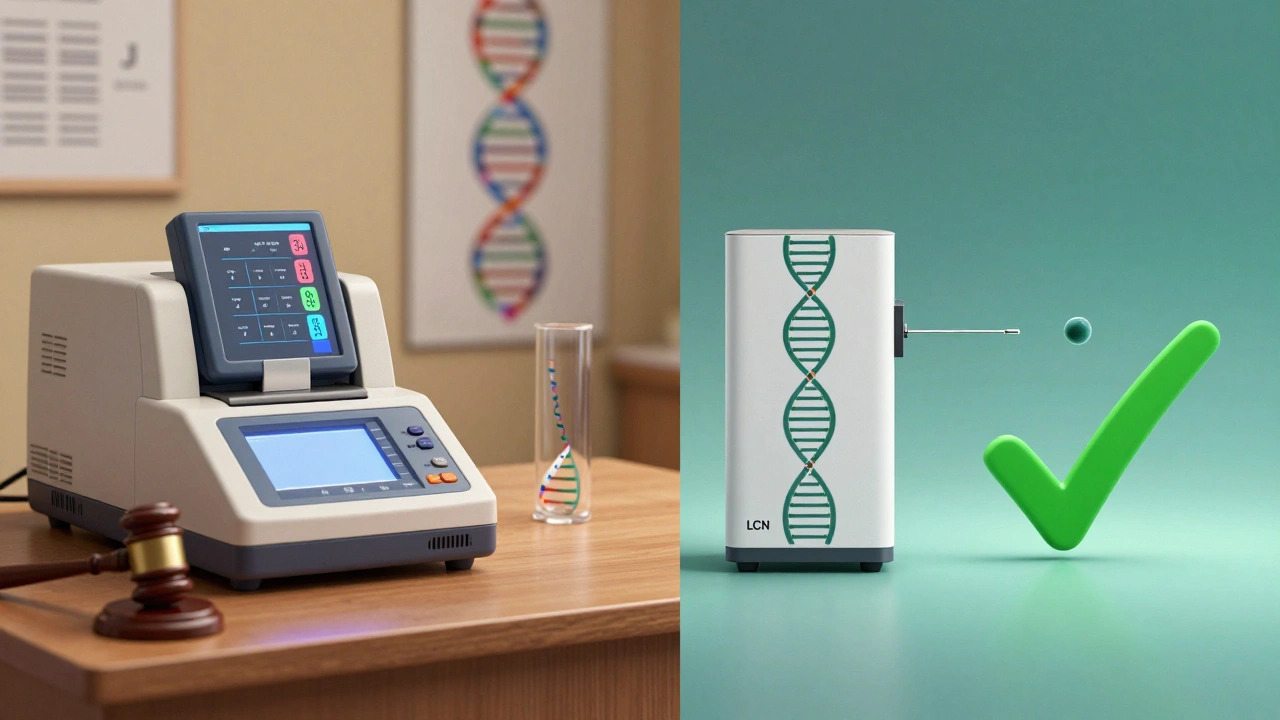
In 2023, the Office of the Chief Medical Examiner in New York stopped using LCN entirely. Why? Because newer STR kits - like the PowerPlex 16 HS, ESI 17, and NGM - now deliver reliable results at 50-100 picograms without needing 34 cycles. They’re more sensitive, more specific, and less prone to amplification errors.
These next-generation kits use better chemistry: modified enzymes, optimized primers, and enhanced dyes that reduce background noise. They don’t need to push PCR cycles to the edge. They just work better. That’s why the forensic community is shifting. LCN was a bridge - not a destination.
Still, courts are split. A Federal Circuit court acknowledged LCN evidence was admissible - but called its reliability “significantly weaker” than standard DNA testing. Judges are starting to ask: How many replicates were run? Was contamination controlled? Can you prove this allele wasn’t dropped in? If the answer is vague, the evidence gets tossed.
What’s Next? Beyond LCN
The future isn’t more cycles. It’s smarter tools.
- Next-gen STR kits are replacing LCN in most major labs. They detect low DNA without the chaos.
- Single-cell sequencing is emerging - isolating and sequencing DNA from a single cell, bypassing PCR entirely.
- Mass spectrometry is being tested to detect DNA fragments by mass, not by amplification. No PCR means no drop-in.
- AI-assisted interpretation is being trained to flag stochastic noise based on thousands of past LCN profiles.
The goal isn’t to dig deeper into the noise. It’s to avoid the noise altogether.
When LCN Still Makes Sense
Even with better tools, LCN hasn’t vanished. It’s still used in:
- Mass disaster victim identification - where tissue is degraded and scarce
- Historic cold cases - where evidence has been stored for years and DNA is fragmented
- Sexual assault cases - where the suspect’s DNA is mixed with a victim’s and only trace amounts remain
But only if:
- Three or more replicates are run
- The lab is ISO 17025 certified
- The interpretation is reviewed by two independent analysts
- The court is informed that this is a high-risk profile
There’s no such thing as a foolproof LCN result. But there are ways to make it less dangerous.
Is low-copy number DNA admissible in court?
Yes - but only in some places and under strict conditions. Courts in the U.S., U.K., and Australia have accepted LCN evidence when it’s backed by multiple replicates, documented contamination controls, and expert testimony explaining the risks. However, many judges now require additional corroboration, like eyewitness testimony or surveillance footage, before allowing LCN results to carry heavy weight.
How much DNA is needed for LCN testing?
LCN testing typically works with samples between 10 and 200 picograms - about 10 to 20 human cells. Some labs push to 1,000 picograms (1 nanogram) if the sample is degraded. But once you’re above 500 picograms, most modern STR kits can handle the sample without needing LCN protocols.
Can LCN DNA be used to identify multiple people in one sample?
It’s possible - but risky. When DNA from two or more people is mixed, LCN amplification can make the profile unreadable. Alleles from each person overlap, drop out, or appear as false signals. Experts can sometimes separate profiles using statistical software, but the error rate jumps dramatically. Most labs avoid interpreting mixtures below 100 picograms unless the sample is from a known victim and suspect.
Why do some labs use 31 cycles and others use 34?
It’s a trade-off. More cycles (34) increase sensitivity - you detect more DNA. But they also increase errors. Labs using 31 cycles get a better balance: decent sensitivity with fewer drop-outs and drop-ins. Labs using 34 cycles are often working with older equipment or extreme cases where even 31 cycles aren’t enough. Validation studies show 34-cycle results are less reliable, so many labs avoid them unless absolutely necessary.
Are there alternatives to LCN DNA testing?
Yes - and they’re replacing LCN fast. Next-generation STR kits like the NGM and ESI 17 can detect DNA at 50-100 picograms without needing extra PCR cycles. They use improved chemistry to reduce noise and increase accuracy. Some labs are also testing single-cell sequencing and mass spectrometry, which bypass PCR entirely. These methods are more expensive but far more reliable.