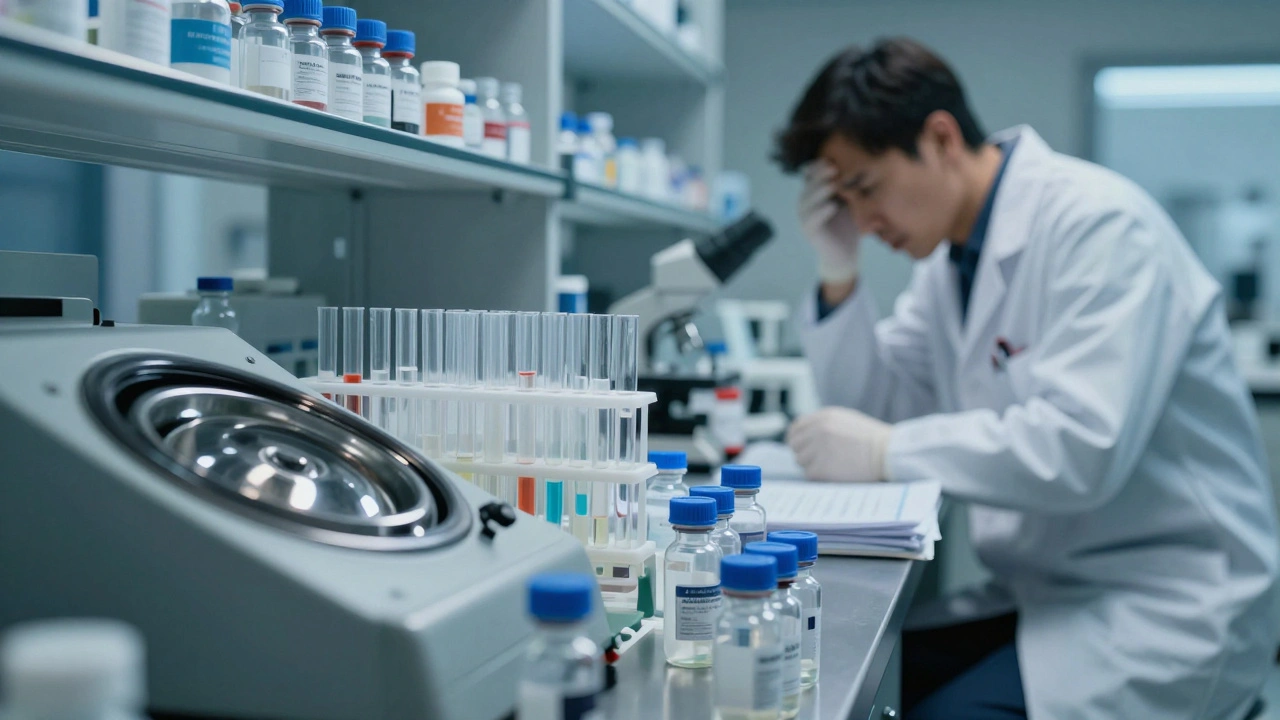
When a forensic lab falls behind, it isn't just a matter of messy desks or long to-do lists. A massive backlog in forensic toxicology is the accumulation of untested biological samples that delays criminal investigations, coroner reports, and legal proceedings. For a detective or a grieving family, a six-month wait for a toxicology report isn't just an inconvenience; it's a barrier to justice. The core problem is simple but brutal: the demand for testing is growing faster than the budgets and staffing levels required to meet it.
Why is this happening now? We're seeing a perfect storm of emerging synthetic drugs, complex polypharmacy (where people use multiple medications at once), and a surge in testing needs as various jurisdictions shift their legal stance on controlled substances. When every new sample is added to an already overflowing queue, the system reaches a breaking point. To fix this, labs have to move beyond simply "working harder" and instead implement systemic changes to their workflow and prioritization.
The Quick Win: Immediate Backlog Recovery
Getting out of a hole requires a different strategy than staying out of one. You cannot expect your permanent staff to clear a year-long backlog while still processing today's urgent cases; they'll either burn out or the new cases will just create a second backlog. The most effective approach is the creation of a parallel workflow.
Take a look at the National Health Laboratory Service (NHLS) in South Africa. They set a bold goal to cut their backlog by 50% by the end of the 2025/2026 financial year. They didn't just ask their current team to work more overtime. Instead, they treated the backlog as a separate project. This involved:
- Dedicated Hardware: Procuring high-output analytical instruments specifically for backlog samples so they don't clog the machines used for routine daily work.
- Targeted Staffing: Hiring technical professionals on fixed-term contracts whose only job is to clear the old cases.
- Physical Separation: In some locations, like Johannesburg, they actually acquired more lab space to build a dedicated backlog processing unit. This prevents the "new" and "old" workflows from bumping into each other.
Smart Prioritization: Who Gets Tested First?
Not all samples are created equal. If you treat every tube of blood with the same urgency, you're wasting resources. A smart prioritization framework allows labs to identify high-risk or high-impact cases and move them to the front of the line.
One way to handle this is by implementing a tiered system to predict toxicity and urgency. This prevents the lab from spending hours on a sample that likely contains nothing of interest while a critical overdose case sits in a freezer. A typical tiered approach looks like this:
| Tier | Approach | Action/Goal |
|---|---|---|
| Tier 0 | Chemical Characterization | Initial basic screening of the substance. |
| Tier 1 | Non-testing Methods | Using existing data and software to predict toxicity. |
| Tier 2 | Biological Assays | Using cell-based tests to determine the biological effect. |
| Tier 3 | In Vivo Testing | Traditional mammalian testing for definitive results. |
By categorizing samples into "high confidence of toxicity" or "inadequate data," labs can allocate their most expensive resources to the most critical cases first. Additionally, some labs reduce the load by screening out requests for cases that are unlikely to be prosecuted or allowing investigators to cancel requests for services that are no longer needed.
Upgrading the Tech Stack
You can't solve a 2026 problem with 2010 technology. The move toward high-throughput instruments is the single biggest lever for increasing capacity. Specifically, the shift toward single-injection assays is a game changer. In the past, a chemist might have had to extract and analyze different drug classes individually. Modern configurations allow for the detection of 100 to 2,000 different drugs in a single run, drastically reducing the manual labor involved per sample.
But hardware is only half the battle. Data management is where many labs stumble. Transitioning to a robust Laboratory Information Management System (LIMS), such as moving from legacy Labware systems to modern platforms like TrakCare, provides real-time visibility. When a manager can see exactly where a bottleneck is happening-whether it's at the extraction stage or the final review-they can shift personnel to fix the jam in real-time.
The Silent Killer: Equipment Downtime
Nothing kills a turnaround time (TAT) faster than a broken LC-MS (Liquid Chromatography-Mass Spectrometry) platform. When a primary instrument goes offline, the backlog doesn't just stop growing-it accelerates. Preventive maintenance isn't a luxury; it's a core part of the production line.
To keep the machines humming, labs should focus on these specific operational habits:
- Smarter Scheduling: Don't wait for a machine to fail. Schedule deep maintenance during known low-volume periods.
- Component Pre-emption: Replace pump seals and check valves *before* they fail. Monitor column performance and replace them systematically rather than waiting for a peak to flatten.
- Source Tuning: Regularly clean and tune the source of the LC-MS to maintain sensitivity and avoid re-running samples that failed due to poor signal.
- Rapid Response: Ensure your service contracts guarantee a phone response within an hour and a technician on-site with the most common replacement parts already in the van.
Long-Term Capacity Building
Short-term fixes like overtime and temporary staff are like putting a bandage on a wound. Long-term recovery requires a structural shift in how the lab operates. This involves a two-tier funding model. The first tier handles the immediate crisis (funding for overtime), while the second tier builds future capacity.
Building that capacity means investing in automation. Robotic systems for sample preparation remove the human element of fatigue and error, allowing the lab to run 24/7. It also means validating new, more efficient laboratory procedures that can process samples in half the time. When a lab validates a new method that reduces a 4-hour process to 2 hours, that's a permanent win for the entire justice system.
Why are toxicology backlogs increasing despite new technology?
The increase is primarily driven by the rise of new synthetic drugs (like fentanyl analogs) and polypharmacy, which make samples harder to analyze. Additionally, as more substances are legalized or regulated differently, the volume of required testing increases, often faster than labs can hire and train new staff.
How does a "parallel workflow" actually work?
A parallel workflow separates routine, new incoming cases from old backlog cases. By using dedicated instruments and separate staff for the backlog, the lab ensures that the effort to clear old cases doesn't slow down the processing of new ones, which would otherwise create a perpetual cycle of delays.
What is the impact of LIMS on turnaround time?
A modern Laboratory Information Management System (LIMS) eliminates manual data entry errors and provides managers with real-time dashboards. This allows them to identify exactly where samples are stalling and reallocate technicians to the bottlenecked area immediately.
Can prioritizing samples lead to legal challenges?
If done transparently and based on established criteria (like investigative urgency or public safety), prioritization is generally acceptable. However, labs must document their prioritization logic to ensure there is no bias and that all cases are eventually processed.
What is the most critical maintenance task for LC-MS systems?
Regular source cleaning and tuning are critical for maintaining sensitivity. Without this, the system may fail to detect low-concentration toxins, leading to false negatives or the need for costly and time-consuming re-analysis of samples.
Next Steps for Lab Managers
If you're currently staring at a mountain of untested samples, start by conducting a full technical assessment of your equipment. You can't optimize a workflow if your machines are running at 60% efficiency. Once the hardware is stable, map out your current turnaround time for each stage-from sample receipt to final report signing. You'll likely find that the delay isn't in the testing itself, but in the administrative "hand-offs."
For those in smaller jurisdictions, consider a mutual aid agreement with other labs in your system. If one lab is overwhelmed while another has a lull, shifting samples (or staff) can prevent a total system collapse. Finally, push for a transition to high-throughput, single-injection assays. The initial cost of the equipment is high, but the cost of a stalled legal system is much higher.