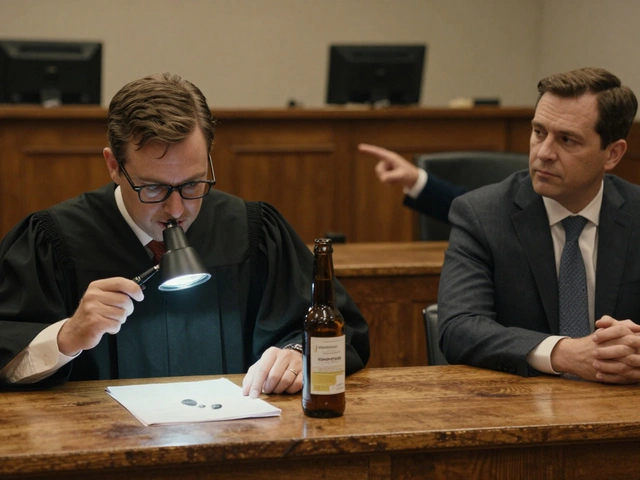
A wrongful conviction often starts before the jury ever steps into the courtroom. Sometimes, the damage is done by bad science, but other times, it’s caused by a defense team that failed to fight over the science. This gap between having proof of innocence and actually presenting it lies at the heart of ineffective assistance claims involving forensic mismanagement. If your attorney ignored key forensic tests, missed evidence, or let the prosecution mishandle samples without objection, the outcome of your life could depend on proving that mistake.
The legal system offers a way to correct these failures, but the path is narrow. Courts do not simply want to know that a mistake happened. They demand proof that the error was significant enough to change the verdict. Understanding the mechanics of these claims requires looking past general frustrations and focusing on specific legal thresholds. We need to examine exactly what constitutes “mismanagement,” who bears the burden of proof, and when the clock runs out on your right to appeal.
The Foundation: Understanding the Strickland Standard
Any claim arguing that your lawyer failed you relies on a Supreme Court ruling from 1984 called Strickland v. Washington. This is the foundational legal standard used to evaluate claims of ineffective assistance of counsel in criminal trials. Before we even talk about forensics, you must satisfy two distinct prongs of this test. It is rare to see a case succeed without meeting both.
First, the performance prong requires showing that your attorney’s actions fell below an objective standard of reasonableness. It isn’t enough to say the lawyer made a choice you disliked. The strategy has to be so unreasonable that no competent lawyer would have made it in that situation. For example, failing to request a crucial DNA test on a murder weapon found at a crime scene is not just a strategic preference; it is a glaring omission that likely breaches professional duty.
Second, the prejudice prong is often where these claims fail. You must prove there is a reasonable probability that, but for the attorney’s errors, the result of the proceeding would have been different. This doesn’t mean you definitely wouldn’t have been convicted. It means the outcome is unreliable. If the forensic evidence was the only thing linking you to the crime, and your lawyer never challenged its validity, that creates a strong argument for prejudice. If there were multiple eyewitnesses placing you at the scene, the court might argue the evidence was overwhelming regardless of the missing DNA test.
Defining Forensic Evidence Mismanagement
Mismanagement is a broad term, but in the context of ineffective assistance, it refers to specific, actionable failures regarding physical evidence. It is not enough to claim the lab was sloppy. You must show your lawyer knew, or should have known, about the sloppy work and failed to stop it.
Common scenarios include:
- Failure to Preserve Evidence: Destruction of biological samples before they could be re-tested by an independent lab.
- Chain of Custody Violations: Gaps in records tracking who held the evidence. If a lawyer does not object to a broken chain, they may be negligent.
- Inadequate Cross-Examination: Accepting expert testimony without questioning outdated methods (like older bite-mark analysis).
- Ignoring Requested Testing: Refusing to pursue exculpatory testing requested by the defense, contrary to the client’s instructions.
Each of these points represents a potential breakdown in the defense. For instance, consider Chain of Custody. This concept refers to the documented trail showing the seizure, custody, control, transfer, analysis, and disposition of physical evidence. A break in this chain raises questions about contamination. If your attorney did not cross-examine the evidence custodian about gaps in the log, a court may later view that silence as a strategic waiver. However, if the gap was glaringly obvious and the lawyer stayed silent, that is a viable claim.

Procedural Pathways: Timing Is Everything
Even if you have a rock-solid case of incompetence, the timing of your claim matters immensely. Legal systems distinguish between raising issues during the initial trial and bringing them up years later. Generally, claims regarding ineffective assistance are difficult to raise during the direct appeal because the record is limited to what happened inside the courtroom.
Usually, these claims belong in Post-Conviction Relief, a separate legal process designed to investigate facts outside the trial record. In many jurisdictions, such as Alabama, this involves filing a specific petition, often referred to as a Rule 32 petition. This distinction is vital because the timeline for filing differs significantly from standard appeals.
| Mechanism | Typical Filing Window | Evidence Scope |
|---|---|---|
| Direct Appeal | Closed after final judgment | Limited to trial transcript and exhibits |
| Post-Conviction Petition | Often one year from judgment | Allows affidavits, new expert reports, and outside records |
If you miss the window for a post-conviction petition, your ability to file another one is often restricted. Some states enforce a "one-opportunity" rule. Under this rule, if you filed a petition previously claiming your lawyer was bad, you cannot file a second petition later claiming the *same* type of errors. You must bring all arguments together initially. This puts immense pressure on defendants and their investigators to find every possible error before the statutory deadline expires.

Pleading Specificity: Avoiding the Vague Trap
Writing the petition itself is a minefield. You cannot simply assert, "My lawyer was lazy." The legal document must list specific failures with detail. If your claim rests on forensic mismanagement, you must identify exactly what test was ignored, who conducted the flawed analysis, and how that specific error prejudiced the jury.
This requirement exists to prevent fishing expeditions. Courts are wary of allowing unlimited litigation over past crimes. Therefore, a motion alleging ineffective assistance based on evidence outside the official trial record often needs verification. You might need sworn affidavits from former experts or copies of lab logs. Without this evidentiary support, the judge can dismiss the claim without ever holding a hearing. Simply stating that evidence was mismanaged without showing the mechanism of the mismanagement results in dismissal.
The Reality of Winning These Claims
You should approach these claims with realistic expectations. The success rate for ineffective assistance claims is notoriously low. Judges give significant deference to trial lawyers. The reasoning is that trial conditions are chaotic and difficult, and appellate judges sitting in a quiet office cannot easily second-guess split-second decisions made in the heat of trial.
To overcome this bias, the forensic element must be irrefutable. For example, if the prosecution claimed a certain tool mark matched your shoe, and your lawyer failed to introduce a counter-expert who proved the tool was yours, that might be a winnable angle. However, if your lawyer decided against calling an expert because they felt the defense strategy should focus on alibi witnesses instead, that sounds like a strategic choice. Strategic choices, even bad ones, are almost never grounds for overturning a conviction unless they are truly irrational.
Statistical data on these outcomes varies, but legal analysts consistently note that claims relying solely on "failure to investigate" face the highest hurdles. The court must agree that the investigation would have produced a result materially affecting the outcome. This hypothetical nature makes the evidence of prejudice speculative rather than concrete. To bolster your position, you need to demonstrate that the missing evidence was readily available and obviously relevant at the time of the trial.
What is the biggest hurdle in a forensic mismanagement claim?
The primary hurdle is the "prejudice" prong. Even if your lawyer made a mistake, you must convince the court that this mistake actually changed the outcome of the trial. Many claims fail because the remaining evidence against the defendant was sufficient to convict despite the forensic oversight.
Can I file an ineffective assistance claim on direct appeal?
It is generally very difficult. Direct appeals are usually limited to the trial record. Since ineffective assistance often requires investigating facts outside the courtroom (like what the lawyer discussed privately), these claims typically belong in a post-conviction proceeding.
Does a mistake by the lab count as ineffective assistance?
No. A lab error is a prosecutorial issue or a discovery violation, not automatically an attorney failure. To make it an ineffective assistance claim, you must prove your lawyer knew about the lab error and failed to raise it, thereby depriving you of a fair defense.
Is there a statute of limitations for these claims?
Yes, strict deadlines apply. In many states, you have one year from the date of the judgment or the end of direct appeal to file a post-conviction petition. Missing this deadline usually bars any future claim for relief based on the same grounds.
What kind of evidence proves my lawyer ignored forensic requests?
You need documentary evidence. Emails, correspondence with investigators, police reports showing availability of evidence, and transcripts of your communications with counsel can prove you requested testing that was never conducted.