
Not all criminals are the same. You might hear about two people who committed the same crime - say, a brutal assault - and assume they acted for the same reason. But that’s rarely true. One might have done it to dominate, another to feel alive, and a third just because they thought they could get away with it. Understanding offender motivation isn’t just academic; it’s what separates a guess from a profile, a dead end from a breakthrough.
Why Power and Control Aren’t Always the Main Goal
For decades, law enforcement and criminal profilers leaned heavily on the idea that violent offenders, especially sexual murderers, were driven by a need for power and control. It made sense: the crimes were intimate, prolonged, and often involved humiliation. But research from 2006 in the Journal of Forensic Sciences turned that assumption on its head. The study found that for serial sexual killers, power and control weren’t the end goal - they were tools. The real driver? Sadistic sexual gratification. These offenders didn’t kill to dominate. They killed because the act of domination, the slow unraveling of a victim’s fear, the physical control over life and death - all of it fed a deeply rooted sexual arousal. The power wasn’t the prize. It was the trigger. Anger, by contrast, didn’t play a big role. Why? Because anger shuts down sexual response. The physiology doesn’t line up. What you see in these cases isn’t rage. It’s cold, calculated pleasure tied directly to suffering.Thrill Seeking Changes Everything
Then there’s the thrill seeker. This isn’t someone who plans a crime for profit or revenge. This is the person who gets a rush from the risk itself. A 2013 study in Criminal Justice and Behavior followed 700 African-American youth over time and found something startling: self-control alone didn’t predict crime. You had to factor in thrill seeking. High self-control people rarely offend - that’s textbook. But here’s the twist: even people with low self-control didn’t always commit crimes. Only those who also scored high on thrill seeking did. Why? Because for them, the danger, the adrenaline, the near-miss with getting caught - that was the reward. The stolen wallet? Just a side effect. The real payoff was the heart-pounding moment they slipped past security, the split-second they knew they could get away with it. This breaks the old model. It’s not just about whether someone can control themselves. It’s about whether they even find crime exciting. Two people with the same poor impulse control might behave completely differently - one avoids crime because it’s boring, the other seeks it out because it’s the only thing that makes them feel alive.Gratification Is Personal
Gratification isn’t one-size-fits-all. For some, it’s money. For others, it’s the feeling of being feared. For a small but chilling subset, it’s the sensation of ending a life. The key is that the gratification must match the offender’s internal wiring. A burglar who breaks into homes for cash is motivated by material gain. A serial arsonist who lights fires in empty buildings might be chasing the spectacle - the sirens, the chaos, the attention. A sexual offender who leaves trophies - a shoe, a lock of hair - isn’t just collecting souvenirs. They’re preserving a piece of the experience, a tangible link to the moment they felt powerful, in control, or sexually aroused. This is why profiling works. When investigators find a pattern - say, victims are always posed in a certain way, or the crime scene is meticulously cleaned - they’re not just looking for clues. They’re reading a signature. That signature tells them what kind of gratification the offender was chasing. Was it sexual? Was it dominance? Was it the thrill of the hunt?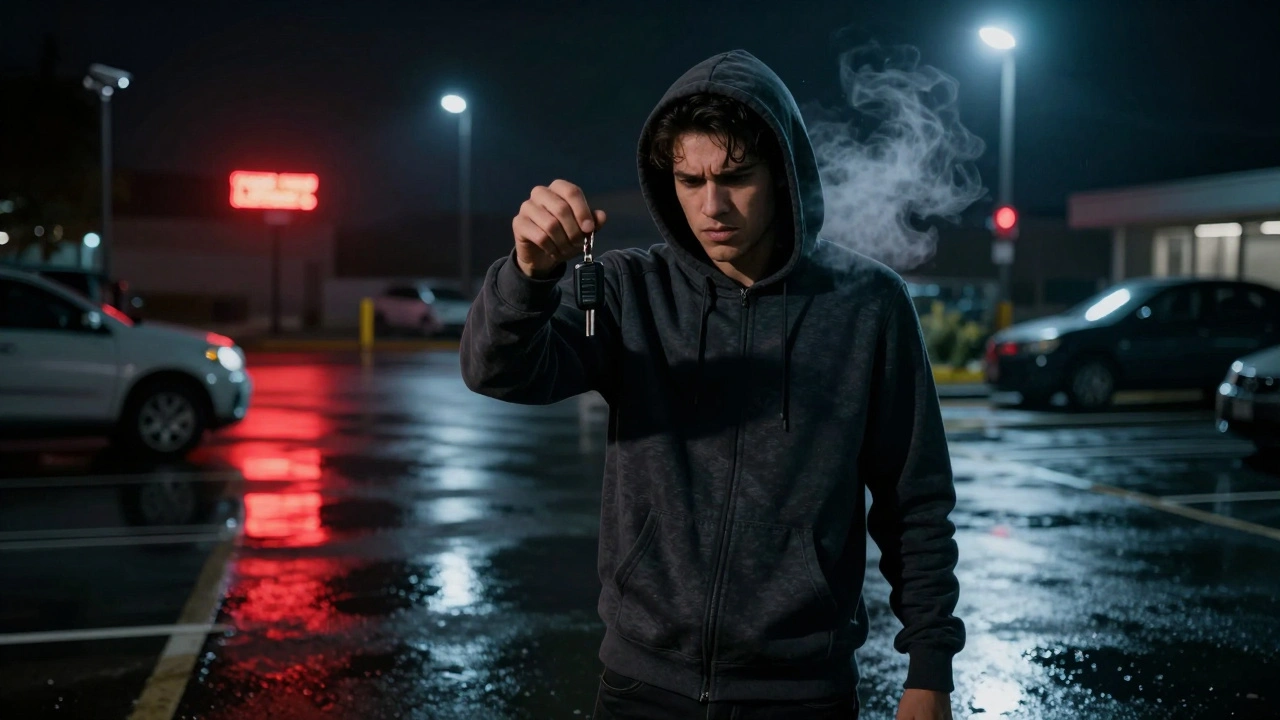
Power Dynamics Shape How We See Criminals
It’s not just about what drives the offender - it’s also about how society reacts. A 2020 study showed that when people perceive an offender as powerful - someone with status, influence, or physical presence - they respond with a stronger urge to punish, not just to retaliate, but to remove them from society entirely. The study found that powerful offenders triggered two things: stronger utilitarian punishment (lock them up, protect others) and stronger retributive punishment (they deserve to suffer). In contrast, powerless offenders - say, someone from a marginalized background - triggered more restorative motives. People were more likely to think, “They need help, not jail.” This matters for criminal profiling because it shows how bias creeps in. A CEO who embezzles millions might be seen as a cold, calculating predator. A teenager stealing food might be seen as a product of bad circumstances. But both are motivated by need - one for control, the other for survival. The difference isn’t in the crime. It’s in the power the offender holds.Personality Is the Blueprint
Locus of control - whether someone believes they control their fate or that life happens to them - plays a huge role. Offenders with an external locus of control often blame society, their upbringing, or bad luck. They’re harder to rehabilitate because they don’t see themselves as responsible. Those with an internal locus believe they chose their path. They might be more likely to change, because they know they can choose again. Life goals matter too. Someone who wants wealth and status might commit fraud to climb the ladder. Someone who wants to feel significant might commit a violent crime to leave a mark. The same outcome - a crime - but completely different internal maps. And here’s the reality: most offenders don’t fit neatly into one box. A serial rapist might be driven by sexual gratification, but also by a need to control, and maybe even a thrill from the chase. The difference is which motive is primary. That’s what profiling tries to uncover.
What This Means for Investigations
If you’re trying to catch someone, you need to ask: What did they get out of this? Not what they wanted - what they needed. The difference is subtle but critical. - Did they take something personal? → Likely sexual or emotional gratification. - Did they leave the scene untouched? → Possibly a need for control, not chaos. - Did they return to the scene? → Likely a craving for re-experiencing the moment. - Did they talk about the crime to others? → Maybe they needed recognition, not just the act. Modern profiling doesn’t just look at behavior. It looks at the psychological reward. A thief who steals cars might be a thrill seeker. One who steals classic cars might be chasing status. One who steals only luxury sedans from wealthy neighborhoods might be driven by resentment. Understanding these layers turns a random act into a pattern. And patterns are what catch criminals.Why This Matters Beyond the Crime Scene
This isn’t just about catching killers or rapists. It’s about how we treat offenders after they’re caught. If you think someone is motivated by power, you treat them differently than if you think they’re motivated by thrill. Rehabilitation programs fail when they assume all offenders want the same thing. Someone who craves control needs therapy that rebuilds autonomy - not just compliance. Someone driven by thrill needs outlets that satisfy that need safely - maybe extreme sports, creative risk-taking, competitive environments. Someone seeking sexual gratification through violence needs deep, long-term therapeutic intervention, often involving cognitive restructuring and trauma work. The system still treats offenders as a monolith. But science says otherwise. There are no universal motives. Only individual ones.Final Takeaway
Offender motivation isn’t about what they did. It’s about why they felt they had to do it. Power, control, and gratification aren’t interchangeable. They’re layers. And the key to understanding any offender is figuring out which layer matters most to them. It’s not about the crime. It’s about the feeling.Are all violent offenders motivated by power and control?
No. While power and control are common in violent crimes, especially sexual homicides, research shows they often serve as tools to achieve deeper gratification - like sexual arousal or sadistic pleasure. Some offenders are driven by thrill, others by revenge, material gain, or a need to feel significant. The motive varies by personality, not just the crime.
Can someone with high self-control still commit crimes?
Yes - if they’re high in thrill seeking. A 2013 study found that self-control alone doesn’t predict crime. People with low self-control who aren’t thrill seekers rarely offend. But those with low self-control AND high thrill seeking are far more likely to commit crimes because they enjoy the risk and excitement, not just the outcome.
Why is sadistic gratification more important than anger in sexual homicides?
Anger inhibits sexual arousal. Research shows that serial sexual murderers don’t act out of rage - they act to heighten sexual pleasure through domination and suffering. The victim’s pain isn’t punishment; it’s stimulation. Anger might be present, but it’s not the driver. Sadistic pleasure is.
How do investigators use offender motivation in profiling?
They look for patterns in behavior that reveal the offender’s psychological reward. Did they take trophies? That suggests emotional or sexual attachment. Did they return to the scene? That indicates a need to relive the experience. Did they leave the scene clean? That points to control, not chaos. These clues help build a psychological profile - not just a physical one.
Does an offender’s social status affect how they’re treated by law enforcement?
Yes - not in how they’re caught, but in how the system responds. Studies show that powerful offenders - those seen as influential or threatening - trigger stronger demands for incapacitation and punishment. Less powerful offenders are more likely to be seen as products of circumstance. This bias can influence sentencing, media portrayal, and even investigative focus.