Getting a suspect to tell the truth isn't about shouting or slamming fists on a table. In the world of high-stakes investigations, especially homicide cases, the goal is to gather accurate, admissible information without compromising the legal integrity of the case. The real challenge isn't just getting a confession-it's ensuring that the confession is true and wasn't coerced. Today, the field is shifting away from high-pressure tactics toward psychological strategies that build trust and leverage evidence strategically.
The Core Framework: Interviewing vs. Interrogation
Before stepping into the room, it's vital to understand that not every conversation with a subject is an interrogation. There is a massive difference between an interview and an interrogation in terms of goal and legal standing. Interviewing is the initial contact with possible suspects to gather a general account of events. It's usually non-accusatory and focused on broad data collection.
Questioning happens when there are reasonable grounds to suspect someone, but the investigator is still refining the facts. Finally, Interrogation is a focused, often accusatory process used when a suspect is established, and the primary goal is to secure a confession or specific incriminating details.
For those following modern investigative training, the suspect interrogation process usually follows a four-phase model:
- Preparation: This is the homework phase. Investigators review every piece of evidence, set clear objectives, and write a detailed plan. You don't walk in blindly; you know exactly what gaps in the story you need the suspect to fill.
- Engagement: The goal here is to set expectations. The investigator explains why they are there and encourages the suspect to provide a detailed narrative.
- Account and Clarification: This is where the heavy lifting happens. The investigator listens and asks for details, using close-ended questions only when they need to pin down a specific inconsistency.
- Closure: The wrap-up. The investigator asks if the suspect has anything else to add and explains the next steps of the process.
A golden rule in these phases? The 80/20 split. The suspect should be talking 80% of the time, while the investigator speaks only 20%. If the detective is doing all the talking, they aren't gathering information; they're just lecturing.
Psychological Techniques for Eliciting Truth
Different suspects require different keys to unlock the truth. While some might crack under pressure, others shut down. This is why investigators use a variety of specialized methodologies.
The Reid Technique is a historically dominant US interrogation method that uses a multi-stage process to move from non-confrontational questioning to a direct accusation. It relies heavily on behavioral cues to detect deception and uses maximization (exaggerating the severity of evidence) and minimization (offering moral excuses for the crime) to encourage a confession. While effective for guilty suspects who are already convinced they're caught, it carries a higher risk of producing false confessions, particularly among juveniles or people with intellectual disabilities.
Contrast that with Motivational Interviewing (MI). This is a collaborative, rapport-based approach. Instead of fighting the suspect, the investigator helps them find their own internal motivation to be honest. A 2023 study on terrorist suspects showed that MI gathered significantly more actionable intelligence than confrontational methods because it reduced subject resistance.
Then there is the Scharff Technique, often called the "friendly" method. Instead of pressuring the suspect, the investigator creates an illusion that they already know everything. By subtly confirming facts and ignoring new, irrelevant information, the suspect often lets their guard down and volunteers details they thought the police didn't have.
| Method | Core Approach | Best For... | Primary Risk |
|---|---|---|---|
| Reid Technique | Accusatory/Psychological Pressure | Culpability already established | False confessions |
| Motivational Interviewing | Collaborative/Empathetic | Resistant or emotionally dysregulated subjects | Time-intensive |
| Scharff Technique | Informational/Illusion of Knowledge | High-value targets/Intelligence gathering | Requires high skill to maintain illusion |
| SUE | Strategic Evidence Disclosure | Detecting deception in narratives | Premature evidence leak |
The Strategic Use of Evidence (SUE)
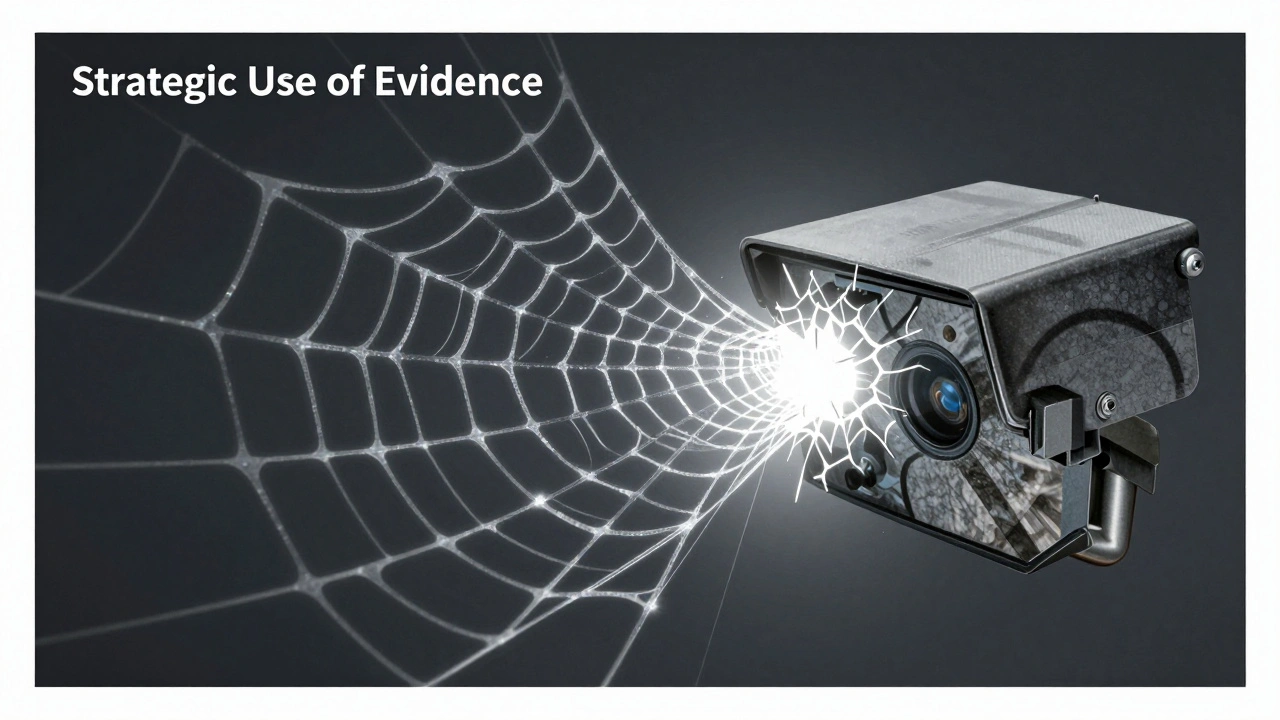
Strategic Use of Evidence (SUE) is a technique where investigators elicit a full narrative from the suspect before revealing known evidence that contradicts that narrative.
The brilliance of SUE is that it traps the suspect in their own lie. If a suspect says they were at home all night, and the investigator then reveals a surveillance photo of them at the crime scene, the suspect's credibility is destroyed. Interestingly, research shows that just letting a suspect know that evidence *might* exist can increase confession rates even before the evidence is actually shown.
When presenting evidence, timing is everything. Investigators don't dump all their cards on the table at once. They reveal pieces of evidence in a specific sequence to encourage the suspect to expand their story and eventually admit the truth.
Environmental Control and the Psychology of Space
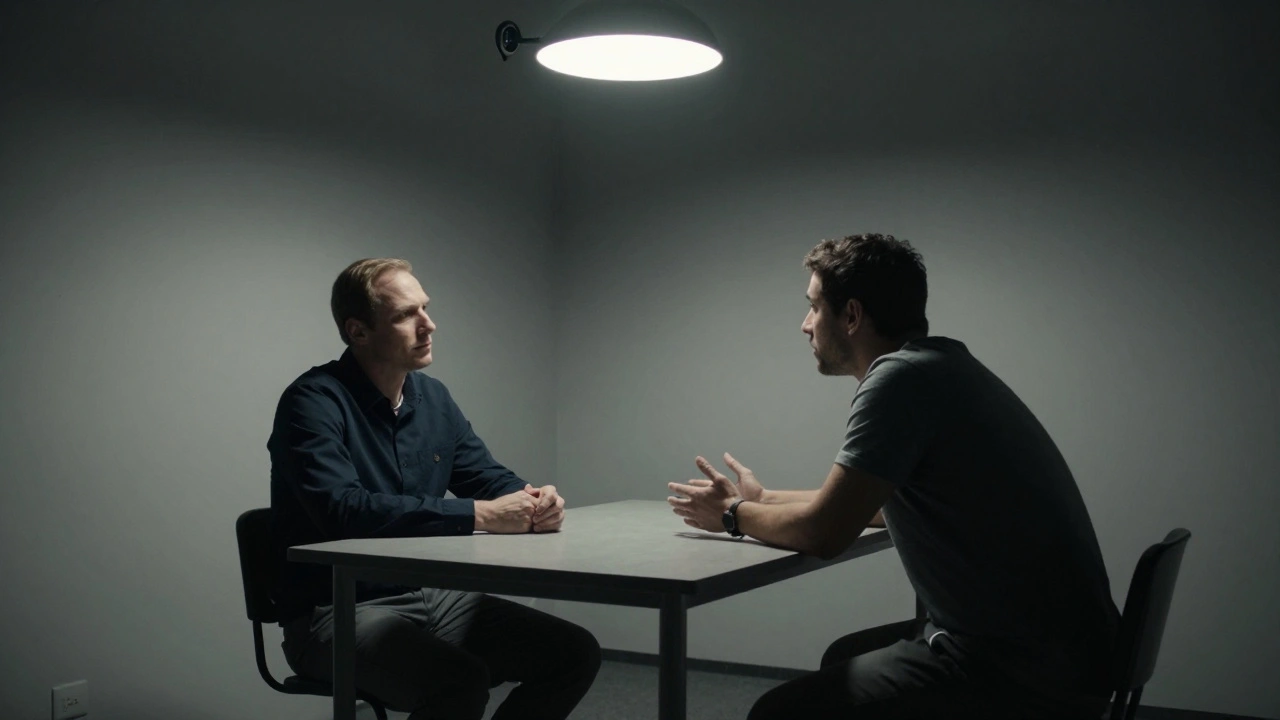
The room where the interrogation happens isn't just a place to sit; it's a tool. Context manipulation involves adjusting the physical setting to influence the suspect's mental state. A windowless room without posters or distractions ensures the suspect remains focused entirely on the investigator.
Beyond the walls, the investigator's appearance and tone set the stage. Building rapport-finding common ground through innocuous, non-threatening conversation-creates a trust framework. Once a suspect identifies with the investigator, they are more likely to seek a sense of absolution through confession.
Crucially, every single interaction must be recorded. A documented confession is one of the strongest pieces of evidence in a courtroom. Without a recording, the defense can easily argue that the statement was coerced or manipulated.
Avoiding the Trap of False Confessions
One of the most dangerous outcomes of a poorly handled interrogation is the false confession. Investigators must be able to distinguish between three types of false confessors:
- Compliant False Confessors: These people confess just to end the stress of custody or because they think they'll get a better deal. They don't actually believe they are guilty.
- Coerced-Compliant False Confessors: These individuals give in under extreme interrogation pressure. They might start to doubt their own memory or simply want the pressure to stop.
- Non-Coerced Confessors: These are the rarest and most complex. They confess based on delusional beliefs or genuine memory distortion, believing they committed a crime they actually didn't.
To prevent these outcomes, modern training emphasizes the Investigative Interviewing model, which aligns with UNODC (United Nations Office on Drugs and Crime) standards. This model prioritizes accurate memory retrieval and veracity assessment over simply extracting a confession.
Practical Steps for an Effective Interrogation Plan
Success in the room starts long before the suspect enters. A professional interrogation plan must include these five elements:
- Evidence Audit: A full review of all forensic, digital, and testimonial evidence.
- Objective Setting: Defining exactly what needs to be admitted (e.g., the location of the murder weapon, the entry point of the building).
- Subject Profiling: Understanding the suspect's mental state, education level, and potential motivations for lying.
- Strategy Selection: Deciding whether to use a rapport-based approach (like MI) or a more direct approach (like the Reid Technique).
- Question Sequencing: Mapping out the flow from open-ended narratives to specific, corroborating questions.
When moving toward a confession, investigators often use "presupposition questions." Instead of asking "Did you do it?", they might ask, "Was this the first time you did something like this, or has it happened before?" This phrasing presupposes involvement and pushes the suspect to discuss the frequency or nature of the act rather than whether it happened at all.
Can investigators lie to suspects about evidence?
In some jurisdictions, investigators can use deceptive tactics to elicit a confession, such as claiming they have fingerprints when they don't. However, manufacturing fake evidence or lying to suspects who genuinely claim a lack of memory is increasingly viewed as a prohibited practice because it drastically increases the risk of false confessions and can jeopardize the legal validity of the statement.
What is the difference between maximization and minimization?
Maximization involves amplifying the perceived seriousness of the crime or the strength of the evidence to make the suspect feel hopeless. Minimization is the opposite; it provides the suspect with a moral or psychological justification (e.g., "you only did it because you were protecting your family") to make confession feel like the "right" or easier path.
Why is the 80/20 rule important in interviewing?
When an investigator talks too much, they inadvertently lead the suspect or feed them information they shouldn't have. By letting the suspect talk 80% of the time, the investigator can observe inconsistencies, gather a natural narrative, and identify details that the suspect doesn't realize are important, which can later be used to prove a lie.
How does the SUE technique detect lying?
SUE works by letting a suspect commit to a story first. If a suspect lies, they have to create a fictional narrative. When the investigator later reveals a piece of evidence that contradicts a specific part of that story, the suspect must either change their story (revealing the lie) or try to explain away the evidence, which is often difficult to do convincingly.
Are rapport-based techniques actually more effective than the Reid Technique?
Research generally shows that rapport-based, collaborative techniques result in more true confessions and significantly fewer false ones. While the Reid Technique can be fast and effective for certain types of suspects, rapport-based methods provide higher-quality information and are more legally robust in court.