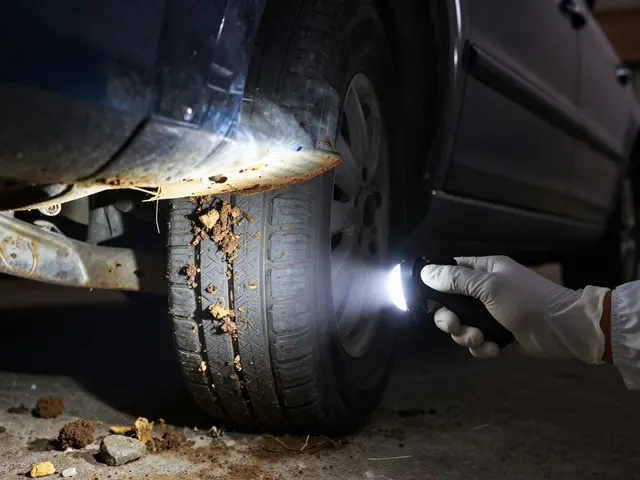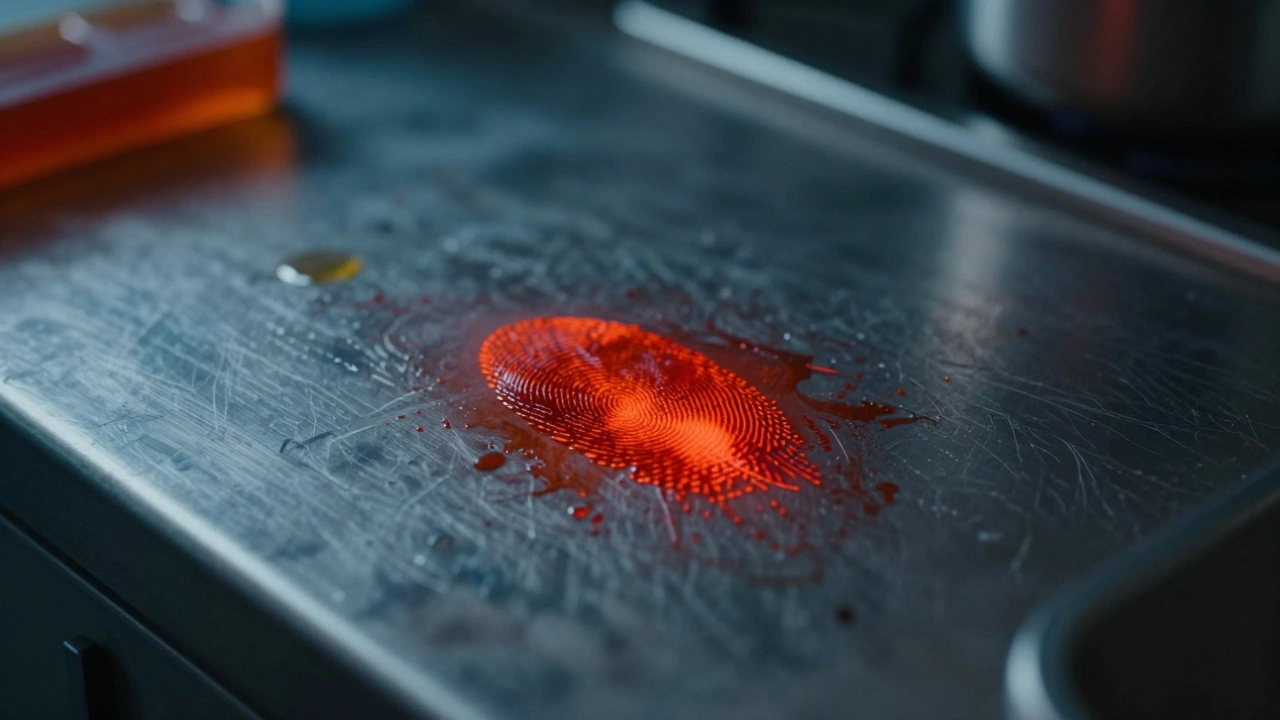
Imagine a crime scene where the only evidence is a smudge on a greasy kitchen counter or a beer bottle left behind at a party. Traditional fingerprint powders often fail here, sliding off slick surfaces or getting lost in background noise. That’s where Oil Red O, also known as Solvent Red 27 or C.I. 26125 steps in. This lipophilic azo dye doesn’t just sit on top of a surface; it hunts down fats. By binding specifically to the lipid components in human sweat and sebaceous secretions, Oil Red O turns invisible latent prints into stark red-orange outlines, even when those prints are buried under grease, food residue, or ethanol contamination.
You might wonder why we need another chemical reagent when we already have ninhydrin or cyanoacrylate fuming. The answer lies in specificity. Most standard reagents target amino acids or proteins found in eccrine sweat. But when a surface is contaminated with organic substances like cooking oil, butter, or alcohol, those traditional methods can produce messy, unreadable results due to background interference. Oil Red O ignores proteins and water-soluble compounds. It goes straight for the fat. This makes it an indispensable tool for forensic examiners dealing with non-porous surfaces that have been compromised by everyday household contaminants.
How Oil Red O Works: The Chemistry of Fat Detection
To understand why this technique works, you have to look at the molecular structure of the dye. Oil Red O is a lipophilic compound, meaning it loves fat. When applied to a surface, the dye molecules seek out hydrophobic (water-repelling) areas. Human fingerprints aren't just water; they contain sebum from our skin's sebaceous glands, which is rich in triglycerides, wax esters, and squalene. These lipids create a unique ridge pattern that transfers onto objects we touch.
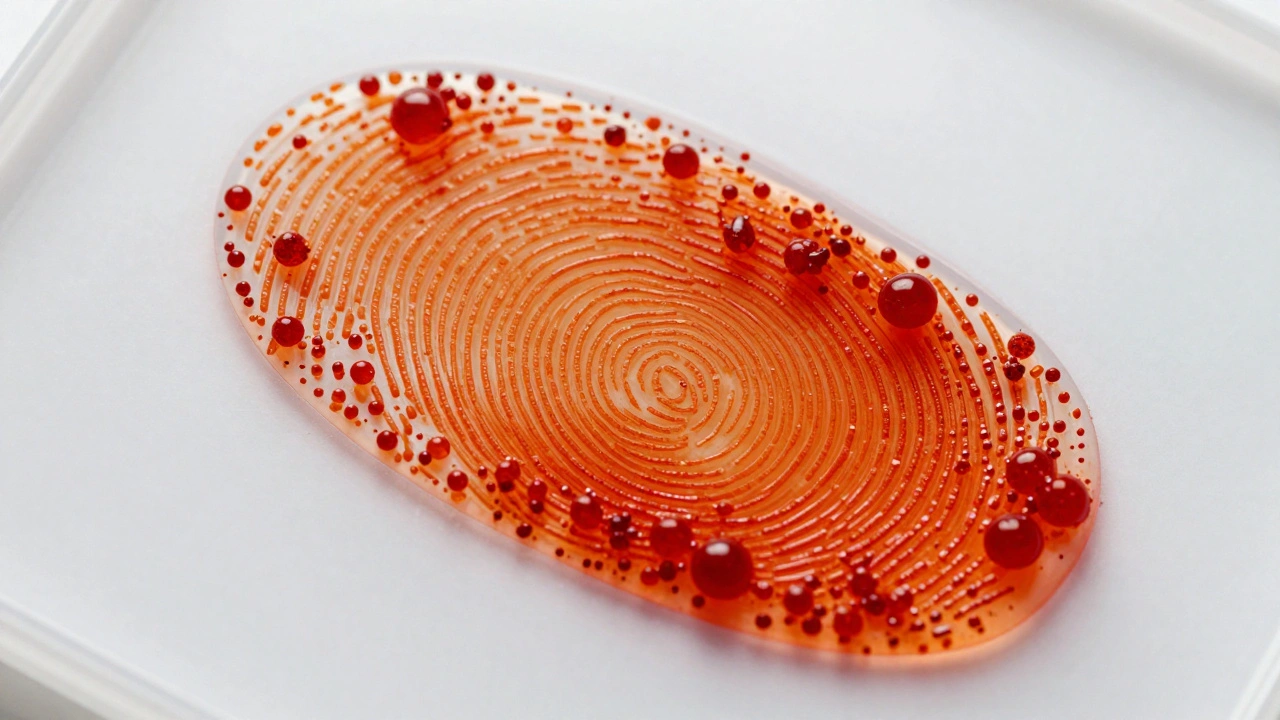
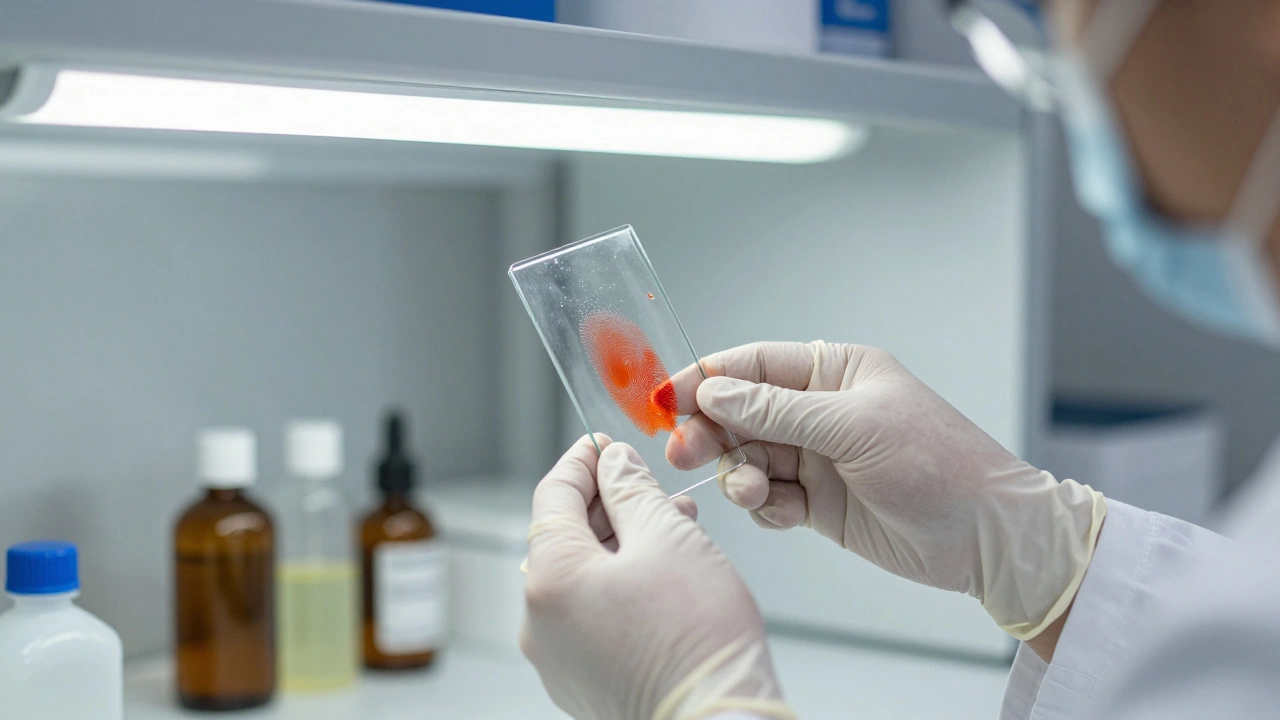
The mechanism is straightforward but effective. You prepare a solution of Oil Red O in a solvent, typically acetone or ethanol. When you apply this solution to a suspect item, the dye penetrates the lipid layers of the fingerprint. Non-lipid areas-like the clean parts of a glass window or a plastic wrapper-repel the dye or allow it to be rinsed away easily. The result? A high-contrast image where the fingerprint ridges appear bright red or orange-red against a clear background. This selectivity is crucial. If you used a general stain, you might end up coloring the entire greasy surface, obscuring the very details you need to identify a suspect.
This chemical affinity explains why Oil Red O is particularly useful on surfaces that would otherwise be considered "difficult." Think about a stainless steel refrigerator door wiped down with a lemon-scented cleaner containing oils, or a vinyl wallet covered in hand lotion. In these scenarios, the background itself contains lipids. However, because the fingerprint lipids are often more concentrated or chemically distinct in their distribution, Oil Red O can still differentiate the ridge detail from the ambient contamination, provided the application protocol is precise.
When to Use Oil Red O: Surface Types and Contamination Scenarios
Not every case calls for Oil Red O. Forensic practitioners must assess the surface type and the nature of the contamination before selecting a development sequence. The primary use cases fall into two categories: porous surfaces with specific ethanol contamination and non-porous surfaces with heavy grease or foodstuff residue.
| Reagent | Target Component | Best Surface Type | Limitations with Contaminants |
|---|---|---|---|
| Ninhydrin | Amino Acids | Porous (Paper, Cardboard) | Fails on non-porous; interfered by heavy grease | Cyanoacrylate (Superglue) | Moisture/Ions | Non-Porous (Glass, Plastic) | Background smoke can obscure prints on dirty surfaces |
| Oil Red O | Lipids/Fats | Non-Porous & Porous (with conditions) | Ineffective if no lipids present; sensitive to ethanol concentration |
| DFO | Amino Acids | Porous | Short shelf-life; less effective on heavily soiled paper |
For non-porous surfaces, such as glazed ceramics, polished metals, or plastics, Oil Red O shines when the item has been handled in environments with significant lipid presence. Consider a restaurant setting where a suspect handles menus or utensils greasy with food residue. Or think about automotive forensics, where fingerprints might be found on dashboard controls coated in silicone-based protectants or accumulated engine grease. In these instances, traditional powder dusting might adhere to the dirt rather than the print, creating a mess. Oil Red O cuts through that clutter by targeting the biological lipids directly.
On porous surfaces, the rules change slightly. Research published in the Korea Science journal highlights a critical threshold: ethanol concentration. If a piece of paper or cardboard has been contaminated with an ethanol solution, Oil Red O is recommended only if the ethanol concentration is less than 75% (v/v). Why does this number matter? Higher concentrations of ethanol can strip away the lipid components of the fingerprint before the dye has a chance to bind, or alter the solubility dynamics of the dye itself, leading to poor contrast. If you’re examining a document spilled with vodka or high-proof spirits, you might need to switch tactics. But for lower-alcohol spills, like wine or beer stains on a napkin, Oil Red O becomes your best bet.
Application Protocol: From Preparation to Documentation
Getting good results requires precision. You can’t just splash the dye on and hope for the best. The standard procedure involves preparing a working solution. Typically, forensic labs dissolve Oil Red O crystals in acetone or ethanol. The exact concentration varies by laboratory protocol, but it usually ranges between 0.1% and 0.5%. Using too much dye leads to background staining, while too little results in faint, hard-to-see prints.
- Preparation: Dissolve the Oil Red O crystals in the chosen solvent. Shake thoroughly until fully dissolved. Store in amber bottles to prevent light degradation.
- Application: Apply the solution using a spray bottle, a brush, or by immersion. For large items like car doors, spraying is efficient. For small evidence like a key or a coin, immersion ensures complete coverage.
- Reaction Time: Allow the dye to interact with the lipids. This usually takes anywhere from 30 seconds to a few minutes, depending on the age of the print and the amount of lipid present.
- Rinsing: This is the most critical step. Rinse the surface gently with the same solvent used for preparation (e.g., pure acetone or ethanol). This removes excess dye from non-lipid areas, leaving only the stained fingerprint ridges.
- Drying: Let the item air dry completely before handling further.
Once developed, documentation is key. Because the dye produces a red-orange color, you need proper lighting to capture the ridge detail. White LED lights work well, but oblique lighting (shining light at a low angle across the surface) helps highlight the three-dimensional texture of the ridges, especially on non-porous surfaces. Always include a scale in your photographs and maintain strict chain-of-custody records. Remember, once you treat an item with Oil Red O, you’ve altered its chemical state. You generally cannot go back and try other chemical methods like ninhydrin on the same spot without risking cross-contamination or interference.
Advantages and Limitations Compared to Traditional Methods
So, why not use Oil Red O for everything? It’s not a silver bullet. Its greatest strength-specificity for lipids-is also its greatest weakness. If a fingerprint was deposited primarily through eccrine sweat (which is mostly water and salts with minimal oil), Oil Red O will likely miss it entirely. This is common on items handled briefly with clean, dry hands. In those cases, cyanoacrylate fuming or small particle reagent would be superior.
Another limitation is sensitivity. While modern formulations are quite potent, Oil Red O may struggle with very old prints where the lipid components have oxidized or degraded over time. Unlike ninhydrin, which can develop prints months after deposition on porous materials, lipid-based stains tend to be more time-sensitive. Additionally, the red coloration can sometimes make digital enhancement tricky if the background isn’t perfectly cleared during the rinsing stage. Examiners need experience in distinguishing true ridge detail from random background staining caused by uneven grease distribution.
However, compared to vacuum metal deposition (VMD), which is highly sensitive but expensive and requires specialized equipment, Oil Red O is cost-effective and accessible. Any forensic lab with basic chemical supplies can implement it. It bridges the gap between simple physical methods like powdering and complex instrumental techniques. For mid-level contamination scenarios, it offers a reliable, reproducible result without the overhead of high-tech machinery.
Safety and Handling Precautions
Working with dyes and solvents demands respect for safety protocols. Oil Red O itself is a solid powder, but once dissolved in acetone or ethanol, you’re dealing with flammable vapors and potential skin irritants. Always work in a fume hood or a well-ventilated area. Wear nitrile gloves to protect your skin from both the dye and the solvents, and use safety goggles to prevent splashes in your eyes. Acetone, in particular, can dry out skin rapidly and cause irritation with repeated exposure.
Disposal of waste solutions must follow local hazardous material regulations. You can’t just pour leftover dye-soaked acetone down the sink. Collect all rinse water and unused solution in designated hazardous waste containers. Proper labeling and documentation of chemical usage are part of maintaining a professional and compliant forensic laboratory environment.
The Future of Lipid-Based Visualization
As forensic science evolves, so do our tools. Oil Red O is currently seen as a specialized, emerging technique rather than a universal standard. Laboratories are increasingly adding it to their repertoire as research validates its efficacy in niche scenarios. Future developments may focus on optimizing solvent systems to reduce environmental impact or enhancing the dye’s stability for longer-term storage. There is also ongoing interest in combining Oil Red O with fluorescent tags, allowing for even greater contrast under laser illumination, though this remains largely experimental.
For now, Oil Red O stands as a testament to the power of targeted chemistry in criminal investigation. It reminds us that solving crimes isn’t just about finding evidence; it’s about knowing exactly how to reveal what’s already there, hidden in plain sight beneath layers of grease, grime, and everyday life.
What is Oil Red O used for in forensics?
Oil Red O is used to visualize latent fingerprints that are contaminated with lipids, grease, or foodstuffs. It binds specifically to fat components in human skin secretions, making it ideal for developing prints on non-porous surfaces like glass or plastic that have been handled in greasy environments.
Can Oil Red O be used on paper?
Yes, but with caution. It is effective on porous surfaces like paper only if they are contaminated with ethanol solutions of less than 75% (v/v). Higher ethanol concentrations can interfere with the dye's ability to bind to lipids, rendering the technique ineffective.
How does Oil Red O differ from Ninhydrin?
Ninhydrin targets amino acids found in sweat, making it excellent for clean porous surfaces like paper. Oil Red O targets lipids (fats), making it better suited for non-porous surfaces contaminated with grease or oil where protein-based reagents might fail due to background interference.
Is Oil Red O safe to handle?
While the dye itself is relatively stable, it is typically dissolved in flammable solvents like acetone or ethanol. Practitioners should wear gloves and eye protection and work in a ventilated area to avoid inhaling vapors or causing skin irritation. Waste must be disposed of as hazardous material.
What color do fingerprints appear after treatment with Oil Red O?
Fingerprints developed with Oil Red O typically appear in shades of red or orange-red. This high-contrast color allows for clear visualization of ridge detail against lighter backgrounds, facilitating photography and subsequent analysis.
Does Oil Red O work on old fingerprints?
Its effectiveness decreases with age. As lipid components oxidize and degrade over time, there is less material for the dye to bind to. It is most effective on relatively fresh prints, though success depends heavily on environmental conditions and the initial quantity of sebum deposited.