Every year, thousands of people accidentally take the wrong pill. Sometimes it’s a mix-up at home. Other times, it’s a pill found in a purse, a drawer, or a child’s pocket. And sometimes, it’s a counterfeit drug sold online or in a foreign country. The difference between a life-saving medication and a dangerous mistake often comes down to one thing: pill identification.
Why Pill Identification Matters
Pills and tablets aren’t just medicine-they’re coded. The U.S. Food and Drug Administration (FDA) requires every prescription and over-the-counter medication to have a unique imprint, color, and shape. No two different drugs can legally have the same combination. This isn’t just bureaucracy. It’s a safety system designed to stop errors before they happen.But here’s the problem: not everyone knows how to read these codes. A blue oval pill might look harmless. But if it’s unmarked, or if the imprint is worn off, you’re guessing. And guessing with medication can kill. The World Health Organization estimates that counterfeit drugs contribute to over 1 million deaths worldwide each year. Most of those deaths happen because someone took a pill they couldn’t identify.
The Five Key Characteristics of a Pill
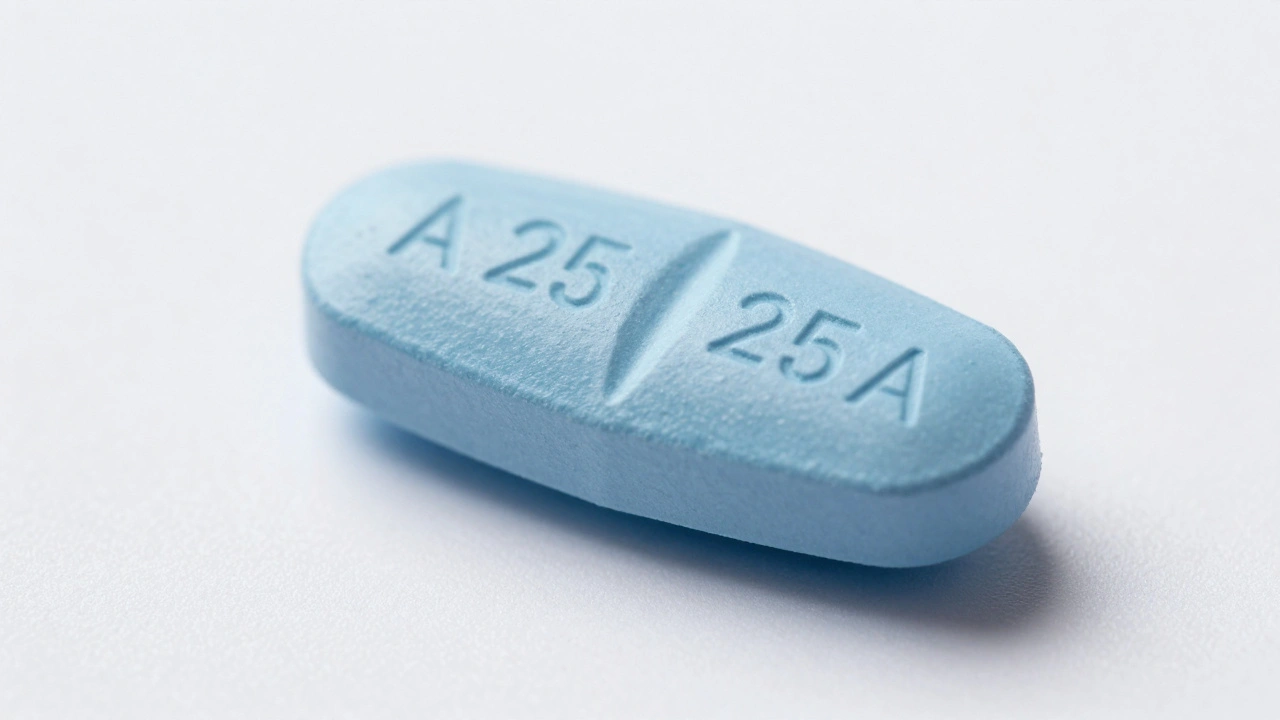
To identify a pill correctly, you need to look at five things. Not one. Not two. All five.- Imprint code: This is the most important part. It’s the letters, numbers, or logo stamped on the pill. It might be on one side or both. If it’s on both, write down what’s on each side. For example: "A 25" on top, "25 A" on bottom. Don’t guess. Write it exactly as it appears.
- Shape: Pills come in more shapes than most people realize. Round, oval, and oblong are common. But you’ll also find triangle, square, diamond, pentagon, and hexagon. A pill shaped like a diamond isn’t just unusual-it’s a clue.
- Color: White, yellow, blue, red, green, pink, clear, brown. Some pills are solid. Others have speckles, stripes, or two-tone designs. Don’t trust your memory of color. Lighting changes everything. A pill that looks blue under a lamp might look gray in sunlight.
- Form: Is it a tablet? A capsule? A caplet? Tablets are flat and solid. Capsules are cylindrical and often two-piece. Caplets are oval with a smooth coating. The form can help narrow down options, especially if the imprint is faded.
- Score lines: These are the grooves you see on some pills. A single line down the middle means it’s meant to be split. A crosshatch means it can be divided into quarters. Some pills have partial lines-only half a score. These details matter. A pill with no score can’t be safely split. One with a deep score might be designed for precise dosing.
These five traits work together. Two pills might both be blue and round. But if one has "V 25" and the other has "25 V", they’re completely different drugs. One could be a blood pressure pill. The other, a sedative. Mixing them up could be deadly.
How Online Pill Identifiers Work
There are three main tools used by pharmacists, poison control centers, and everyday people: WebMD Pill Identifier, Drugs.com Pill Identifier, and Pillbox from the National Library of Medicine. Each works the same way: you enter the imprint, select the color and shape, and the tool returns possible matches.Here’s how to use them right:
- Take a clear photo of the pill under natural light. Avoid shadows.
- Write down the imprint exactly. Include spaces, hyphens, or dots. "25-25" is not the same as "2525".
- Use the drop-down menus for color and shape. Don’t pick "blue" if it’s more of a teal. Pick "light blue" or "turquoise" if available.
- If the pill has an imprint on both sides, use the symbol "*" to separate them. For example: "A * B" means "A" on one side, "B" on the other.
- Check at least two databases. One tool might be outdated. Another might have a newer version of the drug.
Drugs.com’s tool lets you click on actual images of pills to compare. If you see three possible matches, look at the side-by-side photos. One might have a slightly different shape. Another might have a different score line. That’s your answer.

Why Color Alone Is a Trap
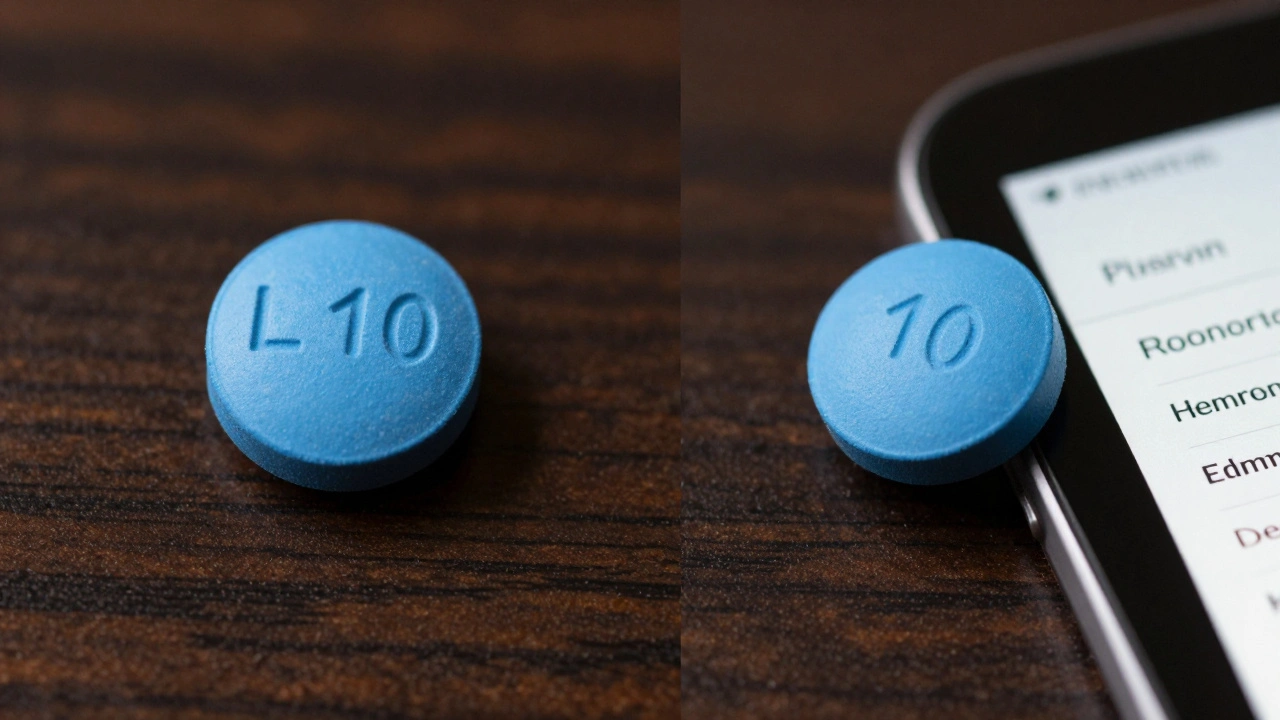
Many people assume color tells the whole story. It doesn’t. A generic version of the same drug can look completely different depending on the manufacturer.Take lisinopril, a common blood pressure pill. One brand might make it a small white oval with "10" stamped on it. Another brand makes it a large blue round tablet with "L 10". Same active ingredient. Same dose. Different look. If you switch brands without checking, you might think you’re taking something new. Or worse-you might think the new pill is fake.
Even the same manufacturer can change colors. A pill that was blue last year might be white this year. That’s because of dye shortages, regulatory changes, or cost-cutting. If you rely on color, you’ll be wrong half the time.
What to Do When the Imprint Is Faded or Missing
Sometimes, pills get worn down. Maybe they’ve been in a purse for months. Maybe they were dropped. Maybe they’re counterfeit.Here’s what to do:
- Don’t take it. Not even one.
- Call your local pharmacy. Most offer free pill identification services. Pharmacists have access to databases with over 24,000 medications-including ones not listed online.
- Use a UV light or magnifying glass. Some imprints are faint but visible under blacklight.
- Call the Poison Control Center at 1-800-222-1222. They have specialists trained to identify pills by description.
- Take the pill to your doctor. They can send it to a lab for chemical analysis if needed.
Counterfeit pills are a growing problem. Fentanyl, a powerful synthetic opioid, is often pressed into pills that look like oxycodone or Xanax. They’re made to look real. But they don’t have legal imprint codes. If you find a pill that looks too perfect-no markings, perfect color, no texture-it’s likely fake.
Keeping a Medication Log
The best way to avoid confusion is to stay ahead of it. Keep a written or digital list of every medication you take. Include:- Name (brand and generic)
- Dosage
- Frequency
- Prescribing doctor
- Appearance (color, shape, imprint)
- Pharmacy name and number
Update this list every time you get a new prescription or refill. Take it with you to every doctor’s appointment. If you’re ever unsure about a pill, pull out your list. Compare. Match. Confirm.
Mobile Apps and New Tools
Apps like MedSnap and MyTherapy let you scan a pill with your phone camera. They use image recognition to match it against databases. These tools are fast, but not foolproof. Lighting, angle, and dirt on the lens can throw them off.Use them as a first step-not the final answer. Always cross-check with a trusted website. And never rely on an app if you’re in an emergency. A pharmacist with a microscope and a database will always be more accurate than a phone camera.
When to Seek Professional Help
You don’t need to be an expert to identify pills. But you do need to know when to stop guessing.Call a professional if:
- The pill has no imprint at all
- Multiple online tools give different answers
- The pill looks different from your usual prescription
- You found it in a place where it doesn’t belong
- Someone else (a child, elderly relative, pet) may have ingested it
Pharmacists don’t charge for this service. Poison control centers answer 24/7. Your doctor’s office can usually help within minutes. Don’t wait. Don’t risk it.
The Bottom Line
Pill identification isn’t about memorizing every drug on the market. It’s about knowing how to read the clues. Imprint. Shape. Color. Form. Score. Five details. That’s all it takes.When in doubt, don’t take it. Don’t guess. Don’t rely on memory or color. Use a trusted tool. Call a pharmacist. Get it right.
Because in medicine, the difference between a safe pill and a deadly one is often just a number. And that number? It’s printed right there on the pill.