When police or investigators sit down to talk to someone about a crime, the goal isn’t just to ask questions. It’s to get truthful, detailed, and useful information-not because someone is forced to talk, but because they choose to. The difference between a successful interview and a failed one often comes down to two things: rapport and cognitive techniques. These aren’t soft skills you can skip. They’re the backbone of modern investigative interviewing.
Why Rapport Isn’t Just Being Nice
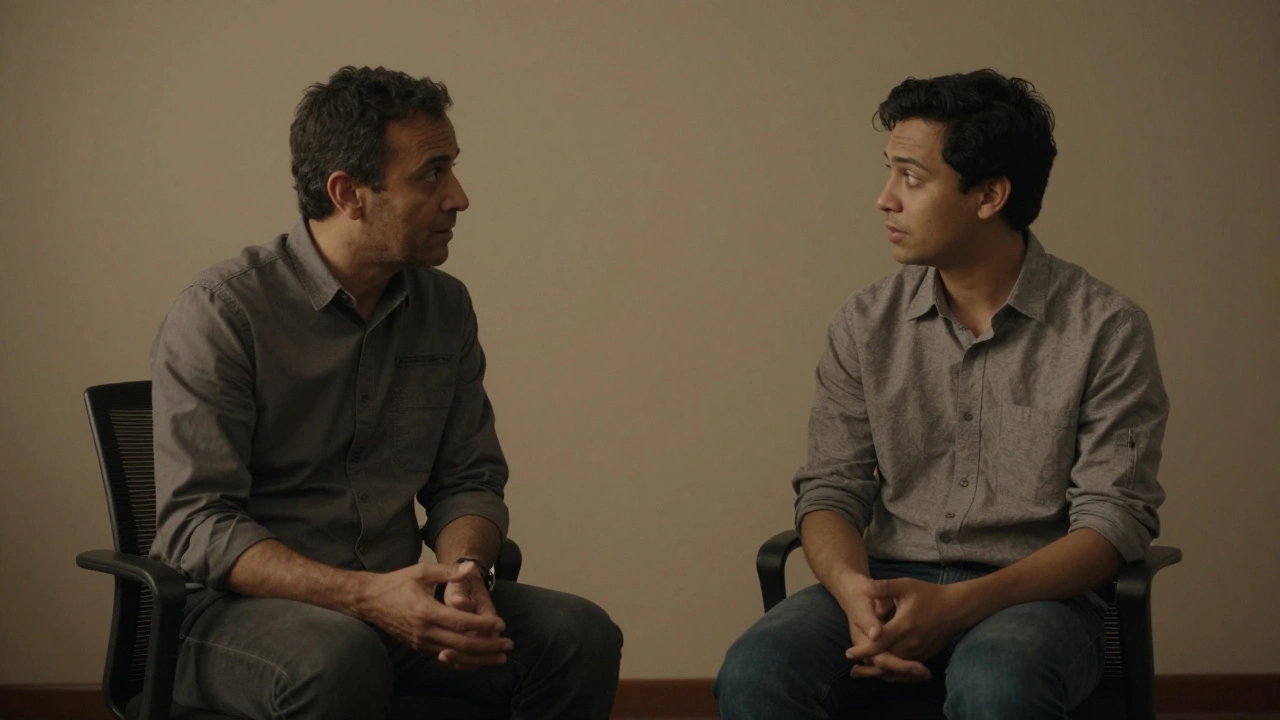
Rapport isn’t about being friendly or pretending to be someone’s friend. It’s about creating a psychological space where the person you’re talking to feels safe enough to speak openly. Studies show that when rapport is strong, interviewees give more information, stay on topic longer, and are less likely to contradict themselves. The key isn’t charm-it’s consistency. Three core elements build rapport: mutual attention, positivity, and coordination. Mutual attention means the interviewer is fully present-no checking phones, no looking at the clock. Positivity isn’t fake smiles; it’s calm tone, open posture, and avoiding judgmental language. Coordination happens when the conversation flows naturally, like two people in sync. You notice it when the interviewee mirrors your body language, pauses when you pause, or picks up on your phrasing. One simple trick? Mirroring. If someone leans back, you lean back slightly. If they speak slowly, you match their pace. This isn’t imitation-it’s subconscious alignment. Research from the University of Liverpool found that interviewers who mirrored interviewees got 37% more voluntary details than those who didn’t.The PEACE Model: A Proven Framework
The PEACE model is the gold standard used by police forces in the UK, Canada, and parts of the US. It breaks interviewing into five stages:- Preparation and Planning: Know who you’re talking to. Review their background, job, relationships, even their commute. A simple detail-like mentioning, “I saw you work at the auto shop on 5th-how’s that going?”-can instantly build connection.
- Engage and Explain: Start with a clear, calm introduction. “I’m here to understand what happened. You’re not under arrest. Anything you say is voluntary.” This removes fear and sets boundaries.
- Account: Let them tell their story without interruption. Don’t jump in with “But what about…?” This is where open-ended questions matter most.
- Challenge: Now you gently probe inconsistencies-not to trap them, but to clarify. Use their own words. “You said you left at 7:15, but the security footage shows the door opening at 7:22. Can you help me understand that?”
- Evaluation: Review what was said. Summarize key points. Ask if they want to add anything. This isn’t a closing-it’s an invitation to go deeper.
Cognitive Interviewing: Unlocking Memory
Memory isn’t a video replay. It’s fragmented, emotional, and easily distorted. The cognitive interview technique helps people reconstruct events by tapping into different memory pathways. Four proven methods:- Context reinstatement: Ask them to mentally return to the scene. “What were you wearing? What sounds were around you? Was the air cold or humid?”
- Reverse order recall: Ask them to recount events backward. “Start from when you got home and go back to when you left the store.” This avoids scripted stories and uncovers hidden details.
- Change perspective: “If you were a passerby watching this, what would you have seen?” This reduces self-consciousness and reveals blind spots.
- Multiple accounts: Ask them to describe the event from different angles-what they saw, heard, felt. Each version adds new layers.
OARS: The Communication Toolkit
OARS is a simple, powerful set of communication tools borrowed from counseling but refined for investigations:- Open-ended questions: Avoid yes/no. Instead of “Did you see the car?” say “What did you notice about the vehicle?”
- Affirmations: Validate their experience. “It makes sense you’d feel uneasy after that.” This doesn’t excuse behavior-it humanizes the person.
- Reflective listening: Paraphrase what they say. “So you’re saying you didn’t recognize the man because he was wearing a hood?” This shows you’re tracking, not just waiting to speak.
- Summarization: Every 10-15 minutes, briefly recap. “So far, you’ve told me you left at 7, saw the light change, and heard a crash. Is that right?” This builds trust and catches errors early.
Non-Verbal Cues That Make or Break the Interview
Words matter, but body language matters more. Here’s what works:- Eye contact: Not staring. Not looking away. Just steady, calm, respectful glances. Too much feels threatening. Too little feels disengaged.
- Posture: Sit at the same level. Don’t tower over them. Don’t slouch. Lean in slightly when they speak-this signals interest, not pressure.
- Vocal tone: Low, calm, even. Raised voices trigger defensiveness. A quiet voice invites honesty.
- Physical environment: A quiet room. A chair that’s comfortable. Water on the table. A restroom nearby. These small things say: “You’re not a suspect. You’re a person.”
Rapport Isn’t Weakness-It’s Strategy
Some think building rapport means being soft. It doesn’t. You can be firm and fair at the same time. You can ask hard questions-like “Why did you lie to the officer?”-and still keep the person talking if you’ve built trust. The key is consistency. If you say, “You’re not under arrest,” and then suddenly raise your voice or slam a file on the table, you break the trust. Rapport isn’t a one-time setup. It’s a continuous adjustment. You watch their reactions. If they stiffen, you soften. If they pause, you wait. If they cry, you give them space. Rapport also makes people feel responsible. When someone feels understood, they’re more likely to feel guilty-or ashamed-and that guilt often leads to confession. It’s not manipulation. It’s psychology. People who feel respected want to do the right thing.Common Mistakes and How to Avoid Them
- Asking too many closed questions: “Did you see the suspect?” → “What did you notice about the person?”
- Interrupting: Let silence sit. People fill silence with truth.
- Jumping to conclusions: Don’t assume guilt. Assume curiosity.
- Using jargon: “Perpetrator,” “alibi,” “forensic timeline”-these words shut people down. Use plain language.
- Ignoring cultural cues: In some cultures, direct eye contact is rude. In others, silence means respect. Learn the person’s background before you sit down.

Real-World Impact
In 2024, the Metropolitan Police in London switched entirely to rapport-based interviewing. Within six months, the rate of accurate witness statements rose by 52%. The number of wrongful accusations dropped by 31%. In one case, a missing child was found because a neighbor, who’d been too scared to speak before, finally said: “I saw him playing with the dog. He was laughing. I didn’t think it was important.” That detail led them to a backyard shed. This isn’t theory. It’s practice. And it works because it treats people like humans-not suspects, not witnesses, not data points.| Aspect | Rapport-Based Approach | Traditional Questioning |
|---|---|---|
| Goal | Gain accurate, detailed information | Confirm or refute a theory |
| Question Style | Open-ended, exploratory | Closed, leading |
| Interviewer Tone | Calm, empathetic, curious | Authoritative, confrontational |
| Memory Use | Cognitive techniques to reconstruct events | Recall based on direct prompts |
| Outcome Quality | Higher accuracy, fewer false statements | More contradictions, higher error rate |
| Interviewee Response | More voluntary details, longer narratives | Short answers, defensiveness |
Frequently Asked Questions
Is rapport-building only useful for witnesses, or does it work with suspects too?
It works best with both. Suspects are often more guarded, but when they feel respected-not judged-they’re more likely to talk. The goal isn’t to make them like you. It’s to make them feel safe enough to explain themselves. Many confessions come not from pressure, but from a moment of clarity during a calm conversation.
Can rapport be built too quickly?
Yes. Rushing rapport feels fake. If you say, “I get you,” before you’ve listened, it backfires. Rapport grows through small, consistent actions-not grand gestures. A pause. A nod. A quiet “I see.” These build trust over time. Don’t try to force it.
Do I need special training to use these techniques?
Formal training helps, but you don’t need a degree. Start with one technique: use open-ended questions in every interview. Then add reflective listening. Then try context reinstatement. Most departments now offer 40-hour courses in evidence-based interviewing. Even a single day of training improves outcomes.
What if the person is lying?
Don’t call them a liar. Instead, say: “I’m trying to understand how this happened.” People lie to protect themselves. If you make them feel judged, they’ll double down. If you make them feel heard, they might correct themselves. The goal is truth, not confrontation.
How long does it take to build rapport?
It can start in seconds. A handshake. A smile. A simple “Thanks for coming in.” But deep rapport takes time-usually 15 to 30 minutes of consistent, respectful interaction. Some interviews last hours. Don’t rush. The best information often comes in the last 10 minutes.