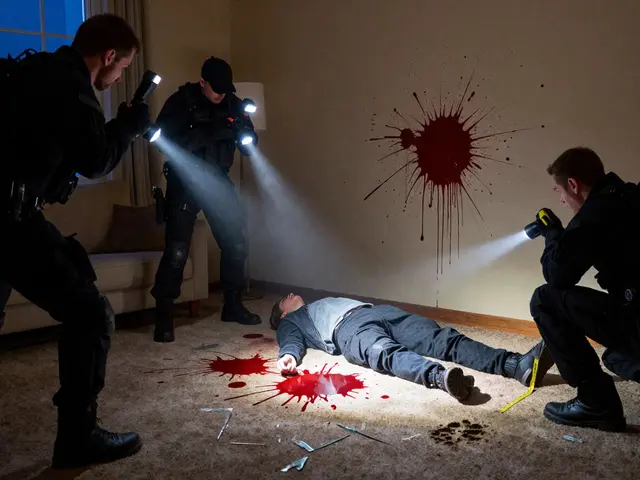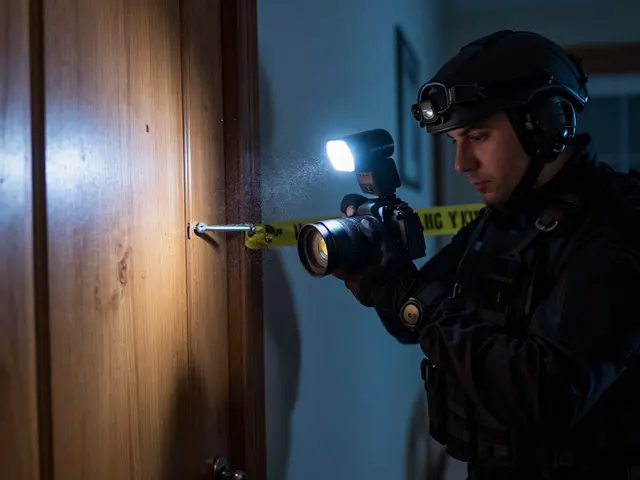
Imagine a crime scene where everything looks spotless. The suspect wiped the counters, vacuumed the rug, and wore gloves. To the naked eye, there is nothing left. But in the world of forensic science, "clean" is a myth. The reality is that every single movement, every brush of a sleeve, and every breath leaves behind a microscopic trail. This is the heart of trace evidence is small, often microscopic materials transferred from one location or person to another during a crime. While some of this evidence is obvious-like a shard of glass on a jacket-much of it is completely invisible without the right tools. Understanding the difference between visible and invisible traces is what allows investigators to turn a "cold" scene into a goldmine of information.
The Golden Rule: Locard's Exchange Principle
Before we get into the types of evidence, we have to talk about the logic behind it. Everything in forensics relies on Locard's exchange principle. Formulated by Edmond Locard, this rule simply states that "every contact leaves a trace." Whether it is a conscious act or an accidental bump, a physical exchange happens. If a suspect breaks a window and climbs inside, they leave behind skin cells or clothing fibers (the trace) and take away shards of glass (the transfer). This exchange is the foundation for placing a suspect at a specific scene or linking a victim to a perpetrator.
What Exactly is Visible Trace Evidence?
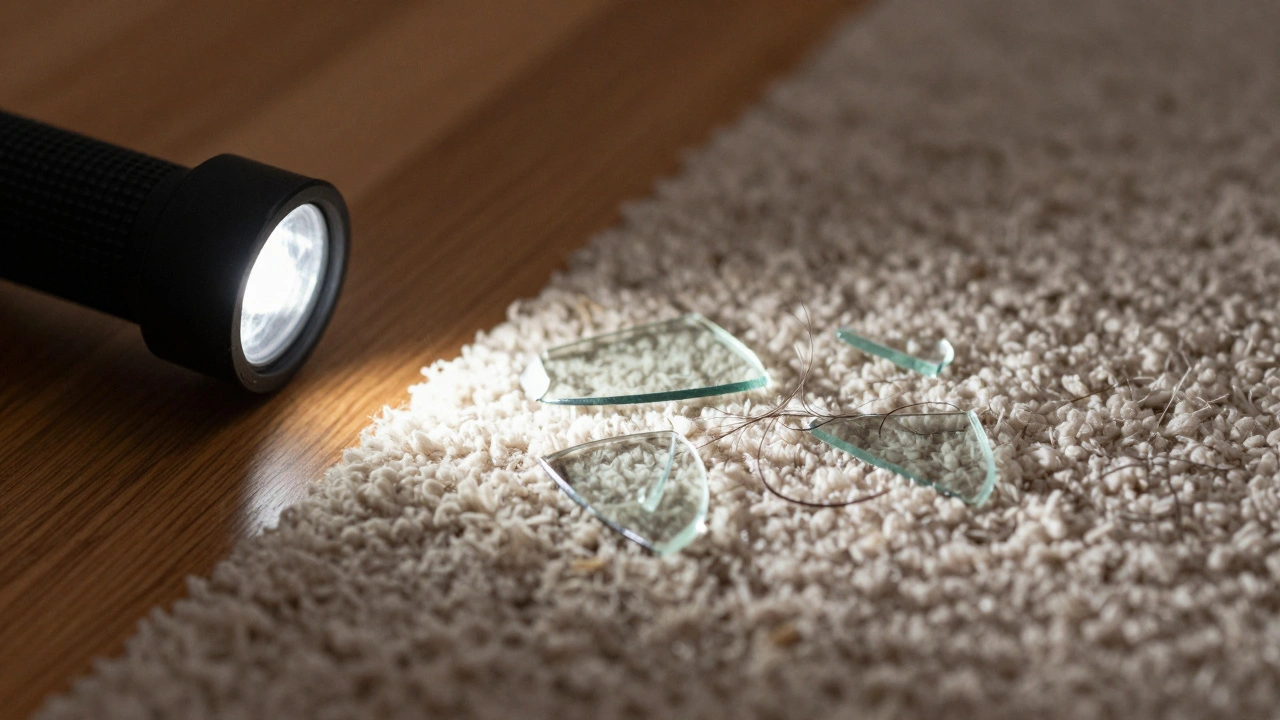
Visible trace evidence is exactly what it sounds like: things you can see without needing a microscope or a special lamp. These are the "low-hanging fruit" of a crime scene. Common examples include glass fragments on a victim's clothing, distinctive paint chips from a hit-and-run vehicle, or coarse hairs caught in a doorway. While these are easier to find, they aren't always simple to collect. An investigator can't just pick up a piece of glass with their fingers; they have to document the distribution pattern. Instead of just grabbing one piece, they look at where the glass fell. This pattern can tell them if a window was broken from the inside or the outside.
To find these visible clues, pros use systematic search strategies. They don't just wander around; they scan from general areas to specific points, changing their viewing angle to let light hit surfaces differently. They pay close attention to "transition zones," like where a carpet meets a hardwood floor, because that's where fibers and debris tend to pile up.
The Hidden World: Invisible Trace Evidence
Now, let's talk about the stuff you can't see. Invisible trace evidence consists of nanoparticles and subvisible particles. We are talking about things like sweat residues, saliva, or microscopic chemical droplets. These are routinely missed by untrained eyes, but they are often the most damning pieces of evidence in a case. For example, a perpetrator might be careful not to leave blood, but they can't stop their body from shedding skin cells or leaving behind microscopic droplets of perspiration.
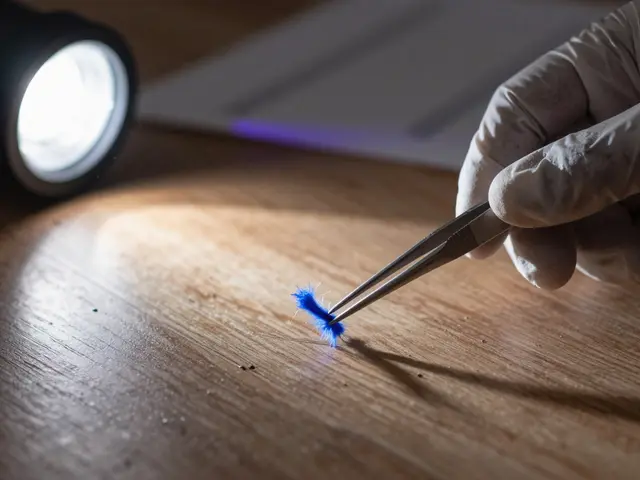
Since you can't see these with the naked eye, forensics experts use Alternate Light Sources (ALS). These aren't just flashlights; they produce specific wavelengths of light, often in the blue or ultraviolet spectrum. When this light hits certain substances, it triggers fluorescence. This is a process where a material absorbs the UV radiation and emits a longer wavelength of visible light. Suddenly, a colorless stain on a white sheet glows a bright, distinctive color, revealing the presence of biological fluids.
| Feature | Visible Trace Evidence | Invisible Trace Evidence |
|---|---|---|
| Examples | Glass shards, paint chips, visible hair | Semen, saliva, nanoparticles, gunpowder residue |
| Detection Method | Visual scanning, magnifying glass | ALS, UV lamps, Fluorescence |
| Collection Tool | Tweezers, vacuuming, direct pickup | Tape lifts, swabs, specialized vacuum filters |
| Primary Value | Direct physical link to an object/location | Biological links and chemical signatures |
How Experts "See" the Invisible in the Lab
Once a sample is collected-often using a tape lift or a swab-it goes to the lab. This is where the real science happens. Experts use Polarized Light Microscopy to examine the physical properties of a fiber or particle. But the heavy lifting is done by Microspectrometry. This tool allows scientists to measure the exact color and chemical composition of a sample. If two fibers look identical under a microscope, microspectrometry can prove they are different by analyzing their ultraviolet and infrared spectra.
Image processing also plays a huge role. Modern software can enhance the contrast of a photo taken under UV light, making a faint fluorescence pattern clear enough to be presented as evidence in court. This non-destructive process ensures the evidence remains intact for further testing, which is critical for maintaining the chain of custody and ensuring the results are legally admissible.
Real-World Application: The Victim's Body
One of the most critical areas for trace evidence is the victim's body. Even when a killer is meticulous, the physical struggle of a crime almost always results in a transfer. Gunshot residue, tiny bits of skin, or microscopic fabric threads from the perpetrator's clothes often end up on the victim. These are typically invisible. If a detective finds a specific synthetic fiber on a victim's neck that matches the rare blend of a suspect's sweater, that is a powerful piece of evidence that can disprove a suspect's alibi.
Fingerprints are another huge part of this. While we think of them as "visible" (if they are in blood or ink), most are latent prints-invisible oils left on a surface. These require chemical developers or specialized lighting to appear, bridging the gap between visible and invisible evidence.
The Hurdles of Trace Analysis
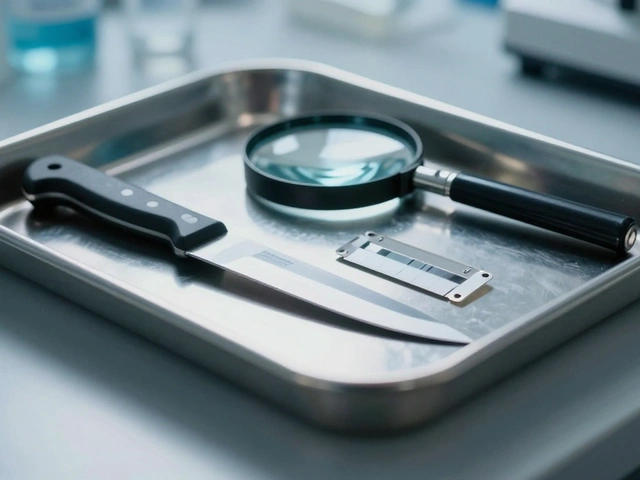
It isn't all high-tech success stories. There are real challenges in this field. First, the gear is expensive. High-end spectrometers and laser light devices aren't in every small-town police department's budget. Second, you need highly specialized personnel. It takes years of training to distinguish between a piece of common household lint and a rare industrial fiber that could link a suspect to a specific factory.
There's also the risk of contamination. Because trace evidence is so small, a single stray hair from the investigator or a piece of dust from a different crime scene can ruin a sample. This is why the collection process is so rigid, involving full-body suits and sterile tools.
Can invisible trace evidence be deleted or cleaned away?
While a suspect can clean a surface with bleach or soap to remove visible stains, microscopic particles often settle into crevices, pores in the skin, or the weave of a fabric. Nanoparticles and chemical residues are incredibly difficult to remove completely, which is why ALS and lab analysis can often find evidence even after a thorough cleaning attempt.
What is the difference between a primary and secondary transfer?
A primary transfer is a direct exchange-for example, a suspect's hair falling onto a victim during a struggle. This has the highest evidential value. A secondary transfer happens when a trace is moved from one place to another-like if the suspect's hair falls on a chair, and then the victim sits in that chair. Secondary transfers are harder to prove in court because they don't definitively prove the two people were in the same room at the same time.
Do all biological fluids fluoresce under UV light?
Not all of them. Blood, for instance, typically looks dark or "absorbed" under UV light because it absorbs the radiation rather than emitting it. However, semen and saliva usually fluoresce with distinctive colors, allowing investigators to differentiate between different types of bodily fluids quickly.
Why is microspectrometry better than just using a microscope?
A microscope tells you what something looks like (its morphology), but microspectrometry tells you what it is made of (its chemical signature). Two fibers might both be blue and cylindrical, but one could be a specific dye used only in a certain brand of carpet, while the other is a different chemical blend. The spectrometer provides objective data that is much harder to dispute in court.
What happens if a print is "unidentifiable"?
In fingerprint analysis, there are three outcomes: the suspect made the print, the suspect definitely didn't make the print, or the print is of poor quality (smudged or partial) and cannot be identified. An unidentifiable print doesn't clear a suspect, but it also can't be used to convict them.
Next Steps for Investigation
If you are dealing with a scene where evidence is sparse, the first step is to move from general visual scanning to targeted ALS screening. Start with the areas where the most physical contact occurred-doorknobs, clothing, and bedding. If you find a fluorescence pattern, document it immediately with photography before using any swabs, as the act of collecting the sample can alter the visual evidence. Finally, ensure that a "control sample" is taken from a non-contaminated area of the scene to prove that the fluorescence isn't just caused by the building's cleaning chemicals.