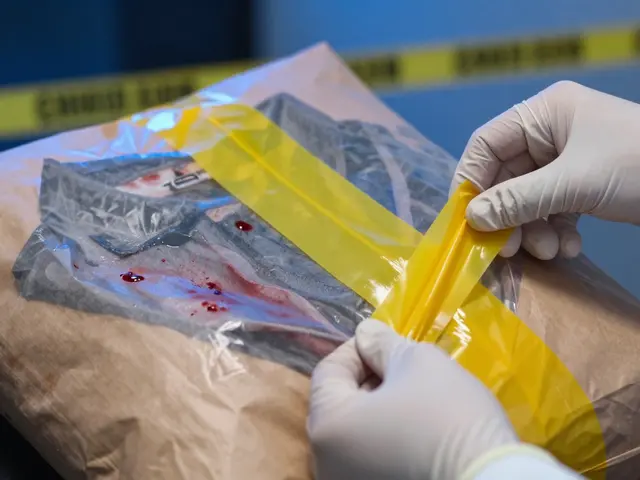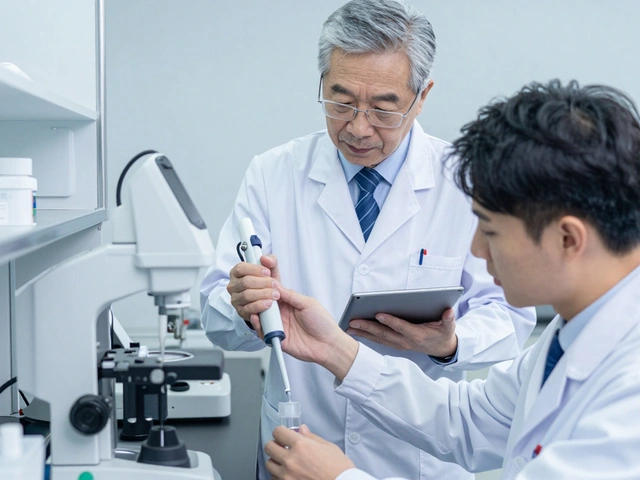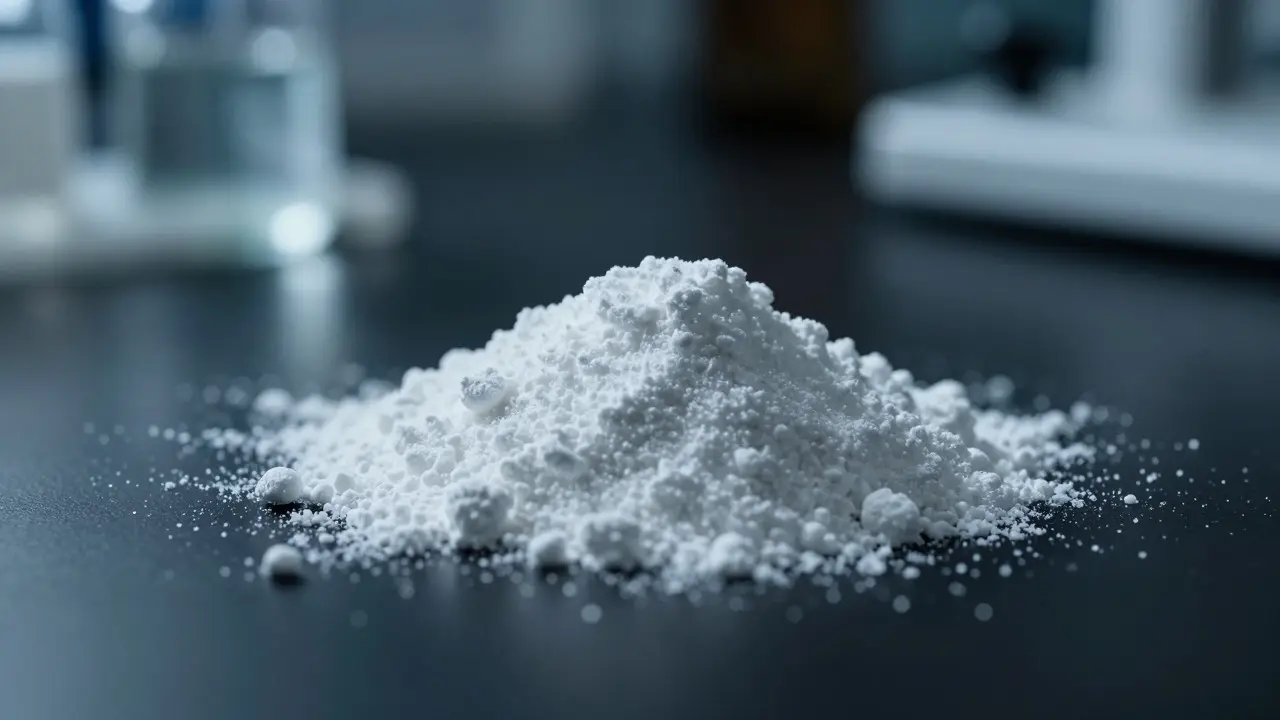
Imagine a single grain of sand. Now imagine that grain is potent enough to kill an adult human within minutes. That is the reality we face with Carfentanil, a veterinary opioid roughly 10,000 times more potent than morphine and 80 times stronger than fentanyl. For forensic toxicologists, this isn't just a statistic; it's a daily operational hazard and a massive analytical challenge. When a body arrives at the morgue, or a suspect is brought in for questioning, the margin for error is zero. One wrong move can cost a life, and one missed detection can let a dangerous substance slip through the cracks.
The rise of opioid analogs has outpaced traditional drug testing methods. We are no longer just looking for heroin or oxycodone. We are hunting down rapidly evolving chemical structures that often mimic known drugs but behave differently in the body and under laboratory conditions. This article breaks down how we detect these emerging threats, why standard screens fail, and what the future holds for forensic toxicology.
The Problem with Traditional Drug Screens
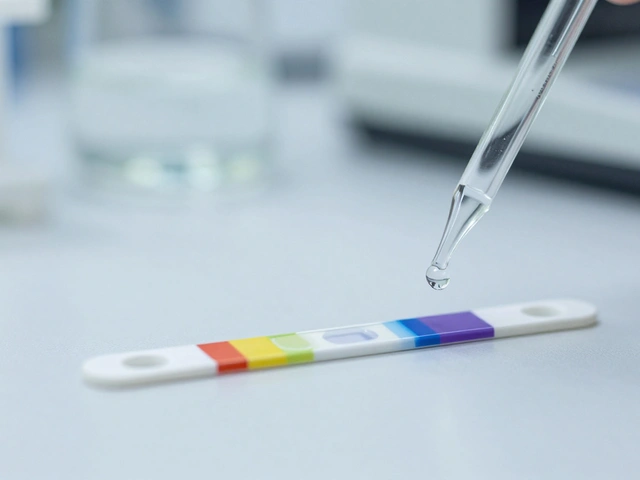
For decades, immunoassay tests have been the first line of defense in drug screening. These tests use antibodies to bind to specific molecules. If the antibody binds, you get a positive result. It’s fast, cheap, and easy. But here is the catch: antibodies are picky. They recognize specific shapes and chemical groups. When chemists tweak a molecule-adding a methyl group here or changing a ring structure there-the antibody might not recognize it at all.
This is where false negatives become a critical issue. A sample containing carfentanil might test negative on a standard fentanyl screen because the structural difference prevents the antibody from latching on. In high-stakes scenarios like overdose deaths or workplace accidents, relying solely on immunoassays is risky. You need confirmatory testing. You need to see the molecule itself, not just its shadow.
Why Carfentanil Is a Unique Challenge
Carfentanil was originally developed to immobilize large animals like elephants and rhinos. Its extreme potency means that trace amounts can be lethal to humans. In forensic cases, we often deal with post-mortem redistribution. After death, drugs concentrate in the heart blood and then slowly redistribute into other tissues. If you draw blood too early, you might find shockingly high levels of carfentanil that don’t reflect the concentration in the brain at the time of death. Conversely, if you wait too long, the drug may degrade or be metabolized into compounds that are harder to identify.
Furthermore, carfentanil is often found in illicit settings mixed with other substances. It’s not always pure. It might be cut with xylazine, benzodiazepines, or even other novel opioids. This complexity requires a laboratory approach that can handle multiple analytes simultaneously without cross-interference.
The Gold Standard: LC-MS/MS
To solve the problem of analogs, forensic labs rely heavily on Liquid Chromatography-Tandem Mass Spectrometry (LC-MS/MS). Unlike immunoassays, LC-MS/MS measures the mass-to-charge ratio of ions. It doesn’t care about shape recognition in the same way; it cares about molecular weight and fragmentation patterns. This makes it far superior for detecting unknown or modified structures.
Here is how the process typically works in a modern lab:
- Extraction: The biological sample (blood, urine, hair) is processed to isolate the target compounds. Solid-phase extraction (SPE) is commonly used to clean up the matrix and remove salts and proteins that could clog the instrument.
- Chromatographic Separation: The extract is injected into the LC system. As it passes through the column, different compounds separate based on their chemical properties. Carfentanil elutes at a specific retention time, distinct from fentanyl or norfentanyl.
- Ionization and Fragmentation: The separated compounds enter the mass spectrometer. Electrospray ionization (ESI) turns them into gas-phase ions. The first mass analyzer selects a specific precursor ion (the intact molecule). Then, collision-induced dissociation (CID) breaks it apart into characteristic fragment ions.
- Detection: The second mass analyzer detects these fragments. By monitoring specific transition pairs (precursor ion to product ion), we can confirm the identity of the compound with high specificity.
This method allows us to detect carfentanil at picogram-per-milliliter levels. It also enables us to run multi-analyte panels. Instead of testing for one drug, we can screen for dozens of opioids, stimulants, and sedatives in a single run. This efficiency is crucial when dealing with complex overdose cases.
Beyond Carfentanil: The Analogue Arms Race
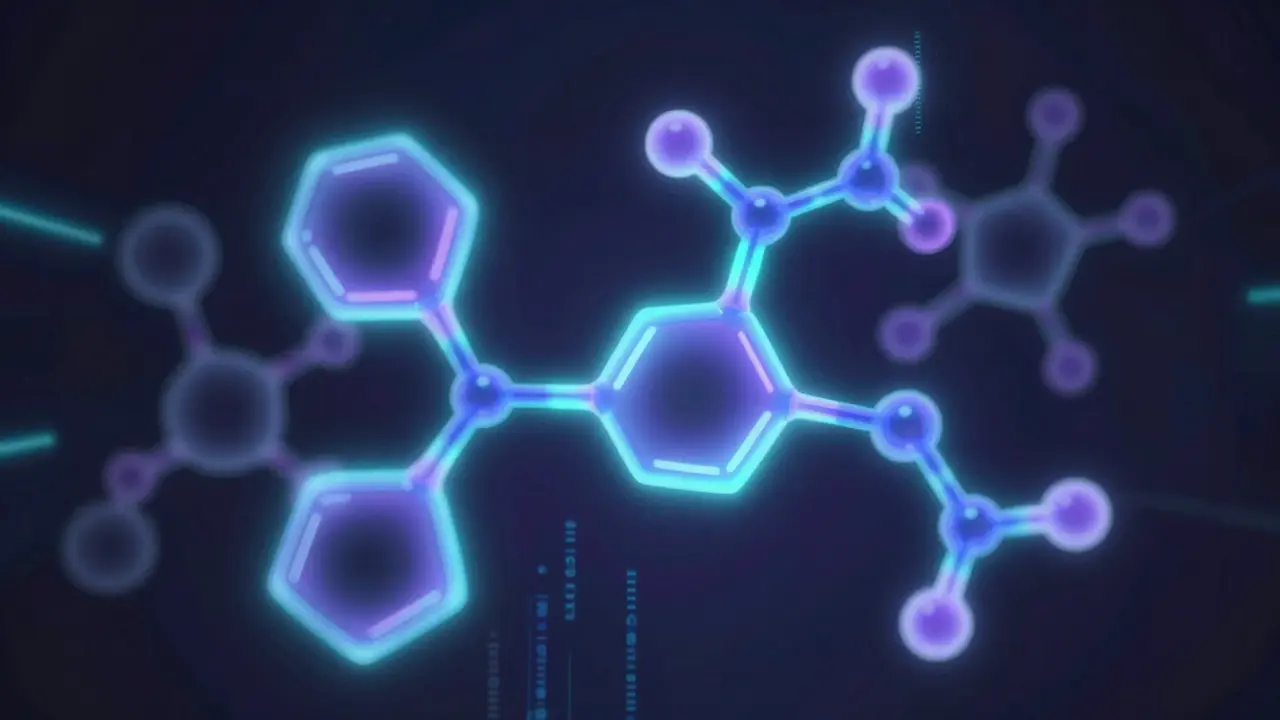
Carfentanil is just one piece of the puzzle. The world of synthetic opioids is constantly shifting. Chemists in clandestine labs modify fentanyl structures to evade detection and regulation. Some common variants include:
- Acetyl Fentanyl: Often mislabeled as "Fur" on the street. It has a similar potency profile to fentanyl but different metabolic pathways.
- Sufentanil: Another veterinary-grade opioid with high potency. Its detection requires careful differentiation from fentanyl due to overlapping mass transitions.
- Methoxetamine: While primarily a dissociative, it is frequently co-ingested with opioids, complicating toxicological profiles.
The challenge for analysts is keeping up. Regulatory lists update, but new analogues appear faster. This is why non-targeted analysis is gaining traction. Instead of looking for a predefined list of drugs, non-targeted approaches use high-resolution mass spectrometry (HRMS) to capture all ions in a sample. Bioinformatic tools then compare these data sets against databases to flag potential unknowns. It’s like scanning a room instead of checking specific shelves.
Practical Considerations for Lab Safety
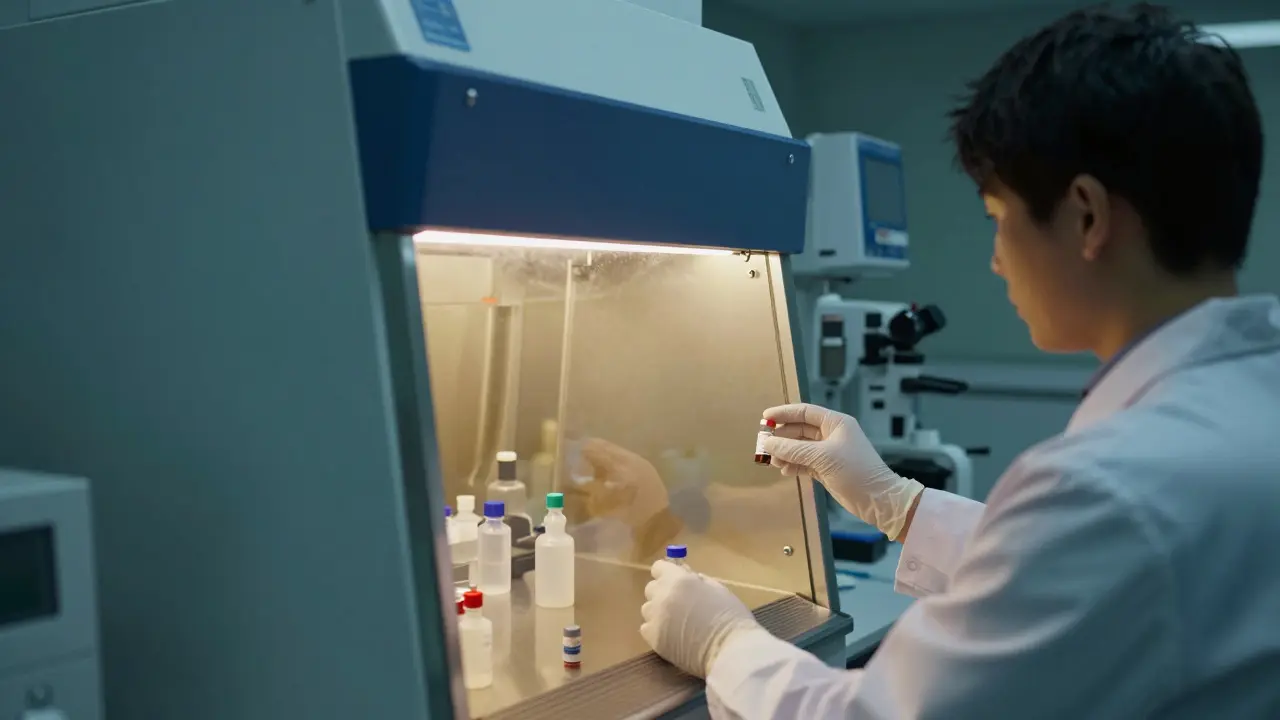
Detection is only half the battle. Handling these samples is the other. Because carfentanil is so potent, accidental exposure is a real risk. A single drop spilled on a benchtop can contaminate an entire workspace. Labs handling suspected carfentanil cases must follow strict protocols:
- Use nitrile gloves (double-gloving is recommended).
- Work in a certified biosafety cabinet or fume hood with activated carbon filtration.
- Avoid pipetting by mouth (obviously, but worth stating for trainees).
- Have naloxone readily available for emergency reversal.
Contamination control is vital. If your blank samples show traces of carfentanil, your results are compromised. Regularly running procedural blanks helps track down contamination sources, whether it’s dirty glassware or airborne particles.
The Future of Opioid Detection
Where do we go from here? The integration of artificial intelligence into toxicological data interpretation is promising. AI algorithms can sift through massive HRMS datasets much faster than humans, identifying subtle patterns that indicate novel analogues. Additionally, point-of-care devices are becoming more sophisticated. While they won’t replace the gold-standard LC-MS/MS in the lab, they offer rapid field screening that can alert first responders to the presence of ultra-potent opioids before they arrive at the hospital.
Collaboration is key. Forensic labs, clinical toxicologists, and law enforcement agencies need to share data in real-time. When a new analogue appears in one city, the whole country should know. Databases like the FDA’s Emergency Use Authorization (EUA) listings and international poison center reports serve as vital resources for staying ahead of the curve.
| Method | Speed | Specificity | Cost per Test | Best For |
|---|---|---|---|---|
| Immunoassay | Minutes | Low-Moderate | $5-$15 | Initial Screening |
| GC-MS | Hours | High | $20-$40 | Volatile Compounds |
| LC-MS/MS | Hours | Very High | $30-$60 | Confirmatory Analysis & Multi-Analyte Panels |
| HRMS Non-Targeted | Days | Variable | $100+ (Data Processing) | Unknown Compound Discovery |
Frequently Asked Questions
How does carfentanil differ from fentanyl in detection?
While both are opioids, carfentanil has a different molecular weight and fragmentation pattern. In LC-MS/MS, they require different precursor and product ion transitions. Immunoassays often fail to detect carfentanil reliably because the antibody binding site differs slightly between the two molecules.
What is the most reliable method for confirming opioid analogs?
Liquid Chromatography-Tandem Mass Spectrometry (LC-MS/MS) is considered the gold standard. It provides high specificity and sensitivity, allowing for the accurate quantification of trace amounts of complex molecules in biological matrices.
Can standard drug tests detect all synthetic opioids?
No. Standard immunoassay screens are designed for specific targets like morphine, codeine, or fentanyl. Novel analogs often escape detection due to structural modifications. Confirmatory testing with mass spectrometry is essential for comprehensive analysis.
Why is post-mortem redistribution important in carfentanil cases?
After death, carfentanil concentrates in central venous blood (heart blood) before redistributing to peripheral sites. Sampling too early can lead to overestimation of the dose responsible for death. Peripheral blood or vitreous humor sampling is often preferred for more accurate post-mortem concentrations.
What safety precautions are needed when handling carfentanil samples?
Due to its extreme potency, strict personal protective equipment (PPE) is required. This includes double nitrile gloves, lab coats, and working in ventilated enclosures. Naloxone should be immediately accessible in case of accidental exposure.